The Possibly Real Trend of Possibly Real Trends

What’s current when nothing is certain.


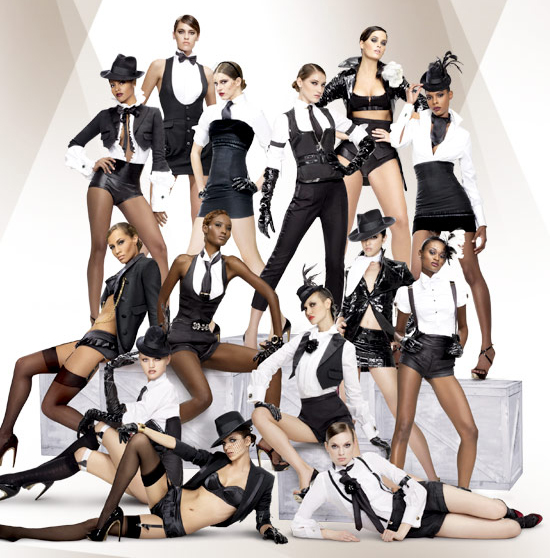
Health Goth.
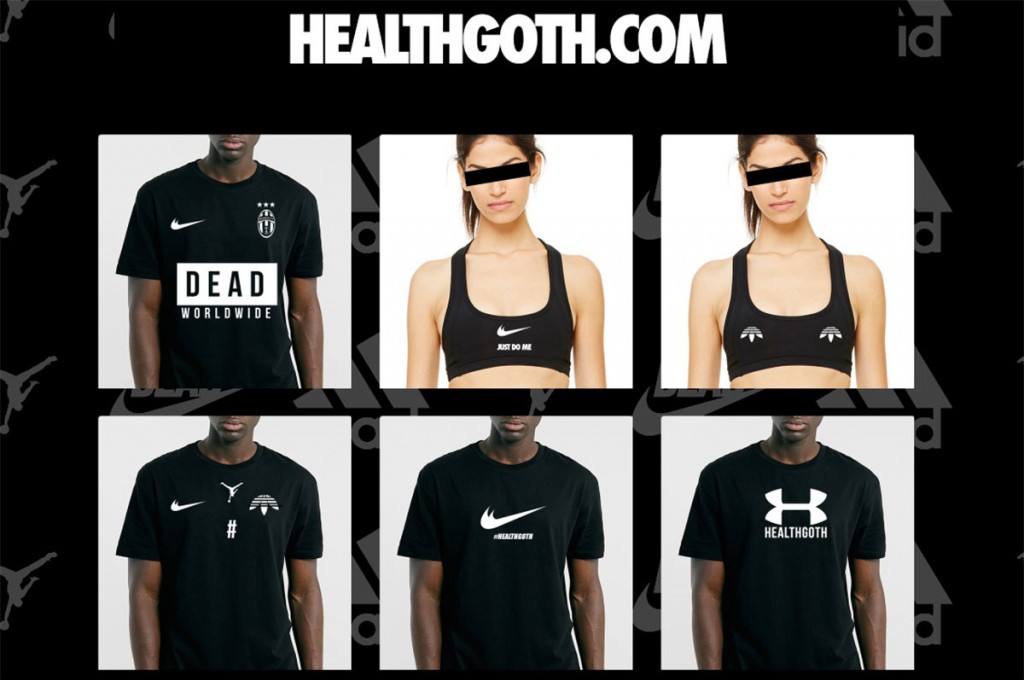
22-healthgoth.w1394.h927.2x

“Somewhere in between normcore, cyberpunk, goth, and sportswear chic exists the possibly real trend known as “Health Goth,” wrote Allison P Davis in New York Magazine’s The Cut blog back in October. “It’s been kicking around since spring, actually, but it seems to have entered the mainstream this week.”

The source for this possibly-real trend’s possibly real tipping point was an article in Marie Claire the week prior, titled, likewise dubiously, “Health Goth: The Latest Trend You’ve Never Heard Of.”

After which “came the inevitable cavalcade of follow-on articles,” wrote Jay Owens in the Hautepop post, The Week That Health Goth Broke. “Rather poetically,” Owens added, “many trend pieces are declaring it stillborn, dead before it arrived”:

Meanwhile, Health Goth may or may not be the new “Street Goth.” Which itself is not to be confused with “Goth Ninja.” And there are also the lesser-known, possibly-real trends, dubbed, Pastel Goth, and Beach Goth. Because goth, apparently, never dies:
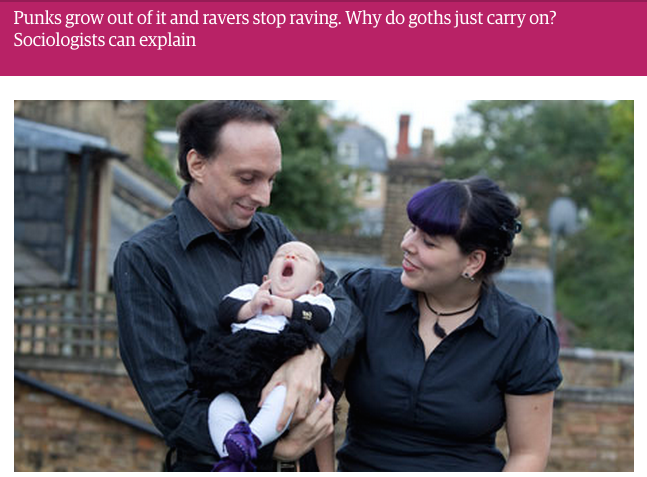
goths


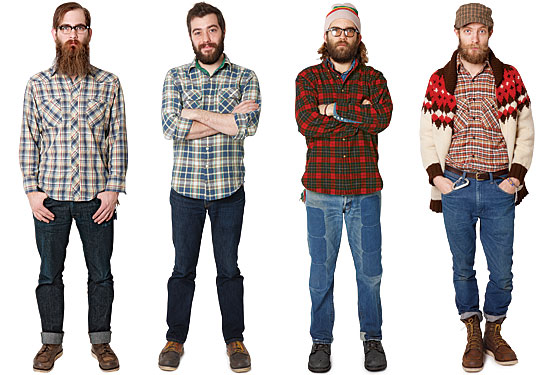
Lumbersexual.

19985


Ushered in by appropriately uncertain headlines like, “Are you a Lumbersexual?” (Gawker); “Are you dating a Lumbersexual?” (Cosmopolitan); “Who Is the Lumbersexual and Is Anything About Him Real?” (Jezebel), another possibly-real trend arrived in November. As Tom Puzak explained in Gear Junkie:

Today, the metrosexual is a disappearing breed being quickly replaced by men more concerned with existing in the outdoors, or the pseudo-outdoors, than meticulous grooming habits.

He is bar-hopping, but he looks like he could fell a Norway Pine.

Seen in New York, LA and everywhere in between, the Lumbersexual is bringing the outdoor industry’s clothing and accessories into the mainstream.

Whether the roots of the lumbersexual are a cultural shift toward environmentalism, rebellion against the grind of 9-5 office jobs, or simply recognition that outdoor gear is just more comfortable, functional and durable, the Lumbersexual is on the rise.

Possibly.

“20 years ago, Mark Simpson coined the term ‘metrosexual,'” reads the Telegraph headline from June 2014. “But now a new, more extreme, sex- and body-obsessed version has emerged.” Simpson calls it the “Spornosexual.”
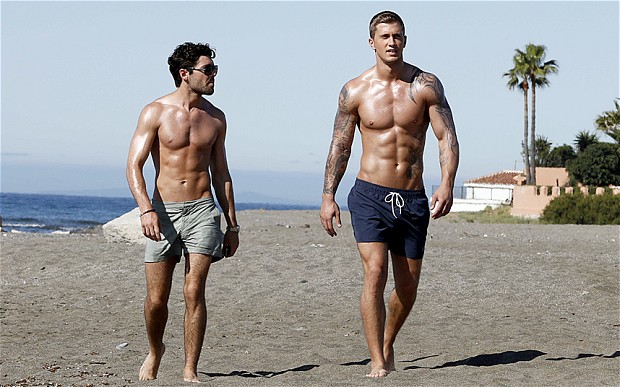
DAN-OSBORNE_2936565b

The term is a portmanteau to describe “these pumped-up offspring of those Ronaldo and Beckham lunch-box ads, where sport got into bed with porn while Mr Armani took pictures,” Simpson explains. “But unlike Beckham’s metrosexual ads of old, in which his attributes were possibly artificially enhanced, today’s spornosexuals have photoshopped themselves in real life. Glossy magazines cultivated early metrosexuality. Celebrity culture then sent it into orbit. But for today’s generation, social media, selfies and porn are the major vectors of the male desire to be desired. They want to be wanted for their bodies, not their wardrobe. And certainly not their minds.”

“Spornosexual” didn’t take off in the zeitgeist quite the way Lumbersexual has. Perhaps for being a little bit too foreign-sounding. And perhaps for being a little bit way too real to be possibly-real.

While I was writing this post, “Highsexual” happened. “What spawned the new psuedo-identity,” Michael D’Alimonte writes on MTL Blog, “was a slightly scandalous question posed to the reddit community, which basically can be summed up by a guy asking: I’m straight when I’m sober, but when I’m super high, I wanna bang guys, is this normal? And that is the crux of “highsexual,” a guy (or girl) that only ponders/enacts in gay sexual activity when stoned.”

While it’s true, as D’Alimonte notes, “You can apparently tack on -sexual to any word and create a new stratum of society,” (Goth too, evidently), in this particular case, the term pertains to sexuality directly rather than a fashion or aesthetic trend. Nevertheless, it’s still worth asking, as D’Alimonte does, “Is being a highsexual a real thing?” The answer? “Well, now that it’s an internet-used term, it kind of is.”


Normcore. 

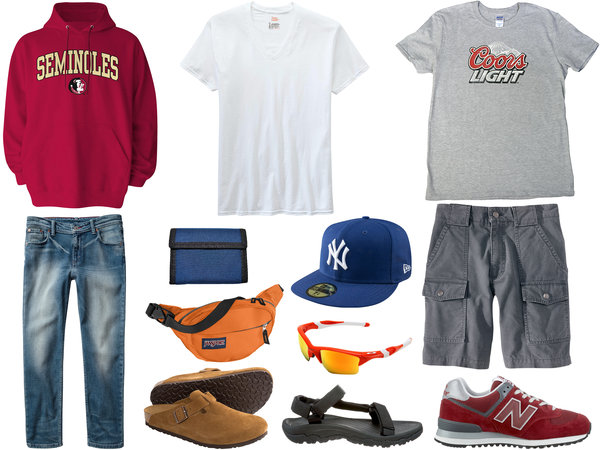
Perhaps the most notorious of 2014’s possibly-real trends, and no longer an anomaly so much as a harbinger, is Normcore. I wrote about it at the beginning of last year. The jury never really came back on whether Normcore is a real fashion movement or an Internet meme that the mass media fell for and self-fulfilled into becoming real. As Alex Williams put it in The New York Times:

A style revolution? A giant in-joke? At this point, it hardly seems to matter. After a month-plus blizzard of commentary, normcore may be a hypothetical movement that turns into a real movement through the power of sheer momentum.

Even so, the fundamental question — is normcore real? — remains a matter of debate, even among the people who foisted the term upon the world.

The catchy neologism was coined by K-Hole, a New York-based group of theoretically minded brand consultants in their 20s, as part of a recent trend-forecasting report, “Youth Mode: A Report on Freedom.” Written in the academic language of an art manifesto, the report was conceived in part as a work of conceptual art produced for a London gallery, not a corporate client.

As envisioned by its creators, “normcore” was not a fashion trend, but a broader sociological attitude. The basic idea is that young alternative types had devoted so much energy to trying to define themselves as individuals, through ever-quirkier style flourishes like handlebar mustaches or esoteric pursuits like artisanal pickling, that they had lost the joy of belonging that comes with being part of the group. Normcore was about dropping the pretense and learning to throw themselves into, without detachment, whatever subcultures or activities they stumbled into, even if they were mainstream. “You might not understand the rules of football, but you can still get a thrill from the roar of the crowd at the World Cup,” the report read. The term remained little more than a conversation starter for art-world cocktail parties until New York magazine published a splashy trend story on Feb. 24 titled “Normcore: Fashion for Those Who Realize They’re One in 7 Billion.” The writer, Fiona Duncan, chronicled the emergence of “the kind of dad-brand non-style you might have once associated with Jerry Seinfeld, but transposed on a Cooper Union student with William Gibson glasses.” An accompanying fashion spread dug up real-life L-train denizens rocking mall-ready Nike baseball caps and stonewashed boyfriend jeans without apparent shame.

03zNORMCORE1-articleLarge

Even so, it was difficult to tell if anyone actually believed the hype. For one thing, the normcore brain trust started to circle the wagons. Christopher Glazek, a journalist and friend of the K-Hole founders took to Facebook to blow holes in the “trend.” “It doesn’t really make sense to identify normcore as a fashion trend,” he wrote. “The point of normcore is that you could dress like a Nascar mascot for a big race and then switch to raver ware for a long druggie night at the club.”


The Trends They Are A-changin’.

Last year, some friends of mine accidentally became health goths. They didn’t mean to. It just happened. They were goths who grew up and got too old to keep going out to clubs the way they once had, so they got into crossfit, and that was that. Unbeknownst to them, they’d become classified into a whole new, possibly-real style.

This is something that didn’t used to happen. You didn’t just accidentally become hiphop. You didn’t one day trip over yourself to discover you were unwittingly wearing 30-inch bottom raver pants. Your clothes weren’t punked out and ripped to shreds for no particular reason that you were aware of until you read a New York Magazine trend piece about it. Now, a lifestyle neologism goes viral and you discover you’ve contracted a trend.

Alternative fashion trends used to be representative of a larger lifestyle or subculture emergence. The fashion brands that defined these aesthetics were often overtly and inextricably linked to these cultures.

“I was messianic about punk,” Vivienne Westwood, the High Priestess of Punk fashion said, in 2002.

The Kikwear brand’s history reads: In 1993, one of our key accounts in San Francisco asked us to make them a 23″ bottom for their store because the Rave scene was beginning to emerge in Northern California and the kids were walking into the store with their homemade “wide leg” pants. We moved on this tip and sure enough those denim pant sold out immediately! We quickly realized that this Rave Movement was starting to come on strong throughout Southern California and we started launching wider leg pants known today as “phatties.”

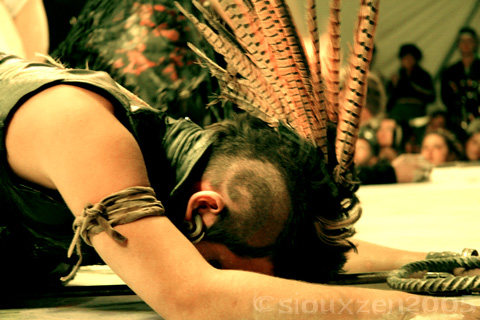
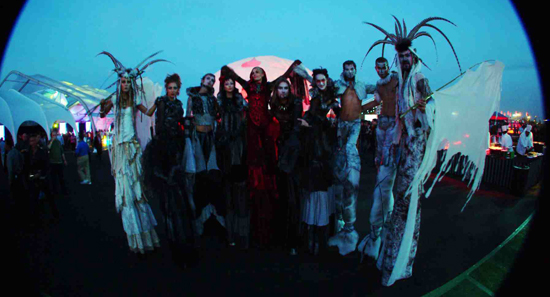
The late designer, Tiffa Novoa, was one of the founders of the seminal, circus subculture performance troupe, El Circo. In designing the troupe’s costumes she also created the postapocalyptic fashions that became associated with the Burning Man style, and carried over into an aesthetic that spanned west coast underground dance culture of the mid aughts. In a 2005 SF-Bay Guardian article, Steven T. Jones describes the personally transformative effect the fashion aesthetic Novoa defined had on its adherents, changing the way they conceived of themselves. “At first, this was all costuming,” The article quoted, Matty Dowlen, El Circo’s head of operations. “But now it’s who I am.”

Meanwhile, aggregating the de riguer health goth brands for the requisite The New York Times article on the subject, Meirav Devash listed: “Mainstream brands like Nike, Adidas and Under Armour, or gothic streetwear from Hood by Air, Cottweiler, Whatever 21, Nvrmnd Clothing, Adyn and Skingraft.”

When I asked Jonny Cota, the owner of Skingraft, about health goth, last year, his response was skeptical amusement. Like everyone else’s.

Perhaps that is what makes possibly-real trends so dubious: the lack of intentionality. Fashion choices used to have specific and unironic meanings. Hippies, punks, ravers, goths — these were cultural philosophies that spread through adoption, not (solely) aesthetic replication. Now, we don’t claim participation, we are simply colonized by memes, unwitting bystanders, just sort of swept up in cultural trend redistricting.

In the days of slow-moving, 20th century media, emergent cultural expressions had time to incubate below the radar before they tipped into mass awareness. Pre-Tumblr, the only way to find out about a new cultural emergence was through the unassailably real channel of one of its actual practitioners. There was no need to wonder about veracity. Now, a nascent trend doesn’t really have the time to mature into something legitimate before the trendhunting hyenas descend upon it, exposing it to a sudden burst of scrutiny. What remains becomes neither niche enough to be authentic nor mass enough to be indisputable. Maybe no new trend seems quite real because it hasn’t had the chance to become real before we’re looking it up on urban dictionary and just as swiftly are click-baited on to the next dubious dopamine hit of meme culture.

Or perhaps, this is what happens now that subculture doesn’t exist. Back in analog days, you wore the clothes you did to express your identity as a participant in the lifestyle they represented. Now that there’s simply no unimpeachable way to really know what is or isn’t “real” at all anymore, possibly-real trends are the reflection of this new, post-certainty reality.

Then again, maybe it’s all just Pizza.


Pizza.

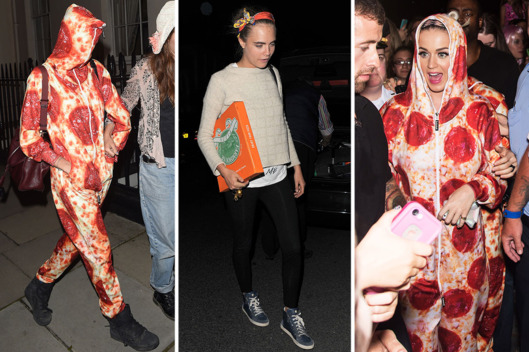
The Chicest New Trend Is Pizza” (New York Magazine, September, 2014):

29-pizza-outfits.w529.h352

Much like any other “It” girl, pizza’s popularity was ignited by internet fascination and possibly endorsed by the Illuminati.

Tumblr and Twitter memes dedicated to pizza’s power appeared, among them the Twitter account Pizzaminati.

Loyal followers still carry on the work via usage of #Pizzaminati on Twitter and Instagram. As such, “pizza” quickly took on new meaning — for example, pizza as a substitute in romantic relationship. The phrase “touch her butt and give her pizza” became a widely accepted way to keep your bae happy and “Pizza Is My Boyfriend” the new “Single Ladies” rally cry.

Then came the various pithy pizza message tees at clothing retailers like Forever 21 and Asos and Urban Outfitters.

However, almost as quickly as the Pizzaminati emerged, it disappeared. This, a screenshot of a funny tweet — “shots fired in the club over the last slice of pizza” — is all that remains. Where did you go, Pizzaminati? Were you really a sect of the Illuminati, destroyed once the pizza takeover was initiated? Yes, probably.
 

Or, you know… possibly.


Subscribe for more like this.


Hardcore Norm

Because dressing different is such a cliché.


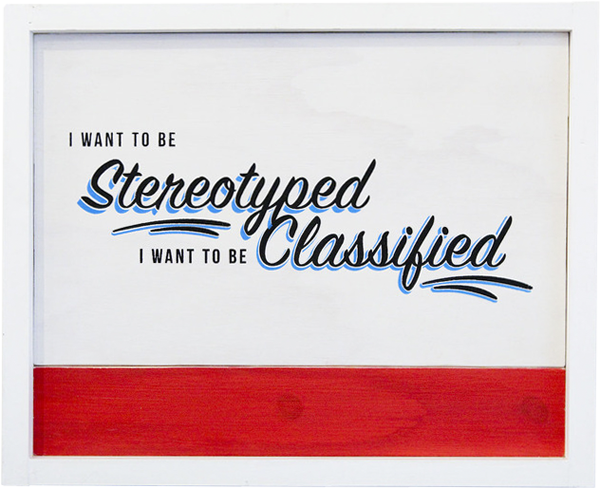
stereotyped_classified

art by Curtis Mead


“The kids are doing the normcore,” my friend Quang said, trying out the new phrase with a deliberate, old fart dialect.

Only a few moments earlier I had tossed off the word like common parlance.

“‘Normcore?’” he had repeated, making sure he’d heard correctly.
“Yeah,” I explained, “It’s exactly what you think it is. It’s us, now.”

A shockingly pleasant March afternoon had arrived in Boston that day, on the heels of a cold that had felt like osteoporosis. A decade in LA had turned me into a wimp. I had forgotten how I’d ever managed to live through this in my youth.

I had grown up here. In high school I discovered raves. By college I was throwing them in 20,000 square foot warehouses in Dumbo. After that, I moved out to the west coast and managed a vaudeville circus troupeproduced electronic music festivals, and worked with a bunch of bands, among other things. In the span of the past decade I saw the niche “electronica” genre evolve into mainstream “EDM;” I saw the circus subculture infiltrate pop performance acts, and the signature, post-apocalyptic, tribal fashion aesthetic originated within the Burning Man community become a major fashion trend.

But that day in Boston, in 2014, hanging out with friends who had come up through the rave, circus, and goth subcultures, you could hardly tell where any of us had been. What we wore now was nondescript. Non-affiliated. Normal.

The week before, at a craft beer tasting party at an indie advertising agency in Silver Lake, a sculpture artist was remarking about recently looking through photos of style choices from the aughts. “What was I thinking,” she said in bewilderment. That evening she was wearing a black tank top, and, like, pants. Maybe three quarter length? Or not? Maybe black jeans? Or not-jean pants? I couldn’t recall. Perhaps, I thought, this was just a symptom of getting older. There was some kind of sartorial giving a shit phase that we had all grown out of. But it turned out this, too, was a trend. Kids, too young to have grown out of anything, were dressing this way.
“By late 2013, it wasn’t uncommon to spot the Downtown chicks you’d expect to have closets full of Acne and Isabel Marant wearing nondescript half-zip pullovers and anonymous denim,” wrote Fiona Duncan, in a February New York Magazine article titled, “Normcore: Fashion for Those Who Realize They’re One in 7 Billion:”

I realized that, from behind, I could no longer tell if my fellow Soho pedestrians were art kids or middle-aged, middle-American tourists. Clad in stonewash jeans, fleece, and comfortable sneakers, both types looked like they might’ve just stepped off an R-train after shopping in Times Square. When I texted my friend Brad (an artist whose summer uniform consisted of Adidas barefoot trainers, mesh shorts and plain cotton tees) for his take on the latest urban camouflage, I got an immediate reply: “lol normcore.”
Normcore—it was funny, but it also effectively captured the self-aware, stylized blandness I’d been noticing. Brad’s source for the term was the trend forecasting collective (and fellow artists) K-Hole. They had been using it in a slightly different sense, not to describe a particular look but a general attitude: embracing sameness deliberately as a new way of being cool, rather than striving for “difference” or “authenticity.”

Oh my god, I thought reading this: this is me.

In Nation of Rebels: Why Counterculture Became Consumer Culture, published in 2004, cultural critics, Joseph Heath and Andrew Potter examined the inherent contradiction in the idea that counterculture was an opposition to  mass consumer culture. Not only were they not opposed, Heath and Potter explained, they weren’t even separate. Alternative culture’s obsession with being different — expressing that difference through prescribed fashion products and subcultural artifacts — had, in fact, helped to create the very mass consumer society the counterculture believed itself to be the alternative to.

“To me, Nike’s famous swoosh logo had long been the mark of the manipulated,” wrote Rob Walker, author of  2008′s Buying In: The Secret Dialogue Between What We Buy And Who We Are, ”A symbol for suckers who take its ‘Just Do It’ bullying at face value. It’s long been, in my view, a brand for followers. On the other hand, the Converse Chuck Taylor All Star had been a mainstay sneaker for me since I was a teenager back in the 1980′s, and I stuck with it well into my thirties. Converse was the no-bullshit yin to Nike’s all-style-and-image yang. It’s what my outsider heroes from Joey Ramone to Kurt Combain wore. So I found [Nike’s] buyout [of Converse] disheartening…. but why, really, did I feel so strongly about a brand of sneaker–any brand of sneaker?”

In response to Buying In, I’d written, “Whether we’re choosing to wear Nikes, Converse, Timberlands, Doc Martens, or some obscure Japanese brand that doesn’t even exist in the US, we’re deliberately saying something about ourselves with the choice. And regardless of how “counter” to whatever culture we think we are, getting to express that differentiation about our selves requires buying something.”

But that was five years ago. A funny thing happened on the way to the mid twenty-teens. The digital era ushered in an unprecedented flood of availability — of both information and products. This constant, ubiquitous access to everything — what Chris Anderson dubbed the “Long  Tail” in his 2006 book of the same name – had changed the cultural equation. We had evolved, as Anderson predicted, “from an ‘Or’ era of hits or niches (mainstream culture vs. subcultures) to an ‘AND’ era.” With the widespread proliferation of internet access, mass culture got less mass, and niche culture got less obscure. We became what Anderson called  a  “massively parallel culture: millions of microcultures coexisting and interacting in a baffling array of ways.” On this new, flattened landscape, what was there to be counter to?

“Jeremy Lewis, the founder/editor of Garmento and a freelance stylist and fashion writer, calls normcore ‘one facet of a growing anti-fashion sentiment,’” Duncan writes in New York  Magazine. “His personal style is (in the words of Andre Walker, a designer Lewis featured in the magazine’s last issue) ‘exhaustingly plain’—this winter, that’s meant a North Face fleece, khakis, and New Balances. Lewis says his ‘look of nothing’ is about absolving oneself from fashion.”

That is how normcore happened to me, too. When I quit the circus, leaving behind its sartorial regulations, I realized that difference wasn’t an expression of identity: it was a rat race.

“Fashion has become very overwhelming and popular,” Lewis explains in New York Magazine. “Right now a lot of people use fashion as a means to buy rather than discover an identity and they end up obscured and defeated. I’m getting cues from people like Steve Jobs and Jerry Seinfeld. It’s a very flat look, conspicuously unpretentious, maybe even endearingly awkward. It’s a lot of cliché style taboos, but it’s not the irony I love, it’s rather practical and no-nonsense, which to me, right now, seems sexy. I like the idea that one doesn’t need their clothes to make a statement.”

“Magazines, too,” Duncan writes, “have picked up the look:”

The enduring appeal of the Patagonia fleece [was] displayed on Patrik Ervell and Marc Jacobs’s runways. Edie Campbell slid into Birkenstocks (or the Céline version thereof) in Vogue Paris. Adidas trackies layered under Louis Vuitton cashmere in Self Service. A bucket hat and Nike slippers framed an Alexander McQueen coveralls in Twin. Smaller, younger magazines like London’s Hot and Cool and New York’s Sex, were interested in even more genuinely average ensembles, skipping high-low blends for the purity of head-to-toe normcore.

One of the first stylists I started bookmarking for her normcore looks was the London-based Alice Goddard. She was assembling this new mainstream minimalism in the magazine she co-founded, Hot and Cool, as early as 2011. For Goddard, the appeal of normal clothes was the latest thing. One standout editorial from Hot and Cool no. 5 (Spring 2013) was composed entirely of screenshots of people from Google Map’s Street View app. Goddard had stumbled upon “this tiny town in America” on Map sand thought the plainly-dressed people there looked amazing. The editorial she designed was a parody of contemporary street style photography—“the main point of difference,” she says, “being that people who are photographed by street style photographers are generally people who have made a huge effort with their clothing, and the resulting images often feel a bit over fussed and over precious—the subject is completely aware of the outcome; whereas the people we were finding on Google Maps obviously had no idea they were being photographed, and yet their outfits were, to me, more interesting.”

New media has changed our relation to information, and, with it, fashion. Reverse Google Image Search and tools like Polyvore make discovering the source of any garment as simple as a few clicks. Online shopping—from eBay through the Outnet—makes each season available for resale almost as soon as it goes on sale. As Natasha Stagg, the Online Editor of V Magazine and a regular contributor at DIS (where she recently wrote a normcore-esque essay about the queer appropriation of mall favorite Abercrombie & Fitch), put it: “Everyone is a researcher and a statistician now, knowing accidentally the popularity of every image they are presented with, and what gets its own life as a trend or meme.” The cycles of fashion are so fast and so vast, it’s impossible to stay current; in fact, there is no one current.

Emily Segal of K-HOLE insists that normcore isn’t about one specific aesthetic. “It’s not about being simple or forfeiting individuality to become a bland, uniform mass,” she explains. Rather, it’s about welcoming the possibility of being recognizable, of looking like other people—and “seeing that as an opportunity for connection.”

K-HOLE describes normcore as a theory rather than a look; but in practice, the contemporary normcore styles I’ve seen have their clear aesthetic precedent in the nineties. The editorials in Hot and Cool look a lot like Corinne Day styling newcomer Kate Moss in Birkenstocks in 1990, or like Art Club 2000′s appropriation of madras from the Gap, like grunge-lite and Calvin Klein minimalism. But while (in their original incarnation) those styles reflected anxiety around “selling out,” today’s version is more ambivalent toward its market reality.

In a post Hot-Topic world, where Forever21 serves up fast fashion in processed flavors like, Occupy:

and Burning Man:

Screenshot-2014-03-10-15.20.59 Screenshot-2014-03-10-15.20.48

we’re realizing that alternativeness, as a means for authentic self expression, is futile.“Normcore isn’t about rebelling against or giving into the status quo,” Duncan concludes, “It’s about letting go of the need to look distinctive.”

In our all-access, always connected, globalized world, obscurity is scarce. When everything is accessible, nothing is alternative.

“In the 21st century,”  Rob Walker wrote back in 2008, not recognizing the quickly approaching end of counterculture, “We still grapple with the eternal dilemma of wanting to feel like individuals and to feel as though we’re apart of something bigger than ourselves. We all seek ways to resolve this fundamental tension of modern life.”

In 2014, normcore is one solution we’ve found to resolve it.


Subscribe for more like this.


A Note From The Absentee Landlord

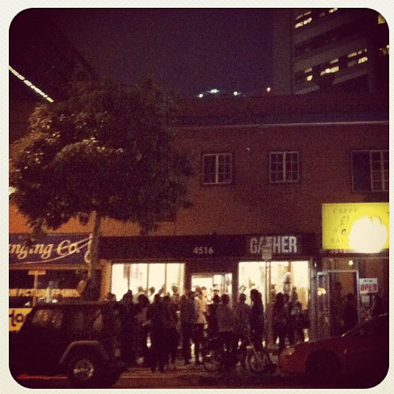
SocialCreature, I haven’t forgotten about you! I still love you and think of things I want to tell you all the time, (like what Roland Emmerich’s Anonymous says about “the intersection of art and politics and role of the artist in society”, or the similarities between the Snow White & the Huntsman trailer and the trailer for Timur Bekmambetov’s Night Watch — hint: crows). I miss you lots but things have just been been TFC* busy lately, and I have no time to get into details. A lot of super cool stuff has been happening behind the scenes, and I’m looking forward to being able to talk about more of it next year. But in the meantime here’s something I call tell you: I have recently become a partner in an intriguing little Los Angeles boutique called Gather.

For those of you following along at home, you may recall that Gather is the creation of one, miss Katie Kay, whose former occupations include being a co-designer at Skingraft, business partner to Amanda Palmer, and Lucent Dossier performer. She first opened Gather in Downtown LA back in July of 2010, and this summer the LA Weekly fashion issue had this to say about it:

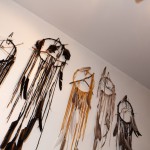
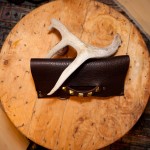
Nearly everything in the store is an expression of what Kay calls the “slow fashion” movement, which favors one-of-a-kind pieces over mass production in China. Slow fashion is about creating a lifestyle as a designer rather than building a “career” it’s about being indifferent to “trends” because, most likely, you’re making them. “This may be fashion, but I’m very open to being genuine about things,” Kay says.

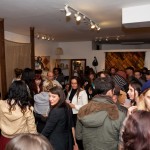
I first met Katie when we were both living in San Francisco over a decade ago and our lives have been intertwined in some strange and wonderful ways since. I came on board with Gather just as it opened its new location, at the intersection of Hollywood and Sunset, a couple of weeks ago. More than just a store, Gather is an articulation of a new kind of relationship we have with the things we buy. Our lives have become ever more like art galleries, both physical and virtual. And we are the curators. The pieces we select tell the story of who we are and where we’ve been. These things, the things we buy, are no longer consumed… they’re gathered.

Images courtesy of Los Angeles, I’m Yours, which had some very nice things to say about the opening.

Visit: Gather

*Totally Fucking Crazy


Subscribe for more like this.


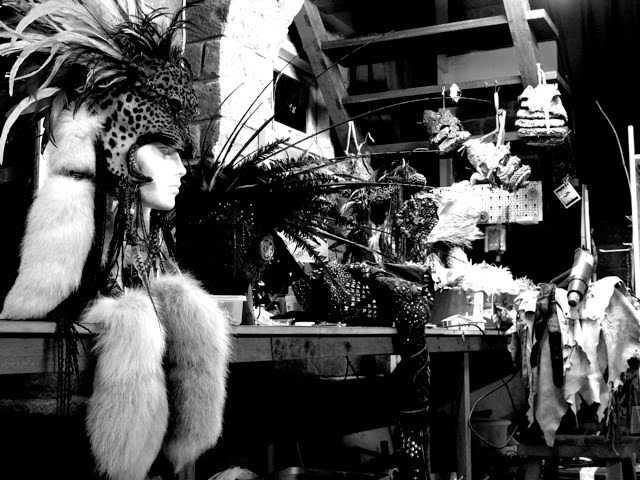
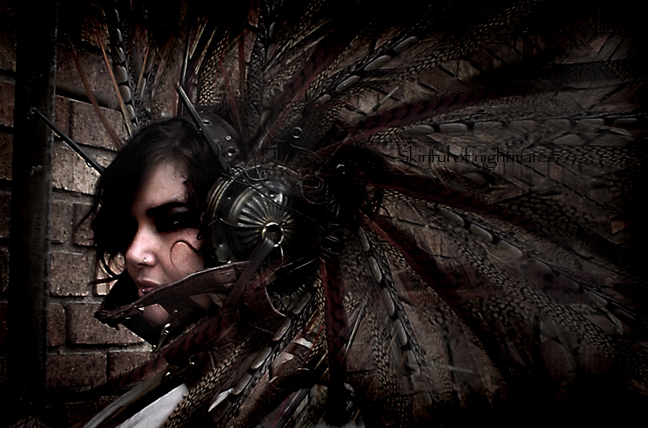
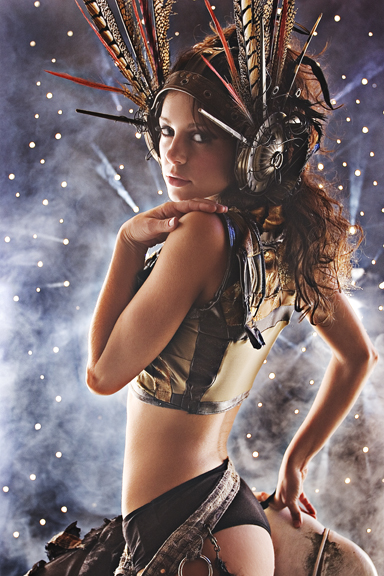
Why You’re Wearing Feathers Right Now


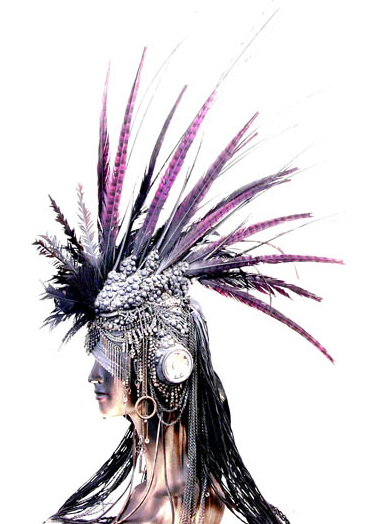
Jocelyn Marsh wearing headdress by Tiffa Novoa. Image: Brion Topolski, 2005

Right now all across America there is a feather shortage. In April, The Billings Gazette reported:

Jewelry-makers and hairstylists have been snatching up the premium chicken feathers used in standby trout-fly patterns, creating a sudden run on a market that’s ill-prepared for significant fluctuations of demand.

“Supplies are just decimated,” said Jim Cox, co-owner of the Kingfisher fly shop in Missoula, [Montana]. “We just can’t get the premium feathers. Even the (sales) reps for the suppliers can’t get them for themselves.”

What began a couple of years ago as a scattered interest in feather jewelry has erupted into a full-on fad for hair extensions made out of long, slender feathers — the exact same feathers used in the vast majority of traditional dry-fly patterns.

The feathers most valued both by fly-tiers and, lately, fashion mavens come from specific types of roosters that are selectively bred to produce long, slender feathers. Such chickens typically take almost a full year to raise before slaughter. What’s more, they’re rare: Only a few dozen commercial breeders exist in America, and most are small operations.

The situation’s getting so dire, American Public Radio’s Marketplace reports, the American Fly Fishing Trade Association is lobbying lawmakers about conservation. Tom Whiting, owner of Whiting Farms in western Colorado, one of the world’s largest producers of fly tying feathers, a third of whose sales now go to fashion, says, “We have orders far in excess of what we have in our system.” With the demand, the prices are skyrocketing. Last week the Oregonian reported a rooster neck of feathers that would have normally cost $29.95, is now selling for $360. A 300% – 700% jump in rooster saddle feather price is now typical.

In fashion parlance, feathers are in. Steven Tyler has been wearing the avian accessories as he judges American Idol contestants. Pop singer, Kesha, rocks feathers, too, even sticking one in Conan Obrien’s hair during a recent appearance on his show. Between Los Angeles’s mercantile meccas of Melrose Ave. and the Beverly Center you can get feather hair extensions, earrings, necklaces; feathers on boots, shoes, tops, skirts, hats, bras, anything. In the summer of 2011, feathers have become a staple of every sartorial and tonsorial aspect imaginable.

The other day I was asked my opinion as to where this current ubiquity of feathers has come from. But as it turns out, I happen to have something better than an opinion: I have an explanation.

Our story begins almost 12 years ago, in a little town in Oregon, by the name of Ashland, where a group of kids came together to start a circus performance troupe called, El Circo. The group would gain recognition within the Burning Man culture for the extravagant parties they threw at the festival, featuring lavish fire performances, a large, geodesic dome venue, and a top-notch sound system that attracted world-renowned music acts to perform there. In a 2005 San Francisco Bay Guardian article on the effect that the various groups within the Burning Man community have had on San Francisco nightlife — an impact which now extends to the entire west coast’s, and arguably global, dance culture — the writer paid particular attention to the influence of El Circo:

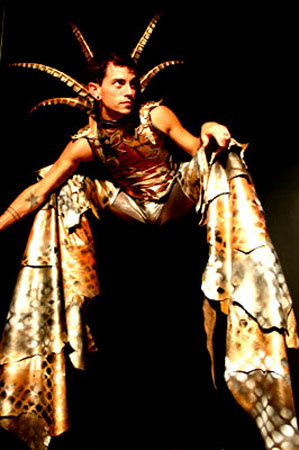
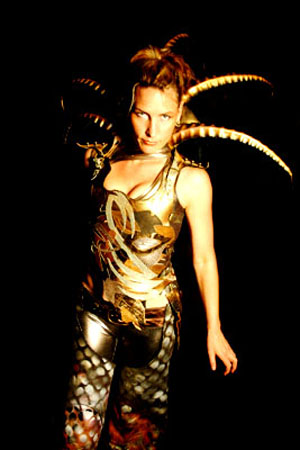
El Circo has fused a musical style and a fashion sense that are major departures from the old rave scene. [They are credited] with creating the postapocalyptic fashions that many now associate with Burning Man. Most of the original El Circo fashions, which convey both tribalism and a sense of whimsy, were designed by member Tiffa Novoa.”

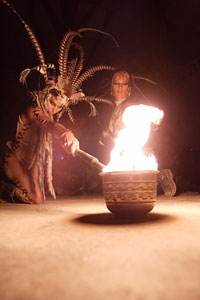
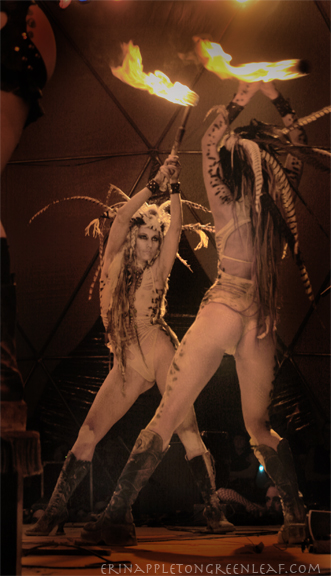
Here are some of the El Circo costumes from their 2005 shows:

That same year, just two years out of college, I stumbled into the role of production manager for a newly-formed, L.A.-based vaudeville cirque troupe called, Lucent Dossier. Through that initial involvement with Lucent I would meet many other circus groups, including El Circo, who were by then based in San Francisco along with The Yard Dogs Road Show and Vau De Vire Society. There was also March Fourth Marching Band in Portland, Clan Destino in Santa Barbara, and Cirque Berzerk, and Mutaytor in L.A. As these acts grew, the I-5 Freeway became a central artery of culture, pumping a distinct combination of art, music, fashion, and performance up and down the west coast. A social scene evolved around these circus troupes the same way the punk subculture sprang up around the bands that defined it. For lack of another term, I’ve referred to this subculture over the years simply as “circus.”

In Freaks and Fire: The Underground Reinvention of the Circus, J. Dee Hill delves into the history and sociology underpinning the alternative culture circus resurgence:

Traditional forms of the tribe, like the village, have almost completely disappeared. Fewer and fewer people live in small communities where their daily interactions bring them in contact with the people they are deeply connected to, either spiritually or economically. Workers in modern corporations are replaceable and no longer bound to each other by the experience of a shared interdependence. The modern individual is preoccupied simultaneously by isolating, immediate concerns of personal survival and the larger, often intangible concerns of war, terror and economic change as transmitted by a now-seamless global media network. The intermediate space of community is not easily reached.

Not by accident, many of the newer, emergent forms of culture include a specifically tribal aspect. A return to tattooing, sacrification, fire performance and drumming, as well as a renewed interest in ritual, has occurred side-by-side with the formation of intentional (if temporary) communities such as the Rainbow Family gatherings and Burning Man festival.

It was at these kinds of festivals, in clubs and at underground raves, that alternative circus acts began appearing in the early 90′s. The performers were young, crazy “freaks” without any formal training who used circus costumes, skills or themes as performative means for expressing their own exaggerated personalities. Many went on to gain formal training or to study the history of the genre, but essentially their relationship to conventional circuses resembled that of outsider art to mainstream art circles. They didn’t really relate to the modern-day circus. They took their cues from something much, much older: the caravan-pulling gypsies.

The phenomenon of alternative circus performance can be seen as the theatrical dimension to one generation’s wholesale rediscovery of the concept of tribe.

And the inexorable feather trend is inextricably linked with this trajectory.

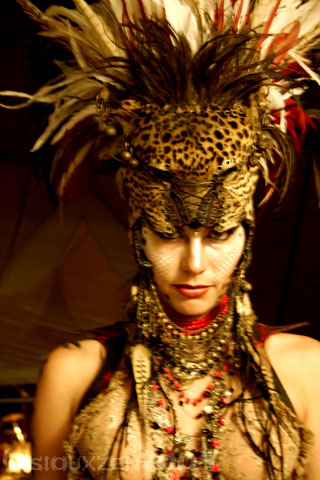
Novoa co-founded El Circo along with Marisa Youlden, a jewelry designer whose pieces accompanied Novoa’s costumes from the beginning. Youlden first used feathers in her pieces in 2000 and recalls this was when Novoa began creating elaborate feather headdresses for the performers. “At first, this was all costuming,” The 2005 Bay Guardian article quoted Matty Dowlen, El Circo’s operations manager, and performer, “but now it’s who I am.” The aesthetic Novoa first envisioned for the El Circo performers evolved into the prêt-à-porter of the circus subculture and became its signature style. Feathers, which had come to define El Circo costumes, became an integral component of the subculture’s street fashion:

205111_5748211647_5015_n

Yup, that last one is me. You can’t see the feather in this shot, but trust me, it was there. In the early to mid-aughts (when the photos above were taken) the feather was as de rigueur a cultural signifier within the circus scene as the safety pin was for punks in the late 1970s and early 80s. In fact, back before it was so commonplace as to lose meaning (or induce a national feather shortage), condescending terms for those sporting the look sprang up within the subculture: “Feather mafia,” was one I heard thrown around; “Trustafarian peacock” even made it into UrbanDictionary.com. And then, something else began to happen.

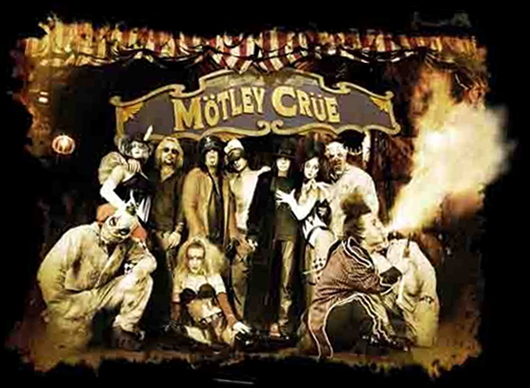
In 2005, Mötley Crüe picked circus as the concept for their comeback tour:

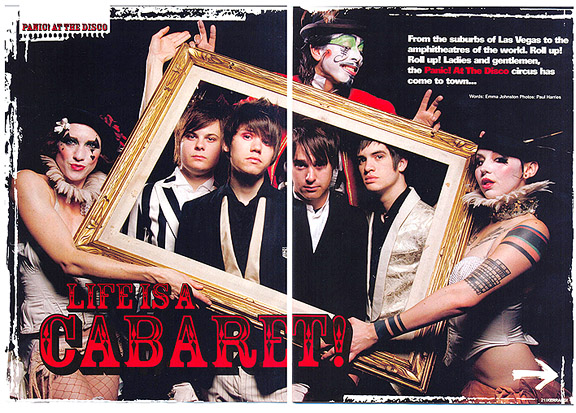
The next year, Panic! At the Disco won an MTV Video Music Award for their circus-themed, “I Write Sins Not Tragedies” video:

A theme they then extended into their “Nothing Rhymes With Circus” tour:

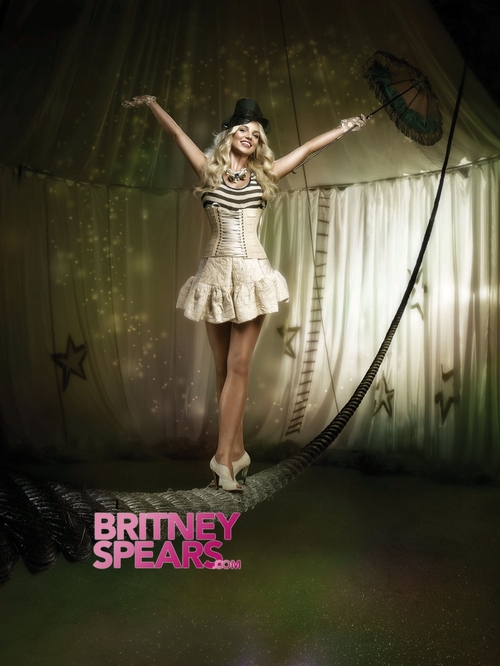
And in 2008, the reigning queen of pop herself at the time, Britney Spears, came out with an album titled, Circus, and ensuing tour of the same theme:

Throughout pop culture, traces of circus’s influence would keep surfacing. The same year as Britney’s Circus album, this was the ad for that season’s America’s Next Top Model:

Or take this ad for the launch of Microsoft’s short-lived Kin mobile device from last year:

The proliferation of circus within pop culture has been directly tied to its growth in underground culture, and being in an underground circus troupe during the height of this infiltration offered backstage access to the proceedings. For example: The circus featured in the Kin ad is March Fourth Marching Band. The circus performers in the Panic! At the Disco music video and tour were members of the troupe I managed. The performers who went on tour with Mötley Crüe would become Lucent Dossier members, as well. Last year, Miley Cyrus’s “Can’t be Tamed” music video featured a winged Cyrus alongside a troupe of be-feathered backup dancers inside a giant birdcage:

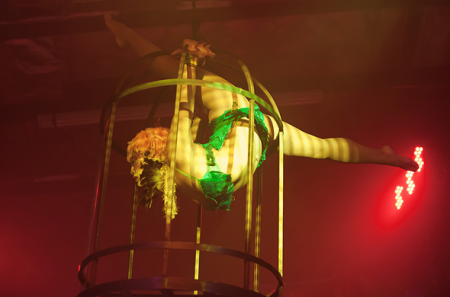
Which bears a distinct resemblance to the birdcage (not to mention the aesthetic) Lucent Dossier used prominently in aerial performances during their 2008 residency at the Edison nightclub in Downtown LA.

Especially in Los Angeles, where the Downtown underground and the Hollywood pop culture industry coexist within such proximity of one another, their crossover was inevitable.

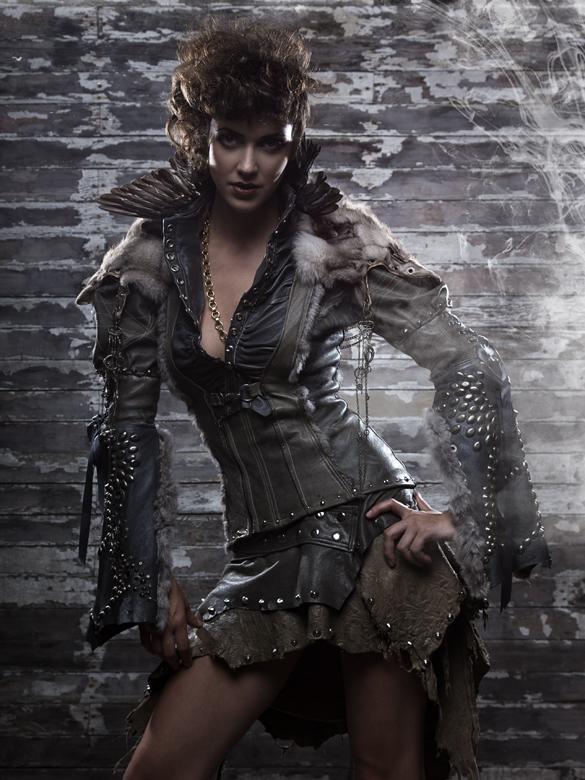
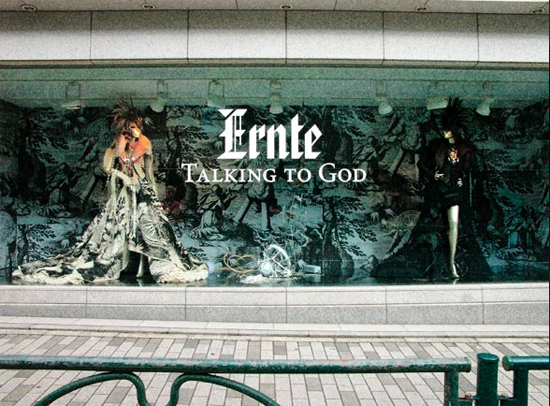
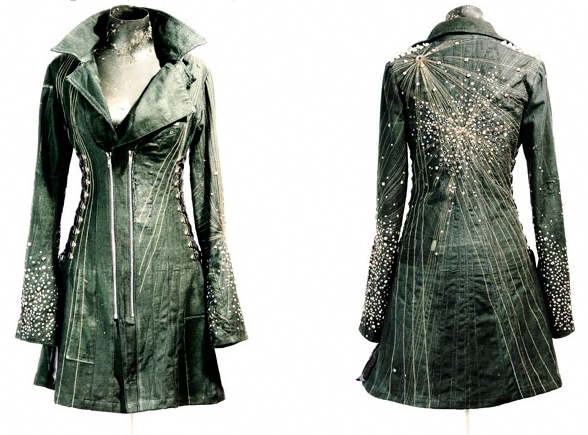
Which brings us back to fashion. In 2002, designers Cassidy Haley and Evan Sugerman, who’d met at Burning Man the year before, founded a fashion label called, Ernte. Two years later, Novoa joined Ernte Fashion Systems, parlaying the aesthetic vision she’d first developed for the circus stage into high fashion. Tragically, in October, 2007, at 32-years-old, Novoa suffered a fatal drug reaction while working in Bali, Indonesia. By then, Ernte had become a globally-renowned haute couture label, retailing in high-end boutiques like Maxfield in Los Angeles, Collete in Paris, and Loveless in Tokyo. Below are some shots of Novoa’s work:


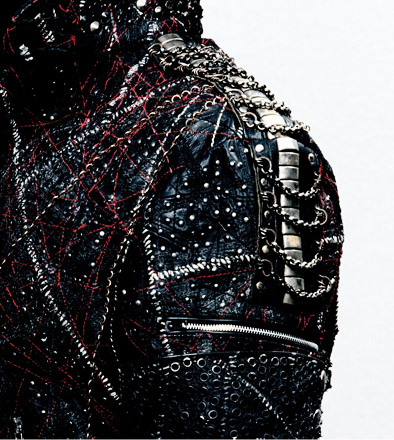
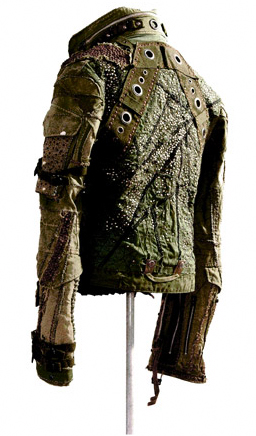
In 2005, Haley went on to form a new label, Skingraft Designs, with Jonny Cota, and later Katie Kay, who was a partner from 2007 – 2010. All three had circus pedigree. Cota and Haley had performed with El Circo, and Kay was one of the original members in Lucent Dossier, for which Haley and Cota would occasionally moonlight. Some of Skingraft’s early work is pictured below.


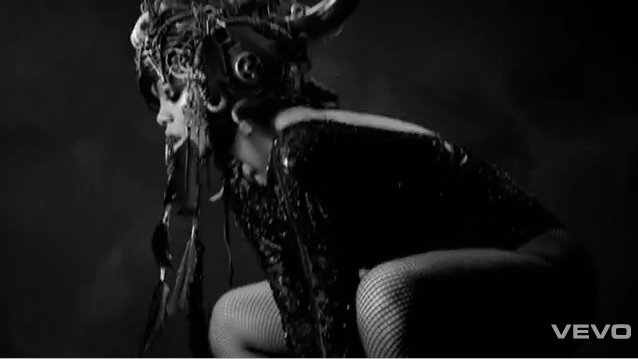
Since opening their flagship store in Downtown L.A., in 2009, Skingraft’s “post-apocalyptic couture” has graced the celebrity skins of Adam Lambert and The Black Eyed Peas. Rhianna wore a custom Skingraft headdress in her “Rockstar 101″ music video:

And both Britney Spears’ and Beyoncé’s most recent videos are dripping in Skingraft designs. As Skingraft has evolved into an established name within the vocabulary of Los Angeles fashion, countless other apparel designers with circus origins have sprung up in the wings, as it were.

Over the years since Tiffa first put feathers on the bodies of circus performers, inspiring others to follow suit, hundreds of thousands, if not millions have been exposed to the style at Burning Man, and the E3 gaming convention where El Circo would perform; at Coachella, and the Grammy’s afterparty, where Lucent Dossier performed; at countless night clubs stretching from the depths of Downtown L.A. up the length of the Pacific coast. Hollywood stylists partying on Saturday night woke up on Monday with new inspiration. And circus costumers became famed fashion designers. In the end, this cross-pollination laid the foundation for the exact kind of tipping point Malcolm Gladwell describes in his seminal, 2000 book exploring the social mechanics that lead trends to “tip” into mass, cultural phenomena. The Tipping Point begins with the words:

For Hush Puppies — the classic American brushed-suede shoes with the lightweight crepe sole — the Tipping Point came somewhere between late 1994 and early 1995. The brand had been all but dead until that point. Sales were down to 30,000 pairs a year, mostly to backwoods outlets and small-town family stores. Wolverine, the company that makes Hush Puppies, was thinking of phasing out the shoes that made them famous. But then something strange happened. At a fashion shoot, two Hush Puppies executives — Owen Baxter and Geoffrey Lewis — ran into a stylist from New York who told them that the classic Hush Puppies had suddenly become hip in the clubs and bars of downtown Manhattan. “We were being told,” Baxter recalls, “that there were resale shops in the Village, in Soho, where the shoes were being sold. People were going to the Ma and Pa stores, the little stores that still carried them, and buying them up.” Baxter and Lewis were baffled at first. It made no sense to them that shoes that were so obviously out of fashion could make a comeback. “We were told that Isaac Mizrahi was wearing the shoes himself,” Lewis says. “I think it’s fair to say that at the time we had no idea who Isaac Mizrahi was.”

By the fall of 1995, things began to happen in a rush. First the designer John Bartlett called. He wanted to use Hush Puppies in his spring collection. Then another Manhattan deisgner, Anna Sui called, wanting shoes for her show as well. In Los Angeles, the designer Joel Fitzgerald put a twenty-five-foot inflatable basset hound — the symbol of the Hush Puppies brand — on the roof of his Hollywood store and gutted an adjoining art gallery to turn it into a Hush Puppies boutique. While he was still painting and putting up shelves, the actor Pee-wee Herman walked in and asked for a couple pairs. “It was total word of mouth,” Fitzgerald remembers.

In 1995, the company sold 430,000 pairs of the classic Hush Puppies, and the next year it sold four times that, and the year after that, still more, until Hush Puppies were once again a staple of the wardrobe of the young American male. In 1996, Hush Puppies won the prize for best accessory at the Council of Fashion Designers awards dinner at Lincoln Center, and the president of the firm stood up on the stage with Calvin Klein and Donna Karan and accepted an award for an achievement that — as he would be the first to admit — his company had almost nothing to do with. Hush Puppies had suddenly exploded, and it all started with a handful of kids in the East Village and Soho.

How did this happen? Those first few kids, whoever they were, weren’t deliberately trying to promote Hush Puppies. They were wearing them precisely because no one else would wear them. Then the fad spread to two fashion designers who used to shoes to peddle something else — haute couture. The shoes were an incidental touch. No one was trying to make Hush Puppies a trend. Yet, somehow, that’s exactly what happened. The shoes passed a certain point in popularity and they tipped. How does a thirty-dollar pair of shoes go from a handful of downtown Manhattan hipsters to every mall in America in the space of two years?

Right now, the roosters know, but they’re not telling.

__________________________________

Special thanks for helping fill in the details and history for this post go to: Arin Ingraham, Siouxzen Kang, Marisa Youlden, and Cassidy Haley.


Subscribe for more like this.


Sex, Drugs, & The Internet – Inspired By A True Story

background

You know those movies about characters trail-blazing the business of some terrible vice? They’re always set in a not-too-distant past, have trailers full of period-specific songs, and include the words “inspired by a true story” on the poster. There’s the initial meteoric rise to power and wealth, followed by a period of unbridled excess — generally involving use of montage — and, ultimately, the inevitable downfall which was doomed to happen from the start, with, possibly, an epilogue of redemption. It’s a very specific film archetype, wherein the traditional bad guy is, instead, the quintessential American hero: the visionary entrepreneur who possesses the ingenuity and tenacity and just plain balls to seize an opportunity only he can see, and achieve a feat so stupendous — inventing the American cocaine trade, for instance, becoming the first black man to rise above the Italian mafia in the New York heroin business — you’re at once inspired and horrified by his success.

In 2001, Blow kicked off this trend of movies where you’re rooting for the drug dealer. The movie’s based on the life of George Jung, played by Johnny Depp, a Boston guy living in California, who starts off smuggling pot cross-country in the 60’s, and ends up becoming the American connection to Pablo Escobar’s Medellín Cartel, which, with Jung’s help, would go on to own 85% share of the U.S. cocaine market by the late 70’s / early 80’s:

.
Then came 2005’s Lord of War, in which the illicit contraband is weaponry, and Nicolas Cage plays Ukranian-American gun trafficker, Yuri Orlov — a fictional character based on a composite of a number of actual post-soviet arms dealers — whose big break comes as he watches Mikhail Gorbachev give his resignation speech on television, Christmas Day 1991. Like a prospector who’s just struck oil (See also: There Will Be Blood, for a variation on this cinematic theme), he envisions, in this moment, the future of his business expanding with the gush of weapons — even tanks! — he’ll now be able to buy (illegally) from the just-dissolved Soviet Union’s stockpile in the Ukraine:

.
2005 was also the year Weeds premiered on Showtime, in which Mary-Louise Parker plays a widowed housewife who becomes a suburban pot dealer, and a few seasons later ends up married to the head of a Mexican drug cartel.

By 2008, when American Gangster came out — which tells the story of Frank Lucas, played by Denzel Washington, who bypassed the entire Italian mafia to become the heroin king-pin of New York in the early 70’s by establishing his own direct supply connection in Asia during the Vietnam war and smuggling the drugs into the U.S. in the coffins of dead U.S. soldiers — rooting for the vice-peddling, psychotically enterprising, imminently doomed outlaw businessman — even though, good god! he’s a fucking heroin drug lord turning all of Harlem into addicted zombies!! — had become a familiar experience:

.
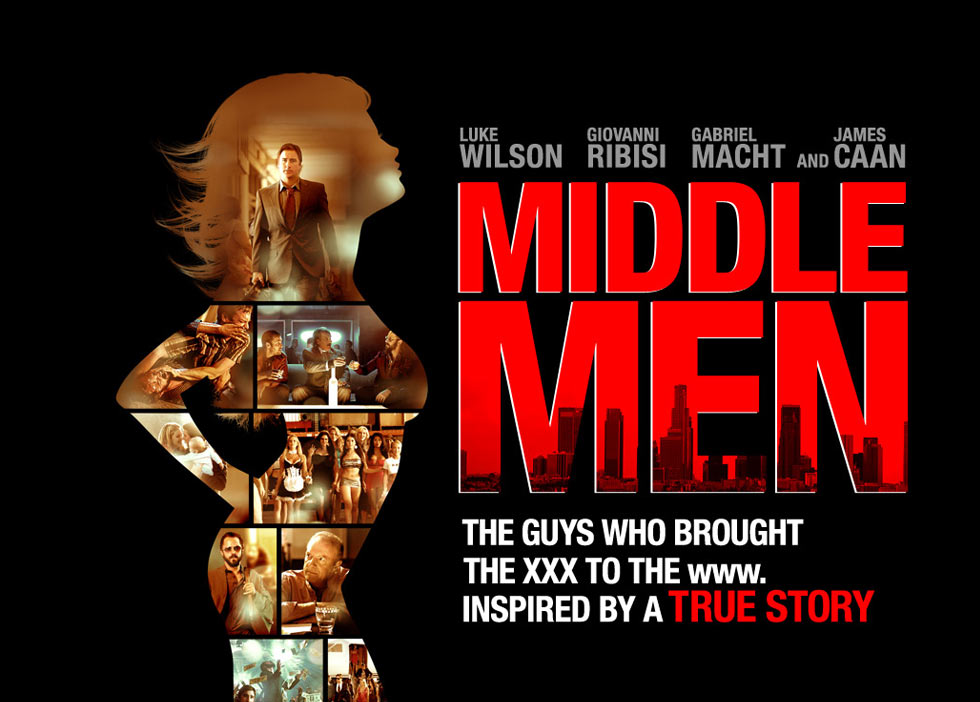
Which is how we arrive at Middle Men, due out later this year, a based-on-reality story in which Luke Wilson plays Jack Harris, a mainstream businessman who partners with a pair of porn content providers (played by Gabriel Macht and Giovanni Ribisi) to form the first online adult billing company in the mid 1990’s:

.

The drug dealer used to ALWAYS be the bad guy. You weren’t supposed to sympathize with him. Now it’s every fuckin’ movie like this. But the story isn’t just about the clever bastard with an idea for a supply to human nature’s demand, it’s about the vice itself. It’s not just George Jung’s story, it’s the history of blow we’re fascinated by — how a chance cell-mate pairing between a California pot smuggler and a member of the Medellín cartel would pave the way for the U.S. cocaine highway. How the Vietnam war became the camouflage for the heroin epidemic Frank Lucas created. How the Soviet Union’s collapse helped the business of illegal arms dealers. Each of these stories has this moment where entrepreneur and zeitgeist collide, and — for better or worse; mostly for worse — it changes the world. In Middle Men the focus of the story could have easily been the porn industry — but it isn’t. Porn is just the side effect. Like the preview voice-over announcer says, it’s the story of the worldwide web.

Finally.

It’s 2010. 20 years since the first web browser, 15 years since the first adult materials became commercially available online, 10 years since the dot com bubble burst, 5 years since MySpace was getting more page-views than Google, a year since Facebook overtook MySpace in unique visitors, and meanwhile, Americans now spend, on average, about as much time on the Internet as watching TV. In fact, if you’re under the age of 45, you spend considerably more time on the Internet than watching TV. Amid a global financial crisis, US online retail managed to grow 11% in 2009 to reach $155.2 billion. Overall online sales are projected to increase almost 200% between 2008 and 2012. 75% of us use social network sites. And the time we spend there is growing at 3 times the overall Internet rate, accounting for 10% of all Internet time — every second of which, by the way, 28,258 internet users are viewing porn.

Hollywood is finally catching on. Up next after Middle Men is the film adaptation of Ben Mezrich’s 2009 book, The Accidental Billionaires: The Founding Of Facebook, A Tale of Sex, Money, Genius, and Betrayal. It comes out just a couple of weeks after Wall Street 2:

article_image-image-article

Here’s an excerpt from the book:

What neither he nor Mark [Zuckerberg, Facebook founder] had known when they started the damn thing was how addictive Facebook was. You didn’t just visit the site once. You vsited it every day. You came back gain and again, adding to your site, your profile, changing your pictures, your interestes, and most of all, updating your friends.

… Most kids who tried out [Facebook] once tended to come back  — 67 percent every day.

The Internet: It might not be illegal, but it’s unquestionably addictive.

Once considered the province of geeks, the Internet is now where all of us live. It is a huge, enormous thing that is changing how we do practically everything and permeating the very experience of our lives. It is now all of our’s vice. And it’s breeding a whole new generation of vice entrepreneurs. Drug dealers and gunrunners have new company.

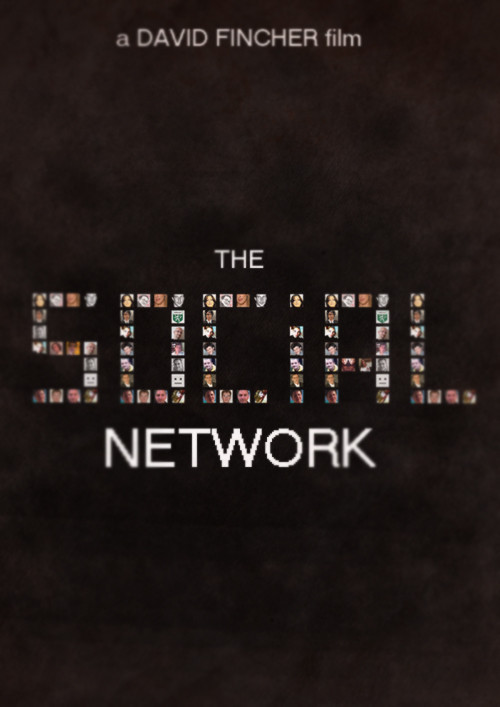
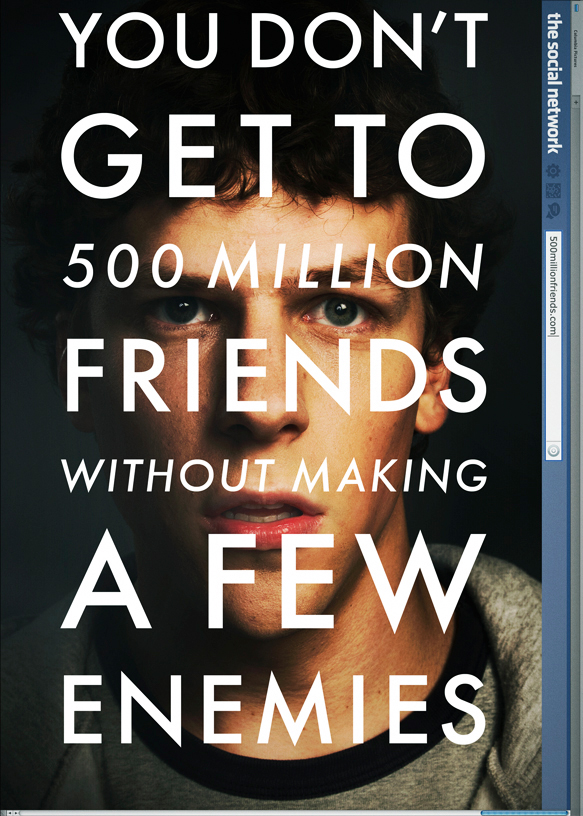
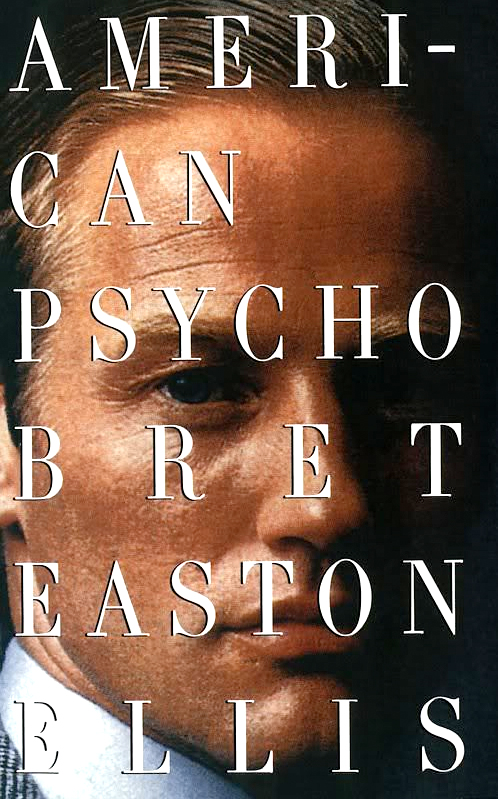
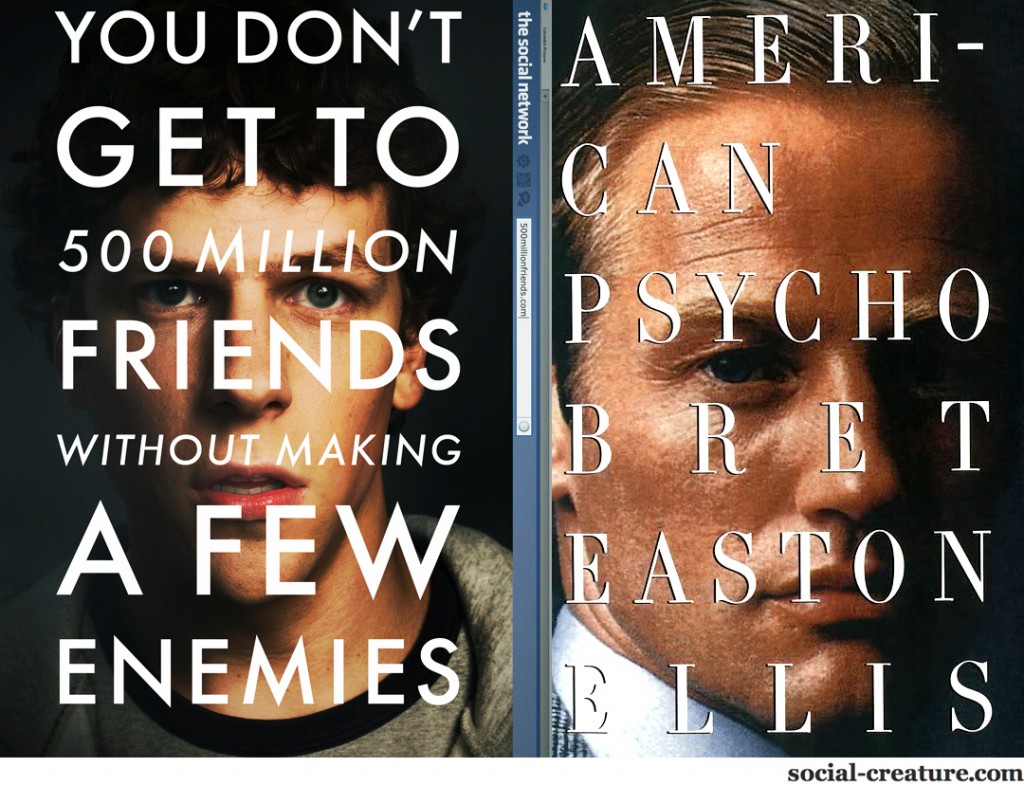
In related news, is it just me or does the new poster for The Social Network seem, like, awfully familiar?

http://social-creature.com/wp-content/uploads/2010/06/socialnetwork.jpg

.

http://social-creature.com/wp-content/uploads/2010/06/americapsycho.jpg

.

Just sayin’.

socialnetwork-americanpsycho


Subscribe for more like this.