Why Iron Man Is The First 21st Century Superhero

iron-man-downey-jr

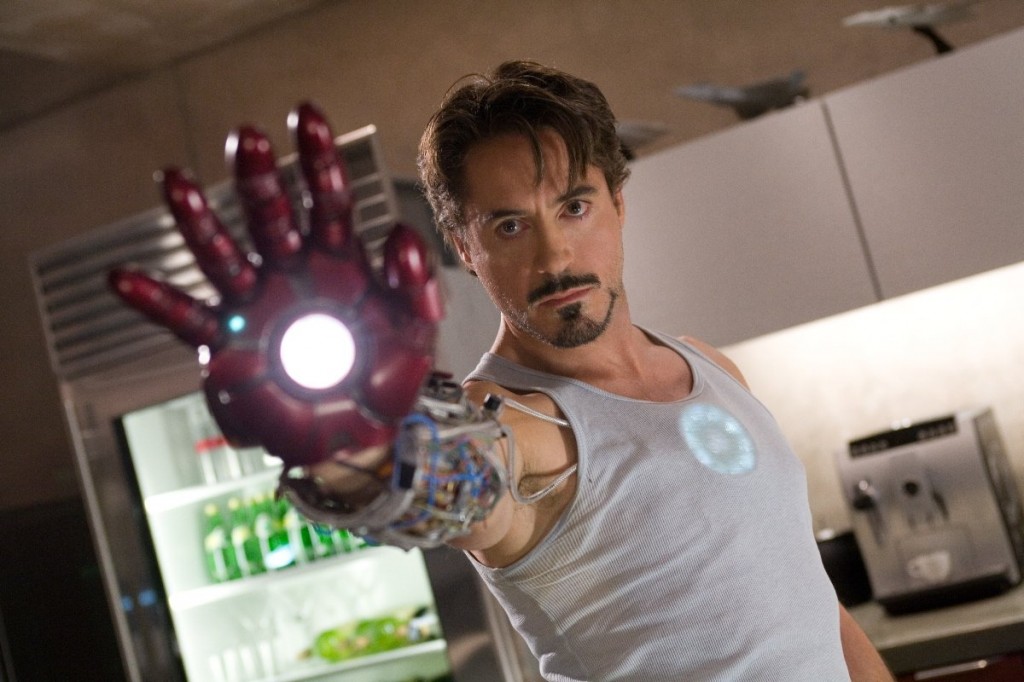
In 1938, on the eve of the Second World War, a relatively new medium called the comic book unleashed a new kind of character into the consciousness of American youth. Created by writer Jerry Siegel and illustrator Joe Shuster, this character possessed superhuman powers and a dedication to using those powers for the benefit of humanity. Often battling and defeating evil as hyperbolic as his own goodness, his iconic name would become the source of the term for this all-American archetype, the “superhero.” In the decades since Superman‘s arrival, innumerable variations on this theme have emerged, but always these characters have struggled under the weight of a concept about who they must be that was invented before television. For the past 70 years we have been living with a 20th century version of the superhero. Until now. Though the Iron Man character was originally created in the early 60s, his most recent incarnation, as played by Robert Downey Jr., and directed by Jon Favreau in the just released Iron Man 2, is really the first Millennial superhero.

The original Superman prototype possessed a key characteristic, one that his creators, first generation American sons of Eastern European Jewish immigrants, would have known something about, one that this “Man of Tomorrow” would pass on as part of his legacy to future generations of masked heroes: a secret identity. This trait would become an intractable part of the very definition of a superhero, as much a prerequisite for his mythology as extraordinary powers, or at least a flamboyant getup. And yet, in a press conference at the end of 2008’s first installment of the Iron Man franchise, Tony Stark announces to the world that he is Iron Man. This is where the sequel starts off. The need for a secret identity is gone. The entire world knows — and not because some tabloid uncovered the mystery man behind the mask, but because he just straight up told everyone. In the comic books, it took Stark 40 years to make this move. For Superman or Spiderman or Batman or virtually any other superhero from the prior century (save some like the X-Men) their secret identities were their most sacred possessions, the keys to their undoings, and they fought as hard to protect them as to save humanity itself. But in the 21st century, Tony Stark’s approach to privacy reflects how Millennials now think of the concept.

These days, the kind of stuff kids choose to reveal about themselves online is almost beyond comprehension. The latest social platform eroding the boundary between what was once strictly private and is now exposed to the world is Formspring.me, which the New York Times calls, “the online version of the bathroom wall in school“:

While Formspring is still under the radar of many parents and guidance counselors, over the last two months it has become an obsession for thousands of teenagers nationwide, a place to trade comments and questions like: Are you still friends with julia? Why wasn’t sam invited to lauren’s party? You’re not as hot as u think u are. Do you wear a d cup? You talk too much. You look stupid when you laugh.

Comments and questions go into a private mailbox, where the user can ignore, delete or answer them. Only the answered ones are posted publicly — leading parents and guidance counselors to wonder why so many young people make public so many nasty comments about their looks, friends and sexual habits.

Social media researcher danah boyd asked a similar question a couple of weeks ago:

This [behavior] has become so pervasive on Formspring so as to define what participation there means.  More startlingly, teens are answering self-humiliating questions and posting their answers to a publicly visible page that is commonly associated with their real name. Why? What’s going on?

While this particular trend is definitely a bit baffling, those of us that have grown up in the digital age have pretty much come to expect that the privacy arc of the internet is perpetually bending more and more towards greater disclosure. Privacy, as Facebook’s Millennial founder Mark Zuckerberg insists, is dead:

People have really gotten comfortable not only sharing more information and different kinds, but more openly and with more people. That social norm is just something that has evolved over time… But we viewed that as a really important thing, to always keep a beginner’s mind and what would we do if we were starting [Facebook] now and we decided that these would be the social norms now and we just went for it.

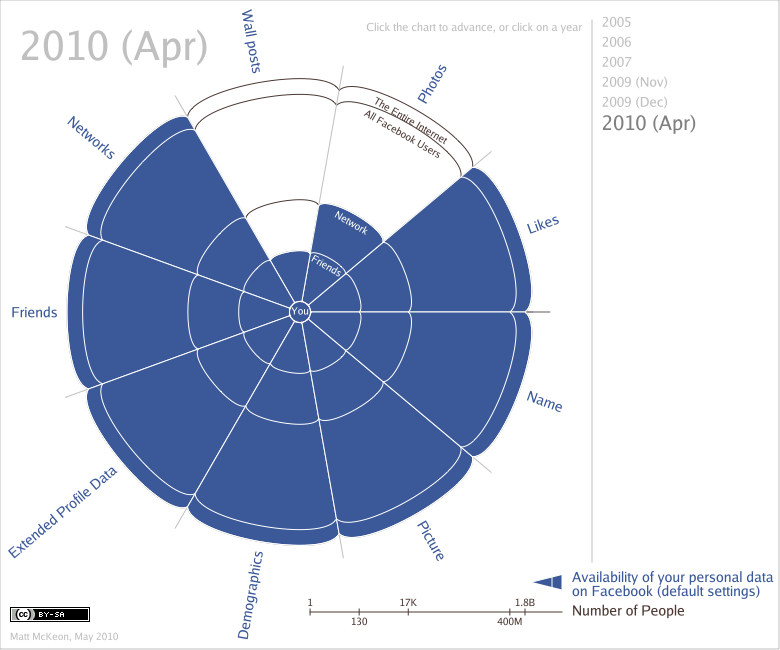
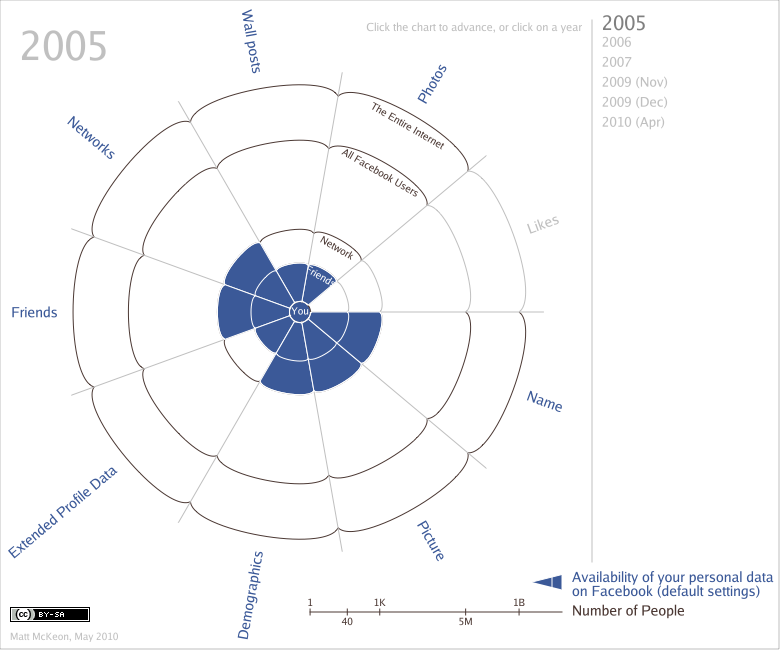
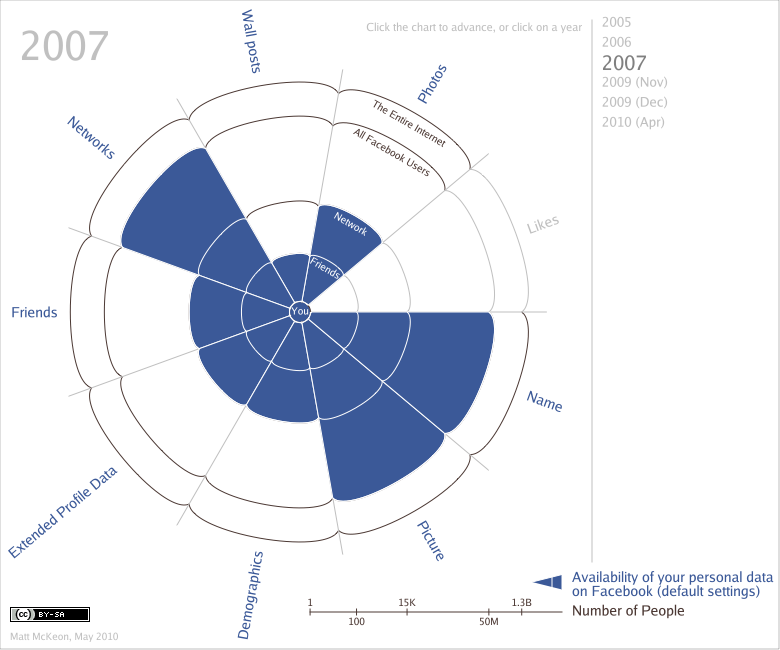
Here’s an interesting visualization of the Evolution of Privacy on Facebook, indicating how the website has let ever more of our information become increasingly public over the years:
bf05

fb07

fb10

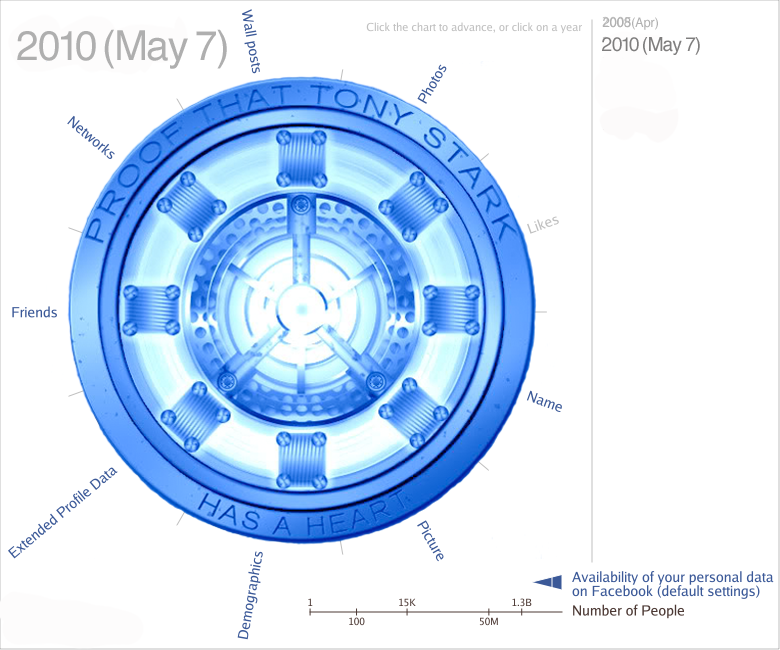
starkarc

Oh… wait a second, no, that last one is actually the arc reactor implant that’s keeping Tony Stark alive. But, no doubt, Skynet… err.. Facebook is intent on catching up to the full-pie version of the chart soon.

Anyway, Bruce Wayne, Clark Kent, Peter Parker, they were never prepared for this brave new networked world. Their entire way of being simply doesn’t fit anymore. Neither with Facebook and its social network platform ilk, nor the (*cough* relative) sensibilities of the Millennial youth who use it. For Tony Stark, transparency isn’t just relegated to the subject of his super-powered “alter ego,” it’s a pervasive part of his total personality, his way of being in the world. Stark is as blatant as his id, his mobile touch-screen device is actually, literally, transparent, allowing others to see everything he’s doing on it, every surface in his house seems to be equipped with touch-screen capabilities, his browsing activities public to anyone sitting nearby who cares to look. Zuckerberg himself likely couldn’t have dreamed up a more post-Privacy kind of superhero, one less conflicted about the disparate parts of his identity. With the death of privacy, you cannot be one thing in one context, and something different in another. You cannot be Clark Kent at the Daily Planet desk job, and then Superman on the night shift. You are exactly who you are to everyone at all times. Like no other superhero, Tony Stark’s identity isn’t conflicted. It’s absolute.

In her book Generation Me: Why Today’s Young Americans Are More Confident, Assertive, Entitled–and More Miserable Than Ever Before, psychology professor Jean Twenge writes:

It has always been normal for kids to have big dreams, but the dreams of kids today are bigger than ever. By the time kids figure out they’re not going to be celebrities or sports figures, they’re well into adolescence, or even their twenties.

High expectations can be the stuff of inspiration, but more often they set GenMe up for bitter disappointment. [The book] Quarterlife Crisis concludes that twenty-somethings often take a while to realize that the “be whatever you want to be, do whatever you want to do,” mantra of their childhoods is not attainable.

In the late 90’s, Tyler Durden, himself a sort of Gen X superhero — a transitional alpha version precursor to the Gen Y launch model, if you will — said it like:

We have no Great War. No Great Depression. Our Great War’s a spiritual war… our Great Depression is our lives. We’ve all been raised on television to believe that one day we’d all be millionaires, and movie gods, and rock stars. But we won’t. And we’re slowly learning that fact. And we’re very, very pissed off.”

Even in the throes of the economic crisis, my generation hasn’t really had a Great Depression either — though we did come this close. And even after 9/11 my generation hasn’t had a Great War. The world is now far too mind-numbingly complicated and complex to even have a clear concept of a single, monolithic Evil to fight. The “heroes” of my generation, the ideals that kids look up to and wish to be like, haven’t been men of steel battling evil for a long time, they are now, like Durden says, millionaires and rock stars. And that is precisely what 21st Century Tony Stark is. After he comes out of the closet (or, more accurately, the basement science lab) as Iron Man, he becomes a worldwide celebrity, a household name. Even the migrant worker he stops to buy strawberries from on the Pacific Coast Highway asks, “Are you Iron Man?” like he’s recognized a movie star.

And unlike Superman or SpiderMan or Batman or any other major superhero before him whose truth the world was not yet ready to handle, Tony Stark answers casually, “Sometimes.”

Perhaps that’s the other side of what allows a 21st century superhero to be transparent. The modern world can accept him as such. Gen Y is a lot more tolerant of lifestyle differences than prior generations, after all. The X-Men didn’t hide that they were different, either, but then again, they COULDN’T hide it — looking like Beast or Nightcrawler, or having Rogue or Cycolps’ particular mutations, you couldn’t just “pass” in normal society — and the humans the X-Men fought to protect could never accept them for being what they are. Not so in the world of Tony Stark. He’s no mutant. No outcast. He’s the most popular kid in school. The late DJ AM even spins at his birthday bash. The 21st century Tony Stark reveals to the world he is Iron Man, and the 21st century world says…. Awesome!

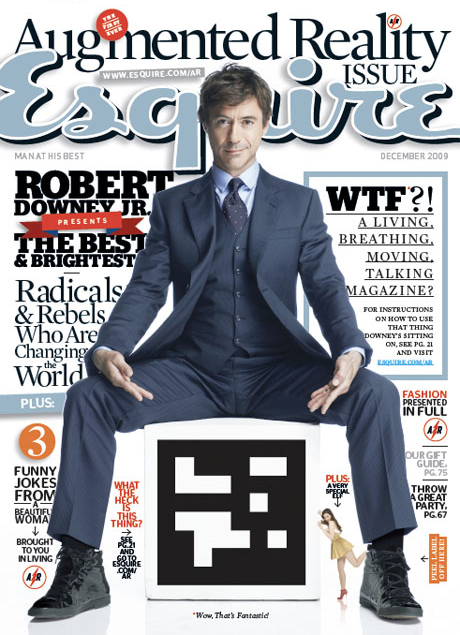
In the past, being a tech entrepreneur-slash-engineer, as Tony Stark is, would have made him a nerd, or otherwise Bruce Wayne, still stuck in the previous millennium, putting on a show of  irresponsible playboy-ness to deflect attention from both his morbidly serious crime-fighting alter ego and his humorless tech geek underbelly. Like, remember when no one would have wanted to sit at the lunch table with kids who talked about stuff like “augmented reality”?
esquire-augmented-reality-cover-robert-downey-1209-lg

Yeah, not so much, anymore. In the  21st century, being a tech geek no longer detracts from the image of a bad-ass or a dilettante. James Bond and Q have combined into one seamless character. It’s 2010, and geeks are cool! Hell, we’ve even got one as President.

While both Wayne and Stark are surrounded by high tech everything, for the 20th century hero all the gadgetry is just a means to an end. Even the Batmobile is ultimately just a flashy tool. Same could technically be said about the iPhone, but who would? In the post-iPod era we have a very different relationship with our technology. Our favorite tech objects aren’t just for utilitarian application, they’re obsessed over, fetishized, loved. It’s why Gizmodo would pay $10,000 for an exclusive scoop on an in-production, “lost” 4g iPhone, and why an enormous global audience would give a crap. When Stark says in the movie that the Iron Man suit is a part of him, that he and it are one, we all intimately understand exactly what he means even if the rest of us don’t actually literally plug our gadgets into our chest cavities.

After a raucous birthday party in which we see Stark, in full Iron Man gear, getting shitfaced and acting the fool, (he’s dying at the time, and feeling a bit of the nothing-really-matters mortality blues — being dissolute and apathetic, itself, unusually postmodern behavior for a superhero), S.H.I.E.L.D. agency director Nick Fury (played by Samuel L. Jackson) “grounds” the hungover superhero by sequestering him in his house with all access to communication with the outside world cut off until he solves a theoretical physics problem. This superhero’s punishment is having his phone and internet privileges revoked and being sent up to his room to finish his math homework. There isn’t a single one of the 60 million American Millennials that doesn’t relate to this.

When Favreau was looking for a 21st century industrialist corporate executive to use as a model for his and Robert Downey Jr’s interpretation of Tony Stark, he sought out Elon Musk, co-founder of paypal. Musk even has a cameo in the movie, chatting Tony up about an electric rocket, a concept referencing Musk’s current endeavors, Tesla Motors, which produces fully electric sports cars that rival Porsche in performance, and SpaceX, a private aerospace company working to invent the first reusable rockets, which would dramatically reduce costs and eventually lead to affordable space-travel. This dude is the inspiration for the 21st century version of Stark.

So what’s Tony Stak’s inspiration? Why does he do what he does? There was no childhood trauma that drove him to caped crusading. He wasn’t raised by adoptive Earth parents who imbued him with a strong moral compass during his formative years on a farm in the American Heartland. Sure, ok, he underwent a certain crisis of conscience in his 40s after escaping from a terrorist hostage situation in Afghanistan, shutting down the weapons manufacturing division of Stark Industries and all, but still, why does he take it so much further, going so far as to “privatize world peace.” …. For the thrill of it! As he himself says, he keeps up the good fight at his own pleasure, adding, “and I like to pleasure myself often.” Unlike the prior century’s superhero, this new version saves the world not out of any overwhelming sense of obligation or indentured servitude to duty, but because he can do what he wants, when he wants, because he wants to, and most importantly, he GETS what he wants. Sure he has to work for it, but unlike with, say, Peter Parker and Mary Jane or Clark Kent and Lois Lane or even Buffy and Angel, what he wants isn’t perpetually out of his grasp just because he is who he is. Being Iron Man isn’t a burden, it’s an epic thrill-ride.

The first 21st century superhero is a hedonistic, narcissistic, even nihilistic, adrenaline junkie, billionaire entrepreneur do-gooder. If Peter Parker’s life lesson is that “with great power comes great responsibility,” Tony Stark’s is that with great power comes a shit-ton of fun.

You can’t get any more Gen Y than that.

Welcome, 21st Century superhero, my generation has been waiting for you.


Subscribe for more like this.


Microsoft gets aKin to Circus

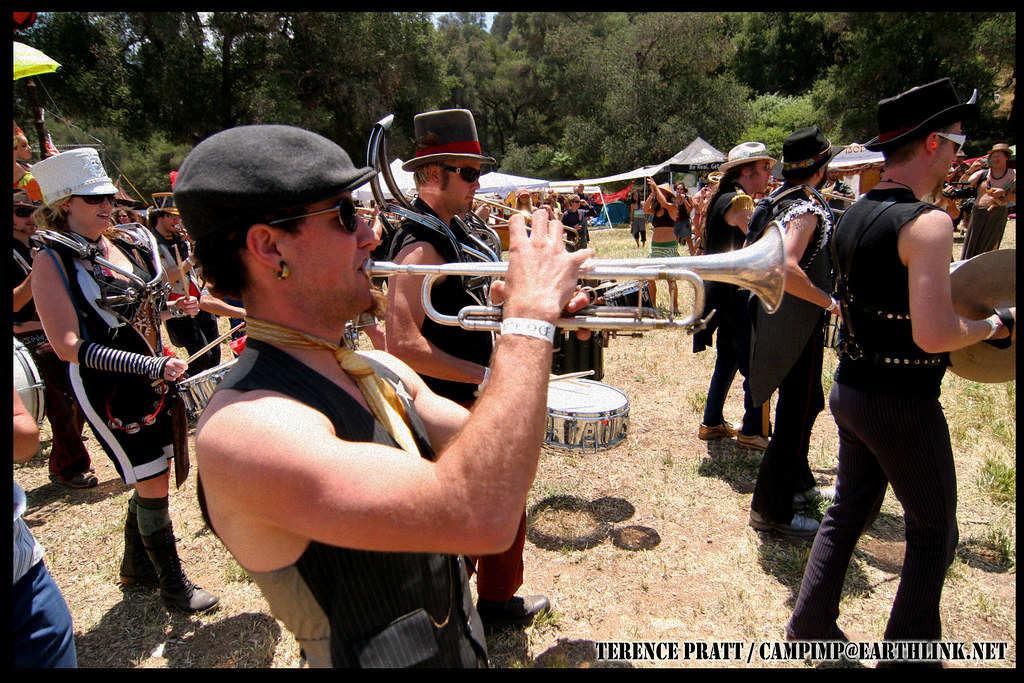
While everyone else is busy speculating about the potential significance of Microsoft’s new mobile contender, the Kin, I just discovered last night that I am much more interested in the content of their new ads, namely Portland’s March Fourth Marching Band, who’ve been repping it for the Northwest Contingent of the 1-5 Circus Scene since 2003, and who performed at an independent music festival I helped produce back in 07 (pictured above doing just that, and below, adding some cool for Microsoft):

.

Interestingly enough, the ad is called “Day in The Life.” And for a certain subculture, this pretty much is. Haven’t written too much about the Circus scene’s influence in the pop landscape since Britney’s last album a couple years ago. By no means surprised to see Oops! It’s doing it again.


Subscribe for more like this.


Social, Super-Sized

3522353676_52e28e4e41_b
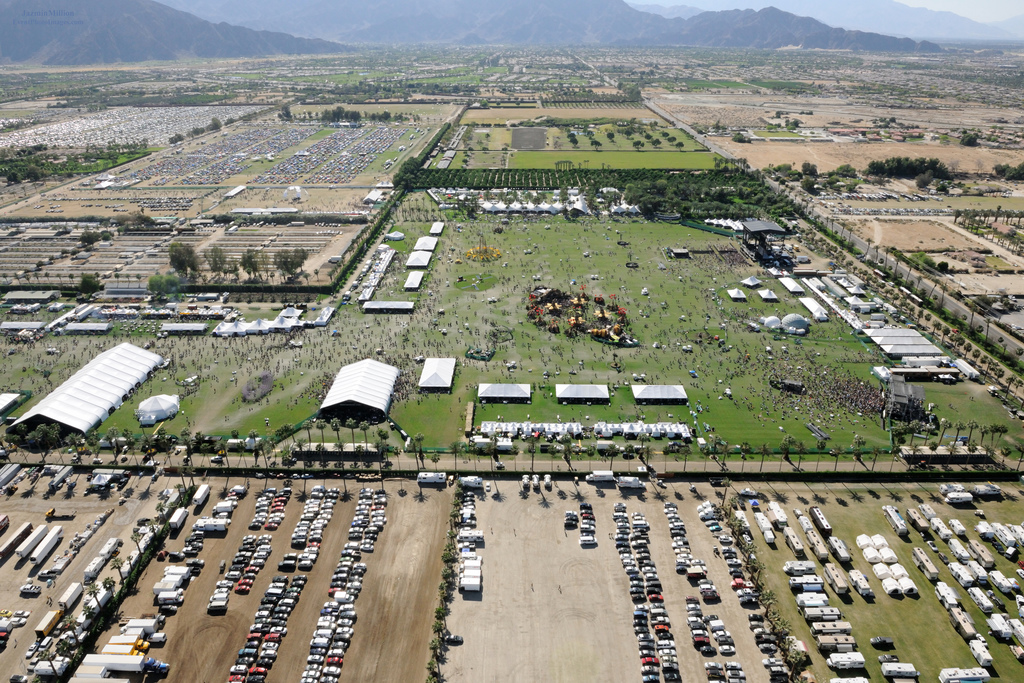
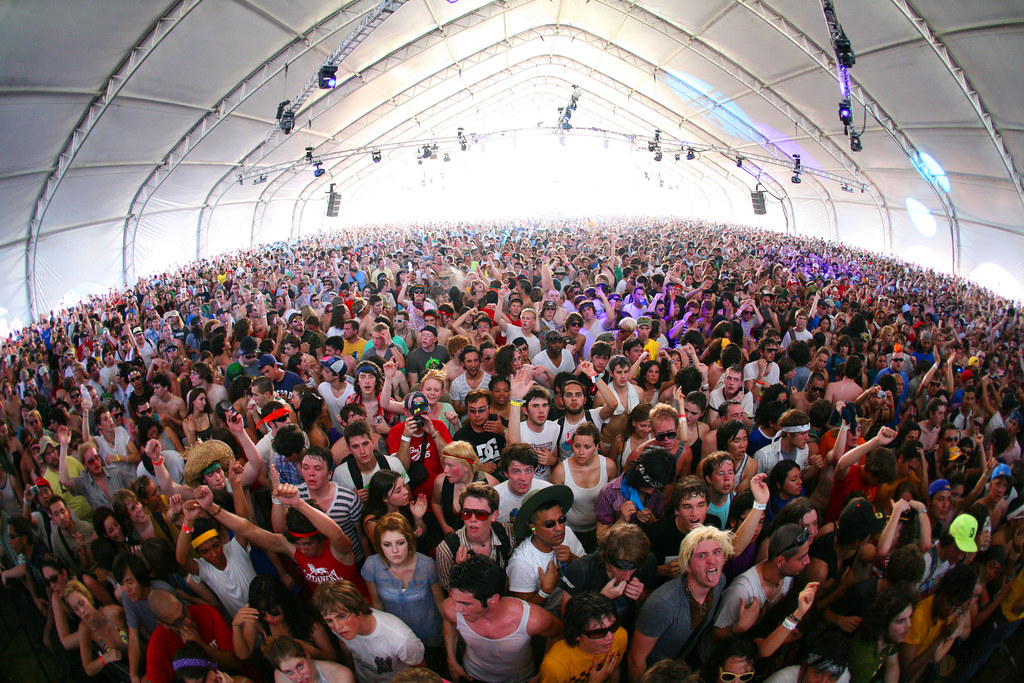
Aerial shot of the Coachella Arts & Music Festival (photo: Jazmin Million)

.

“God is alone — but the devil, he is far from being alone; he sees a great deal of company;
he is legion.”
– Henry David Thoreau, “Solitude,” Walden, 1854

Standing on the field at Coachella 2008, the endless noise and heat like physical things pushing and shoving in a mosh pit, the blast clouds of music spilling out from monolithic stacks of speakers across four hundred acres, the polo field crawling like an ant-farm with a hundred thousand bodies, it suddenly occurred to me that the only historical precedent for this sort of massive concentration of people and resources and infrastructure in one place at one time had to have been… war.

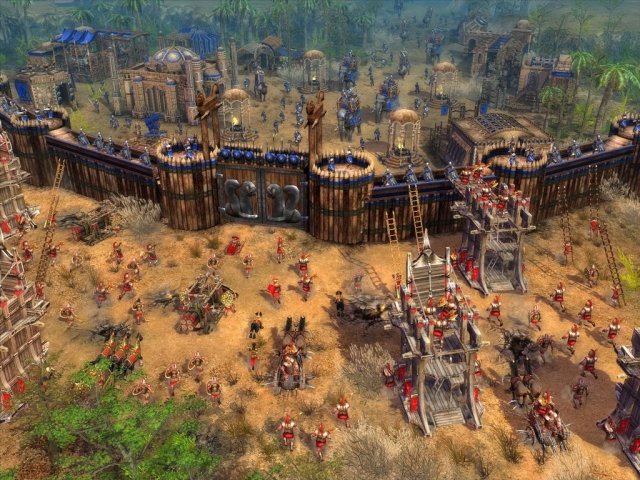
I’d only slept a few hours the previous night, been up since early enough to hear Prince’s sound-check as the score to the start of my workday, and looking through the 100+ degree Palm Sprigs haze that afternoon under the sweltering sky, I imagined ancient Greek or Roman or Macedonian battlegrounds and thought they might not have looked too different.

skan1-640

In college I’d started throwing raves; at the turn of the millennium I was part of the promotions team at New York’s iconic Lunatarium, a 20-thousand square foot warehouse space in DUMBO dubbed “the studio 54 of the moveon.org crowd” by the New York Times; by the mid-aughties I’d been the Online marketing Coordinator for House of Blues Concerts in Southern California, led the social media strategy for Live Nation’s Street Scene Music Festival in San Diego, consulted on web strategy for the Bonnaroo Festival in Tennessee, and at the moment of that heat-stroked revelation on the Empire Polo Field was the Marketing Director for an independent event creations company which, in addition to Coachella, that summer would also work with the Rothbury Music Festival in Michigan, Optimus Alive Festival in Portugal, All Points West Festival in New York, the Virgin Music Festival in Baltimore, Electric Picnic in Ireland, and finish off the season with a stint at Burning Man.

Needless to say, this wild proliferation and growth of massive music festivals over the past decade was something I’d noticed. Yet at the same time that I was in the front row seat at the concert industry, my career also overlapped with the ascension of social technology. At the time, already anachronistic phrases like “new media,” and “electronic marketing” were still being tossed about to describe my inevitable department. Just the year before, at SXSW Interactive 2007, when Myspace was still king of the web and Facebook was just a college dorm and the newly-launched Twitter was yet to be anything but the geeks’ private playground, there were still panels called things like, “Why Marketers Need To Work With ‘People Media’“. Hard to imagine now that just a few years ago the term “Social Media” had barely entered the mainstream marketing lexicon. Witnessing the rise in demand for massive music festival experiences and the mass adoption of digital and social technologies, it occurred to me that these two seemingly disparate forces were not only gaining traction in tandem, they were, in fact, both part of a far lager and more meaningful societal shift.

Mass Mingling” is what trendwatching.com called it, one of their “10 Crucial Consumer Trends For 2010:”

More people than ever will be living large parts of their lives online in 2010. Yet, those same people will also mingle, meet up, and congregate more often with other ‘warm bodies’ in the offline world. In fact, social media and mobile communications are fueling a MASS MINGLING that defies virtually every cliché about diminished human interaction in our ‘online era’.

So, forget (for now) a future in which the majority of consumers lose themselves in virtual worlds. Ironically the same technology that was once seen to be—and condemned for—turning entire generations into homebound gaming zombies and avatars, is now deployed to get people out of their homes.

Basically, the more people can get their hands on the right info, at home and on the go; the more they date and network and twitter and socialize online, the more likely they are to eventually meet up with friends and followers in the real world. Why? Because people actually enjoy interacting with other warm bodies, and will do so forever.

At SXSW Interactive 2010, convincing marketers that they need social media would have been about as necessary as convincing them they live on a round planet. Attendance for Interactive grew by 40% in the past year alone, and for the first time surpassed that of both the film and music portions of the festival. This year, the hot new thing getting everyone’s panties in a twist was location-based social technologies like Foursquare and G0walla, which add a real-time, real-place dimension to social media. You’re not just keeping up with your friends’ status updates or photo uploads anymore, you’re now actually aware of where they are in relation to you geographically — and perhaps it’s at the bar next door, which you may never have known otherwise, but now that you do, you can all meet up. Much of the appeal of these new location-based social applications is the alleviation — or perhaps the compulsive exacerbation — of FOMO (“fear of missing out”) on ever more potential social opportunities.

But what’s interesting to me in all this isn’t that, social creatures such as we are, we’re using yet more new technology to enable evolutionary imperatives — so, we’re using new gadgets to scratch the itch of 200,000-year-old human desires, and this is a new trend for 2010 why? — but rather that, much like music festivals themselves, our new social experiences seem to be happening at a consistently unprecedented scale. We are no longer content to have social experiences, we want bigger, faster, louder, immediate, MASSIVE social experiences. The kind of resources that thousands of years ago would have been summoned for the purpose of defending an empire, and decades ago for a singular moment in the Summer of Love, are now routinely assembled every weekend of the annual music festival season that is summer.

In his essay in The Chronicle of Higher Education entitled “The End of Solitude,” former Yale professor William Deresiewicz writes:

Technology is taking away our privacy and our concentration, but it is also taking away our ability to be alone. Though I shouldn’t say taking away. We are doing this to ourselves; we are discarding these riches as fast as we can. I was told by one of her older relatives that a teenager I know had sent 3,000 text messages one recent month. That’s 100 a day, or about one every 10 waking minutes, morning, noon, and night, weekdays and weekends, class time, lunch time, homework time, and toothbrushing time. So on average, she’s never alone for more than 10 minutes at once. Which means, she’s never alone.

I once asked my students about the place that solitude has in their lives. One of them admitted that she finds the prospect of being alone so unsettling that she’ll sit with a friend even when she has a paper to write. Another said, why would anyone want to be alone?

There is an analogy, it seems to me, with the previous generation’s experience of boredom. The two emotions, loneliness and boredom, are closely allied. They are also both characteristically modern. The Oxford English Dictionary’s earliest citations of either word, at least in the contemporary sense, date from the 19th century. But the great age of boredom, I believe, came in with television, precisely because television was designed to palliate that feeling. Boredom is not a necessary consequence of having nothing to do, it is only the negative experience of that state. Television, by obviating the need to learn how to make use of one’s lack of occupation, precludes one from ever discovering how to enjoy it. In fact, it renders that condition fearsome, its prospect intolerable. You are terrified of being bored — so you turn on the television.

So it is with the current generation’s experience of being alone. That is precisely the recognition implicit in the idea of solitude, which is to loneliness what idleness is to boredom. Loneliness is not the absence of company, it is grief over that absence. If boredom is the great emotion of the TV generation, loneliness is the great emotion of the Web generation.

Young people today seem to have no desire for solitude, have never heard of it, can’t imagine why it would be worth having. In fact, their use of technology — or to be fair, our use of technology — seems to involve a constant effort to stave off the possibility of solitude. As long ago as 1952, Trilling wrote about “the modern fear of being cut off from the social group even for a moment.” Now we have equipped ourselves with the means to prevent that fear from ever being realized. Which does not mean that we have put it to rest. Quite the contrary. Remember my student, who couldn’t even write a paper by herself. The more we keep aloneness at bay, the less are we able to deal with it and the more terrifying it gets.

Which is why massive festivals have exploded like manic Murakami mushrooms after a radioactive rain. Having produced and marketed music festivals I am keenly aware that it’s not just the lineup that sells the ticket. “The Internet is as powerful a machine for the production of loneliness,” adds Deresiewicz, “as television is for the manufacture of boredom.” The same technology that allows us to be more connected than ever before, on its flip side, perhaps even simply through contrast, has increased our capacity for loneliness. We have built up a new tolerance level, and all we do is want more, more, more. Hence the compulsive need to feel a part of something, something massive, surrounded by hundreds of thousands of other people, all experiencing the same trending topic together as it scrolls by. Of course, it helps that adding music to the cocktail lends a self-transcending aspect to the experience — as does rolling or tripping or being stoned or drunk, which, lets face it, you probably are if you’re at a festival. Taking part in these massive social experiences has become a default rite of passage, an almost religious annual ceremony, and, perhaps, an addiction like any other, demanding we keep upping the dose at every tinge of the creeping withdrawal that is loneliness.

So, as the legions prepare to head to the desert this weekend to score a fix at the kickoff to the annual music festival season (the first of the 2010’s) that is Coachella, and as the rest of us, too, keep tap tap taping our QWERTY keys and touchscreens like pushing the air-bubbles out of a syringe, Deresiewicz reminds us: “We are not merely social beings. We are each also separate, each solitary, each alone in our own room, each miraculously our unique selves and mysteriously enclosed in that selfhood. No real excellence, personal or social, artistic, philosophical, scientific or moral, can arise without solitude. To remember this, to hold oneself apart from society, is to begin to think one’s way beyond it.”


Subscribe for more like this.


All Your Music Are Belong To Us


(photo: Mick O )

.
“They say the music business is in trouble. No! The business of selling CDs is in trouble; this is a religion.”
Michael Rapino, CEO, Live Nation

I was in the weekly Southern California marketing meeting at House of Blues the morning it was announced that Tower Records was going out of business. It was a Friday in 2006, and the marketing departments from LA, Anaheim, and San Diego were all on the conference line. The moment I heard the news I wanted to get up and cheer, but as I looked around I saw only fallen faces. The other cities on the call were silent. A mourning pall had fallen over the rest of the room, but all I felt was a complete excitement. I was the youngest person there.

When I was in high school my friends started burning CDs with mp3s. In June of 1999, same time as I was walking up in my cap and gown to accept my high school diploma, a kid at Northeastern University unleashed Napster into the world. It was a few months later, when I got to college at Boston University, just a few miles up the road from Northeastern, when I first heard about this program everyone was using to find and share music. College has always been the setting for waves of new discoveries, from drugs, to new perspectives. At the fin de siècle, what most of us encountered for the first time in the dorms was high-speed internet, the gateway drug to more hardcore file downloading. Napster spread like wildfire across Boston campuses, and then beyond. At first it never occurred to us that there could be anything wrong about using it. The arrival and adoption of Shawn Fanning’s creation was so inextricably linked with my and my cohort’s transition from high school to college, it seemed like just another new thing that being 18 gave you access to, like nightclubs, or cigarettes. It felt like such a natural technological progression that when Napster was ultimately forced to shut down in 2001 it was hard not to see it as a devolution. That a fellow student’s invention had been deliberately destroyed was a lot easier to understand than the reasoning of the faraway, suddenly ominous music industry. It had the feeling of repression, an attack on innovation itself, let alone on the access it offered, and it left a bad aftertaste.

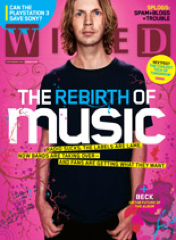
By the time I was out of college and working in the concert industry it had long become clear that shutting down the iceberg had not saved the Titanic. Things had vastly deteriorated. In the depths of the music industry’s despair, the October 2006 issue of Wired Magazine dared boldly proclaim that “The Rebirth of Music” was nigh:

wiredRecord labels have always been the center of gravity in the industry – the locus of power, ideas, and money. Labels discovered the talent, pushed the songs, and got the product on the air and into stores. The goal: move records, and later, CDs. “The labels were never in the business of selling music,” says David Kusek, vice president of Boston’s Berklee College of Music and coauthor of The Future of Music. “They were in the business of selling plastic discs.”
The articulation of this concept of music that could exist on its own, liberated from CDs, or any other physical medium, expressed how I, and my generation, had already understood music to be. When Tower Records announced it was going out of business that Friday morning, the first thing I could think was:

The Future is here!

It was the same month as the “Rebirth of Music” issue came out.

Of course, my desire to celebrate upon discovering music was, indeed, about to be reborn out of the ashes of CD stores was completely out of sync. For everyone else in the room — even though we, ourselves, were in the business of selling something that didn’t come on a plastic disc — it was like the day the music died.

But wait, let’s back up a few months. In the Summer of 2006 Live Nation bought House of Blues. After separating from parent company Clear Channel the year before, the concerts division was rebranded Live Nation, and went on a shopping spree like it was Google. From fan club operator Musictoday, to music merchandising company Trunk LTD, to, seriously, countless concert promotion companies and music festivals around the world, if you were sitting still for too long, Live Nation would buy you. Towards the end of the year, on the eve of the House of Blues merger approval, we gathered for a series of company-wide conference calls with Michael Rapino, the CEO steering the company in this new direction, and it was on these calls that I heard, for the first time, someone in our business who not only saw the same future that I (and Wired) expected, he understood exactly what it meant.

In October 2007, a year after Wired’s augury, and after 25 years at Warner Brothers Records, which had release all of her albums up till then, Madonna left the label to sign a $120 million “360 degree” deal with Live Nation. In addition to operating the world’s highest-earning female singer’s tours, which it had already been doing, Live Nation would now also be handling her albums, merchandising, film and TV projects, DVD releases, music-licensing agreements and more, and getting a cut of all of it, hence “360.” This move was so revolutionary that most people didn’t even get it. According to a Fortune article, in November 2007, Live Nation’s stock sagged 30% after news of the Madonna deal. The myopic reaction — based on an understanding of the music industry as defined solely by the already broken record label model in which dumping dollars into artists was nothing but a sure loss — prompted an emergency presentation to analysts and investors, with Rapino having to actually explain how this was an entirely different approach, and why it made sense. “Of course [analysts] have to go out and tell the world we overpaid,” Rapino said in the article, “And we did overpay, if you’re just buying the record. But when you’re buying all those rights, it’s a beautiful deal.” If Madonna does four tours and three albums with revenues comparable to her recent output, it was projected the contract would pay for itself in 10 years with profits from merchandise, sponsorships, DVDs, and on and on.

In a statement issued at the time of the deal, Madonna said: “The paradigm in the music business has shifted and as an artist and a business woman, I have to move with that shift. For the first time in my career, the way that my music can reach my fans is unlimited. I’ve never wanted to think in a limited way and with this new partnership, the possibilities are endless. Who knows how my albums will be distributed in the future?”

But you know what? Who cares how? How had stopped mattering anymore. Under this model, every downloaded song would become not an act of theft, but a process of promotion for all the other things that couldn’t be copied online. As Madonna’s manager, Guy Oseary said in the Wall Street Journal, “In the past, people would tour to promote their albums; today they put out albums to promote their tours. The pendulum has swung, and Live Nation is at the forefront of touring.”

Unlike so much else in the music industry, this arrangement actually works in both the suits’ and the artists’ favor. To a large extent, the interests of artists and their concert promoters are already far more closely aligned than with their labels, and to drive this point home, as part of the deal, Madonna got equity in Live Nation to the tune of 1.7 million shares. A mutual investment between artist and industry is a complete turnaround from the label relationship, which has generally consisted of record companies tossing artists onto the sacrificial fire, hoping to gain favor with the gods. By now, three years later, U2, Jay-Z,  Shakira, and Nickelback have also eschewed the traditional record label route for similar kinds of deals with Live Nation, and no doubt more are to come.

But record labels aren’t the only middlemen Live Nation has sought to remove from the equation. On those company-wide calls in 2006, Rapino talked about the importance of owning the relationship with music fans directly, which included the ticket purchase process itself.  The contracts with Ticketmaster for both Live Nation and House of Blues were to be up within a couple of years at the time of the merge, and they would not be renewed. The idea was for concertgoers to start buying tickets directly from livenation.com, but from the very beginning there was a much greater goal as well. In 2007, Live Nation began experimenting with a program called OPEL — Open Platform Event Listings. Promoters for venues not operated by Live Nation, i.e. its competitors, were invited to have their events listed on livenation.com as well. The program never got too far off the ground (no doubt, for reasons that will become obvious below), but by the time the contract with Ticketmaster finally expired last year, it was already clear that Live Nation’s moves were about far more than even just owning its own vertical ecosystem.

The schism between Ticketmaster’s largest account by far, and Live Nation’s relationship with a company that already had the massive ticketing infrastructure it needed, made it a no-brainer that within just two months of this trial separation Live Nation would seek to buy Ticketmaster outright. Last week, the Department of Justice finally approved, with some concessions, the first big merger of the Obama administration.

Todd Martens writes on the LA Times Music Blog:

In the wake of the Department of Justice giving the green light to a merger between promoter/venue owner Live Nation and ticketing agency/management firm Ticketmaster Entertainment, Mitchell Frank, [owner of  Spaceland Productions, which promotes events at three independent LA venues] suddenly finds himself in the unenviable position of making money for the competitor.

Spaceland Productions has 15 months, Frank said, remaining on an exclusive contract with TicketWeb, the once-indie ticket seller now owned by Ticketmaster. “To make money for that behemoth, it turns my stomach,” Frank said. “I’m an indie promoter, and that’s what I do. So it’s kind of tough to give money to the mother ship.”

Frank was interviewed by the Justice Department and expressed concerns that he said appear to have gone unheard, largely that an approved partnership would have him working — and potentially providing information for — his competitor.

The newly formed Live Nation Entertainment… has the ability to book concerts, sell tickets and merchandise, and, with management company Front Line, direct access to such name acts as the Eagles, Jimmy Buffett, Neil Diamond, Van Halen, Fleetwood Mac, Christina Aguilera and more.

“That’s where the concern is,” said Jordan Kurland, whose Zeitgeist Management represents Death Cab for Cutie, She & Him, Grizzly Bear and more. “When you look at the intersection of Ticketmaster, Live Nation and Front Line? Information is power, and they will have a lot of it.”

Addressing the company’s vertical integration powers would have been a near impossibility, said one Washington, D.C.-based antitrust expert familiar with the proceedings. Many, including Mickelson in the Tribune, have cited the 1948 U.S. Supreme Court antitrust decision against Paramount Pictures, which essentially stated that Hollywood studios could not also own the theaters that had exclusive rights to show their films.

“The courts have been very favorable to vertical integration for 40 years,” said the antitrust expert, who agreed to speak only on condition of anonymity. “I like going back to Paramount vs. U.S. also, but that’s a very old case, and there have not been any vertical mergers blocked in about 40 years.”

In 2008, Ticketmaster had a market share of more than 83% for major venues, according to concert-industry tracking publication Pollstar. Its nearest competitor’s share was just under 4%. The Department of Justice said that breaking up prior contracts with Ticketmaster and TicketWeb would have done little to preserve competition in the ticketing space, adding that “a lot of the [venues] would not have wanted that.” The department estimates that 20% of Ticketmaster’s exclusive arrangements will expire each year and intends for venues and promoters to have more options when they do. In the meantime, however, Ticketmaster already retains information such as emails used to make purchases. Many of those emails came in through tickets bought to Live Nation events, but, then again, others did not. Now that Live Nation and Ticketmaster are one, who do all those ticket-buyer emails belong to? Live Nation Entertainment now has access to an enormous share of not only the concert industry, but of the actual concert-going population. Perhaps not 83%, when all is said and done, but still, through its competitors, it’s inevitably larger than what it actually even owns itself.

In the olden days, when labels dominated the system, they still had to share power with one another. The upheaval in the music business over the past decade, however, as the recording industry more or less tried to stick their fingers in their ears and go lalalalaalalalala hoping to ignore it into going away — oh, wait, they DID try experimenting with suing their own fans to see if that might be a viable way to make money — left the industry vulnerable to someone, anyone, with a clear understanding of changing consumer behavior, and the unclouded vision to see where the game was going. Not that it’s exactly the same, but after the Soviet system collapsed in the 1990’s, Russian organized crime exploded because basic government functions — such as social security, the pension system, some electrical grids, dispute settlement and the distribution and protection of property — either disappeared or were hopelessly inefficient. Organized crime had the impunity to take advantage of the general chaos, but just as importantly, if not more so, in the void left behind by the state, it had the actual organization.

Though, thankfully, this isn’t post-collapse Russia. The Justice Department said in legal filings that the merger, as initially proposed, would eliminate competition in the market for ticket sales, creating less pressure on the fees charged and potentially less innovation. No existing player, they said, would have the resources to compete. So in order for the $889-million deal to proceed, the two companies had to agree to make room for a couple of rivals. Under the agreement,  Ticketmaster will give Anschutz Entertainment Group access to its technology so that AEG — which owns and manages nearly 100 venues including Staples Center — can create its own ticketing service. Additionally, Ticketmaster agreed to divest a subsidiary that provides software for venue operators to sell their own tickets. But for Live Nation, ticket sales are just the tip of the iceberg. Even as tour revenues are rising, the margins in the concert industry are, as they have always been, anemic. According to Fortune, Live Nation’s cash-flow margins were 4.3% in 2007. Which is why what Live Nation is really after isn’t just being the iTunes of tickets but something that the other players in the music industry never understood they should have been after all along — or at least not until it was too late.

If you were to remove selling plastic discs from the entire music equation, the most profitable thing on the table becomes not just concerts, but the larger relationship between artists and fans. It’s why labels are pushing their own “360 degree” deals now (not that they really had any other choice, seeing as their primary revenue stream dried up like a fossil fuel) but inevitably, since labels don’t own or operate their own venues, it’s a smaller circumference. The Wall Street Journal recently wrote about the notable example of Lady Gaga, whose merchandise, touring, and Polaroid, Estée Lauder, and MAC contracts revenue is basically the tent-pole holding up all of Interscope. It’s the relationship artists have with their fans that drives the sales for everything else their brand is connected with, and owning that relationship is what the rebirth of music…. of the music business is really about. Right now, with the ability to book its own concerts, sell its own tickets and merchandise, and manage its exclusive artists all under one roof, Live Nation Entertainment has an entirely unprecedented model for owning the complete fan relationship from tickets to trinkets. A decade after Napster, the relationship with music fans IS the music business, and Live Nation is after owning that business on a massive scale. After the B.C. / AD digital changeover, control of the music business has shifted from the recording to the performing side of the industry, and Live Nation isn’t so much a monopoly in the music industry as it actually IS the music industry. If not yet fully in application, then in its model.


Subscribe for more like this.


Don’t blame me. I’m from — wait… what?

blue

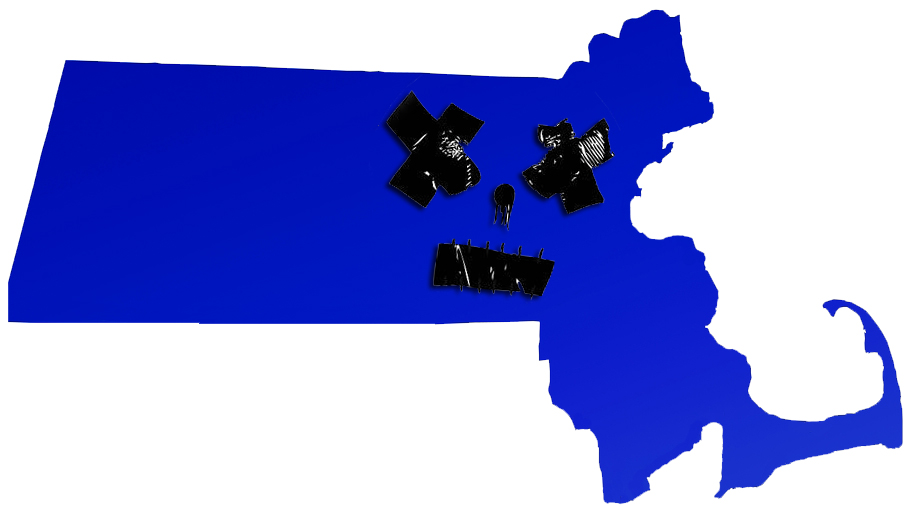
Last night, in a special election to replace the late Senator, Ted Kennedy, my home state of Massachusetts elected its first Republican to the senate since 1978, Scott Brown.

Massachusetts has never elected a Republican senator during my lifetime. I’ve never known anything but Democrats (except for one Governor, once), from my home state my ENTIRE LIFE. It’s always been other states that voted Republican. Red states. Far away. Where rich families would inevitably end up like the Bushes. Not the Kennedys. And it’s not even like the Bay State is all uber liberal, vegan hipsters or anything — Massachusetts is very much a working class kind of place — it’s just that we’ve always been Democrats, and that’s that.  Even New York, which is by and large perceived as the liberal bastion of the East Coast is really only Democratic in the City. Massachusetts has never had the “upstate” vs. “downtown” battle. The first shots of the American revolution were fired in the suburbs, after all, and as a first generation immigrant from the USSR, growing up in Boston since the age of six, the Bay State’s staunch Democratism has always had a sort of romance to it. Like, of course, there would be a unified sense of responsibility to uphold Democracy’s legacy here, kind of thing, in its New World cradle and all.

The realization that there was a maddening political divide tearing up the rest of the country didn’t even cross my radar until I was in college. Once I grew up and actually started to understand the polarizing nature of partisan politics, looking back on Massachusetts with that new perspective I think I just sort of assumed that my state was somehow smarter than the rest (all those college kids aside). We’d found a good thing, and we were sticking with it. We could not be tempted.

More a unifying sense of civic pride and responsibility than icky fundamentalist ideology, Democrat isn’t just how Massachusetts votes voted, it’s a part of our cultural identity. Like the Red Sox. Which is why the idea of a Republican winning the senate race in Massachusetts is just completely insane to me. It’s like imagining Boston throwing a parade down Comm. Ave. to celebrate the Yankees winning the World Series. I can’t even compute how this could happen. (Though, Jon Stewart explains it below, rather well).

In the 1972 Presidential election, Nixon won by a landslide. It was the second biggest electoral vote margin in United States history. Nixon got the majority of votes in 49 states. His opponent, George McGovern, could only get one: Massachusetts. A year later, Nixon’s VP, Spiro Agnew, resigned after being charged with bribery, extortion, and tax fraud. And the year after that, Nixon resigned in the face of impeachment over the Watergate Scandal. That was when wiseasses from the one state McGovern carried started sporting bumper stickers that read, “Don’t blame me. I’m from Massachusetts.” A sentiment that was more recently revived as “Don’t blame me. I voted for Kerry.” That’s just how Massachusetts is. Or… was.

Regardless of wherever else I’ve lived or been, Massachusetts has felt something like an insurance policy: No matter how crazy things got elsewhere, I could always go back to Blue. Until now, when the election of the first Republican senator in over 3 decades is an event so monumentally unimaginable, it shakes the whole foundation of what I’ve known as a lifelong institution.

The Daily Show With Jon Stewart Mon – Thurs 11p / 10c
Mass Backwards
www.thedailyshow.com


Subscribe for more like this.