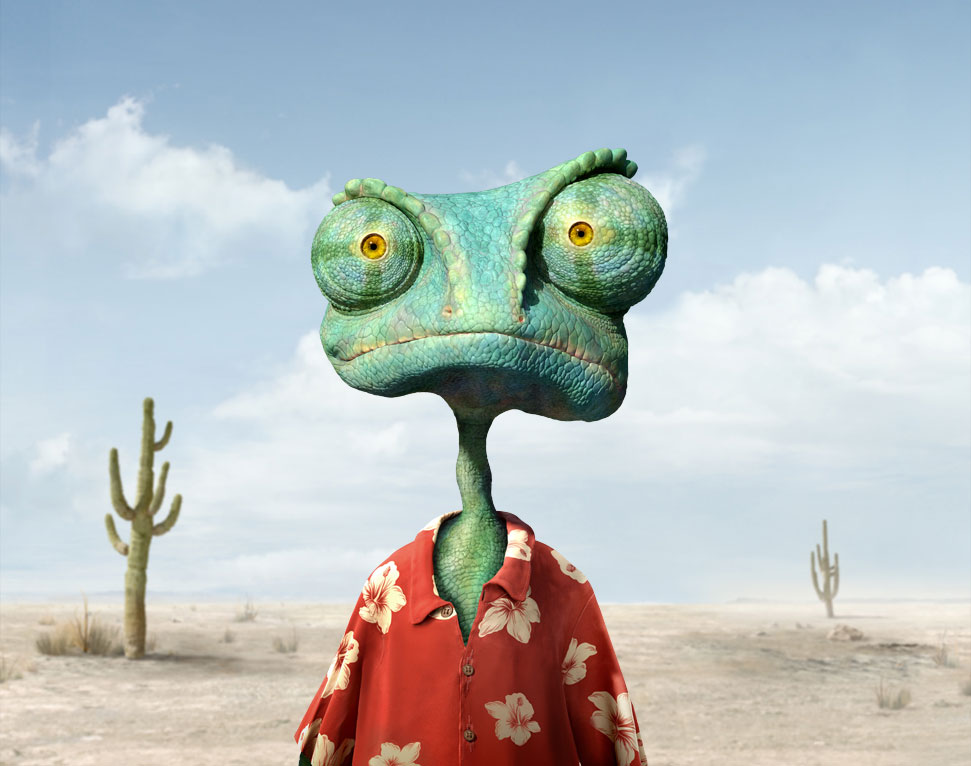
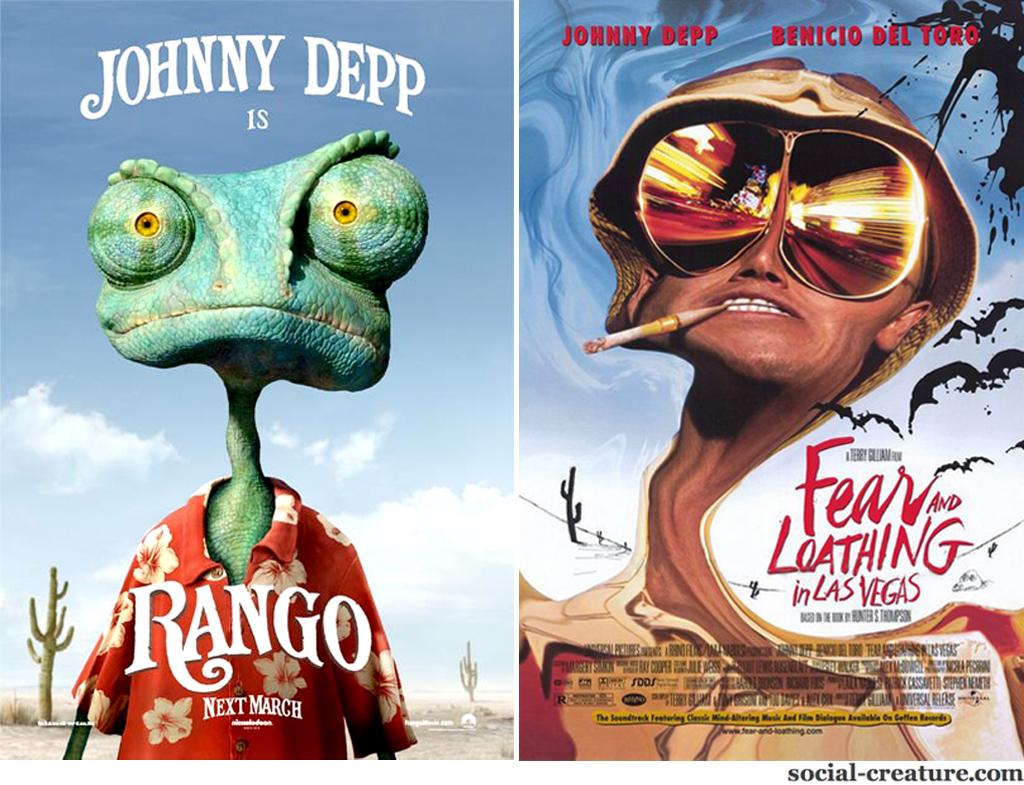
Above, is a poster for an animated Nickelodeon movie called Rango, starring Johnny Depp, coming out in 2011.
Here is a poster for a movie Johnny Depp made a decade ago:
The same cactuses in the background, the big bug-eye aviator shades and the big lizard bug-eyes, the horizontal, grimacy mouth, the psychedelically twisty neck, with the massively disproportionate head bobbling on top. But it’s the Hawaiian shirt that seals the deal. You just do not ACCIDENTALLY put Johnny Depp, as a lizard, in the Mojave desert with the same cactus in the background as on the Fear and Loathing poster…. in a HAWAIIAN shirt.
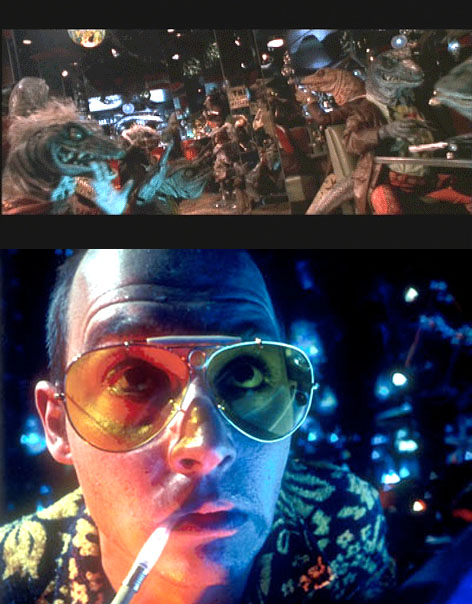
Here is what lizards look like in that other Johnny Depp movie in the Mojave desert.
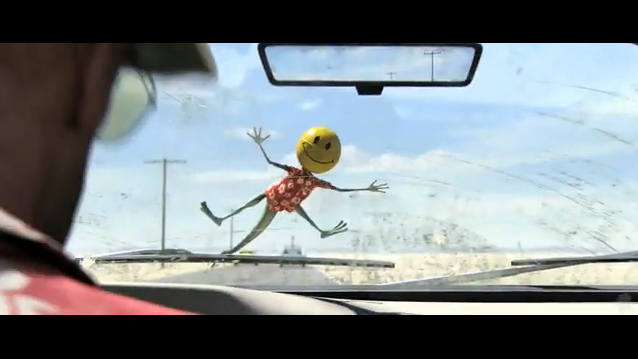
But now there’s this:
.
Is it just me or does this shot from the trailer look….. like Bat Country?
Last week, my friend Kris Krug flew down to the Gulf of Mexico on the TEDxOilSpill Expedition, a week-long project to document the crisis in the Gulf and bring a first hand report back to the TEDxOilSpill event in Washington, D.C. on June 28. Kris, a photographer, web strategist, and self-described “cyberpunk anti-hero from the future” (though, technically, from Vancouver) was there as part of the team of photographers, videographers, and writer traveling through Mississippi, Alabama, and Louisiana documenting the current situation in the coastal communities affected by the oil spill. (Kris’s shots from the expedition have also appeared in National Geographic photo essays: 1, 2, 3).
Talking with Kris — who has been one of the earliest and staunchest supporters of my writing here at Social-Creature (the header image on this site is one of his photos) — he suggested that while it’s not my usual ‘beat,’ if I felt so inspired, I should write some words about this situation.
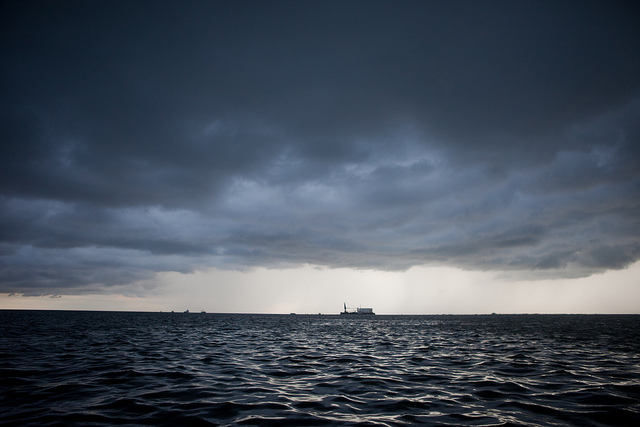
Early morning thunderstorm off the coast of Grand Isle, Louisiana.
The truth is that there is something in this endlessly tragic mire which I’ve kept thinking about over and over during the course of the now 69 days since the Deepwater Horizon oil rig exploded. And that recurring thought — beyond how devastating and heartbreaking this entire situation is — is how utterly foreign and disturbing it feels to be this completely powerless to do anything about it.
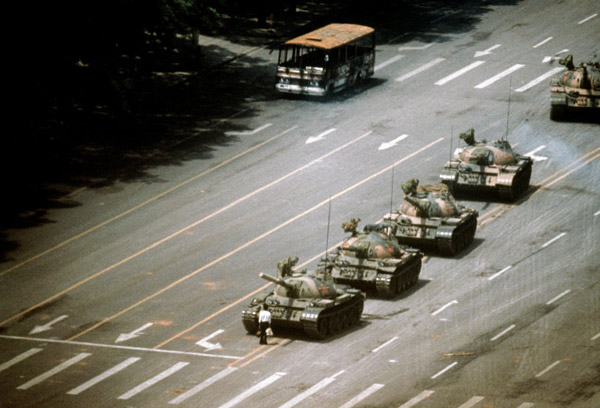
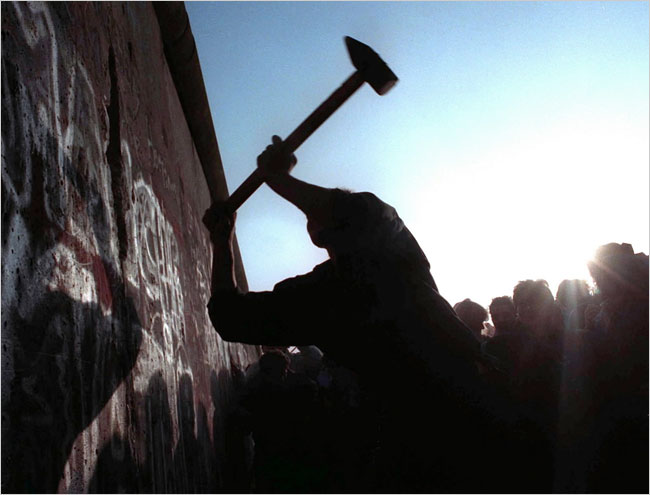
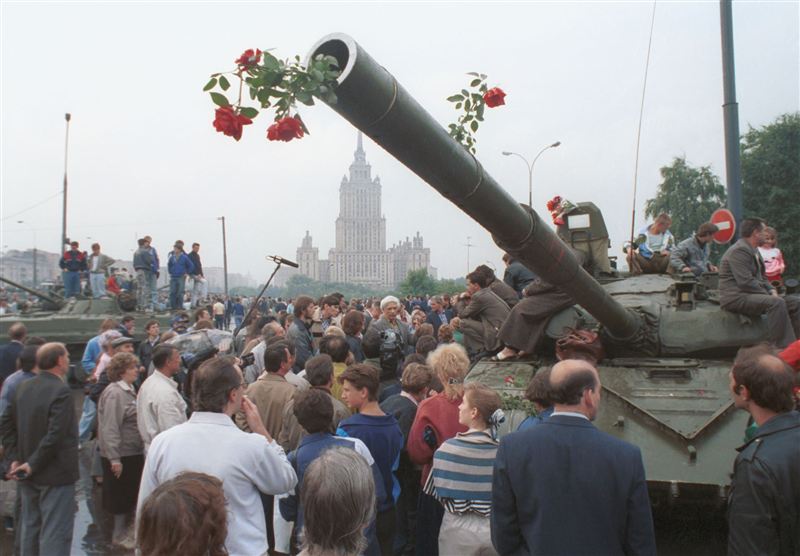
As a generation, mine has not known powerlessness. We have known no great war. No great depression. We were born a decade after the last U.S. draft ended. Our childhoods were filled with images like these:
We were weaned on the sense that something could be done. A single person could stand up to a row of tanks in Tiananmen Square. People could tear the Berlin wall down. People could undo the totalitarian Soviet regime. By the time we got to high school, the Internet had arrived, followed quickly by college and the birth of the social web. The digital revolution added an unprecedented amplification to this sense of our own personal agency. Just over the past few short years we have experienced how sites like Twitter, YouTube, and Facebook have offered platforms for us to do something.
Last summer, the Washington Post called the aftermath of the Iran election a “A Twitter Revolution.” As police tried to suppress demonstrators who took to the streets to protest the declared results of the presidential elections in a place halfway around the planet, Twitter let the world know exactly what was going on, on the ground in Iran even as outside journalists were barred from the country. It was instantaneous, unfiltered, real, and it compelled our attention. The U.S. State Department even asked Twitter to delay scheduled maintenance on the site at the time in order avoid disrupting communications among tweeting Iranian citizens and the rest of the world. Ordinary voices of dissent had never had access to such mass media before, and just bearing witness, just knowing their struggle, just retweeting and communicating was an act of solidarity with those citizens of Iran who were protesting, and an act of defiance against the forces that would have them silenced. It was doing something.
Six months ago, after a 7.0 magnitude earthquake devastated Haiti, a place of no real political or economic importance, these digital tools helped mobilize the aid and compassion of the entire world almost instantly. Within just a few hours a text-based donation service was set up for the American Red Cross’s relief efforts. In just 2 days of the earthquake the program had raised over $5 million from over a half million different mobile phone users. Haitian-born musician Wyclef Jean’s Yele Haiti Foundation, also running its own text donation drive, raised another $1 million. It was a watershed moment. Never had so much money been raised for relief so quickly after a disaster. The digital tools facilitated this, but what drove people to make those donations was the desire to do something even if it was just giving a few dollars to help alleviate suffering.
Our brains are primed for [belief in the supernatural], ready to presume the presence of agents even when such presence confounds logic.
We automatically, and often unconsciously, look for an explanation of why things happen to us,” Barrett wrote, “and ‘stuff just happens’ is no explanation. Gods, by virtue of their strange physical properties and their mysterious superpowers, make fine candidates for causes of many of these unusual events.” The ancient Greeks believed thunder was the sound of Zeus’s thunderbolt. Similarly, a contemporary woman whose cancer treatment works despite 10-to-1 odds might look for a story to explain her survival. It fits better with her causal-reasoning tool for her recovery to be a miracle, or a reward for prayer, than for it to be just a lucky roll of the dice.
Oil coming on shore.
As an alternative to these external supernatural forces it’s become increasingly popular to reclaim a sense of power in the face of chaos or tragedy by elevating control of our inner selves to this transcendent status of godliness. In Bright-Sided: How the Relentless Promotion of Positive Thinking Has Undermined America Barbara Ehrenreich recounts, in a chapter titled, “Smile or Die: The Bright Side of Cancer,” how getting diagnosed with breast cancer led to her first introduction with the cult of “positive thinking.” The “Pink Ribbon Culture,” she writes, is defined by a mantra of “positive thinking” that is so extreme, at times it paints cancer as a “gift, deserving of the most heartfelt gratitude:”
In the mainstream of breast cancer culture there is very little anger, no mention of possible environmental causes, and few comments about the fact that in all but the most advanced, metastasized cases, it is the “treatments,” not the disease, that cause the immediate illness and pain. In fact, the overall tone is almost universally upbeat. The Best Friends Web site, for example, featured a series of inspirational quotes: “Don’t cry over anything that can’t cry over you,” “I cant stop the birds of sorrow from circling my head, but I can stop them from building a nest in my hair,” “When life hands out lemons, squeeze out a smile,” “Don’t wait for your ship to come in… swim out to meet it,” and much more of that ilk.
The cheerfulness of breast cancer culture goes beyond mere absence of anger to what looks all too often, like a positive embrace of the disease. As “Mary” reports, on the Bosom Buds message board: “I really believe I am a much more sensitive and thoughtful person now. I was a real worrier before. Now I don’t want to waste my energy on worrying. I enjoy life so much more now and in a lot of aspects I am much happier now.” [Another] such testimony to the redemptive powers of the disease: “I can honestly say I am happier now than I have ever been in my life — even before the breast cancer.
One survivor turned author credits it with revelatory powers, writing in her book The Gift of Cancer: A Call to Awakening that “cancer is your ticket to your real life. Cancer is your passport to the life you were truly meant to live. Cancer will lead you to God. Let me say that again. Cancer is your connection to the Divine.”
The effect of all this positive thinking is to transform breast cancer [from] an injustice or tragedy to rail against.
There was, I learned, an urgent medical reason to embrace cancer with a smile: a “positive attitude” is supposedly essential to recovery. It remains almost axiomatic, within the breast cancer culture, that survival hinges on “attitude”…. [the belief] that a positive attitude boosts the immune system, empowering it to battle cancer more effectively.
You’ve probably read that assertion so often, in one form or another, that it glides by without a moment’s thought about what the immune system is, how it might be affected by emotions, and what, if anything, it could do to fight cancer. The business of the immune system is to defend the body against foreign intruders, such as microbes, and it does so with a a huge onslaught of cells and whole cascades of different molecular weapons.
In 1970, the famed Australian medical researcher McFarlane Burnet had proposed that the immune system is engaged in constant “surveillance” for cancer cells, which, supposedly, it would destroy upon detection. Presumably, the immune system was engaged in busily destroying cancer cells — until the day came when it was too exhausted (for example, by stress) to eliminate the renegades. There was at least one a priori problem with this hypothesis: unlike microbes, cancer cells are not “foreign”; they are ordinary tissue cells that have mutated and are not necessarily recognizable as enemy cells. As a recent editorial in the Journal of Clinical Oncology put it: “What we must first remember is that the immune system is designed to detect foreign invaders, and avoid our own cells. With few exceptions, the immune system does not appear to recognize cancers within an individual as foreign, because they are actually part of the self.”
More to the point, there is no consistent evidence that the immune system fights cancers, with the exception of those cancers caused by viruses, which may be more truly “foreign.” People whose immune systems have been depleted by HIV or animals rendered immunodeficient are not especially susceptible to cancers, as the “immune surveillance” theory would predict. Nor would it make much sense to treat cancer with chemotherapy, which suppresses the immune system, if the latter were truly crucial to fighting the disease. Furthermore, no one has found a way to cure cancer by boosting the immune system with chemical or biological agents.
But despite all the evidence to the contrary, you can see the appeal of believing in the power of “positive thinking” anyway, can’t you? Instead of waiting passively for the treatments to kick in, breast cancer patients can now “work on themselves;” monitor their moods and “psychic energies.” In other words, the idea of a link between subjective feelings and the disease, fabricated though it may be, gives cancer patient something to do.
And this applies far beyond cancer, to any kind of overpowering misfortune. “We’re always being told that looking on the bright side is good for us,” writes Thomas Frank, author of What’s the Matter With Kansas?, in a review on the back cover of Bright-Sided, “But now we see that it’s a great way to brush off poverty, disease, and unemployment, to rationalize an order where all the rewards go to those on top. The people who are sick or jobless — why, they just aren’t thinking positively. They have no one to blame but themselves.”
It’s not that we’re assholes. It’s just that we desperately want to believe the world is a far more just place than it actually is. As David McRaney, journalist, and author of You Are Not So Smart, a blog about the workings of self-delusion, writes in a post about The Just World Fallacy, humans have “a tendency to react to horrible misfortune, like homelessness or drug addiction, by believing the people stuck in horrible situations must have done something to deserve it.” Here is the Just World fallacy in action:
.
Oh, wait. Actually, THAT guy IS an asshole. As is Rhonda Byrne, creator of “The Secret,” who, in the wake of the 2006 tsunami, citing the law of attraction, announced that disasters like that can happen only to those who are “on the same frequency as the event.”
A flock of Brown Pelicans on some rocks in Alabama.
While, clearly, suggesting that the poor little pelicans (or anyone else) signed a deal with the devil or somehow attracted the oil spill upon themselves is just waaaay the fuck further out in looney-land than anyone who is not an asshole cares to travel, at their base, all these delusions are simply coping mechanisms. A way to synthesize a sense of being less powerless than you really are; a way to deal in the face of extreme evidence to the contrary. Because the reality is that feeling like we have NO control whatsoever, like our lives are simply dried up leaves in the autumn winds of chaos, like any choices we make are utterly meaningless and futile is actually terrible for our mental well-being and our health. Note: this is not the same as saying “thinking positive will cure your cancer,” it’s saying that extreme stress factors are, indeed, bad for you. Duh. “Torture a lab animal long enough,” Ehrenreich writes, “as the famous stress investigator Hans Selye did in the 1930s, and it becomes less healthy and resistant to disease.” In a post on Learned Helplessness — McRaney writes:
If, over the course of your life, you have experienced crushing defeat or pummeling abuse or loss of control, you learn over time there is no escape, and if escape is offered, you will not act – you become a nihilist who trusts futility above optimism.
Studies of the clinically depressed show that when they fail they often just give in to defeat and stop trying.
A study in 1976 by Langer and Rodin showed in nursing homes where conformity and passivity is encouraged and every whim is attended to, the health and wellbeing of the patients declines rapidly. If, instead, the people in these homes are given responsibilities and choices, they remain healthy and active.
This research was repeated in prisons. Sure enough, just letting prisoners move furniture and control the television kept them from developing health problems and staging revolts.
In homeless shelters where people can’t pick out their own beds or choose what to eat, the residents are less likely to try and get a job or find an apartment.
Perdido Beach, Alabama
The underlying thread here is always about control, or the loss of it. Chaos is unbelievably traumatizing — personally, and to us as a species. Researchers at the University of California, Irvine, have been studying the impact of the 9/11 attacks on male babies since 2005. Their just recently published findings reveal that in the aftermath of the 2001 tragedy pregnant women miscarried a disproportionate number of male fetuses. In September 2001, the death rate of male fetuses compared with female increased by 12 percent. That’s 120 extra losses in a single month. The theory behind this phenomenon is likely an evolutionary adaptation. Women have adapted to produce what, Tim Bruckner, the study’s lead author and a professor at UC Irvine, describes as “the alpha male.” Which could explain why male fetuses are more sensitive to their mothers’ stress hormones than female ones. When a pregnant woman experiences some sort of crisis — whether personal or not — her male baby is more vulnerable to be miscarried. In times of prosperity and security, male fetuses are more likely to be brought to term, because there’s a greater chance that they’ll be healthy and robust. During periods of scarcity, however, male miscarriages are much more common. Indeed, the phenomenon reported by Bruckner & Co. has been observed before — reduced male birth rates have been reported during other instances of national stress or suffering, like economic recessions or natural disasters.
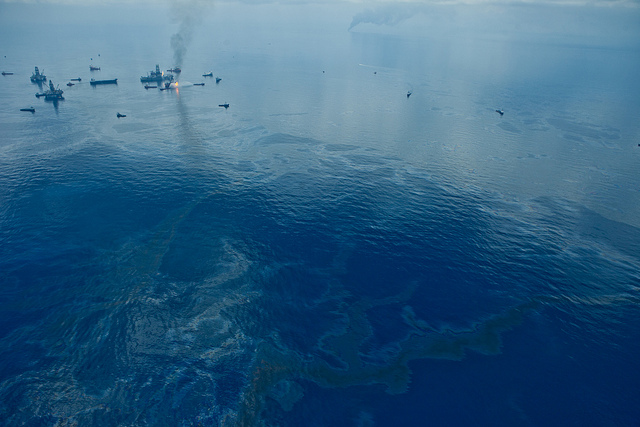
Surface oil burns in the Gulf of Mexico as part of the oil spill clean-up.
Which brings us back to the Gulf of Mexico and the worst environmental disaster in US history; the cold, strange, numbing sense of a profound national powerlessness seeping in as we see sickening photos of helpless animals drowning in oil. Just thinking about how you can’t do anything about it for too long will make you want to check the fuck out of this whole story. I know. I want, as much as anyone else, to have something to be able to do to make all of this stop.
To a large extent this is completely new territory for my generation. Nationally, we have never been faced with something we couldn’t “do” something about. As the child of parents who lived through WWII, Refuseniks, no less — the 1 and a half million Russian Jews who were trapped in the Soviet Union, denied permission by the government to leave the country, in my parents’ case, for a decade — I know, personally, just how sheltered my generation’s childhood has been in contrast. It’s unprecedented for us. We’ve had so little practice at facing situations where we couldn’t just do something, at fighting them, at living through them. Not 9/11, not the financial crisis, not the wars in between, it’s this oil spill that is my generation’s unfortunate turn to figure out how to stand in the face of powerlessness.
In a Huffington Post piece a few weeks ago on why he “Co-opted BP’s Twitter Presence,” Leroy Stick, the alleged name behind the anonymous @BPGlobalPR twitter account, which posts ingeniously scathing commentary on BP with satire so black as to befit the disaster the company has wrought, wrote:
I started @BPGlobalPR because the oil spill had been going on for almost a month and all BP had to offer were bullshit PR statements. No solutions, no urgency, no sincerity, no nothing. That’s why I decided to relate to the public for them. I started off just making jokes at their expense with a few friends, but now it has turned into something of a movement. As I write this, we have 100,000 followers and counting. [Currently, almost 179,000]. People are sharing billboards, music, graphic art, videos and most importantly information.
If you are angry, speak up. Don’t let people forget what has happened here. Don’t let the prolonged nature of this tragedy numb you to its severity. Re-branding doesn’t work if we don’t let it, so let’s hold BP’s feet to the fire. Let’s make them own up to and fix their mistakes NOW and most importantly, let’s make sure we don’t let them do this again.
Right now, PR is all about brand protection. All I’m suggesting is that we use that energy to work on human progression. Until then, I guess we’ve still got jokes.
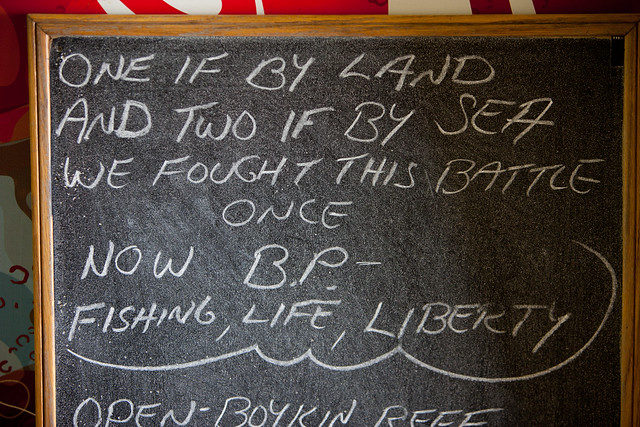
A small quote of inspiration to the affected fishing community at a bait and tackle in Dauphin Island, Alabama
In the introduction to Bright-Sided, Ehrenreich writes:
Americans did not start out as positive thinkers…. In the Declaration of Independence, the founding fathers pledged to one another “our lives, our fortunes and our sacred honor.” They knew that they had no certainty of winning the war for independence and that they were taking a mortal risk. Just the act of signing the declaration made them all traitors to the crown, and treason was a crime punishable by execution. The point is, they fought anyway. There is a vast difference between positive thinking and existential courage.
We must find that courage now. To keep paying attention. To not tune out the story of this tragedy. To not let futility or apathy or simple delusion take over. We must have the courage to see things as they really are, to bear witness to what’s happening in the gulf, and we must have the courage to fight for answers, to fight for institutional change in the policies that have lead to this disaster, and to work for new solutions. The TEDxOilSpill event I mentioned at the beginning of this post, which is bringing together researchers and leaders to explore new ideas for our energy future, and how we can mitigate the crisis in the Gulf, is a start. There are also currently 126 local Meetups happening in conjunction with the event in 30 countries around the globe. We have to have the courage to do what we can, until we can actually do what we must.
That courage is, literally, what America was founded on, and I hope my generation discovers we too possess a reserve of it.
You know those movies about characters trail-blazing the business of some terrible vice? They’re always set in a not-too-distant past, have trailers full of period-specific songs, and include the words “inspired by a true story” on the poster. There’s the initial meteoric rise to power and wealth, followed by a period of unbridled excess — generally involving use of montage — and, ultimately, the inevitable downfall which was doomed to happen from the start, with, possibly, an epilogue of redemption. It’s a very specific film archetype, wherein the traditional bad guy is, instead, the quintessential American hero: the visionary entrepreneur who possesses the ingenuity and tenacity and just plain balls to seize an opportunity only he can see, and achieve a feat so stupendous — inventing the American cocaine trade, for instance, becoming the first black man to rise above the Italian mafia in the New York heroin business — you’re at once inspired and horrified by his success.
In 2001, Blow kicked off this trend of movies where you’re rooting for the drug dealer. The movie’s based on the life of George Jung, played by Johnny Depp, a Boston guy living in California, who starts off smuggling pot cross-country in the 60’s, and ends up becoming the American connection to Pablo Escobar’s Medellín Cartel, which, with Jung’s help, would go on to own 85% share of the U.S. cocaine market by the late 70’s / early 80’s:
.
Then came 2005’s Lord of War, in which the illicit contraband is weaponry, and Nicolas Cage plays Ukranian-American gun trafficker, Yuri Orlov — a fictional character based on a composite of a number of actual post-soviet arms dealers — whose big break comes as he watches Mikhail Gorbachev give his resignation speech on television, Christmas Day 1991. Like a prospector who’s just struck oil (See also: There Will Be Blood, for a variation on this cinematic theme), he envisions, in this moment, the future of his business expanding with the gush of weapons — even tanks! — he’ll now be able to buy (illegally) from the just-dissolved Soviet Union’s stockpile in the Ukraine:
.
2005 was also the year Weeds premiered on Showtime, in which Mary-Louise Parker plays a widowed housewife who becomes a suburban pot dealer, and a few seasons later ends up married to the head of a Mexican drug cartel.
By 2008, when American Gangster came out — which tells the story of Frank Lucas, played by Denzel Washington, who bypassed the entire Italian mafia to become the heroin king-pin of New York in the early 70’s by establishing his own direct supply connection in Asia during the Vietnam war and smuggling the drugs into the U.S. in the coffins of dead U.S. soldiers — rooting for the vice-peddling, psychotically enterprising, imminently doomed outlaw businessman — even though, good god! he’s a fucking heroin drug lord turning all of Harlem into addicted zombies!! — had become a familiar experience:
.
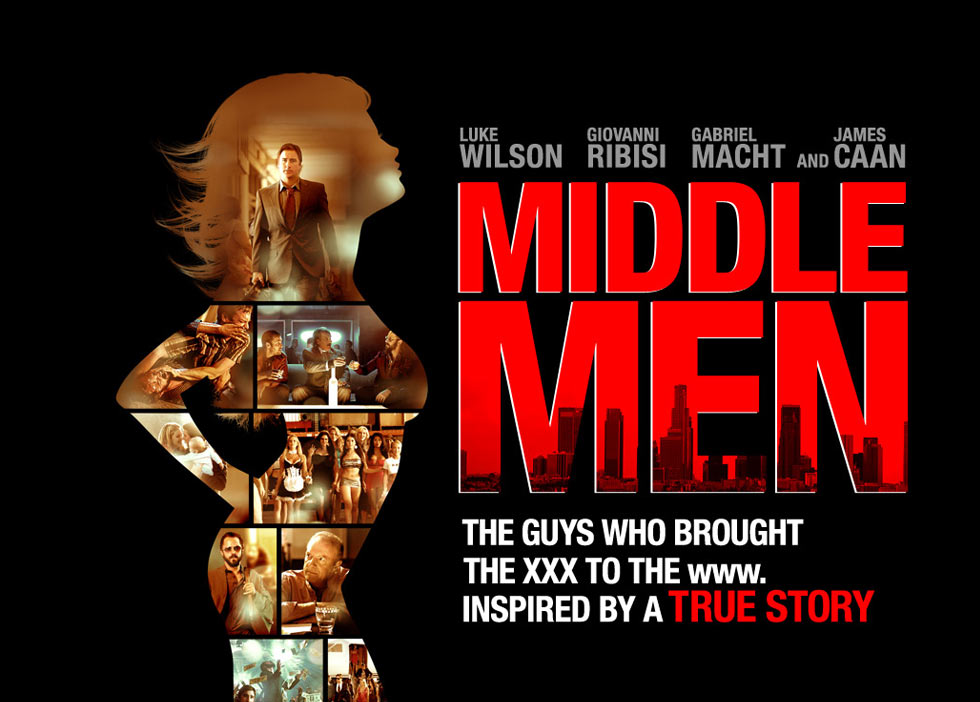
Which is how we arrive at Middle Men, due out later this year, a based-on-reality story in which Luke Wilson plays Jack Harris, a mainstream businessman who partners with a pair of porn content providers (played by Gabriel Macht and Giovanni Ribisi) to form the first online adult billing company in the mid 1990’s:
.
The drug dealer used to ALWAYS be the bad guy. You weren’t supposed to sympathize with him. Now it’s every fuckin’ movie like this. But the story isn’t just about the clever bastard with an idea for a supply to human nature’s demand, it’s about the vice itself. It’s not just George Jung’s story, it’s the history of blow we’re fascinated by — how a chance cell-mate pairing between a California pot smuggler and a member of the Medellín cartel would pave the way for the U.S. cocaine highway. How the Vietnam war became the camouflage for the heroin epidemic Frank Lucas created. How the Soviet Union’s collapse helped the business of illegal arms dealers. Each of these stories has this moment where entrepreneur and zeitgeist collide, and — for better or worse; mostly for worse — it changes the world. In Middle Men the focus of the story could have easily been the porn industry — but it isn’t. Porn is just the side effect. Like the preview voice-over announcer says, it’s the story of the worldwide web.
What neither he nor Mark [Zuckerberg, Facebook founder] had known when they started the damn thing was how addictive Facebook was. You didn’t just visit the site once. You vsited it every day. You came back gain and again, adding to your site, your profile, changing your pictures, your interestes, and most of all, updating your friends.
… Most kids who tried out [Facebook] once tended to come back — 67 percent every day.
The Internet: It might not be illegal, but it’s unquestionably addictive.
Once considered the province of geeks, the Internet is now where all of us live. It is a huge, enormous thing that is changing how we do practically everything and permeating the very experience of our lives. It is now all of our’s vice. And it’s breeding a whole new generation of vice entrepreneurs. Drug dealers and gunrunners have new company.
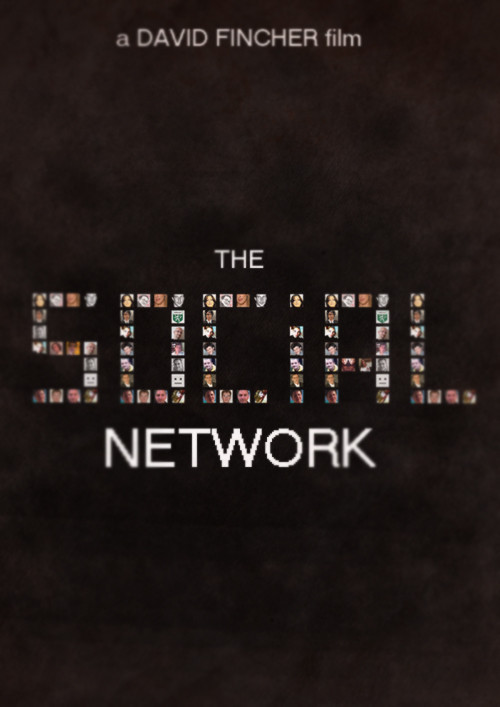
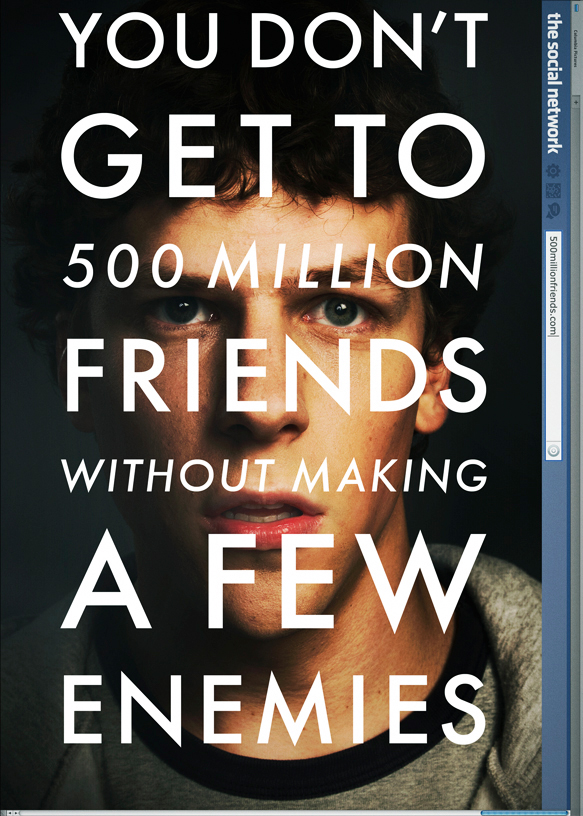
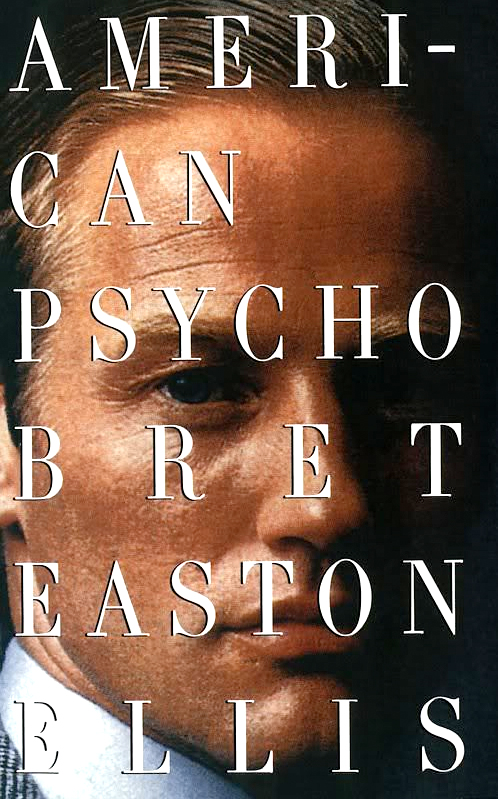
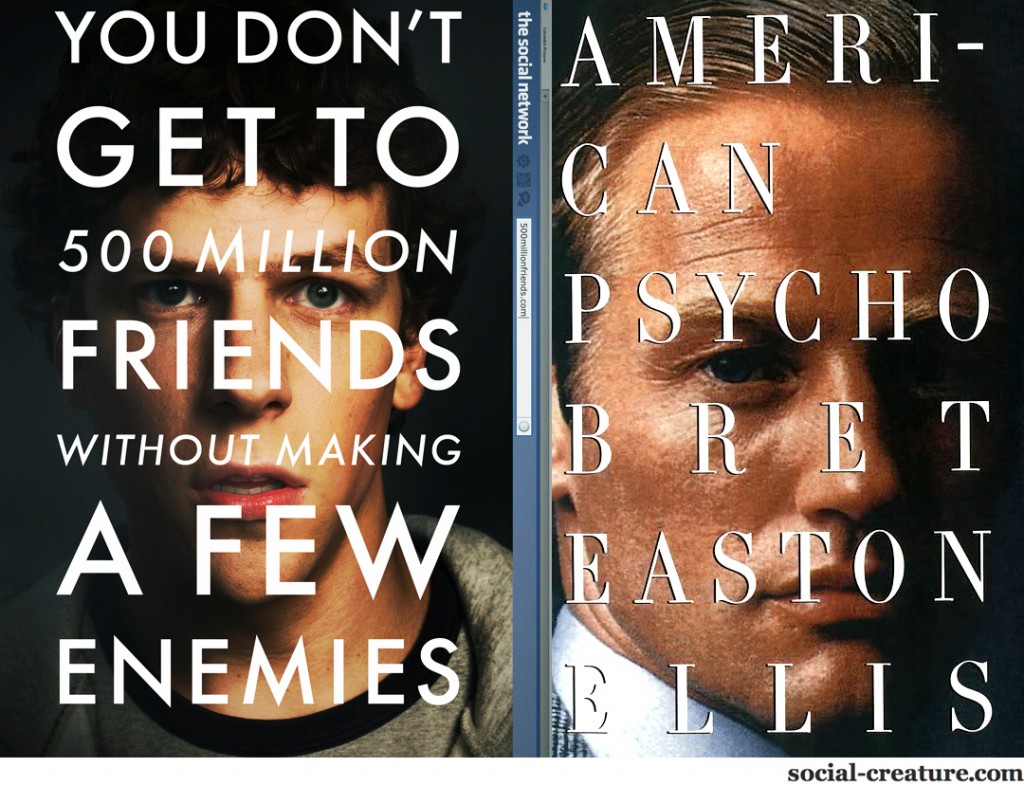
In related news, is it just me or does the new poster for The Social Network seem, like, awfully familiar?
A year ago I wrote a piece called “Your Lifestyle Is An Alternate Reality Game.” An ARG, for short, is an interactive narrative that uses the real world as a platform, often involving multiple media and game elements, to tell a story that may be affected by participants’ ideas or actions. Lifestyle, I suggested, with its proscribed media content, its insider signifiers, its ever-evolving subcultural narrative, is the alternate reality game all of us in the modern world are already playing. Having grown up in the rave scene and then produced nightlife events and music festivals for a decade this similarity was instantly apparent. Since writing that post, I’ve actually seen pioneering ARG creators, Jordan Weisman and Sean Stewart, each, individually liken ARGs to a quintessential alternative culture / music festival experience: Woodstock. (Called it!)
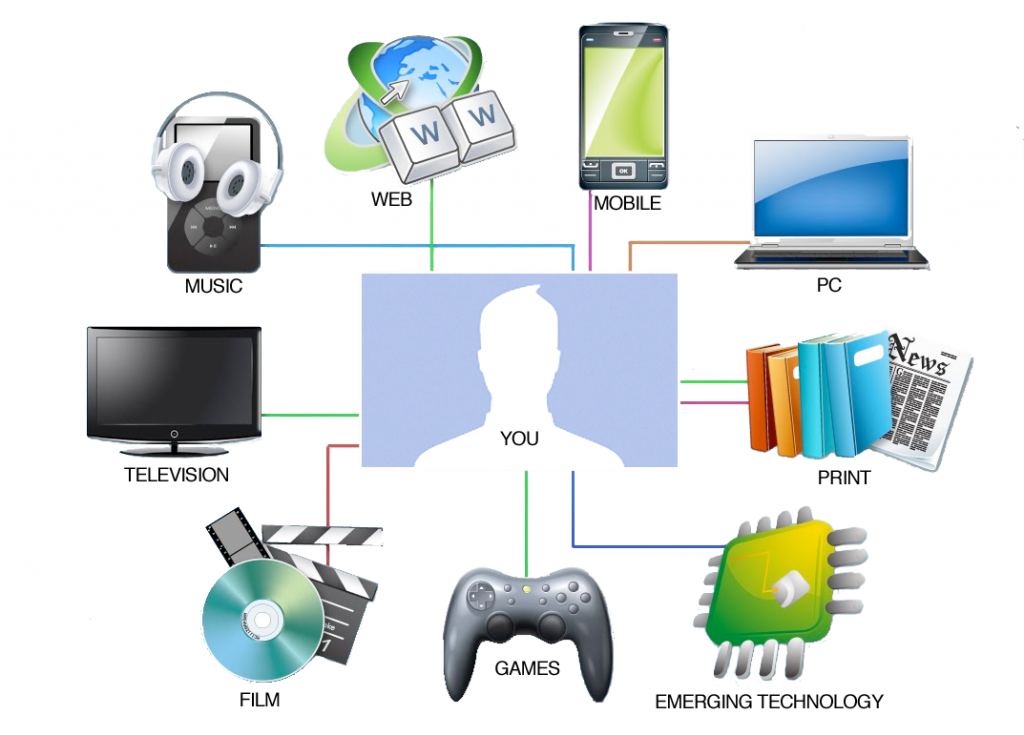
This year, however, the new buzzword gaining popularity for this type of multi-platform narrative is “transmedia.” (On the schedule for the New York DIY Days conference a couple of months ago, the word “transmedia” appeared literally a dozen times in the descriptions for no less than 5 different sessions during the course of the 1-day event). And as the terminology becomes more encompassing — no longer strictly a gaming-specific thing — last year’s thesis needs an upgrade as well: In the digital age, transmedia isn’t just how we create lifestyle narratives, it’s how we experience the narrative of our lives. .
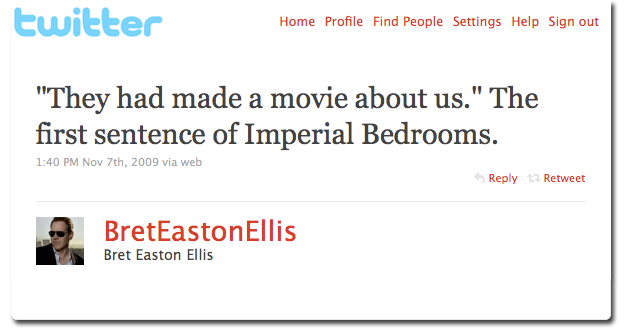
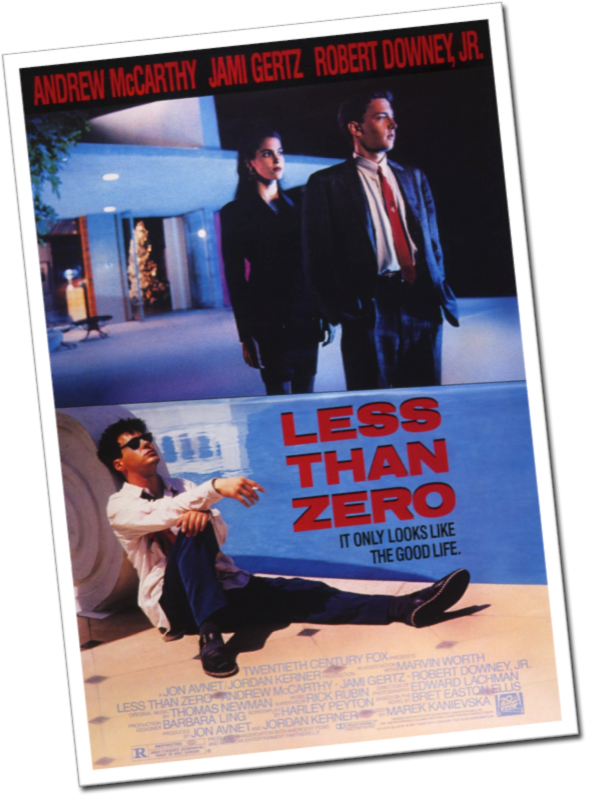
In 1985, a student at Bennington College named Bret Easton Ellis published what would become a best-selling debut novel called Less Than Zero. It’s a story told in first person by a narrator named Clay, home for Christmas break from a fictional New England liberal arts college, as he wafts through L.A.’s endlessly dissolute desert of affluence, parties, rampant drug use, meaningless sex, and progressively increasing depravity. The book was so insidious and disturbing that by 1987, just two years after its publication, it was turned into an inevitably much less insidious and disturbing movie starring Andrew McCarthy as Clay, Jami Gertz as his ex-girlfriend, Blair, and, notably, Robert Downey Jr. as Clay’s heroin-addicted best friend from high school, Julian, who’d turned to prostitution to pay off his drug debt. Now, 25 years and 5 novels (including The Rules of Attraction and American Psycho) later, Ellis’s newest book, Imperial Bedrooms, out June 15, catches up with Less Than Zero’s original cast of poster-children for morally vacant, excess-addled, existentially corrupted youth in present day, as they inhabit middle age. Once again, Clay is the narrator, once again, he’s just returned to Los Angeles after a semester-length absence, and the first thing Clay says — as classically laconic as his “People are afraid to merge on the freeways in Los Angeles” line that opened Less Than Zero two and a half decades earlier — is: “They had made a movie about us.”
The movie was based on a book written by someone we knew. The book was a simple thing about four weeks in the city we grew up in and for the most part was an accurate portrayal. It was labeled fiction but only a few details had been altered and our names weren’t changed and there was nothing in it that hadn’t happened….
[The author] wasn’t close to any of us… He was simply someone who floated through our lives and didn’t seem to care how flatly he perceived everyone or that he’d shared our secret failures with the world, showcasing the youthful indifference, the gleaming nihilism, glamorizing the horror of it all….
I remember my trepidation about the movie began on a warm October night three weeks prior to its theatrical release, in a screening room on the 20th Century Fox lot. I was sitting between Trent Burroughs and Julian, who wasn’t clean yet and kept biting his nails, squirming in the plush black chair with anticipation…. The movie was very different from the book in that there was nothing from the book in the movie. Despite everything — all the pain I felt, the betrayal — I couldn’t help but recognize a truth while sitting in that screening room. In the book everything about me had happened. The book was something I simply couldn’t disavow. The book was blunt and had an honesty about it, whereas the movie was just a beautiful lie. (It was also a bummer: very colorful and busy but also grim and expensive, and it didn’t recoup its cost when released that November.) In the movie I was played by an actor who actually looked more like me than the character the author portrayed in the book: I wasn’t blond, I wasn’t tan, and neither was the actor. I also suddenly became the movie’s moral compass, spouting AA jargon, castigating everyone’s drug use and trying to save Julian. (“I’ll sell my car,” I warn the actor playing Julian’s dealer. “Whatever it takes.”) This was slightly less true of the adaptation of Blair’s character, played by a girl who actually seemed like she belonged in our group — jittery, sexually available, easily wounded. Julian became the sentimentalized version of himself, acted by a talented, sad-faced clown, who has an affair with Blair and then realizes he has to let her go because I was his best bud. “Be good to her,” Julian tells Clay. “She really deserves it.” The sheer hypocrisy of this scene must have made the author blanch. Smiling secretly to myself with perverse satisfaction when the actor delivered that line, I then glanced at Blair in the darkness of the screening room.
As the movie glided across the giant screen, restlessness began to reverberate in the hushed auditorium. The audience — the book’s actual cast — quickly realized what had happened. The reason the movie dropped everything that made the novel real was because there was no way the parents who ran the studio would ever expose their children in the same black light the book did. The movie was begging for our sympathy whereas the book didn’t give a shit. And attitudes about drugs and sex had shifted quickly from 1985 to 1987 (and a regime change at the studio didn’t help) so the source material — surprisingly conservative despite its surface immorality — had to be reshaped. The best way to look at the movie was as modern eighties noir — the cinematography was breathtaking — and I sighed as it kept streaming forward…. But the thing I remember most about that screening in October twenty years ago was the moment Julian grasped my hand that had gone numb on the armrest separating our seats. He did this because in the book Julian Wells lived but in the movie’s new scenario he had to die. He had to be punished for all of his sins. That’s what the movie demanded. (Later, as a screenwriter, I learned it’s what all movies demanded.) When this scene occurred, in the last ten minutes, Julian looked at me in the darkness, stunned. “I died,” he whispered. “They killed me off.” I waited a beat before sighing, “But you’re still here.” Julian turned back to the screen and soon the movie ended, the credits rolling over the palm trees as I (improbably) take Blair back to my college while Roy Orbison wails a song about how life fades away.
The real Julian Wells didn’t die in a cherry-red convertible, overdosing on a highway in Joshua Tree while a choir soared over the sound track. The real Julian Wells was murdered over twenty years later….
I’d seen what had happened to him in another — and very different — movie.
Transmedia, as USC media studies professor Henry Jenkins describes in his book, Convergence Culture, is storytelling that spans across multiple forms of media, with each element expanding the viewer’s understanding of the story world and creating a new “entry point” through which to become immersed in it. Beyond Ellis’s sheer meta-mindfuckery (and the full, unabridged intro is even moreso), by incorporating the existence of the Less Than Zero movie into Imperial Bedrooms — even detailing the various characters’ reactions to its sanitized inconsistencies with the original novel — he’s effectively turned the film into something other than just the compromised adaptation it’s been for the past 23 years. It’s now a legitimate, if suitably ironic, “entry point” into the Less Than Zero world.
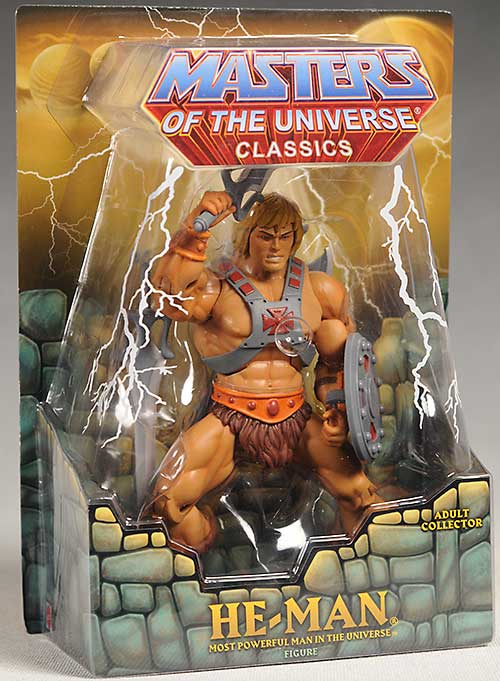
A couple of weeks ago, Jenkins wrote a post called “He-Man and the Masters of Transmedia,” about another fictional world spawned from the 80’s which may have had a lasting affect on my generation:
In many ways, Masters of the Universe was already a transmedia story, at least as much as the technology of the day would allow. He-Man not only appeared in the Filmation-produced cartoons but his story was extended into the mini comic books which came with each action figure, on the collector cards and sticker books and coloring books and kids books.
Once they were removed from their packages, these toys could be mixed and matched to create new kinds of stories….Kids would move from re-performing favorite stories or ritualizing conventional elements from the series to breaking with conventions and creating their own narratives.
I never understood the parents who feared such toys would stifle my son’s imagination because what I observed was very much the opposite – a child learning to appropriate and remix the materials of his culture.
When I speak to the 20 and 30 somethings who are leading the charge for transmedia storytelling, many of them have stories of childhood spent immersed in Dungeons and Dragons or Star Wars, playing with action figures or other franchise related toys, and my own suspicion has always been that such experiences shaped how they thought about stories.
From the beginning, they understood stories less in terms of plots than in terms of clusters of characters and in terms of world building. From the beginning they thought of stories as extending from the screen across platforms and into the physical realm.”
It’s why the website for Imperial Bedrooms has a playlist of songs “from the book” featuring tracks by Randy Newton, Bat for Lashes, Duran Duran, The Fray, Bruce Springsteen, and others — music has always been a key element in Ellis’s fiction: Less Than Zero got its title from an Elvis Costello track, as does its sequel, and there are constant references to songs throughout his novels, cueing a soundtrack in your mind as you’re reading the story. (In fact, all of Ellis’s books now have playlists.) It’s why the Los Angeles Magazine website has an interactive Google map of the locations featured in Imperial Bedrooms and it’s accompanied by Clay’s guide, in his own words, to these various haunts. It’s why Clay has ended up on Facebook and his profile photo — still bearing a decided resemblance to Andrew McCarthy — is also included with his city guide. Here, for instance, is Clay’s take on Hollywood Forever Cemetery:
The most beautiful cemetery in Los Angeles. It’s behind the Paramount lot and it can be disorienting to walk off Gower Avenue into this lush, paradisiacal place. I remember going to movies there during the summer; Psycho, The Muppet Movie, Carrie. I was there last for a funeral where the only person I talked to was Blair.
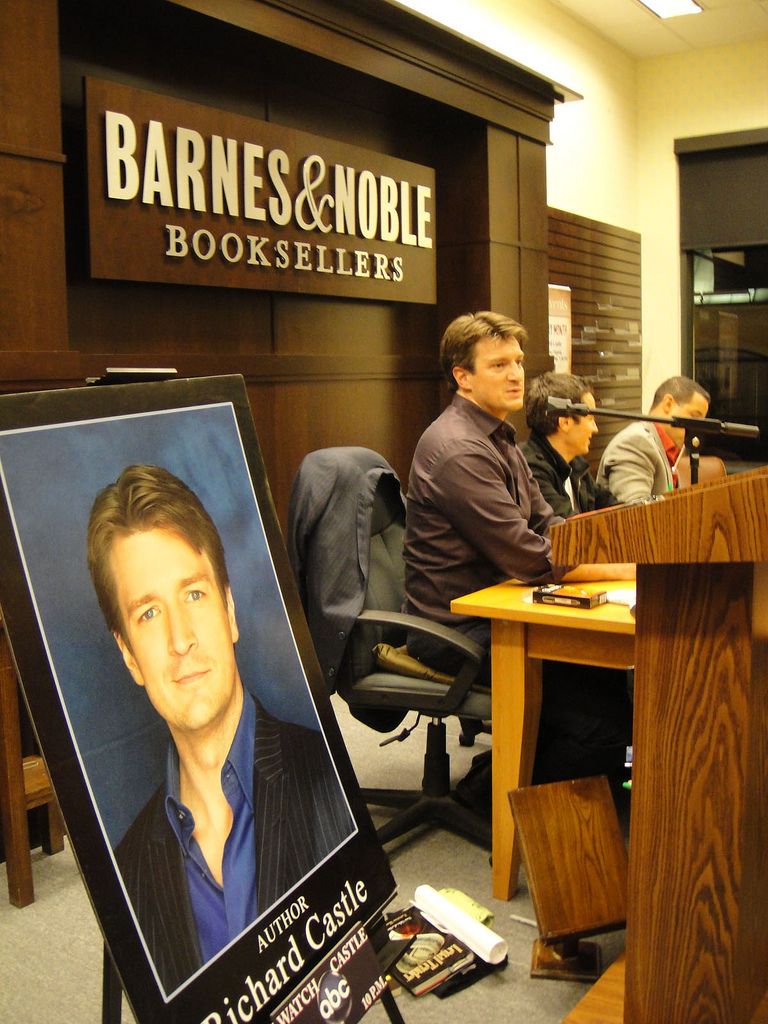
Meanwhile, in a different genre section of the bookstore, there’s yet another author blurring the lines between fiction, reality, media formats, you know, the ushe: Richard Castle.
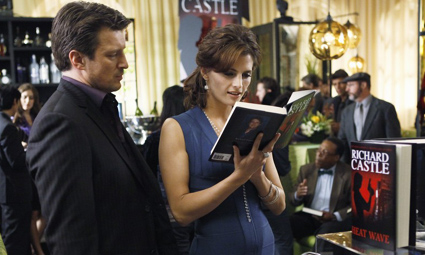
OK, so, technically he’s a TV character played by Nathan Fillion on the ABC show, Castle, which follows the best-selling mystery writer and his unlikely partner, a tough, sexy, NYPD detective named Kate Beckett, as they solve Manhattan murders. The show’s first season story-arc saw the release of Heat Wave, Castle’s new novel about (you know this) a tough, sexy, NYPD homicide detective named Nikki Heat, which also happens to be an actual Hyperion book.
Richard Castle is the author of numerous bestsellers, including the critically acclaimed Derrick Storm series. His first novel, In a Hail of Bullets, published while he was still in college, received the Nom DePlume Society’s prestigious Tom Straw Award for Mystery Literature. Castle currently lives in Manhattan with his daughter and mother, both of whom infuse his life with humor and inspiration.
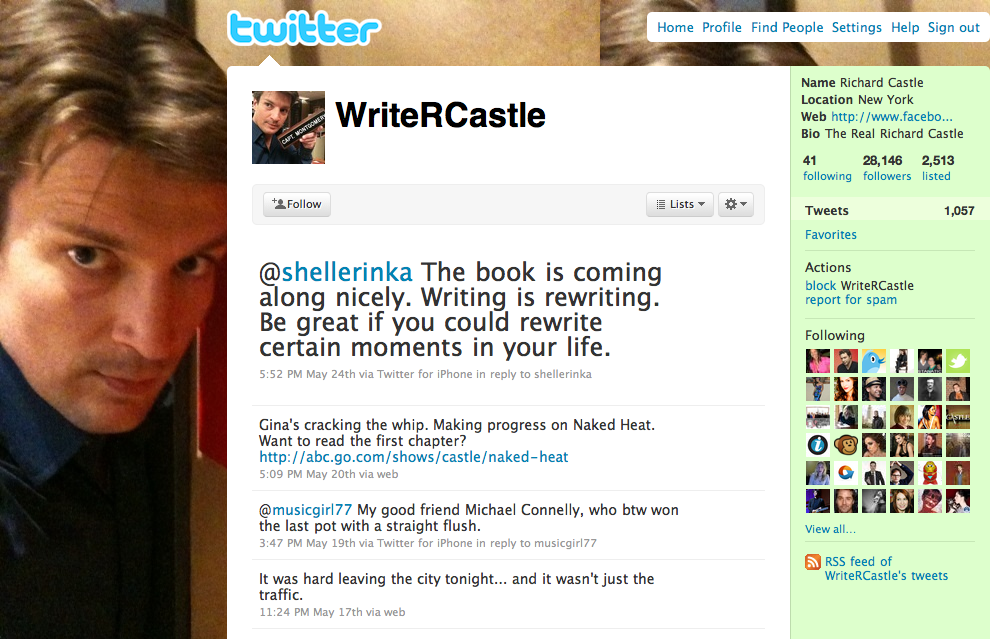
But Castle isn’t just on TV and bookshelves. Like any 21st century writer who knows what’s up, he’s also on Twitter —
Imperial Bedrooms wasn’t designed to deliberately be a “transmedia narrative” — it’s just a novel, after all — but that doesn’t matter. It’s inevitable. Our lives are inundated with the use of digital platforms and social applications. We move from medium to medium effortlessly, and we expect the content and narratives we consume to travel the same way. Any world or characters we find compelling already exist beyond their original medium. It’s 2010. All media is transmedia. Deal with it. Rock ‘n roll.
Castle has obviously been designed as a deliberate transmedia narrative, but Imperial Bedrooms wasn’t — it’s just a novel. Either way, it’s inevitable. The human brain has a natural affinity for narrative construction, and it’s incredibly channel agnostic. Once upon a time, the Ancient Greeks heard thunder and believed it to be the sound of Zeus’s thunderbolt. Today, our media formats are just more sophisticated. Our lives are inundated by digital technology, content platforms, network applications — it’s not narratives that travel trans-media: we do. And we bring the stories along for the ride. It’s 2010. All media is transmedia. Deal with it. Rock ‘n’ roll.
Your computer doesn’t care what the 19th century production mechanism for producing your entertainment was. Record, book, it doesn’t care. It’s all 1’s and 0’s to your computer. Video, music, pictures, text, and let’s not stop there, let’s include other things that you can now incorporate as part of your entertainment, like web-pages or searches or email or phone calls directly to your audience. Here’s a simple mnemonic: any way that human-kind has invented to lie to one another should be part of your storytelling toolkit.
But fictional narratives aren’t what this toolkit is strictly limited to. As tech blogger Robert Scoble writes in his recent post, “The ‘like, er, lie’ economy“:
The other day I found myself over at Yelp.com clicking “like” on a bunch of Half Moon Bay restaurants. After a while I noticed that I was only clicking “like” on restaurants that were cool, hip, high end, or had extraordinary experiences.
That’s cool. I’m sure you’re doing the same thing.
But then I started noticing that I wasn’t behaving with integrity. What I was presenting to you wasn’t reality.
See, I like McDonalds and Subway. But I wasn’t clicking like on those. Why not?
Because we want to present ourselves to other people the way we would like to have other people perceive us as.
I’d rather be seen as someone who eats salad at Pasta Moon than someone who eats a Big Mac at McDonalds.
This is the problem with likes and other explicit sharing systems. We lie and we lie our asses off.
We are all storytellers now, all the authors of our own life stories (no big surprise, we’re taking some “creative liberties”). The array of media tools through which to “present ourselves” is already ubiquitous, and constantly expanding. Social networks, personal blogs, microblogs, digital cameras, location-based social applications — for some reason Time Magazine singled out Foursquare as one of the 50 Worst Inventions for being “just another tool tapping into a generation of narcissism,” as if, inexplicably, it’s particularly worse than the cesspools of self-focus that are Facebook or Myspace. With every status update and photo upload and location check-in and “like” we click, we are producing an endless stream of new “entry points” into our personal narratives. And, in turn, like Ellis’s, aptly named, Clay, we are all shaped by the resultant media representations of our selves. In the digital age, transmedia isn’t simply the default for how we experience entertainment, it is how we experience the story of our lives.








 Once they were removed from their packages, these toys could be mixed and matched to create new kinds of stories….Kids would move from re-performing favorite stories or ritualizing conventional elements from the series to breaking with conventions and creating their own narratives.