In contrast, here’s what it looks like when technology ads rely on pushing the lingua franca of features instead of the native tongue of *experience*:
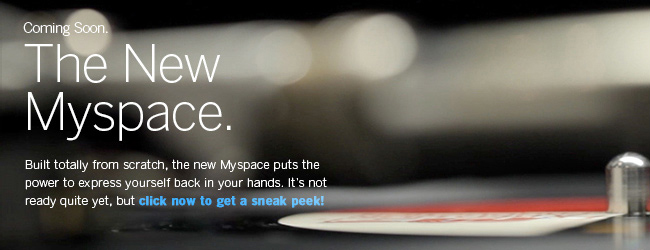
The technology pervading our lives has brought with it a new colonizing language. Even the term “UX” has become mainstream enough within the cultural lexicon that it can now referenced explicitly, as in the new MySpace ad. But more importantly, we have evolved a shared vocabulary for technology that goes beyond the rudimentary terms of features and specifications. In the years since Apple first pioneered and perfected this approach, we have all become fluent in technology’s emotional language.
For anyone who knew WTF social media was before they got a Facebook account in 2007 when everyone else they knew was doing it — you may understand.
Myspace was built on music. When Friendster, which preceded Myspace by a year, started shutting down accounts created for non-real person, individual entities, Myspace opened its doors to bands. As these acts brought, and built, their fanbases online, Myspace grew, until, without understanding its full meaning or potential Myspace sold its hockey-stick growth curve to News Corp for $580 million back before you started paying attention, in 2006. From there, its fate was sealed. Myspace should have become THE online destination for music fans, the interactive MTV of my generation — but it wouldn’t. With Fox as its new parent, Myspace was doomed to creating an ever clunkier product in the name of increasing ad space — which is all News Corp could really understand about the medium, anyway. It opened up an ever widening gap which a “cleaner,” “simpler” competitor was perfectly poised to exploit.
But something strange happened on the way Myspace’s 10-year-long journey to become what it always should have been. Facebook bloated up, IPOed, fizzled. I cant imagine referring to Facebook as “clean” and “simple” now. Can you? I’m not sure I even really fully understand all the profile and content settings, let alone the endless apps and features. I use Facebook for a much more reduced function, essentially in deliberate spite of all its bells and whistles — I use it to keep up with people I already know. This was always what it was intended for. The musicians I know who use Facebook as a channel to engage their fans are the first to admit that for their needs they’ve basically had to hack the platform, contorting it around what it was natively designed to accommodate. Connecting fans with the music and musicians they love is something that was backed in on top of the original Facebook idea. It’s not part of Facebook’s DNA. It was Myspace’s.
We shall see if, under new management (which includes a musician), the new Myspace product itself lives up to the hype and the promise, but in the meantime, what we have is this video, which is perhaps the most elegant strategic execution I’ve seen all year.
Who am I to say I want you back?
When you were never mine to give away.
I was waiting for a long, long time for you to feel the same.
Who are you to look at me like that?
Is there something more you need to say?
I haven’t loved you in a long, long time,
so why do I feel this way?
Can you hear my heartbeat?
Please don’t stand so close to me.
Can you hear my heartbeat still beating strong?
Maybe I’m ashamed to want you back.
Maybe I’m afraid you’ll never stay.
Thought I hated you a long, long time.
There was my mistake.
I just can’t pretend that nothing’s changed.
Can you comprehend just what to say?
If you break my heart a second time,
I might never be the same.
Can you hear my heartbeat?
Please don’t stand so close to me.
Can you hear my heartbeat still beating strong?
If you’ve been in the social game a long, long time, you understand. There is an explicit double meaning in the lyrics of love lost about our relationship with Myspace; about Myspace’s relationship with us. We aren’t just watching a product demo, we are suddenly thrust into something else. We’re in on something with Myspace. It’s INTIMATE. And EMOTIONAL.
And if the soundtrack can do that, then it means something else too, something even more powerful. If the music in this video could get you to understand all this, to know all this, to feel all this, then the video is a statement about the very power of music itself. About what music can do, how it can affect us, what it’s capable of.
In the decade since Myspace first launched and then declined into spammy, irrelevant obsolescence, record stores closed and the music industry shrank and a gazillion new social music apps and platforms came and went and pivoted and the internet killed the rock star and turned every band into a startup and nothing arrived to fill the gap left behind by what Myspace should have been. There has always been something missing, and this video makes it clear that its creators know what that black magic element is. What has been missing is an experience that can support, that can reflect, and that’s built for why it is we love music in the first place. THAT is what Myspace was always supposed to have become. And I hope it still does.
You know those movies about characters trail-blazing the business of some terrible vice? They’re always set in a not-too-distant past, have trailers full of period-specific songs, and include the words “inspired by a true story” on the poster. There’s the initial meteoric rise to power and wealth, followed by a period of unbridled excess — generally involving use of montage — and, ultimately, the inevitable downfall which was doomed to happen from the start, with, possibly, an epilogue of redemption. It’s a very specific film archetype, wherein the traditional bad guy is, instead, the quintessential American hero: the visionary entrepreneur who possesses the ingenuity and tenacity and just plain balls to seize an opportunity only he can see, and achieve a feat so stupendous — inventing the American cocaine trade, for instance, becoming the first black man to rise above the Italian mafia in the New York heroin business — you’re at once inspired and horrified by his success.
In 2001, Blow kicked off this trend of movies where you’re rooting for the drug dealer. The movie’s based on the life of George Jung, played by Johnny Depp, a Boston guy living in California, who starts off smuggling pot cross-country in the 60’s, and ends up becoming the American connection to Pablo Escobar’s Medellín Cartel, which, with Jung’s help, would go on to own 85% share of the U.S. cocaine market by the late 70’s / early 80’s:
.
Then came 2005’s Lord of War, in which the illicit contraband is weaponry, and Nicolas Cage plays Ukranian-American gun trafficker, Yuri Orlov — a fictional character based on a composite of a number of actual post-soviet arms dealers — whose big break comes as he watches Mikhail Gorbachev give his resignation speech on television, Christmas Day 1991. Like a prospector who’s just struck oil (See also: There Will Be Blood, for a variation on this cinematic theme), he envisions, in this moment, the future of his business expanding with the gush of weapons — even tanks! — he’ll now be able to buy (illegally) from the just-dissolved Soviet Union’s stockpile in the Ukraine:
.
2005 was also the year Weeds premiered on Showtime, in which Mary-Louise Parker plays a widowed housewife who becomes a suburban pot dealer, and a few seasons later ends up married to the head of a Mexican drug cartel.
By 2008, when American Gangster came out — which tells the story of Frank Lucas, played by Denzel Washington, who bypassed the entire Italian mafia to become the heroin king-pin of New York in the early 70’s by establishing his own direct supply connection in Asia during the Vietnam war and smuggling the drugs into the U.S. in the coffins of dead U.S. soldiers — rooting for the vice-peddling, psychotically enterprising, imminently doomed outlaw businessman — even though, good god! he’s a fucking heroin drug lord turning all of Harlem into addicted zombies!! — had become a familiar experience:
.
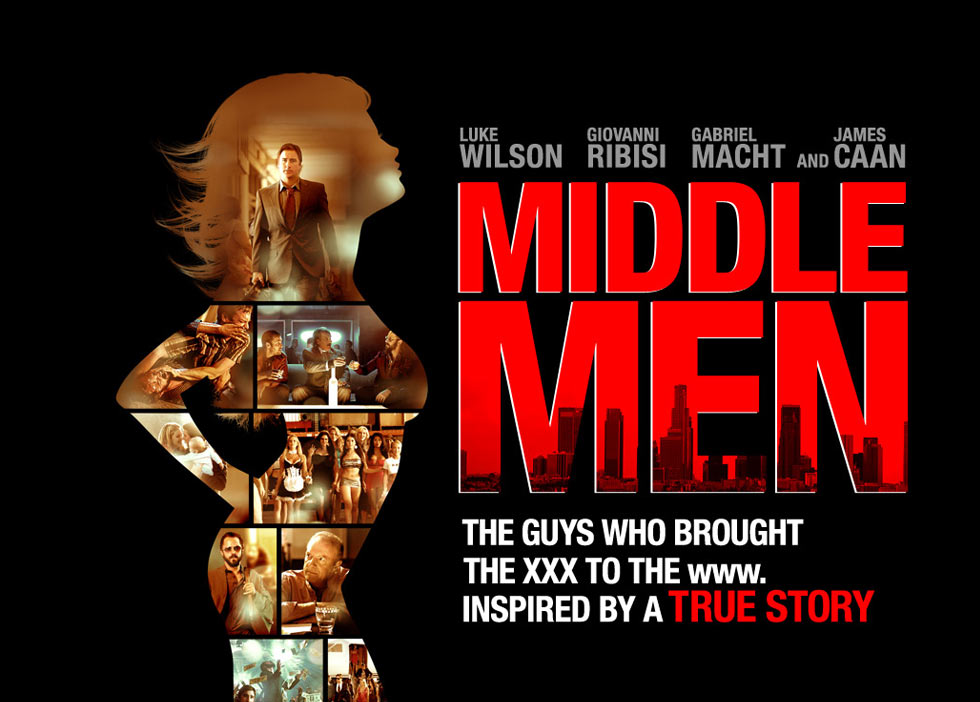
Which is how we arrive at Middle Men, due out later this year, a based-on-reality story in which Luke Wilson plays Jack Harris, a mainstream businessman who partners with a pair of porn content providers (played by Gabriel Macht and Giovanni Ribisi) to form the first online adult billing company in the mid 1990’s:
.
The drug dealer used to ALWAYS be the bad guy. You weren’t supposed to sympathize with him. Now it’s every fuckin’ movie like this. But the story isn’t just about the clever bastard with an idea for a supply to human nature’s demand, it’s about the vice itself. It’s not just George Jung’s story, it’s the history of blow we’re fascinated by — how a chance cell-mate pairing between a California pot smuggler and a member of the Medellín cartel would pave the way for the U.S. cocaine highway. How the Vietnam war became the camouflage for the heroin epidemic Frank Lucas created. How the Soviet Union’s collapse helped the business of illegal arms dealers. Each of these stories has this moment where entrepreneur and zeitgeist collide, and — for better or worse; mostly for worse — it changes the world. In Middle Men the focus of the story could have easily been the porn industry — but it isn’t. Porn is just the side effect. Like the preview voice-over announcer says, it’s the story of the worldwide web.
What neither he nor Mark [Zuckerberg, Facebook founder] had known when they started the damn thing was how addictive Facebook was. You didn’t just visit the site once. You vsited it every day. You came back gain and again, adding to your site, your profile, changing your pictures, your interestes, and most of all, updating your friends.
… Most kids who tried out [Facebook] once tended to come back — 67 percent every day.
The Internet: It might not be illegal, but it’s unquestionably addictive.
Once considered the province of geeks, the Internet is now where all of us live. It is a huge, enormous thing that is changing how we do practically everything and permeating the very experience of our lives. It is now all of our’s vice. And it’s breeding a whole new generation of vice entrepreneurs. Drug dealers and gunrunners have new company.
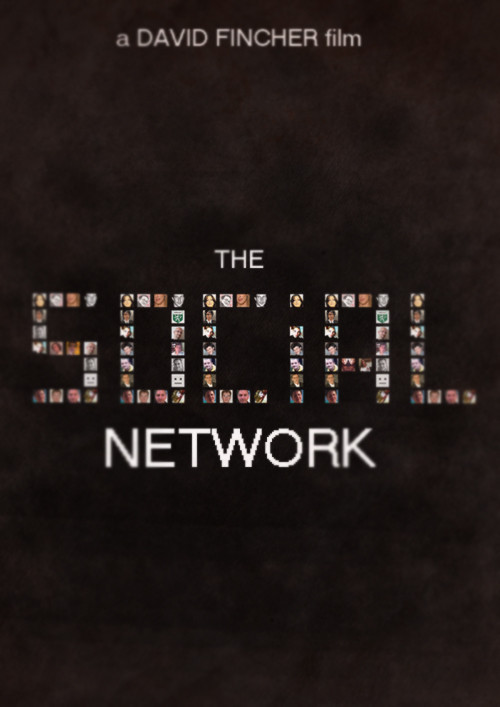
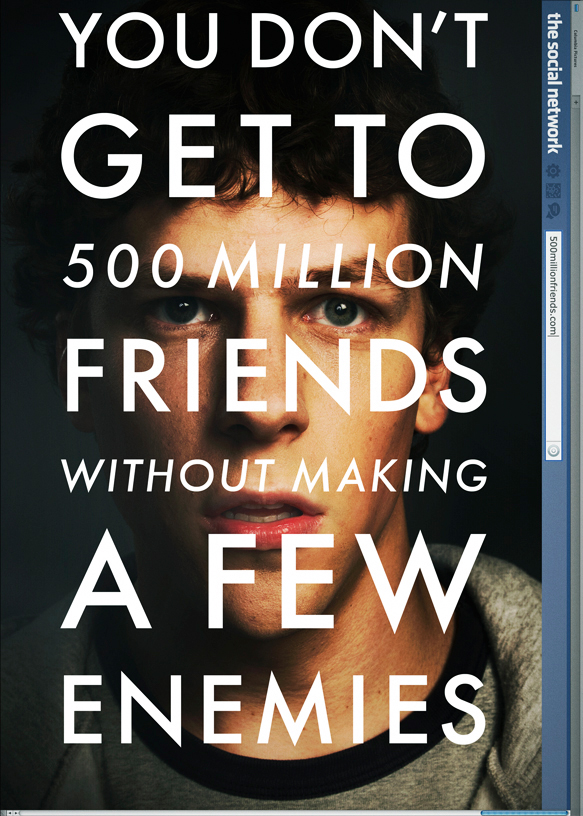
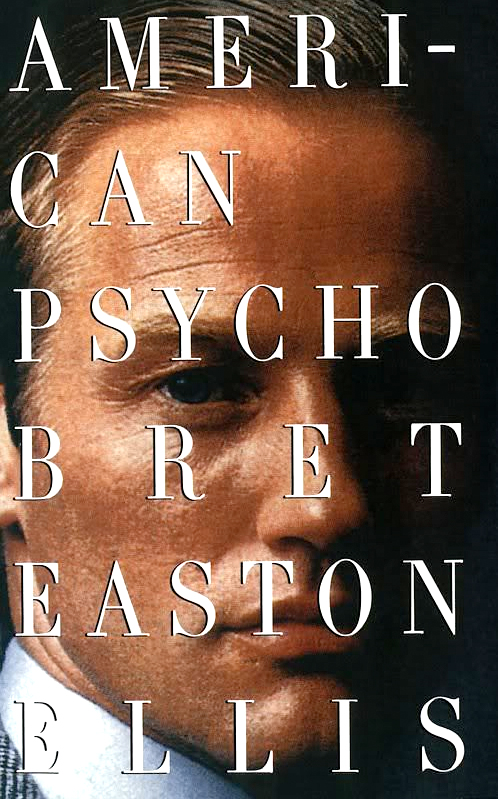
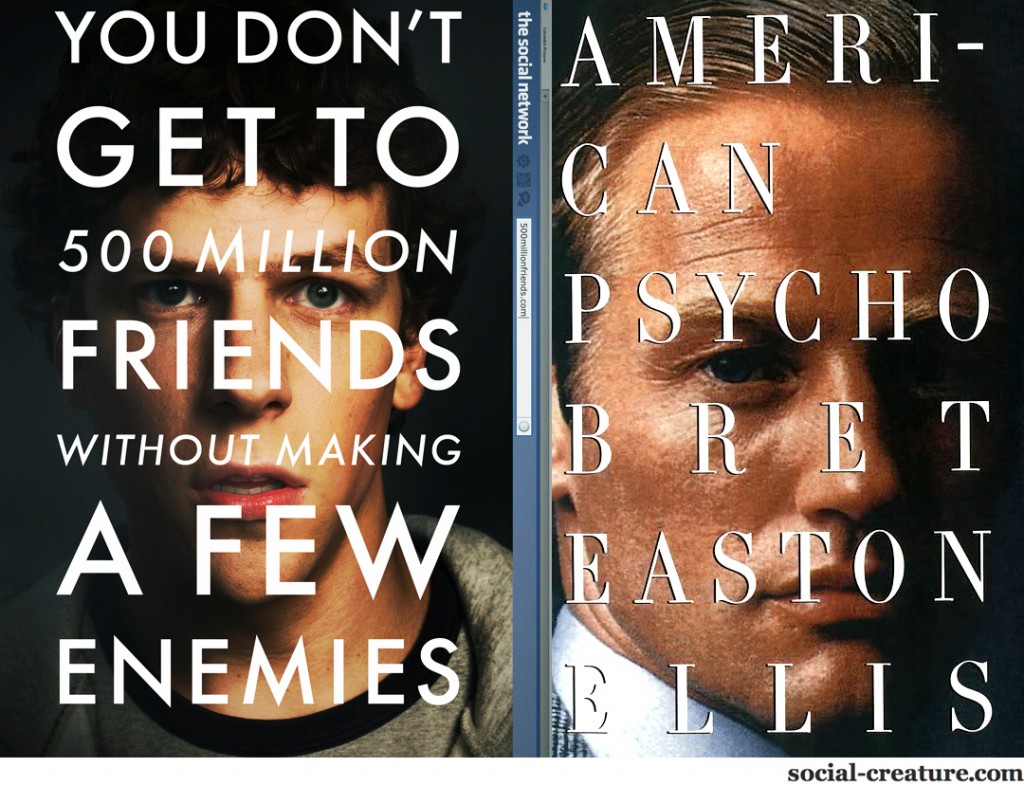
In related news, is it just me or does the new poster for The Social Network seem, like, awfully familiar?
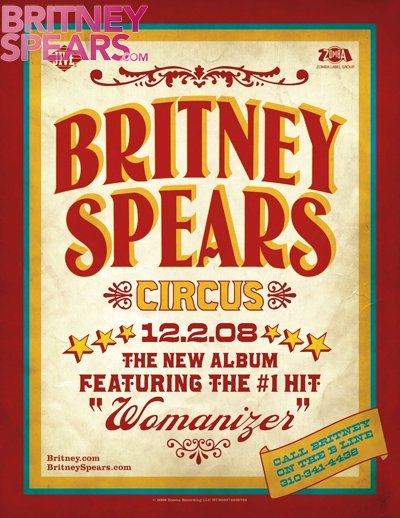
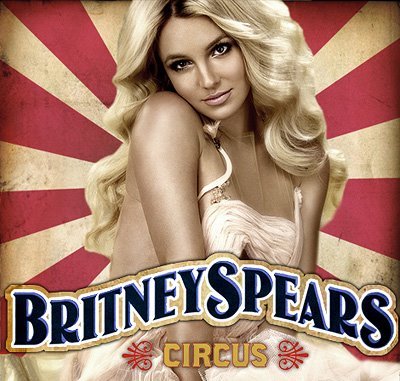
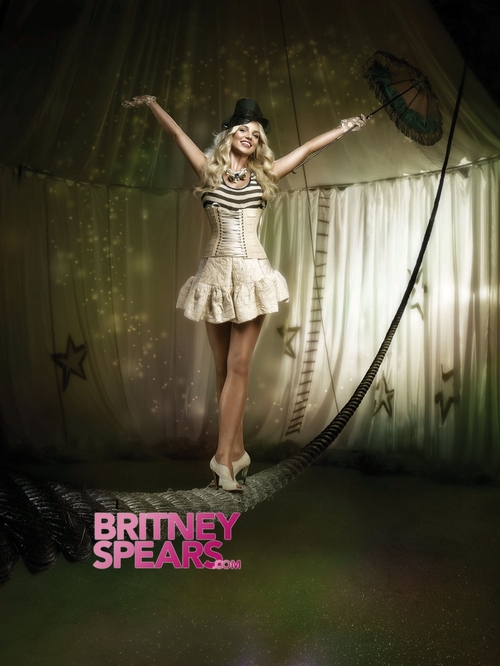
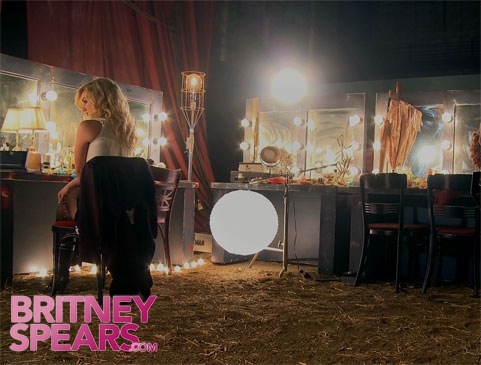
Britney Spears has a new album out today, and guess what it’s called:
That’s right!
Britney Spears’ new album is called Circus, and this is incredibly interesting to me.
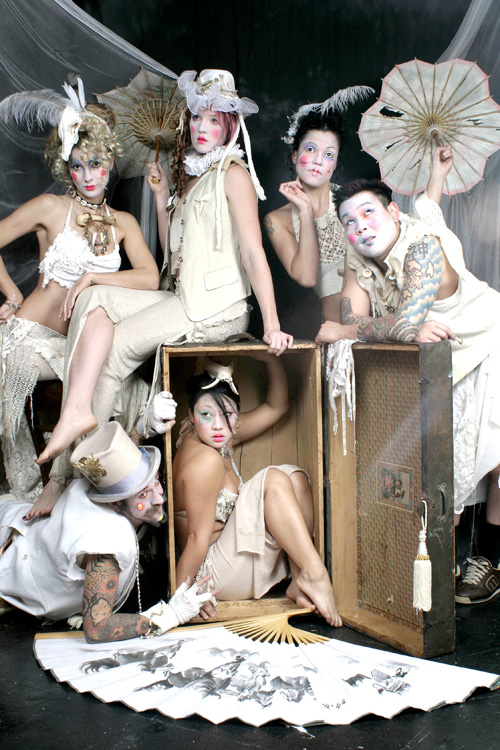
Once upon a time, I used to be the production manager for a circus called Lucent Dossier—
This troupe is actually part of a whole larger Circus performance subculture that has been growing on the West Coast for years. San Francisco’s The Yard Dogs Road Show, El Circo, and Vau De Vire Society, Santa Barbara’s Clan Destino, L.A.’s Mutaytor, Cirque Berzerk, and Lucent Dossier, these are just a few of the major acts that are coming to mind, but there are untold scores of others. With its own distinctive music, style, and nightlife, the Circus scene’s cultural influence has been steadily spilling over into mainstream fare for a while.
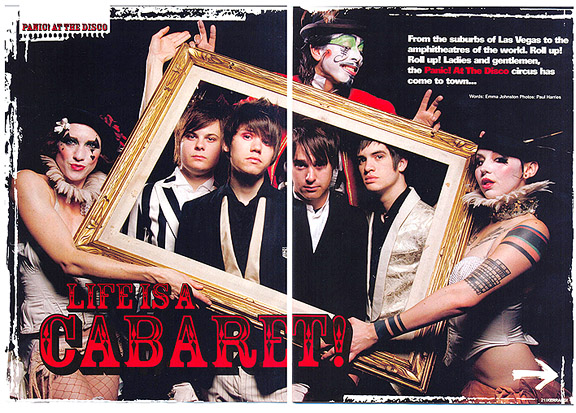
In 2006, Panic! at the Disco cast Lucent Dossier in the music video for their first big hit, I Write Sins Not Tragedies. When Panic! went on the road later that same year they brought Lucent along, and called it the “Nothing Rhymes With Circus,” Tour–
–which, according to the Washington Post, offered “a far superior take on the warped circus theme Motley Crüe was going for in its latest tour.”
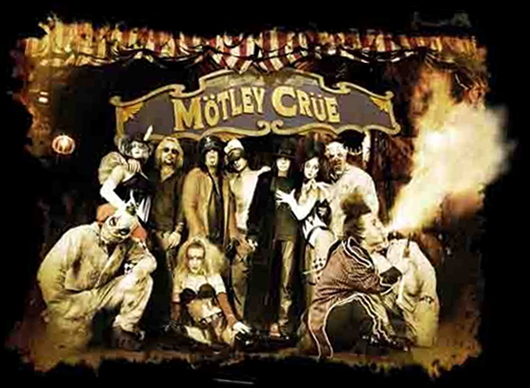
Oh, yes…that’s right. A year prior, Motley Crüe–who would become no strangers to the stylings of Lucent Dossier, themselves–reunited, and you know what their comeback tour was about?
Here’s a hint:
The Circus subculture infiltration, I should mention, has by no means been limited to music. With such proximity to the entertainment industry, it’s been showing up all over the place. Captivating gamers at E3, holding it down at Red Bull’s nightlife spectacle, Ascension, even America’s Next Top Model weighed in with an “homage” of sorts to the style earlier this year–
–but none of this is really comparable in scale to an endorsement from the Princess of Pop herself.
Despite the inescapable reality that it’s blatantly far from any kind of original album or tour concept, Britney Spears still chose to go with Circus anyway. Clearly there is something about Circus that continues to resonate with performers, but there is also something about our current culture, that the Circus theme persists in being so damn appealing. It should have long ago gotten played out, and yet here it is again, and again. It would be easy to contend that Circus is just an overly-tenacious current trend (and I know a few Circus professionals who do), but I see it is as the manifestation of a cultural response to a slew of far greater–and much less fickle–social trends.
Traditional forms of the tribe, like the village, have almost completely disappeared. Fewer and fewer people live in small communities where their daily interactions bring them in contact with the people they are deeply connected to, either spiritually or economically. Workers in modern corporations are replaceable and no longer bound to each other by the experience of a shared interdependence. The modern individual is preoccupied simultaneously by isolating, immediate concerns of personal survival and the larger, often intangible concerns of war, terror and economic change as transmitted by a now-seamless global media network. The intermediate space of community is not easily reached.
Not by accident, many of the newer, emergent forms of culture include a specifically tribal aspect. A return to tattooing, sacrification, fire performance and drumming, as well as a renewed interest in ritual, has occurred side-by-side with the formation of intentional (if temporary) communities such as the Rainbow Family gatherings and Burning Man festival, all of which focus on celebrating and integrating the peculiarities of their varied members.
It was at these kinds of festivals, in clubs and at underground raves, that alternative circus acts began appearing in the early 90’s. The performers were young, crazy “freaks” without any formal training who used circus costumes, skills or themes as performative means for expressing their own exaggerated personalities. Many went on to gain formal training or to study the history of the genre, but essentially their relationship to conventional circuses resembled that of outsider art to mainstream art circles. They didn’t really relate to the modern-day circus. They took their cues from something much, much older: the caravan-pulling gypsies.
The gypsies, shunned by society at large, but fiercely loyal to their own clan, were the most tribal group in all of Europe. It was these wanderers who first produced circus-like entertainment in the medieval townships, along with strolling players and minstrel shows. It wasn’t until the 1770’s that Englishman Philip Astley fused military equestrian drills with acrobatics and other entertainments to form the modern circus.
The phenomenon of alternative circus performance can be seen as the theatrical dimension to one generation’s wholesale rediscovery of the concept of tribe.
In other words, kids originally began forming Circus performance troupes as an extension of creating urban tribes:
According to French sociologist Michel Maffesoli, urban tribes are microgroups of people who share common interests in metropolitan areas. The members of these relatively small groups tend to have similar worldviews, dress styles and behavioral patterns. Maffesoli claims that punks are a typical example of an “urban tribe.”
20 Years later, instead of forming punk bands, party kids were forming circuses. And in an age where no one thinks twice of breakdancing or skateboarding, does circus art seem all that unexpected?
In the past decade we’ve also seen the arrival of social media, and “Performative means for expressing exaggerated personalities” as Hill put it, isn’t just for the Circus anymore. It’s what makes the social web go round, too. In Generation Me: Why Today’s Young Americans Are More Confident, Assertive, Entitled–and More Miserable Than Ever Before, Jean Twenge and her coauthors analyzed 15,324 responses to the Narcissistic Personality Inventory, completed by college students between 1987 and 2006. The survey is considered the most popular and valid measure of narcissism, and features statements such as “I think I am a special person,” “I can live my life anyway I want to,” “If I ruled the world, it would be better place,” etc. According to the results:
The trend was extremely clear: younger generations were significantly more narcissistic. The average college student in 2006 scored higher on narcissism than 65% of students just nineteen years before in 1987. In other words, the number of college students high in narcissism rose to two-thirds in the space of less than twenty years.
While Myspace, Youtube, blogs, and all the rest, aren’t responsible for the origins of this narcissism trend, they absolutely help enable its progress. “Narcissism is the darker side of the focus on the self,” writes Twenge, and our constant interaction with social media is an indulgence in self-focus. All of us have been affected by the process of maintaining our online presence. Even if we’re not all live-streaming our entire existence, we upload photos of our lunches or puppies for our network to see, we write blogs about experiences that we planned to blog about even as we were having them, we leave comments for friends just so other people will see them, we fill in our favorite movies and books and music in the appropriate boxes on various profiles, aware of what our choices say about us. In a sense, all of this is a performance. We are already constantly performing our selves, and Circus represents the ultimate performance platform.
Not surprisingly, we also crave attention. After all, what’s the point of being the spectacle if no one is watching? “Given the choice between fame and contentment,” writes Twenge, “29% of 1990s young people chose fame, compared to only 17% f Boomers.” No doubt, the 2000’s generation would score even higher.
When i ask teens about their desire to be famous, it all boils down to one thing: freedom. If you’re famous, you don’t have to work. If you’re famous, you can buy anything you want. If you’re famous, your parents can’t tell you what to do. If you’re famous, you can have interesting friends and go to interesting parties. If you’re famous, you’re free!… [However] Anyone who has worked with celebrities knows that fame comes with a price and that price is unimaginable to those who don’t have to pay it.
The idea of “freedom” is a huge aspect of the appeal embodied by the Circus since way before its modern “reinvention.” Circus has long represented freedom from normal society’s rules. The ultimate outlaw lifestyle. And like celebrity, it too has extolled its own price. No surprise then that celebrities from Motley Crüe to Britney spears should find this theme so relatable.
While I don’t doubt there will be much talk of shark-jumping going on within the Circus underground (after all, just how underground-y can it be if Britney’s fans get into it?), to me, both the alternative and the mainstream reincarnations of Circus are on the same continuum. More than just a subculture or a concert tour fad, Circus has come to articulate something about the nature of our relationship with various social trends shaping the modern experience.
In Nation of Rebels: Why Counterculture Became Consumer Culture, Joseph Heath and Andrew Potter explain that really, there was never any conflict between the two to begin with. Counterculture hinges on, and consumer culture consists of, the expression of your lifestyle/identity. Whether you’re choosing to wear Nikes, Doc Martens, or some crazy obscure Japanese brand that doesn’t even exist in the US, you’re deliberately saying something about yourself with the fashion choice. And regardless of how “counter” whatever culture you think you are, getting to express that about yourself requires buying something.
Yet the concept of a strict divide between the “mainstream” and “counter”–or “alternative”–cultures persists, and the distinction between these “affiliations” is now defined not by whether we consume, but by what. Identities hinge on particular expressions and symbols, such as music or fashion for instance. In a very simple sense, you are “mainstream” or “alternative” based on whether the way you choose to express your identity, your taste, is shared by a big group/culture, or a small one. Yet the trouble is that these expressions are given meaning precisely through their common significance within a group, if the group size changes, then so too does the meaning.
Last summer Danah Boyd wrote about the idea of “Pointer Remix“:
One way to think about remix is as the production of a new artifact through the artistic interweaving of other artifacts…. With this in mind, think about an average MySpace profile. What should come to mind is a multimedia collage: music, videos, images, text, etc. This collage is created through a practice known as “copy/paste” where teens (and adults) copy layout codes that they find on the web and paste it into the right place in the right forms to produce a profile collage. One can easily argue that this is remix: a remix of multimedia to produce a digital representation of self. Yet, the difference between this and say a hip-hop track is that the producer of a MySpace typically does not “hold” the content that they are using. Inevitably, the “img src=” code points to an image hosted by someone somewhere on the web; rarely is that owner the person posting said code to MySpace. The profile artist is remixing pointers, not content.
I kind of think of all culture creation/expression as a process of “Pointer Remix”— and when I say culture creation, I mean brand creation too. There’s a paragraph in Pattern Recognition where William Gibson lapses into fashion historian momentarily:
My God, don’t they know? This stuff is simulacra of simulacra of simulacra. A diluted tincture of Ralph Lauren, who had himself diluted the glory days of Brooks Brothers, who themselves had stepped on the product of Jermyn Street and Savile Row, flavoring their ready-to-wear with liberal lashings of polo knit and regimental stripes. But Tommy surely is the null point, the black hole. There must be some Tommy Hilfiger event horizon, beyond which it is impossible to be more derivative, more removed from the source, more devoid of soul.
And just as much as all labels are creating pointers, that’s exactly what we are buying. In fact, looking TO buy. Now, more than ever before, the possession of an “original” source is either impossible, pointless, or even irrelevant. In postmodernism’s revenge, even an “original” becomes a reference. A vintage dress is all about what it “points” to.
Yet as Boyd points out:
If the content to which s/he is pointing changes, the remix changes…. Say that my profile is filled with pictures of cats from all over the world. The owners of said cat pictures get cranky that I’m using up their bandwidth (or thieving) so they decide to replace the pictures of cats with pictures of cat shit. Thus, my profile is now comprised of pictures of cat shit (not exactly the image I’m trying to convey). This is what happened to Steve-O.
One of the most high profile cases of such content replacement came from John McCain’s run-in with MySpace profile creation. His staff failed to use images from their own servers. When the owner of the image McCain used realized that the bandwidth hog was McCain, he decided to replace the image. All of a sudden, McCain’s MySpace profile informed supporters that he was going to support gay marriage. Needless to say, this got cleaned up pretty fast.
Cleaning it up on myspace is easy. You can just go and find another image and use that, or, of course, you can host your own images, and that way be sure that the content being pointed to will not change without you knowing about it–but that defeats this metaphor, so pretend you didn’t just read it.
Cause what’s interesting to me is when this same phenomenon happens in a non-html-based context. Like, for example, if a priest gets outed as a pedophile. This kind of “content change” happens to real-life “pointers” all the time. Pointers that happen to be used as elements in the construction of identity.
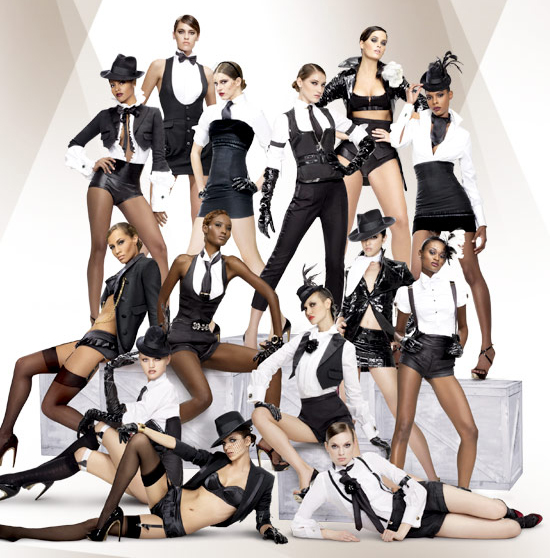
Check this out, below is the ad campaign for the 2008 season of America’s Next Top Model:
(For the record, seeing this billboard is what inspired this whole post.)
There’s a few particular aesthetic elements to note here for the purpose at hand, and I’ll tell you what they are. The hats with the feathers, the general 1920’s and 40’s infusion with the high waists and cropped tops, and the whole cabaret/vaudeville overtone.
These are all elements of a style that’s been rocked in the scene around me for years.
If you’re interested in some history you might want to click here, but the quick version is it became a part of the aesthetic expression of a particular subculture with a significant presence all up along the West Coast. And then last week, at the intersection of Sunset and Vine a bus rolls past me carrying a whole tableau along its side of girls sporting this style. It was pretty startling to see it so out of context, since up until then I hadn’t seen this look used in any mainstream media or setting–anyone who can find links to other examples, post it in the comments, I’d love to see it.
While I personally have no idea exactly how the stylist team for ANTM got the idea for the particular creative direction in the ad, I think the possibility that this burgeoning aesthetic, with a major base of operations in LA, might have somehow made it directly onto their radar is hardly a long shot.
Boyd asks, “What happens when a culture exists that rests on pointer remix for identity construction?” Well, at least one side effect is that meanings of cultural expressions–and hence what they say about our identities–change.
One pretty consistent way this “content change” in the meaning of a cultural expression happens is in the process of becoming more exposed. It’s been going on ever since the first small local band blew up and became huge. Everything else about the music and the act might have stayed the same but the obscurity, and it’s the very “alternative”-ness itself that was a part of its meaning all along. The difference between being a fan of something intimate and distinctive vs. something mainstream and egalitarian could be kinda like waking up to discover your kitten pictures have turned into kitten poo.
Here’s another approach. In October of 2007, Sasha Frere-Jones wrote an article in the New Yorker about “How Indie Rock Lost Its Soul.” The premise of the piece is that in the 1990’s rock and roll, a genre that evolved out of a tremendous black musical influence on white performers, and became the most miscegenated popular music ever to have existed, underwent a kind of racial re-segregation in its style:
Why did so many white rock bands retreat from the ecstatic singing and intense, voicelike guitar tones of the blues, the heavy African downbeat, and the elaborate showmanship that characterized black music of the mid-twentieth century? These are the volatile elements that launched rock and roll, in the nineteen-fifties, when Elvis Presley stole the world away from Pat Boone and moved popular music from the head to the hips.
…It’s difficult to talk about the racial pedigree of American pop music without being accused of reductionism, essentialism, or worse, and such suspicion is often warranted. In the case of many popular genres, the respective contributions of white and black musical traditions are nearly impossible to measure. In the nineteen-twenties, folk music was being recorded for the first time, and it was not always clear where the songs—passed from generation to generation and place to place—had come from.
…Yet there are also moments in the history of pop music when it’s not difficult to figure out whose chocolate got in whose peanut butter. In 1960, on a train between Dartford and London, Mick Jagger and Keith Richards, then teen-agers, bonded over a shared affinity for obscure blues records. (Jagger lent Richards an LP by Muddy Waters.) “Twist and Shout,” a song that will forever be associated with the Beatles, is in fact a fairly faithful rendition of a 1962 R. & B. cover by the Isley Brothers. In sum, as has been widely noted, the music that inspired some of the most commercially successful rock bands of the sixties and seventies—among them Led Zeppelin, Cream, and Grand Funk Railroad—was American blues and soul.
… In the mid- and late eighties, as MTV began granting equal airtime to videos by black musicians, academia was developing a doctrine of racial sensitivity that also had a sobering effect on white musicians: political correctness. Dabbling in black song forms, new or old, could now be seen as an act of appropriation, minstrelsy, or co-optation. A political reading of art took root, ending an age of innocent—or, at least, guilt-free—pilfering.
Himself a white musician/vocalist, Frere-Jones notes that adopting a black singing style even in his own band “seemed insulting.”
By the mid-nineties black influences had begun to recede, sometimes drastically, and the term “indie rock” came implicitly to mean white rock.
….How did rhythm come to be discounted in an art form that was born as a celebration of rhythm’s possibilities? Where is the impulse to reach out to an audience—to entertain? I can imagine James Brown writing dull material. I can even imagine the Meters wearing out their fans by playing a little too long. But I can’t imagine any of these musicians retreating inward and settling for the lassitude and monotony that so many indie acts seem to confuse with authenticity and significance.
While the article is specifically focused on the indie rock side, he readily admits that the segregation went both ways. Just as indie rock became “white rock,” “Black” music too began to occupy a space that may be more inaccessible and irrelevant to an outside audience now than it was during the 50’s. In an audio interview accompanying the article, Frere-Jones talks more about the results of the musical re-segregation from both angles. “Why is this a hit?” He jokes, about the absurdity of “Soulja Boy’s” success. “It’s just rapping over a ring-tone.”
Social and (after a series of lawsuits involving sampling) legislative forces gradually changed the sound of the music itself, and also of the “content” in the meaning of these musical pointers. As in: what does liking Indie Rock or Rock and Roll, and even Hip Hop at this point, convey about your identity now vs. what it would have 20 year ago? 40 years ago? Lose miscegenation and something that could once be relevant to a mixed audience becomes divisive.
Just as “Nation of Rebels” points out that there is no conflict between the counter and over-the-counter culture, I likewise see alternative and mainstream culture as just parts of a greater continuum, which ultimately, despite all the obstacles that societies, politics, economics, religions, and even individual personalities may put in its path, seeks its level at the greatest hybridity. “Content change” in the meaning of its expressions is as inevitable as the remixing of the expressions themselves.
In the meantime though, I’m gonna enjoy this kitten while it lasts.