Back in early 2006, Chevy tried to get on the whole “consumer generated content” bandwagon (or bandSUV, I suppose), with a website which allowed users to easily create their own “ads” for the Chevy Tahoe using provided video and music assets. In theory, the idea was to generate interest in the vehicle through user created ads circulating virally around the web. But just months ahead of the release of An Inconvenient Truth, with all things “green” and “climate crisis”-related just on the verge of tipping over from environmentalist niche to major mainstream movement, the cluelessness of the folks at Chevy about the extent of the negative sentiment for this vehicle became all too quickly apparent, as the most popular results generated by the their ad-creator came out looking something like this: .
.
Three years after what remains one of the most infamous examples of a social media reality check, Chevy is pursuing perhaps the greatest rebranding of any American car company, (not that it has a choice, exactly), with the debut of the whopping 230mpg, electric vehicle: the Chevy Volt. .
.
A phenomenal advancement from the environmental perspective, for sure, but from the marketing side, perhaps, it shouldn’t take a government bailout to get you to really listen to what consumers are telling you. .
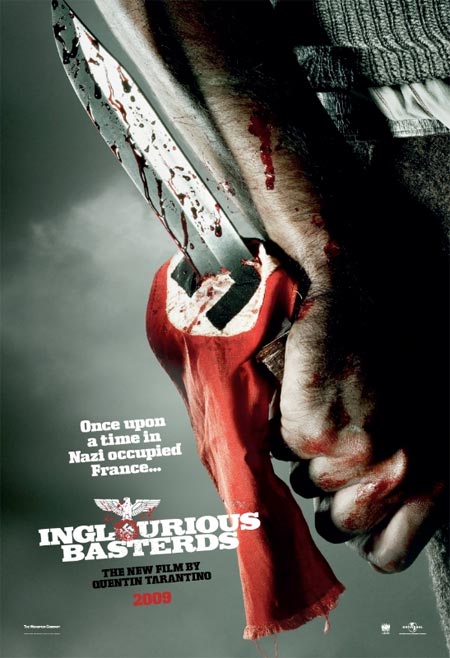
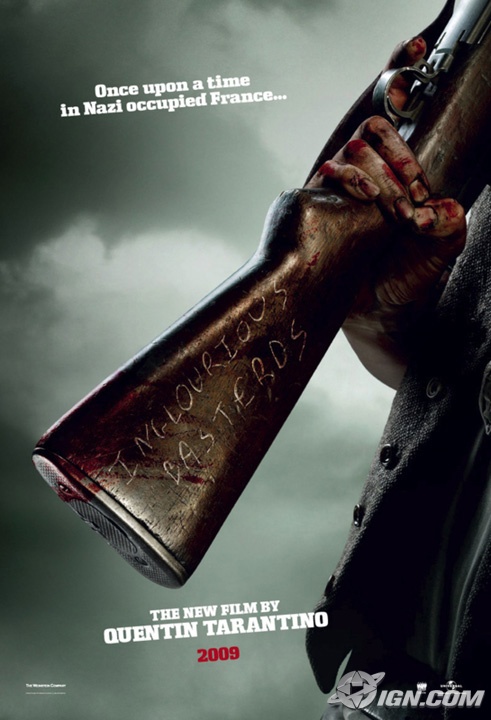
Have you noticed the slate of WWII resistance movies lately? There’s last year’s Valkyrie, starring Tom Cruise, which depicts the actual attempted plot devised by a cadre of senior German officers to assassinate Hitler. Earlier this year saw the release of Defiance, also based on a true story, with Daniel Craig and Liev Schriber portraying the Bielski brothers, who formed a Jewish resistance otryad in Nazi-occupied Eastern Europe and helped over 1,000 people survive in the Belorussian forest. Not to be outdone by American productions, Europe is getting in on its own action with the Danish film, Flame & Citron, which came out a few weeks ago, an ultra-stylized spy noir based, once again, on a true story of two resistance fighters, nicknamed, as one might expect, Flame and Citron, who became heroes of the underground through their violent dealings. And finally (or perhaps not?) there’s Inglourious Basterds, due out this Friday, starring Brad Pitt, and directed by Quentin Tarantino.
For the majority of onscreen depictions of WWII warfare, the script has been about specifically military combat (Saving Private Ryan, Band of Brothers, Flags of our Fathers, etc.) What’s striking about this current slew of films, however, is that the focus has shifted to stories of renegade insurgence. One could postulate all sorts of hypotheses about why that shift might have gained traction recently, but regardless, obviously there really were a lot of resistance movements going on during WWII, and there are a lot of incredible stories of heroism and courage to be told. Yet the particular cultural territory the Inglorious Basterds are invading I find rather dangerous and troubling.
Of all the recent resistance-themed movies, Basterds is the only one that does not appear to be based, as far as I can tell, on any sort of actual events, and from what I can gather from the movie’s trailer the whole premise basically just seems like an excuse for Tarantino, the Auteur of American Violence Porn to do a 1940’s period flick — altho, allegedly there is some sort of plot, also. After the trailer’s initial 50 seconds of banter, when we’re watching a Nazi getting his head glibly bashed in with that All-American weapon, the baseball bat, like it’s a Wiemar Goodfellas, it seems the huffing, gleaming black trend train, trailing more than a half century’s smoke behind it, might have arrived at its ultimate cinematic destination. Though not before — and this is perhaps reflective of what Tarantino does with his down time — video games got there first.
Wolfenstein, Call of Duty: World at War, Medal of Honor, Mortyr, ÜberSoldier, Commandos: Strike Force — these are all first-person shooter games (and doubtless there’s others I’m missing on this list) wherein players are, as Pitt puts it in the trailer, “in the killin’ Nazi bidness.” In fact, the the film is so seamlessly aligned with this game genre that much of the promotion for it is happening through online gamer destinations like IGN and GGL. Even the movie’s iconography might as well be for an Inglourious Basterds video game, (which, I’m sort of surprised it isn’t):
Not that I am against the killin’ Nazi bidness, it’s just that I find the progressive reduction of the Third Reich to a cartoon, to be rather tasteless — also, a little bit queasily horrifying.
65 years after the defeat of Nazi Germany, our concept of Nazisms seems to be losing its reality. More and more we are turning a cancerous pathology of human behavior into a fantasy of evil. Their atrocious actuality wiped away by time, Nazis have become almost too perfectly evil to be have been true. They have come to serve now as a broad cultural shorthand for the ultimate, rottenest badness, or otherwise, for just whatever we happen to find personally distasteful. (See: Bill O’reilly expounding in all seriousness on why the Huffington Post are a bunch of Nazis for an example of just how utterly degenerated the cultural understanding of the term’s meaning has become.) Nazis have evolved into mythical, timeless, uncomplaining boogiemen, always on call to play the supreme Hollywood villains or video game baddies now that the idea of Soviets as arch enemies is an anachronism and Arab villains still feel way too real to be fantasy.
But there is a hugely real and present danger in treating Nazis like the occupied-Europe equivalent of Ninja adversaries in Revenge / Action flicks, or like human-looking-yet-conveniently-not human alien monsters. It is at our own peril that we think of the absolute, explicit worst that humanity is capable of doing, as if it were a supernatural, science-fiction evil, safely beyond human achievement. It’s very much not. Nazis are not Hollywood creations. They were REAL. And the fact of their existence is STILL real. And there is no fantasy for any of us in forgetting.
Just getting around to some bits of music housekeeping I’ve been meaning to mention:
1. Mos Def Sells New Album on T-shirt
About a year and a half ago I wrote a post called Sell Music On ANYTHING! where I suggested that since digital technology had recently liberated music from its previously contrived confinement on things like tape and plastic and vinyl, the really exciting thing wasn’t that it was no longer necessary to sell music on something, but that it was now possible to sell music on ANYTHING!
It turns out Mos Def had the same exact notion. Case in point:
Here’s a new one: Mos Def‘s BNM’ed new album The Ecstatic is available as a T-shirt. As in: You can buy a shirt that has The Ecstatic‘s Killer of Sheep-interpolating cover art on the front, its tracklist on the back, and a download code for the album on a hang tag.
Selling albums these days is hard! So the music/fashion company Invisible DJ, working with the fashion designer LnA, has come up with this idea called the Music Tee.
The Ecstatic is the first album available in the Music Tee format. Mos Def’s Downtown Music labelmates Santigold and Miike Snow also have Music Tees on the way.
One prophecy down.
As companies such as Invisible DJ and Dropcards spring up to corner the various new mediums that music can be sold on, it’s time for brands to start paying attention to what’s going on here. After all, why start a new shoe company to sell music on, when you could just sell new music on the shoes you’re already producing if you’re, say, Nike? I’ve written before about how brands are behaving more and more like record labels by teaming with music acts in various ways in order to create relevance and cultural salience — and in the process bands are benefiting from the partnership by taking advantage of the brand’s marketing reach to access an even greater audience for their music. Perhaps the new incarnation for “record labels” is in the guise of marketing agencies. In the aftermath of Vibe Magazine’s recent demise, Jeff Chang, music journalist and author of Can’t Stop Won’t Stop: A History of the Hip-Hop Generation spurred a discussion on Twitter (which he re-posted on his blog) musing on the future of magazines, especially those focusing on urban culture. Chang writes:
For what it’s worth, most of the mags I know in the high 10,000 – low 100,000 circulation realm have become quasi- or real marketing agencies. I think of magazines like URB, The Fader, and Juxtapoz, and Swindle as businesses that are working. But there are a number of ancillary units working there aside from the content work. All of them have massive marketing arms. Juxtapoz is part of the Upper Playground clothing/street art business. Swindle is part of Shepard Fairey’s empire.
But yeah, media qua media? Not so much…
Alan Light, a music journalist and editor who’s worked with Vibe, Spin, and Rolling Stone, among others added that the magazine parts of the marketing companies are “A good investment in terms of visibility. As a kind of calling card for the rest of the operation where the profits are.” Since the music industry is in pretty much the same shape as magazines perhaps it might be time for labels to start exploring this sort of culture creation / marketing agency model as well? One prophecy to go.
2. The Glitch Mob’s Summer Tour: “More Voltage”
I helped out with refining the tour concept and now I’m all bummed none of the dates are gonna be on the East Coast. Boo.
3. New music I’ve been listening to on repeat: Beats Antique
Their new album, “Contraption” is some seriously awesome shit. Have a listen:
.
And Bandcamp, the service they’re using to release the music, is definitely looking like something to keep an eye on.
I had already joined the Circusscene when, in early 2006, I was consulting at Wong Doody and heard about a clothing company client they were working with called Edoc Laundry. The clothes had an intriguing concept: there were secret codes in the garments, which, if deciphered, would reveal clues to a mystery story. The wearers of Edoc Laundry clothing would thus become players in an “Alternate Reality Game” — a new form of interactive entertainment that uses the real world as a platform for creating an ever-evolving narrative. Now, I had grown up in subculture, gone on to produce nightlife events and music festivals, and ultimately ended up in marketing. So the concept of a secret “code” embedded in clothes — of hidden meanings conveyed in the way people dressed — it all made perfect sense to me. This was already a game all of us in the modern world were playing. It was called Lifestyle.
Years earlier, Reznor had heard about a complex game played out over many months, both online and in the real world, in which millions of people across the planet had collectively solved a cascading series of puzzles, riddles, and treasure hunts that ultimately tied into the Steven Spielberg movie AI: Artificial Intelligence. Developed by Jordan Weisman, then a Microsoft exec, it was the first of what came to be called alternate reality games — ARGs for short. After leaving Redmond, Weisman founded a company called 42 Entertainment, which made ARGs for products ranging from Windows Vista to Pirates of the Caribbean:Dead Man’s Chest. Reznor wanted to give his fans a taste of life in a massively dysfunctional theocratic police state, and he decided that a game involving millions of players worldwide would help him do that in a big way.
Reznor was stepping into a new kind of interactive fiction. These narratives unfold in fragments, in all sorts of media, from Web sites to phone calls to live events, and the audience pieces together the story from shards of information. The task is too complicated for any one person, but the Web enables a collective intelligence to emerge to assemble the pieces, solve the mysteries, and in the process, tell and retell the story online. The narrative is shaped — and ultimately owned — by the audience in ways that other forms of storytelling cannot match. No longer passive consumers, the players live out the story.Eight years ago, this kind of entertainment didn’t exist; now dozens of such games are launched every year, many of them attracting millions of followers on every continent.
When I was in high school I started going to raves. This was way before anyone would say the words “social” and “media” next to one another, when us kids still did shit like go to the library, and AOL was the only way to instant message. But if you were, let’s say, looking for an underground party to dance at all night, where no one was gonna care if you weren’t 21, you could definitely find it online. In Boston, where I grew up, there was NE-Raves, an online mailing list for electronic music events in the Northeast, originally hosted out of MIT. According to the “Cobbled-Together History of Hyperreal,” as far back as 1992, NE-Raves was one of the very first rave email lists in the US, along with SFraves on the West Coast. By the time I got into the Rave Scene (ahem *ARG*), both of these regional lists, and others, had been subsumed into hyperreal.org. In fact, by that point there were actually various other newsgroups and listservs and websites and whatnot created by and for the rave community, but in a sense, all roads would lead back to Hyperreal, which had become a kind of online clearinghouse of information on “Rave Culture, Chemistry, and Music.” In ARG parlance, Hyperreal could be considered the “Rabbithole” — the trailhead that marks the first website, contact, or puzzle that starts off the ARG. When Hyperreal first began, now almost two decades ago, as creator Mike Brown writes:
The majority of people with internet access back then were college students involved in computer-oriented studies, employees of well-funded technology companies like AT&T, and a smattering of U.S. government and military agencies. Consumer-oriented services like Compuserve, Genie, Prodigy and AOL, as well as most dialup bbs ‘networks’ were not on the internet, or had very limited gateways for mail and news that no one knew about. There was no spam, and since you weren’t interacting with a true cross-section of the general public, the entire net had a different character than it does today, socially.
So as the rave scene started to blow up nationwide, we’d tell each other online about the flyers we found and the records we bought and the parties we went to. You’d have people in the Midwest who were driving 9-12 hours to get to raves in New York and D.C., and to hang out with the friends we made through these online forums. A lot of information sharing was going on in this subculture’s subculture.
They are collective and talking and engaged, both with the project and with each other. They’re having a collective experience in which they literally bring different pieces, one to the next, swap them back and forth, gossip about them. They have an element of cocreation and a collaborative nature that doesn’t really have an analog that I’ve been able to think of in the arts, although it does in another place. This behavior—this sort of creative, collaborative, enthusiastic scavengering behavior—is something that we call by another name when we direct it, not to entertainment, but to the physical world. We call it science, as it’s been constructed since Newton and the Royal Society, and that’s worked out pretty well for us as a species.
I would argue it has a direct analog in culture as well. The term “Alternate Reality Game,” after all, was never actually what the creators of The Beast used to describe what they were doing. It was a phrase that came from the players themselves, to refer to this idea of a self-styled world that proposed an alternative vision of reality hidden under the “mainstream” surface. In Tara Mcall’s book This Is Not A Rave (“This Is Not A Game” anyone?) she writes about the way early ravers deliberately positioned themselves against the status quo and the mainstream club crowd:
They saw a need to maintain their scene’s underground status. To be part of an underground culture meant that you stood apart from the norm. It indicated that you belonged to a secret community. If you were part of the underground you were part of a chosen group. Set apart from the mainstream, these early ravers bonded with one another by exhibiting small signs such as specific articles of clothing that could be “read” by those in the know, signaling that they belonged.
Signals embedded in attire, containing meaningful (cultural) codes decipherable by others in the know? Sounds pretty much like what Edoc Laundry had in mind. While the expression of identity — whether alternative or not — is a function of all lifestyle apparel, there are numerous other rave/ARG parallels that come to mind. For instance, back in the day the actual location of a party (especially if it was unpermitted) would be kept under wraps until the very last minute, with only an “info line” phone number disseminated. To find out where to go you’d have to call the number on the night of the event, and oftentimes the directions you’d get wouldn’t lead you directly to the location but to a designated “map point” where you’d either receive further instructions on where to go, or park your car and be shuttled to the event location. At the time all of this was done in order to avoid “outside” attention — after all, it’s harder for law enforcement to bust up a party if they don’t exactly know where it is — but now it’s par for the course in ARG “experience design.” From Wired’s description of the Year Zero ARG culmination:
On April 13 [2007], all the players who had signed up at a subversive site called Open Source Resistance were invited to gather beneath a mural in Hollywood. Some of those who showed up were given cell phones and told to keep them on at all times. Five days later, the phones rang. The players were told to report to a parking lot, where they were loaded onto a ram-shackle bus with blacked-out windows.
The bus delivered them at twilight to what appeared to be an abandoned warehouse near some railroad tracks. Armed men patrolled the roof. The 50-odd players were led up a ramp and into a large, dark room where the leader of Open Source Resistance (actually an actor) gave a speech about the importance of making themselves heard. Then they were led through a maze of rooms and deposited in front of — a row of amps?
With the sudden crack of a drumbeat, Nine Inch Nails materialized onstage and broke into “The Beginning of the End,” a song they had never before played in the US. “This is the beginning,” Reznor intoned, as guitar chords strafed the room. He got out one, two, three, four more songs before the SWAT team arrived. Then, as flashing lights and flash bombs filled the room, men in riot gear stormed the stage. “Run for the bus!” someone yelled, and the players started sprinting. The bus sped them back to the parking lot and the cars that would take them safely home. But before they drove away, they were told they’d be contacted again.
If you were a party kid in the 90’s, there’s no way that this doesn’t sound like an exaggerated version of something straight out of the old raver playbook, but I’m not suggesting that the ARG form takes its cues strictly from rave culture. Whereas in a deliberately produced ARG the key elements of the game’s narrative are painstakingly planned out and scripted, the narrative of any Lifestyle ARG becomes the evolving story that its own culture tells about itself. Hip Hop, for instance, originally defined the foundation of its culture (it’s “narrative”) through The Four Elements of Hip Hop: MCing (rapping), DJing, graffiti, and breakdancing — though later there evolved as many as 9 elements, including beatboxing, hip hop fashion, and slang. Not every lifestyle necessarily outlines the elements of its narrative as explicitly, but every lifestyle indeed has them. Whether it’s a certain type of music, a fashion aesthetic, an ethos or set of values, specific kinds of community-reinforcing events and experiences, or a particular cultural mythology, these all become indelible components of any Lifestyle ARG “narrative.”
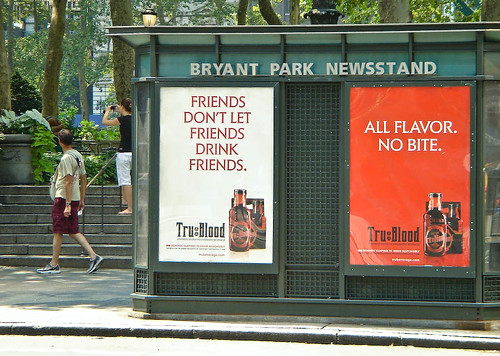
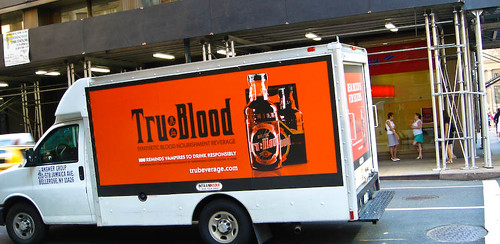
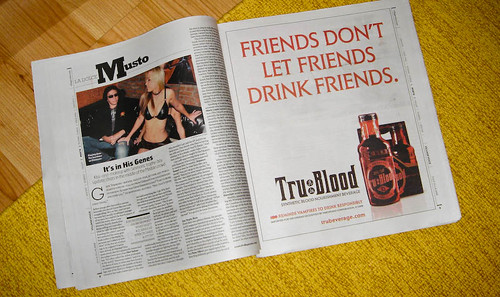
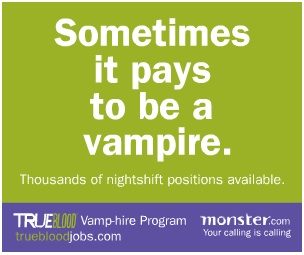
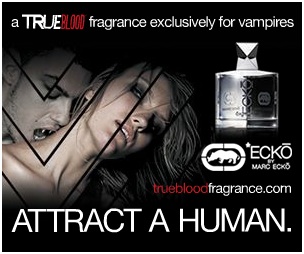
Having been the Marketing Director for a Lifestyle-driven music festival over the past three years, I’ve thought about Alternate Reality Games in this framework for a while, but the idea resurfaced when I heard about the recent tumult caused by the True Blood campaign. Originally developed last year by Campfire Agency to promote the premiere of HBO’s True Blood series, the ARG, which won ad:tech’s Best Integrated Campaign award for 2008, hinges on the same premise as the show — that Vampires are real, and thanks to the development of a synthetic blood beverage they are now finally able to ascend from the “underground,” as it were, and become functioning members of society, albeit still a uniquely particular minority within society, with their own “Alternative Lifestyle.” Initially, a network of online destinations had emerged addressing the various inevitabilities of True Blood’s parallel universe. For instance, there’s the Human/Vampire dating site, Lovebitten, there’s the American Vampire League advocacy group (“Because Vampires were people too”), and there’s also Blood Copy: “Once a human’s attempt to understand the vampire phenomenon, now the leading source for vampire news (and proud member of The Gawker Media Network).” It’s that parenthetical which has generated quite a brouhaha.
Yesterday morning, we reported that Gawker Media had acquired a blog called BloodCopy. This “news” turned out to be false, part of a viral ad campaign for an HBO show called “True Blood.”
We apologize for the error. We’d also like to explain how it happened, because we imagine others came to the same conclusion we did. We also think that HBO, Gawker, and the marketing agency crossed a line, and we’re not surprised that they are now withdrawing parts of the campaign.
First, we received an email from a marketing firm announcing that “BloodCopy has joined the Gawker Media Network.” The email was an invitation to a party to celebrate this event.
Here’s the email:
At the time, the front page of Bloodcopy.com read:
Last week Gawker Media realized they simply could not live (so to speak) without having BloodCopy.com on their roster of websites. As of next week, we will officially be under the Gawker umbrella, joining sites such as Gakwer, Gizmodo, Kotaku, Jalopnik, Lifehacker, Deadspin, Jezebel and io9. Hope they can handle us.
I’ve said it before, and I’ll say it again, there are more things about vampires than are dreamt of in your philosophy. But I know a lot of them. And I’m finding out about more. And I’m willing to share with the class. So stick to BloodCopy – and Gawker – and we’ll bring you all the news that’s fit to print (and some that’s not) about vampires.
There has been discussion in the fallout, of Gawker’s advertising department “Undermin[ing] the credibility of Gawker Editorial to promote an ad campaign,” and while, by that same token, I think there hasn’t been quite as much discussion on the subject of reporters actually checking facts before simply rehashing press releases…. I’ll leave that particular debate to the journalists. What’s interesting to me in this whole situation is that despite Blood Copy’s open proclamation that it is A BLOG ABOUT VAMPIRES, the idea that Gawker Media would have bought it, seemed, somehow….. plausible enough to publish!
Why?
Well, consider the other properties under the Gawker Media umbrella:
Essentially, Gawker owns a network of Lifestyle Blogs. If, let’s say, Vampires were real (which they’re not) but if they were, and there was a news blog for that Lifestyle… it’s completely plausible Gawker would, indeed, buy it. Playing with the idea of superimposing True Blood’s reality onto actual reality has been a goal of the ARG all along. Last year it was about how reality might look if a new synthetic-blood beverage brand had, in fact, just been introduced to the market:
This time around, it’s about what reality might look like if the Vampire Lifestyle indeed became, as Blood Copy proposes, “a more visible and influential part of the mainstream:”
In the era of the Long Tail we have an ever-expanding array of choices for defining our identities, and brands now play an integral part in expressing these definitions. We may not all necessarily consider ourselves to be members of an alternative subculture, but we are all aware of making deliberate “Lifestyle” choices in how we dress, what we drive, the music we listen to, what we do for fun, and on and on. Even between relatively mainstream choices there are always conscious decisions being made. Whether we’re buying American Apparel or American Eagle, the choice of one vs the other is not accidental. By deliberately making these different Lifestyle choices we are all defining own particular realities — we are ALL participating in a Lifestyle ARG.