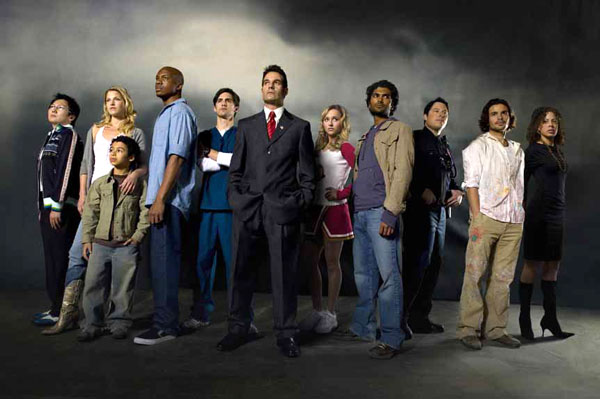
It first occurred to me as I was watching the trailer for Star Trek: First Contact, back in March. The cast seemed so typical of the racial and ethnic diversity reflected in the TV shows we’ve all been watching for years now, like Lost…
and Heroes…
It seemed completely natural for 2009, and yet what occurred to me was that this movie was based on a TV show that was decades old–I wasn’t even entirely sure how many. Thirty? Forty? When I looked it up, I discovered that the original Star Trek series had first aired in 1966!
This seemed utterly amazing.
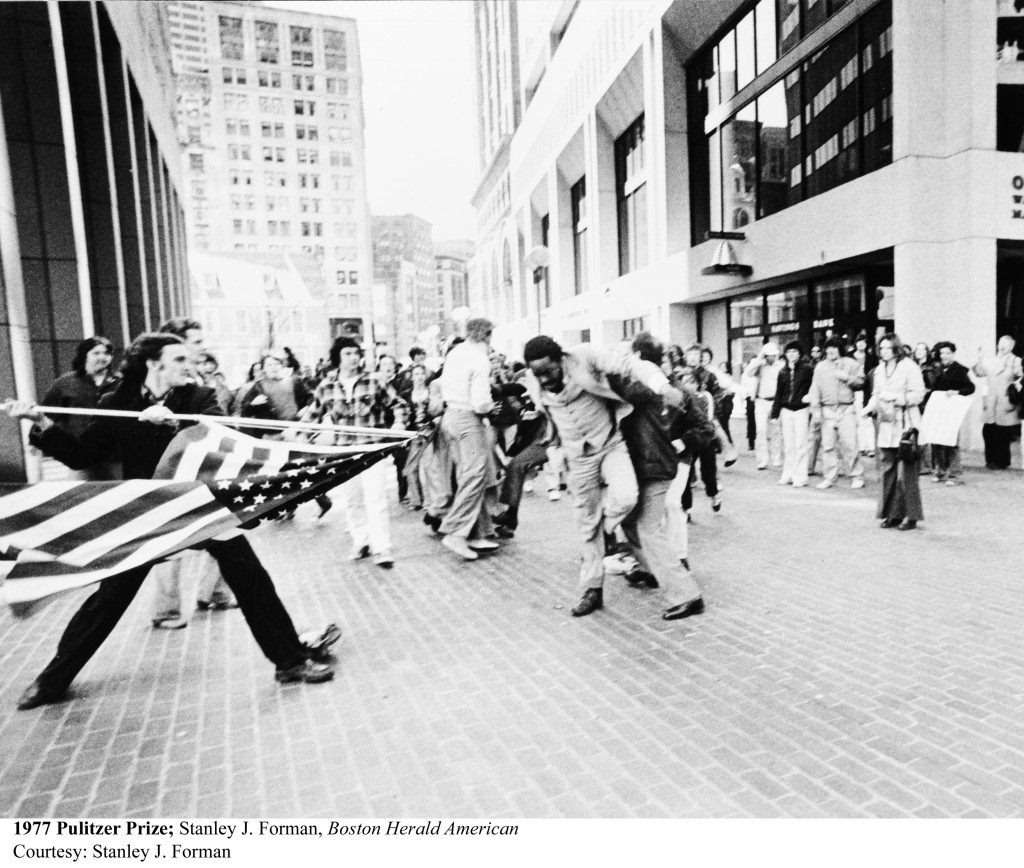
The Civil Rights Act of 1964, which outlawed racial segregation in schools, public places, and employment, had passed just TWO YEARS prior. Bussing (to desegregate schools in reality vs. just in legislation) wouldn’t even begin until 1971. Had it lasted, Star Trek would have been in its 5th season by then. More than a decade after the show premiered, the reality of the social response to racial desegregation all too often still looked like this:
The cultural conflicts that raged in the 1960’s extended beyond racial divides, beyond even national boundaries, into outer space itself. When Star Trek first aired–nine years after the Russians had been the first to launch human beings outside of the Earth’s atmosphere, and still three years before Americans would first land on the moon–the Space Race between the Americans and the Soviets was an integral part of the cultural, technological, and ideological rivalry that defined the Cold War. After all, advanced space technology was more than simply a pissing contest, it had blatant military applications for the two adversarial nations, should the Cold War actually heat up.
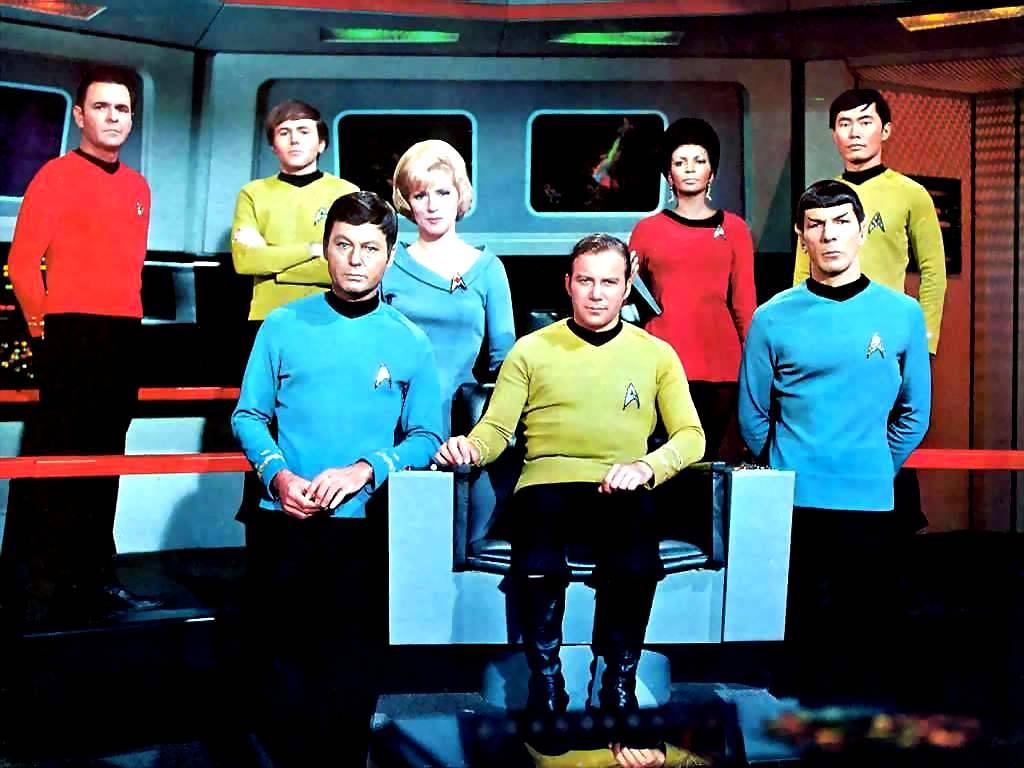
But just three years after Martin Luther King had described his dream of a future where blacks and whites, and all races, could coexist harmoniously as equals, Gene Roddenberry’s futuristic vision, that beamed into living rooms all across America, looked like this:
…and it included an American, a Russian, an Asian, a Black woman, and even a biracial (bi-special?) alien all working together for the purpose of scientific exploration and peacekeeping efforts.
To put how insanely revolutionary this really was in 1966 into more perspective–since I’d only seen the episodes as reruns when I was a kid in the 90’s–Nichelle Nichols, who played Uhura, was one of the first black women featured in a major television series who was not playing a servant EVER. Her prominent supporting role as a female black bridge officer was unprecedented in the history of television at the time. In a recent interview in Hyphen Magazine, John Cho, who plays Sulu in the new Star Trek movie, described the experience of watching George Takei embody the role in the original series: “It was stunning. He was just alone on television as an Asian American.” And as for the idea of a half-human/half-Vulcan hyphenate…. when Star Trek first aired, interracial marriage was still illegal in 16 states! It wouldn’t be until a year later, in 1967, that these “Anti-Miscegenation” laws would be declared unconstitutional.
At the end of Star Trek’s first season, Nichelle Nichols says she’d wanted to leave the show. Gene Roddenberry urged her to reconsider, but she told him she was planning to return to theater. That same weekend, at an NAACP event Nichols was introduced to Martin Luther King, Jr. He told her he was a fan, and praised the importance of her role in the show as it was part of the first fully integrated cast that portrayed men and women as equals. Star Trek, it turned out, was one of the only shows his children were allowed to watch. When she told him she was planning to leave, he replied, “You can’t do that! Your character is the first non-stereotypical [Black] role on television, and is in a position of authority. People who don’t look like us, see us for the first time as we should be seen: As equals. Don’t you see? Star Trek has changed the face of Television.” Needless to say, Nichols told Roddenberry she would stay on the show.
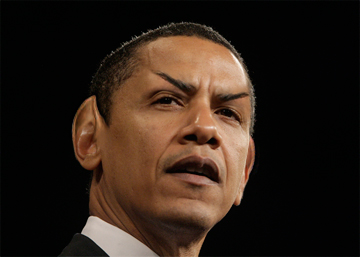
What’s fascinating to me is that what Star Trek did, with its deliberate emphasis on diversity and equality, was not only change the face of Television, but, in fact, shape a cultural vision of what the future would be expected to look like, in its own image. “I am a first-generation ‘Star Trek’ fan,” declared Henry Jenkins, author of Convergence Culture, and co-director of the MIT comparative media studies program, in a recent Salon article entitled, Obama Is Spock: It’s Quite Logical. “And I’ve long argued that many of my deepest political convictions emerged from my experience of watching the program as a young man growing up in Atlanta during the civil rights era. In many ways, my commitment to social justice was shaped in reality by Martin Luther King and in fantasy by ‘Star Trek.’”
Premiering five years before the first pocket calculator, the Star Trek world wasn’t simply a glittering science fiction, it actually primed a whole generation to demand that the future keep its promises.
While traditional media budgets have kept shrinking in the wake of the recession, according to recent Forrester Research, “53% of marketers are determined to increase their social media budget, and 42% will keep it the same, a total of 95% of marketers are bullish on social media marketing.” Just two years ago, “Social Media” was still something that most marketers felt needed to be justified. The absence of a simple answer to the complex question of “how to measure the ROI of Social Media,” was consistently invoked as a means to dismiss it. (As if the effectiveness of traditional media was oh so much more trackable in contrast.) But times are definitely changing. Speaking at Ad Age’s Digital Conference last month, Unilever CMO, Simon Clift admitted, “I’m convinced fat media budgets help make people lazy,” adding that he encourages thinking about what could be done without a media budget altogether to inspire alternative, social media ideas.
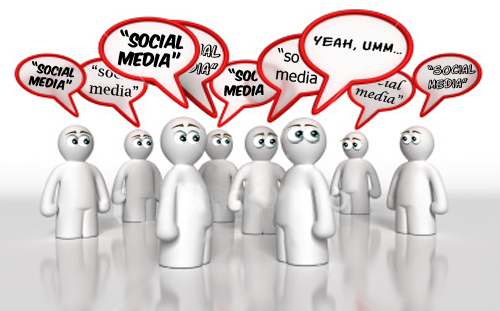
While some companies are clearly on the right track, lately I’ve been seeing how that dismissive attitude of two years ago is being replaced by a new frenetic trendiness. With everyone rushing to get this latest campaign accessory, it seems “Social Media” has become the new “Viral“–a term that gets thrown about much more frequently than what it actually means is understood. Everyone just knows they need to score some “Social Media”…. Whatever it is.
The problem, of course, is that “social media” is not just a new flavor of media, it’s not even really MEDIA, in the way we think of the word, as just another channel to push messaging through, at all. When you’re saying “Social Media” what you are actually referring to are:
SOCIAL NETWORKS / SOCIAL NETWORK SITES / SOCIAL PLATFORMS
Think: Online destinations where people connect, communicate, and share with their friends.
Example: Myspace, Facebook, Twitter, LinkedIn, etc.
BLOGS / BLOGGERS / THE BLOGOSPHERE
Think: Just like “The Press.” I.e. Writers, video-makers, podcasters, and other content creators, as well as the websites where they post their output.
Example: You’re at one right now.
SOCIAL TOOLS / SOCIAL APPLICATIONS:
Think: Digital tools that facilitate the sharing of content and help drive adoption.
Example: Embeddable video players, embeddable music players, embeddable widgets….pretty much ANYTHING embeddable, really. See also, the “Forward to a friend” button.
COMMUNITY WEBSITES:
Think: Any website that helps support a specific community by enabling connection, communication, and sharing between its members. Community websites function in many ways like social networks but are usually centered around a specific community focus.
Example: Nikeplus.com, Mystarbucksidea.com, TheShadowbox.net, Ted.com,
COMMUNITY FEATURES Think: Interactive features that support online communication, sharing, and community connection.
Example: Comments, forums, profiles, video sharing, photo sharing, content rating, Facebook Connect, etc.
Thus, when you’re saying something like “We’ll do Social Media outreach,” what you actually should be saying is “We’ll do blogger outreach.” (Which, by the way, is called PR.) When you’re saying something like “We’ll promote it on Social Media,” what you actually should be saying is “We’ll promote it on social networks.” And when you’re saying something like “We’ll just add some Social Media,” what’s actually important to realize is that Social Media is not just a budget line item, it is now an integral component of strategy.
Joe Rospars, the man behind Barack Obama’s election campaign’s new new-media effort, explained in an Ad Age interview that the campaign succeed not because it used the latest technology, but rather because of its “holistic approach that integrated digital tools into the overall strategy.” That Ad Age entitled this approach of mixing the old media with the new, “The Secret” to the campaign’s success, is telling of where the industry’s understanding of what Social Media is and how it works is at. The most effective social media strategies do more than just utilize newfangled networks, features, tools and whatnot, they absolutely incorporate the digital resources into the complete, overall strategy.
So, forget the word “media.” Think of Social Media like messaging tone or demographic research–a critical element in the way a campaing is planned and in defining the direction it will take. Approaching it as something that can just be added on at the end is like building a house without electrical wiring. And tacking on a generator at the end is as pretty lousy substitute. Social Media isn’t just the wiring for one house, it is the whole electric gird, and you need to be putting a plan in place for how your campaign will plug into it from the very beginning. That’s what you’re actually saying whenever you say you want to use “Social Media.”
At Passover Seder a friend of my mother’s brought me a DVD of the movie Stilyagi (“Стиляги.”)
The movie is about a counter-culture youth movement that took place in mid-1950’s USSR. These kids would listen to jazz, dress in outlandish western fashion, with zoot suit jackets and skinny pants, style their hair into pompadours, call each other by American names like “Bob” and “Mel,” and in general behave in a flamboyant style that flew in the face of the Soviet norms. While it might be kind of bizarre for Americans to think of Boogie Woogie or the Happy Days wardrobe as “anti-establishment,” on the other side of the Iron Curtain, during the height of the Cold War, adopting Western culture was not only a shocking, subversive form of rebellion, it was totally illegal.
The Stilyagi constitute one of the most remarkable movements in the rich history of oppositional subcultures. What they had turned themselves into were walking cultural protests against Stalinism in one of its most paranoid periods. All that Stalin had melted into air, the stilyagi made flesh.
In the years after World War II, Stalin attempted to extirpate every aspect of American culture from Soviet life. Jazz, which had been played publicly in the USSR as recently as the war years, was now officially regarded as decadent capitalist filth; to even speak of jazz during this period was a criminal act. The same was true of anything American: It was all capitalist decadence, and it was all dangerous and usually illegal. In reaction, the stilyagi did not merely embrace American culture in secret; they actually appropriated American characters, as they understood them, and took them into public. Indeed, they borrowed American cultural geography (“Broadway”) and laid it over Stalin’s [Gorki Prospekt].
Their protest was not a matter of distributing banned poetry texts; it was a public act, complete with role names, costumes, and even a peculiar behavior that was intended to call attention to itself.
It wasn’t only the authorities with whom the stilyagi had to contend; it was everyone. Being a stilyaga was truly isolating, and the public reaction was brutal. Their fellow Moscovites taunted them on the sidewalks and on the streetcars, loudly criticizing their appearance, hurling insults at them, sometimes attacking them. Obviously, the Communist press took notice of them, terming them subversive and linking them to criminal elements. Inevitably, the police also went after them.
In his book “Refusenik: Trapped in the Soviet Union” Mark Azbel writes, “With the tacit approval of the authorities, roaming gangs armed with scissors attacked the stilyagi on the streets,” slashing their moddish clothes and long hair.
The term Stilyagi itself comes from the word “Style.” It roughly translates to “style hunters,” which makes sense considering that creating their outfits, which were completely removed from the sartorial norm, required having to hunt all over the black market. Ironically, the American title for the film is “Hipsters,” whose 21st century incarnation Adbusters credited with finally achieving “The Dead End of Western Civilization.”
In the finale of Stilyagi, the movie breaks from the 1950’s, and offers a little love letter of sorts to all youth culture. Enjoy:
Just saw the trailer for the latest Bret Easton Ellis adaptation: The Informers – Check it (if you’re seeing this in a reader, click HERE to see the video).
Ellis is one of my favorite writers. There’s a lot of people out there who enjoy his writing in a disturbingly literal way (particularly the people who like American Psycho the best of his work), but I think he’s one of the most explicit satirists around. He’s like the modern Evelyn Waugh. There’s an irony that’s as sharp as Patrick Bateman‘s machete cutting through all of Ellis’s books. His condemnation of the modern, over-privileged, narcissistic, instant-gratification obsessed yet terminally insatiable, superficial, alienated, self-destructive, overindulged, psychologically damaged society, is wrought precisely through a celebration of its most hyperblolically psychotic, emotionally anesthetized elements.
And for some reason there’s something inexplicably captivating about these stories about these characters for whom inhumanity comes effortlessly. I’m no psychologist, so I have no clue why THAT’s the case, but that Ellis’s stories–the seminal of which are some 30 years old now–continue to resonate with each new generation, is a testament to the persistence of this pathology.
Watching the Informers trailer I remembered my first introduction to Bret Easton Ellis: renting Less Than Zero back in high school. At the time the story was already a decade old but its glimmering bleakness was still just as compelling. Looking back on the preview for Less Than Zero, which came out in 1987, it’s kind of a trip:
In contrast to the Informers, Less Than Zero’s version of pretty much the exact same story, told three decades ago, seems so sincere! Almost quaint. And yet Less Than Zero was considered so controversial when it came out. Perhaps in that time we have steadily been moving more and more towards the society Bret Easton Ellis always envisioned as a satirical cautionary tale. After all, the Informers isn’t just an 80’s “period” film. As unimaginatively literal as I thought the film adaptations of American Psycho and The Rules of Attraction were, Informers looks like it might actually deliver on the kind of phenomenally allegoric treatment an Ellis tale deserves! Can’t wait to see it.
As consumer spending and ad budgets continue to decrease, it’s not unreasonable to think we may be entering a “post consumption economy,” as Ed Cotton of Influx insights describes it:
This latest downturn, recession, depression, or whatever you like to call it has gotten people scared.
There’s simply no way to see ahead to work out when this is all going to be over and life and business will return to normal.
However, there’s certainly an expectation from most people that things will eventually return back to normality, with the only question being when this will happen?
What if their expectations are wrong?
What if we are going through a giant “RESET” and there will be no return to normal, just a new post-depression era.
There are some signals already that suggest this might be the case; the shift from negative saving for US consumers, to the current 5% of income, is a big change that might not be temporary. The fall off in credit and the push to saving means a lot less disposable income floating around the system and therefore a much more challenging time for brands trying to chase these dollars
While it’s definitely not business as usual in these times, before we get too far ahead of ourselves down the “post-consumption” rabbit hole, it’s useful to remember that the underlying socio-psychological desire we all have to express our identities has not in any way been dismantled recently. We may be spending less and saving more, but we nevertheless still seek ways to express aspects of our selves, and the things we purchase still serve to fulfill that desire. Of course, the way we make purchase decisions now is changing, and for brands, adapting to this more challenging consumer landscape requires a more attuned understanding of consumers’ needs, and more strategical approaches to connecting with them. To that end, here are five directions I think brands should focus their energies and resources towards in the current climate: .
In our latest research: Social Media Playtime is Over, we found that 53% of marketers are determined to increase their social media budget during a recession, and 42% will keep it the same, a total of 95% of marketers bullish on social media marketing. Why? The reasons are obvious to some, it’s inexpensive and the opportunity to benefit from cost-effective word-of-mouth, are promising.
The problem revealed in the research findings, however, according to Adage’s B.L. Ochman, is that many brands “Are not integrating social media into their overall marketing strategy. Instead, they are ‘experimenting’ with isolated tactics and hoping that they will take the place of long-term strategy. Furthermore, social media is [considered] more of an after-thought than a marketing line item.”
Since new media budgets have generally been small to begin with, (three-quarters of marketers surveyed have $100,000 or less budgeted for social media marketing), it’s not surprising they are easier to sustain, and even expand upon in this economy than a behemoth ad spend. But the big difference between the traditional advertising model and social media is that the latter does not really function as an isolated “campaign.” Social media strategy is an ongoing process that is integrated into the brand’s overall messaging and a defining aspect of its identity. In a time when consumers are becoming hyper-conscious of finances, all the advantages of social media (that are not offered by advertising) become more pronounced. If we now need to be much more discriminating about how we spend our money, personal endorsements (or denouncements) from real people (and particularly those in our social networks) will have much greater influence on our purchase decisions. So will the way a brand handles consumer engagement. Understanding social media as a strategy rather than a gimmick or “add-on” will go a long way to extending reach, impact, and customer retention in the recession. .
Last summer I spent weeks shopping for an anniversary present for my wife. I searched all my usual retail sources but couldn’t find anything that hit just the right note. Then I went to Etsy—an ecommerce site where artisans sell unique handmade goods—and found the microstore of ClockworkZero, a woman who turns old electronics gear into steampunk accessories. Presto: ClockworkZero’s stuff was both gorgeous and geeky, precisely the vibe I craved. I came away with a necklace made from a vintage vacuum tube.
The economy may be cratering, but people are stampeding to handmade goods. Why? The Etsy guys attribute their success in part to customers tiring of cookie-cutter products. “The ’90s were the period of wearing big-box names on your chest,” says Adam Brown, who heads up Etsy’s cooperative advertising program. The site’s popularity may also be a reaction to the slightly sour, rummage-sale feel that taints eBay, progenitor of the modern microbusiness.
As Virginia Postrel wrote in her superb book The Substance of Style, Americans have become more discriminating over the past few decades. In the ’60s and ’70s, we worried about getting good-quality stuff, she says, because mass-market manufacturing was often of such poor quality. But most products these days are decent: the bargain-basement TV you get at Best Buy will last 15 years. So now we’re focusing more on aesthetics, beauty, and uniqueness.
And we are also focusing on personal meaning. We don’t just want a beautiful and unique product, we want a personal story. NYU Sociologist Dalton Conley writes about the very importance of having a story to tell about the things we own (like the one Thompson recounted about his search for his wife’s present) in his book Elsewhere U.S.A.:
Individuals are led to try to give their totemic objects of choice a personalized spin, embodying them with particular knowledge or histories that bestow status on the owner. It might be the handbag fashioned by garbage pickers in Manila’s slums: The fashion statement rests both in the political stand, of sorts, taken by the owner and in the pleasure of telling how such a bag was obtained (especially if one cannot yet order them online). Or it might be the ability to talk about wine “intelligently.” Or maybe the simple wooden table that was serendipitously purchased at a roadside house sale when your rental car broke down in New Hampshire, that comes with a great story about the old lady who sold it to you while being pestered by a presidential candidate seeking her vote in the 1992 primary. Or the willingness of the Prius owner to boast about the greatest mileage per gallon she has ever achieved with her hybrid car that she hacked in order to be able to recharge the battery from a wall socket.
Often the social value rests in the aura around the product with which we imbue it.
If you’re thinking about brand development during the downturn that last sentence is gonna be crucial. “Consider the numbers,” Thompson writes. “Etsy has 2 million users buying nearly $90 million worth of stuff annually. Its sales have increased twentyfold in the past two years.” When all products are of equally good quality, and custom-made objects are both affordable and easily accessible, it’s the brands that can offer us the most meaningful and distinctive story that will provide the greatest “value,” and as we are forced to deliberate our purchases ever more stringently, they’ll be the ones we’ll choose to buy. .
3. SUPPORTING COMMUNITY
(This is also part and parcel of #1.)
When everything else is uncertain (and nothing says everything’s uncertain like putting the word “global” in front of the word “crisis”) the comfort of community will matter even more to us. More important that pushing consumers to connect to a brand, is creating ways for consumers to connect to each other through a brand. Working in lifestyle events and music festivals for 10 years, I’m intimately familiar with the incomparable role social gatherings play in reinforcing community ties. Many events can, themselves, become identity-defining brands, motivating attendance not just by the promise of a good time, but by the opportunity to share an experience with friends and establish belonging within a greater community. In talking with South By Southwest Festival organizer Hugh Forrest, Owyang writes that attendance to the event’s Interactive portion is up approximately 20% this year. It is a testament to the the appeal of community-reinforcing experiences that this can be the case in a recession.
MillerCoors is among the companies currently seeking to increase their investment in event strategy, according to Adage:
That stakes-raising strategy paid off two weeks ago, when MillerCoors sponsored a U2 Day for Emmis’ XRT radio station in Chicago to promote the release of U2’s new album, “No Line on the Horizon.” For the month leading up to the event, MillerCoors and Emmis ran a co-sponsored mobile campaign where listeners could send text messages to win a chance to score tickets to an exclusive U2-hosted event. Ms. Luegers said the promotion was the perfect opportunity to establish a database of avid MillerCoors drinkers in the Chicago market and re-market to those consumers in the future.
Plus, the U2 contest delivered the ultimate success metric for both advertiser and media partner: “Fans got the feeling of, ‘Wow, I’m in a secret underground society where the average person walking down the street doesn’t know about, but I’m here because I’m an avid listener,” she said.
For brands, providing environments that reinforce community ties means not only a much deeper connection with consumers, but also a platform to jump start the “network effect.” If everyone else in your community is into something, you’ll feel compelled to be into it too because it’s a part of the lifestyle that defines you. Think about how this impacted the spread of Twitter, American Apparel, or Harry Potter, for example. .Just as the brands that offer us personal meaning will be the ones considered to provide more bang for our buck, so too will the ones that offer us a deeper community connection and shared experiences. .
4. ADDRESSING CONSUMER REALITY
Same as we seek to counteract our anxiety in tough times with the buffer of community, we’ll gravitate to brands that offer “Certainty in Uncertain Times,” As Hjörtur Smárason writes on “Why Hyundai is Winning the US Automarket”:
It’s a recession and it isn’t easy for the car makers. In January sales dropped 37% in the US (which is pretty good compared to 88% here in Iceland). The American producers are leading the drop with 55% (Chrysler), 49% (GM) and 40% (Ford). But Hyundai didn’t drop. They increased their sales 14%!
Why is Hyundai growing while everyone else is losing? They are playing their cards according to the situation. These are uncertain times. People don’t know how the economy will develop. More people are going to lose their jobs, and no one is safe. At times like that, people hesitate to make big commitments, like buying a new car. So to overcome that, Hyundai started their Assurance program: If you lose your job or income, you can just return your car. They'[re] even offering to pay for you up to three months if you can find another job within that time.
Brands that are genuinely able to address the needs and prevailing sentiments of the current consumer reality may even be able to undermine brand loyalty as deeply embedded as the Mac Vs. PC dichotomy. Back in October, Steve Jobs announced that Apple doesn’t “Know how to make a $500 computer that’s not a piece of junk, and our DNA will not let us ship that.” Which is why the nascent Netbook market is dominated by the PC. While the computer industry overall is going through a rather tough period, the Netbook segment of the market has shown a growth of over 160% quarter-over-quarter. With that kind of growth, there’s no doubt loyal Mac users are being swept up in the Netbook tide. Whether it’s figuring out how to make a $500 computer that’s not a piece of junk, or allaying people’s car-shopping fears, or just seeking to provide certainty in uncertain times in general, genuinely addressing the current consumer reality is going to be the deciding difference between growth and decline during the economic downturn.