
you are not the demo

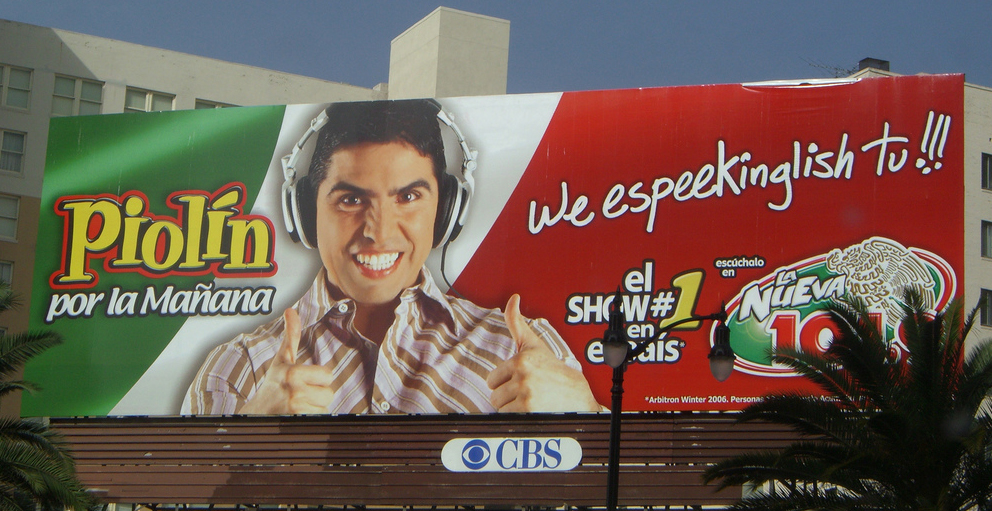
piolin.jpg
photo by: anearthling

One of usability’s most hard-earned lessons is that “you are not the user.” If you work on a development project, you’re atypical by definition. Design to optimize the user experience for outsiders, not insiders.
jakob nielsen

much the same way that the developer is not the user, the marketer is not the demo. being a marketer does not actually make you so atypical, (anyone who has given thought to what they put up on their social network profile, and why, suddenly understands the concept of “branding”), but being who you ARE does. to a certain extent marketers address the fact that not all markets are made in their own image, but at the end of the day, despite all the demographic research, despite all the focus groups, and everything that the nielsen ratings have to say, it is, inevitably, still individuals who design the ad and its messaging. individuals whose natural tendency is to take for granted that their own identity defaults are relevant to other people. the tricky thing, of course, is that since they’re defaults, it’s quite hard to recognize their personal and non-universal nature. and since we generally tend to hang out with the kinds of folks that reinforce our own identity and worldview back to us (our “community”) we often end up viewing the people who don’t agree with us as “wrong”–just think about people with political leanings or musical tastes that are incompatible with yours….

well, it’s those same people thinking about your political leanings and musical tastes right now, and comparing how incompatible they are with their own, that are designing the marketing message that’s gonna speak to you.

as humans we define our modern identities by our cultural affiliations and lifestyle choices, and the more we are identified with them the more it can get in the way of understanding what resonates with the people who do not share our community’s language and values. as marketers–who still happen to be human–this poses a particular problem.

unlike, say, the perspective of danah boyd, i don’t subscribe to the worldview that american society is so easily split up between the “hegemony” (dominant class) and the “subaltern” (subordinate, lower class). perhaps it’s like that among high school kids, since that’s whom danah studies, but i still doubt it. if this simple split between the popular kids and the burnouts castes was a hugely relevant definition of identity then all marketers would need to do is keep cranking out hegemonic “aspirational” ad messages, go home, and call it day. the reality of ad messaging, however, seems to have gotten a bit more complicated than that since the 1950’s, and then even exponentially MORE complicated since the 1980’s. there is no universal influencer anymore. there are instead tribal market segments, and the tricky part is translating between, and even within them.

ok, i don’t know about you, but if i have to slog through reading a lot of abstract theory i tend to zone out and go skipping stones across my mozilla tabs, so how about a practical example?

nielsen writes:

The Web’s chattering classes tend to be overly engaged in the “Internet elite experience.” They actually care about the ‘Net for its own sake, and go gaga over new ways of showing maps. In contrast, average users just want to complete tasks online. They don’t particularly like the Web, and they’d like to get back to their jobs or families as quickly as possible.

i’d add that they want to get back to their own identities as quickly as possible. the “elite internet user” is a kind of identity/lifestyle/community unto itself, and it’s not that the “average” user is just a wannabe tourist in this clique, it’s that the average user isn’t even INTERESTED in being part of the clique. the average user probably has interests and ways of defining their identity that the “elite internet user” couldn’t even care about, much like an “elite soccer mom” probably doesn’t give a shit about the “Net for its own sake”–except for the times when it’s in any way involved with sex offenders, maybe.

that photo at the top of this post is for a spanish-speaking morning radio show in l.a. hosted by piolin, and i think it’s absolutely hilarious. this message, which proclaims in a broken english that “we espeekinglish tu!” is in no way aimed at convincing any native english speaker to listen to the program. this is, of course, a more dramatic example of translating between market segments since it actually involves a product and a message that, literally, speaks to a demo in a different language–but it’s not spanish. it’s spanglish.

these billboards are all over l.a. (including an even funnier one that involves the phrase “free toes free hole es” smack dab over hollywood blvd.) these are not messages relegated to some “subaltern” niche corner, they are actually pretty brazen displays of a very inside joke that is only supposed to resonate with a particular kind of identity.

even though markets are increasingly defined by their individuals’ identities, it is impossible for any one individual marketer to be able to understand and speak the language of EVERY identity out there. the first step to learning anything new, however, is to simply accept that you don’t know it. accept that you are not the demo. EVER. even if you fit the profile, it doesn’t matter. it’s not the point. it’s just luck. (like it’s lucky that you, reader, happen to be part of the 35% of internet users who are familiar with “blogs”… if you’re from the west coast, 18-34, college educated and male, you’re also likely to be a part of the paltry 16% familiar with “wikis”…. and if you happen to be surprised that those percentages are so low, considering how much impact you might feel these channels/tools carry, then it’s even more proof of why taking your personal self out of the equation when developing a strategy is crucial.)

nielsen says that the antidote to the elite “bubble vapor” problem is user testing:

Find out what representative users need. It’s tempting to work on what’s hot, but to make money, focus on the basics that customers value.

in marketing it’s not specifically about what the “user needs” but what they “relate to.” it’s not about what you think is “hot,” it’s about distilling a message and an approach that resonates with a particular identity.



Subscribe for more like this.


create culture

the do lab’s hope flower, 2006
photo by: Natalia Valik

it’s the middle of summer. this means i’ve been spending time lately putting together the next issue of the Do Lab Artist Network. it started in the winter, when a ton of the producers we work with at the do were making noise about the new noise they were making, so i got the idea to put together an email from the dolab covering the latest moves happening in the music in our music-driven scene. i realized even then that if we were to do this on a quarterly basis, we could time the spring issue to coincide perfectly with the peak of promotions for lightning in a bottle, the do’s music festival. it just so happened that there were a bunch of new videos (music and doc-stylie) coming out of our community at that time, so the spring issue was dedicated to this multimedia explosion. with LIB over, and my move to a freelance lifestyle giving me insomnia, i started sharing work space with skin.graft designs in an effort to curb the sensation that my home was my office, hoping this would get me back to sleeping normally. it’s no surprise then that summer is going to be the do lab artist network “vogue” issue with a focus on fashion designers/photographers.

as always any do lab project inevitably becomes more than just the sum of its parts. (the do motto is “go big” after all). a great part of the reason that i cherish what i get to do with the do is that at its most profound, my ideas and projects develop into all sorts of insights on everything from branding, to campaign strategy, to business organization, the artist network publication is now no exception.

for the past seven years the do has been producing events, and in the past couple of years is when the scale of these productions has begun to grow exponentially. we now count such companies as redbull, scion, lexus, and the coachella music festival among our portfolio of clients (and before the fall issue of the artist network comes out we will have added summer sonic festival in japan, electric picnic in ireland, virgin festival in baltimore, and that’s all i can keep track of so far). on top of this we are still also producing our own events. we had our biggest creation ever (LIB) go down just a couple of months ago. creating events for our community is what the dolab was doing before any big corporate brands ever knew our name, and it’s still where our heart is and always will be.

what we do isn’t just about entertainment. it’s about taking people’s breath away. people come to our events to have visions, make discoveries, get inspired, fall in love, (among other things you don’t mention in polite company). we design super dynamic, interactive environments, and our creations move people. it’s hard to describe what it’s like to see people ride up to the giant hope flower, and look up at this insanity that was pulled out of the ether of magic and heavy machinery, speechless, tears streaming uncontrollably down their faces.

then a funny thing happens when you are the consistent purveyor of epic, life-changing, reality-bending experiences… you end up developing a very dedicated and suuper engaged community.

people not only keep coming back to event after event, but people spend the time in between telling their friends about it, or talking to the new friends they made there about it. people become interested not just in participating in the experience, but in actually being a part of the creation process itself. our events run on an army of volunteers, and everything we build is the result of a kaleidoscope of collaboration. the fact that an event production crew said “sure, let’s do it,” when i suggested we start an arts publication is testament to this collaborative spirit.

(…. and thank god that segue brings us back to the point–i was getting so far into back-story exposition there, i was kind of getting worried about how i’d be able to suavely transition us back to the action. did you notice?)

in the process of brand development there are elements that are the well-established usual suspects. experience and design are crucial, “content is king,” and community is…. well, you know. but there is such a vital element that is so often neglected.

culture.

in all the time i worked at house of blues, the only kind of communications we ever sent out to our huge database of avid music fans were emails bugging them to buy tickets. there’s a never-ending stream of popular musicians touring through the clubs at any given moment, and yet the idea of leveraging these relationships with culture creators into, say, a house of blues publication, that could, for instance, offer its readers exclusive interviews with the artists, conducted over drinks after soundcheck…. would have been considered ridiculous. instead it was all just emails about show pre-sales and desperate reminders. cuz what would a concert promotion company get out of becoming a publisher, right? (you know… just thinking about the out of control drinks at the house of blues restaurant–a chocolate vodka concoction that sips like an alcoholic tiramisu, margaritas that are so whipped you’ll feel like any other margarita is cheating on you thereafter–i’d be down to read an interview even with the bartenders.)

anyway…something really strange and amazing happened to the open rates on do lab emails that we were sending out leading up to our music festival. they kept getting better with each one! which is unheard of in the land of event reminder emails. the difference between the kind of “reminders” that the do sends vs. house of blues–or, i suppose, really any other major concert promoter–is that we make sure to approach each communication with our community as not just another opportunity to send a banner ad into their inbox, but as culture creation. that is, a transmission of the aesthetics, sound, news, and values of the community.

not like hiring the words “culture” and “marketing” as a team to model your brand’s latest collection is all that new. in fact, no less a sage than faith popcorn has already hailed “culture as the new medium,” pointing out that in the future (and by that i mean, you know… the present) brands need to find ways to “embed” themselves within culture to stay relevant and competitive, and that considering a “culture plan” is just as important as a “media plan.” culture marketing, however, depends on the process of co-opting existing culture. and hey, i’m not knockin’ that. the hippies, hipsters, and hiphop-sters are all equally entitled to free redbull, and brand logos on their flyers. it’s all love, baby, fo sho. but i’m not talking about “embedding” your brand into culture here. (most “sponsorship” at this point has devolved into essentially nothing more than just getting a new place to put a billboard.) this post is called “create culture.”

it’s about brands being platforms of cultural expression. in the ballyhooed (what the hell kind of word is ballyhoo?) future where “brands are the new networks, and advertising agencies are like Hollywood producers” you can think of culture as… cable. mtv, in fact, is THE perfect example of a brand creating culture. (in case you didn’t really think i meant that the concept should be applied literally, you’re wrong.)

ok, but not every brand is mtv or house of blues or even the do lab for that matter, that has cultural content literally walking through its doors, right? and by the same token, not all cultural content is created equally relevant to your particular community (though music is almost always a good place to start). either way, it’s not necessarily about brands needing to create their own proprietary cultural content (we’ve totally got enough of that already, thanks). but perhaps partnering with culture creators to license their stuff would be a direction to consider. after all, the do lab artist network is not us stroking our own egos on our decor and lighting designs, it’s about the many varied cultural creators relevant to our community.

culture not only facilitates communication within a community–it is a medium for expression and communication at its core, after all–but it’s a way to build brand value! think of it like the advanced level you get to in the game after you beat the koopa at the end of the “creating community” level. and this level involves giving something back.

Go Big!


Subscribe for more like this.


the bad kind of viral

you know… sometimes the point isn’t about how many people see your ad, it’s about actually changing people’s behavior.

if it’s a matter of getting them to drink diet pepsi vs. diet coke, or getting them to shop at target vs. walmart… no one’s gonna die.

it’s not really a matter of life or death.

however, when the ad is for an hiv-awareness campaign…. it actually IS.

i have no idea if this was just a spec or if the spot actually ran, but if it did, i think it’s pretty fucking tragic:

“you have no idea what a difference that makes” …. they may as well have added “and hey, ignorance is bliss, right?” at the end, cuz it’s not like that ad conveys ANYTHING about the difference that DOES make.

so…. just keep having no idea.

don’t get me wrong, it’s hot, and you want to watch it…but is it really something that’s going to change people’s behavior?

since i’m not actually the target audience for this, a couple of gay friends later the consensus to that question is:

“not so sure.”

exactly what good does a sensational and even popular ad do, if the message isn’t effective? priority #1 should be to make an message that works, not a video that gets passed around.

the idea that some ad agency is actually thinking that it’s more important that a lot of people see their ad than that anyone is actually motivated to use a condom…. is kind of sick.

the point isn’t about making an ad viral… it’s about making a message that might actually help STOP the virus.


Subscribe for more like this.