Circus has come

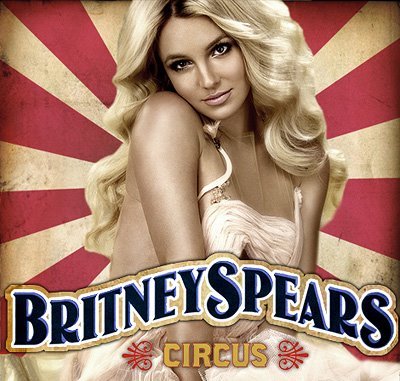
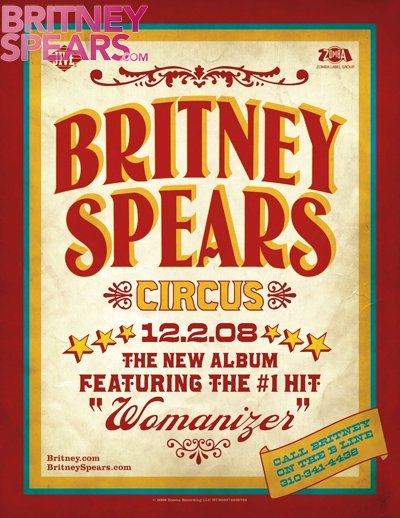
Britney Spears has a new album out today, and guess what it’s called:
00019506

That’s right!

2fan-made-cover-britney-spears-circus

Britney Spears’ new album is called Circus, and this is incredibly interesting to me.

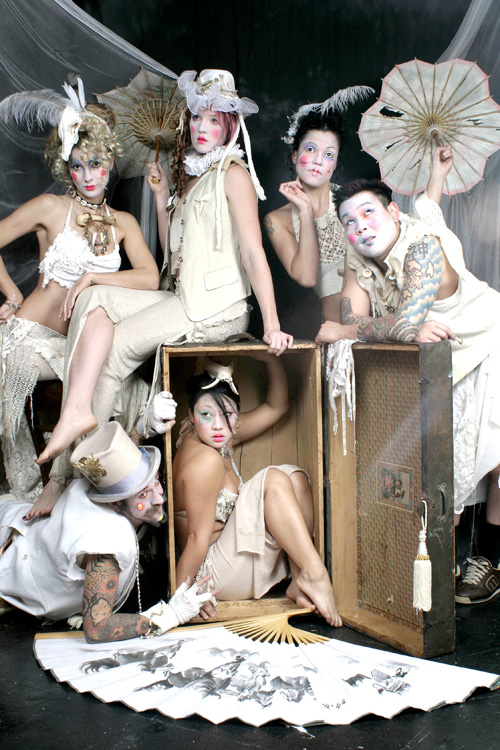
Once upon a time, I used to be the production manager for a circus called Lucent Dossier

c74afc88-be5e-47ad-90cb-37597b23a7a2

This troupe is actually part of a whole larger Circus performance subculture that has been growing on the West Coast for years. San Francisco’s The Yard Dogs Road Show, El Circo, and Vau De Vire Society, Santa Barbara’s Clan Destino, L.A.’s  Mutaytor, Cirque Berzerk, and Lucent Dossier, these are just a few of the major acts that are coming to mind, but there are untold scores of others. With its own distinctive music, style, and nightlife, the Circus scene’s cultural influence has been steadily spilling over into mainstream fare for a while.

In 2006, Panic! at the Disco cast Lucent Dossier in the music video for their first big hit, I Write Sins Not Tragedies. When Panic! went on the road later that same year they brought Lucent along, and called it the “Nothing Rhymes With Circus,” Tour–
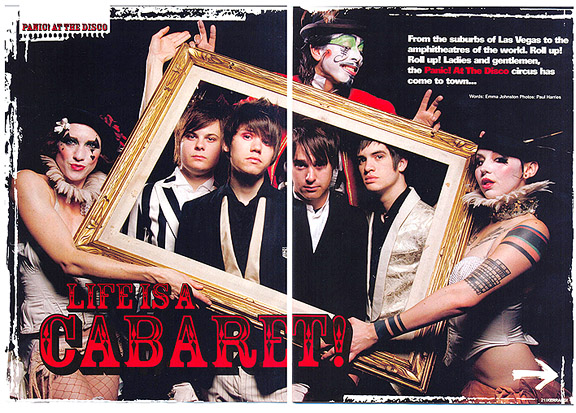
–which, according to the Washington Post, offered “a far superior take on the warped circus theme Motley Crüe was going for in its latest tour.”

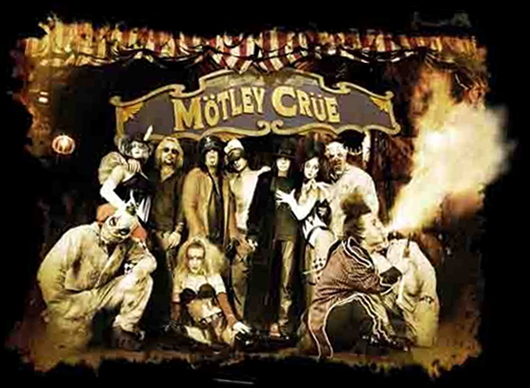
Oh, yes…that’s right. A year prior, Motley Crüe–who would become no strangers to the stylings of Lucent Dossier, themselves–reunited, and you know what their comeback tour was about?

Here’s a hint:
52007

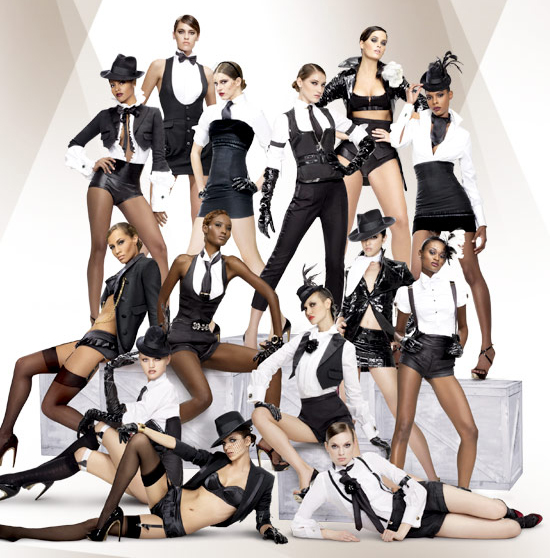
The Circus subculture infiltration, I should mention, has by no means been limited to music. With such proximity to the entertainment industry, it’s been showing up all over the place. Captivating gamers at E3, holding it down at Red Bull’s nightlife spectacle, Ascension, even America’s Next Top Model weighed in with an “homage” of sorts to the style earlier this year–
http://social-creature.com/wp-content/uploads/2008/03/bg.jpg

–but none of this is really comparable in scale to an endorsement from the Princess of Pop herself.
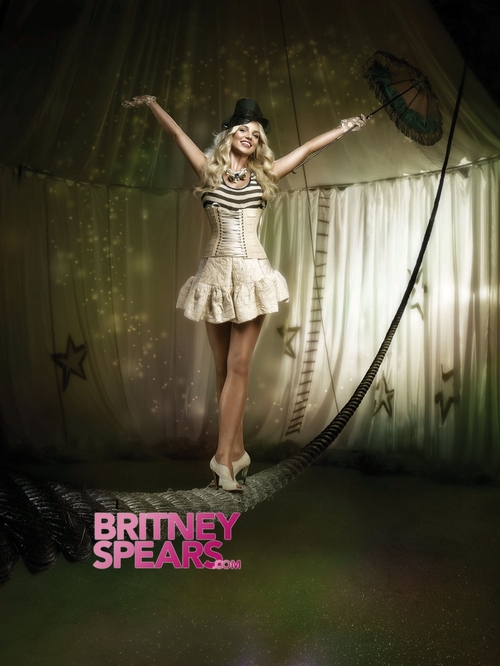
gallery_main-Britney-spears-circus-image111808

Despite the inescapable reality that it’s blatantly far from any kind of original album or tour concept, Britney Spears still chose to go with Circus anyway. Clearly there is something about Circus that continues to resonate with performers, but there is also something about our current culture, that the Circus theme persists in being so damn appealing. It should have long ago gotten played out, and yet here it is again, and again. It would be easy to contend that Circus is just an overly-tenacious current trend (and I know a few Circus professionals who do), but I see it is as the manifestation of a cultural response to a slew of far greater–and much less fickle–social trends.

In Freaks and Fire: The Underground Reinvention of the Circus, J. Dee Hill delves into the history and sociology of the Circus subculture:

Traditional forms of the tribe, like the village, have almost completely disappeared. Fewer and fewer people live in small communities where their daily interactions bring them in contact with the people they are deeply connected to, either spiritually or economically. Workers in modern corporations are replaceable and no longer bound to each other by the experience of a shared interdependence. The modern individual is preoccupied simultaneously by isolating, immediate concerns of personal survival and the larger, often intangible concerns of war, terror and economic change as transmitted by a now-seamless global media network. The intermediate space of community is not easily reached.

Not by accident, many of the newer, emergent forms of culture include a specifically tribal aspect. A return to tattooing, sacrification, fire performance and drumming, as well as a renewed interest in ritual, has occurred side-by-side with the formation of intentional (if temporary) communities such as the Rainbow Family gatherings and Burning Man festival, all of which focus on celebrating and integrating the peculiarities of their varied members.

It was at these kinds of festivals, in clubs and at underground raves, that alternative circus acts began appearing in the early 90’s. The performers were young, crazy “freaks” without any formal training who used circus costumes, skills or themes as performative means for expressing their own exaggerated personalities. Many went on to gain formal training or to study the history of the genre, but essentially their relationship to conventional circuses resembled that of outsider art to mainstream art circles. They didn’t really relate to the modern-day circus. They took their cues from something much, much older: the caravan-pulling gypsies.

The gypsies, shunned by society at large, but fiercely loyal to their own clan, were the most tribal group in all of Europe. It was these wanderers who first produced circus-like entertainment in the medieval townships, along with strolling players and minstrel shows. It wasn’t until the 1770’s that Englishman Philip Astley fused military equestrian drills with acrobatics and other entertainments to form the modern circus.

The phenomenon of alternative circus performance can be seen as the theatrical dimension to one generation’s wholesale rediscovery of the concept of tribe.

In other words, kids originally began forming Circus performance troupes as an extension of creating urban tribes:

According to French sociologist Michel Maffesoli, urban tribes are microgroups of people who share common interests in metropolitan areas. The members of these relatively small groups tend to have similar worldviews, dress styles and behavioral patterns. Maffesoli claims that punks are a typical example of an “urban tribe.”

20 Years later, instead of forming punk bands, party kids were forming circuses. And in an age where no one thinks twice of breakdancing or skateboarding, does circus art seem all that unexpected?

In the past decade we’ve also seen the arrival of social media, and “Performative means for expressing exaggerated personalities” as Hill put it, isn’t just for the Circus anymore. It’s what makes the social web go round, too. In Generation Me: Why Today’s Young Americans Are More Confident, Assertive, Entitled–and More Miserable Than Ever Before, Jean Twenge and her coauthors analyzed 15,324 responses to the Narcissistic Personality Inventory, completed by college students between 1987 and 2006. The survey is considered the most popular and valid measure of narcissism, and features statements such as “I think I am a special person,” “I can live my life anyway I want to,” “If I ruled the world, it would be  better place,” etc. According to the results:

The trend was extremely clear: younger generations were significantly more narcissistic. The average college student in 2006 scored higher on narcissism than 65% of students just nineteen years before in 1987. In other words, the number of college students high in narcissism rose to two-thirds in the space of less than twenty years.

While Myspace, Youtube, blogs, and all the rest, aren’t responsible for the origins of this narcissism trend, they absolutely help enable its progress. “Narcissism is the darker side of the focus on the self,” writes Twenge, and our constant interaction with social media is an indulgence in self-focus. All of us have been affected by the process of maintaining our online presence.  Even if we’re not all live-streaming our entire existence, we upload photos of our lunches or puppies for our network to see, we write blogs about experiences that we planned to blog about even as we were having them, we leave comments for friends just so other people will see them, we fill in our favorite movies and books and music in the appropriate boxes on various profiles, aware of what our choices say about us. In a sense, all of this is a performance. We are already constantly performing our selves, and Circus represents the ultimate performance platform.

Not surprisingly, we also crave attention. After all, what’s the point of being the spectacle if no one is watching? “Given the choice between fame and contentment,” writes Twenge, “29% of 1990s young people chose fame, compared to only 17% f Boomers.” No doubt, the 2000’s generation would score even higher.

Writing about narcissism and fame, Danah Boyd, a researcher of digital youth practices, asks, Why is it that people want to be famous?:

When i ask teens about their desire to be famous, it all boils down to one thing: freedom. If you’re famous, you don’t have to work. If you’re famous, you can buy anything you want. If you’re famous, your parents can’t tell you what to do. If you’re famous, you can have interesting friends and go to interesting parties. If you’re famous, you’re free!… [However] Anyone who has worked with celebrities knows that fame comes with a price and that price is unimaginable to those who don’t have to pay it.

The idea of “freedom” is a huge aspect of the appeal embodied by the Circus since way before its modern “reinvention.” Circus has long represented freedom from normal society’s rules. The ultimate outlaw lifestyle. And like celebrity, it too has extolled its own price. No surprise then that celebrities from Motley Crüe to Britney spears should find this theme so relatable.

While I don’t doubt there will be much talk of shark-jumping going on within the Circus underground (after all, just how underground-y can it be if Britney’s fans get into it?), to me, both the alternative and the mainstream reincarnations of Circus are on the same continuum. More than just a subculture or a concert tour fad, Circus has come to articulate something about the nature of our relationship with various social trends shaping the modern experience.

gallery_main-britney-spears-for-the-record-stills-photos-pics-111908-09


Subscribe for more like this.


change.us

“Our stories are singular, but our destiny is shared, and a new dawn of American leadership is at hand.”
President-Elect Barack Obama

516 Years since Columbus discovered America.
232 Years since the first democratic government was established in the United States of America.
143 Years since slavery was abolished.
138 Years since black people got the right to vote.
54 Years since it was agreed that “separate but equal” was bullshit.
26 Years since the coinage of the Bradley Effect.
3 Days since Barack Obama was elected the next president of the United States of America.

Those Obama posters proclaimed “Change,” but I don’t think it ever really occurred to anyone, not even to his most avid supporters, just how sudden, and overwhelmingly personal this change would feel. In the past three days the most profound change I have witnessed has been in people’s perceptions. Perceptions of their personal identities, of their cultural identities, of their national identities, and their perceptions about the very process of affecting social change, and personal opportunity.

These changes that happened, literally, overnight, are undeniably going to be important in shaping the future of this country, and the world. So as every trend forecaster and futurist gets down to the task of figuring out how the result of this election is going to impact our culture, I offer these three-day old observations.

What Obama’s victory means for:

1. Black People – As Sherri Shepherd summed it up on the View, “People of color, we’ve always had these limitations on us. I remember, somebody in my family said one time, when I said I want to be a comic, and an actor, they said, ‘No, you will get a job at the post office. They don’t let people like us do that.’ And so, to look at my son and say, ‘You don’t have to have limitations’… It is an extraordinary day for me.” Unlike too many examples of black achievement in the past, Obama’s win does not signify an exception, but rather a symbol of opportunity for all people of color. The idea that there is only so far you can go if you are black, or that you can only succeed up to a certain point, has been shattered, and I think it’s possible that something in the very sense of black identity itself has been affected here. This is such a huge deal that it’s pretty impossible to really grasp the full magnitude of what this will mean for the future of the Black community specifically, and race relations in the in the U.S. in general yet.

2. GEN Y – Much like black people, I know, from personal experience, that the general under-30 population is feeling something right now that they’ve never experienced before either. The picture below was taken in the Mission district in San Francisco on election night:

http://farm4.static.flickr.com/3218/3005196613_320424a03c.jpg?v=0

Sean Bonner, who took the photo, later wrote, “19th and Valencia. One of the last places in the country I would expect a crowd of people waving American flags. But sure enough it happened. I talked to people today who said for the first time in their lives they hung flags in and out of their houses and finally understood what patriotism is all about. That’s kind of a big deal if you think about it.” It’s a huge deal. Think about this: The first election that my generation was old enough to vote for was stolen. All the other elections we’ve ever known involved George Bush. Neocons aside, the general population born after 1981 has never known what it’s like to not feel resentment and embarrassment about our country. We’ve never felt like our country reflected US, until now. As with the Black community, I think the impact of Obama’s win on the future of the youth of this country, and the future of our affect ON this country that we can now feel is ours to care for, is still unimaginable.

3. America’s perception in the rest of the world – A friend of mine who’s leaving for a tour in Europe next week said to me, “It’s going to be SO different traveling abroad now.” At first I wasn’t completely convinced. My dad has a joke. He says, “Anywhere in the world, Russians and Americans walk into a bar the same way. Loud and obnoxious. Americans do it because they think they own the bar. Russians do it cuz they think they can beat up anyone in the bar.” And it’s not like the way Americans walk into a bar changed with Obama’s acceptance speech. But something definitely did change. “I travel a lot,” Sean Bonner also wrote, “And I’m constantly faced with people from other countries saying ‘Well, you are cool enough but obviously you are the exception, the rest of your country must be idiots to have voted for that Bush guy.’ When I try to tell people that not everyone voted for him, and even people who did vote for him aren’t 100% down with his actions over the last several years, they usually scoff and point out if the country didn’t like him he’d get kicked out, so clearly people are behind him. That’s not something I heard from one person in one country, it’s a feeling I got repeatedly all over the world. The US electing Obama over McCain is a clear message to everyone else on this planet that the US isn’t happy with the leadership we’ve had and we want something to change. This is good for all of us.”

4. Politics – Politics–and I do mean the political process itself, not simply “being political”–is not just for your conservative, older uncle-in-law anymore. Politics is YOURS. Something really remarkable about the Obama campaign is that it offered an outlet for channelling that political youth energy that since the 60’s has been expended on efforts “outside the system,” INTO the system. (Counterculture is dead, after all). I think having felt cheated and ignored by the political process for so long made the prospect of trying to affect institutional change seem impossible. The low-hanging fruit of “personal growth” has all but replaced institutional change as the means for solving society’s problems. But at the end of the day, institutional change, is, in fact, the change we need. So will this new experience of feeling that the political process CAN be ours to affect motivate more of the activists of my generation to give it a rest with the protests-slash-street festivals, and instead put on a suit and tie and do the work it takes to create institutional change? Man, I would really fucking like to hope so.

5. Government – Have you seen this www.change.gov?? Government has NEVER looked like this before. Not just American government. Not ANY government. Fucking amazing! Yesterday, in a cafe, I was watching as CNN announced that Barack Obama had appointed his chief of staff, and I was riveted! Everyone else in the cafe was watching it too. It was the kind of scene that makes you think something terrible is happening on TV, but it wasn’t terrible at all, it was just the new president forming the new government…and it was fascinating! Maybe it’s just cuz it was day 2, maybe this interest in our government that we all seem to suddenly be possessed by will wane, but I’ve gotta say, before, I NEVER used to be interested. Not on ANY day. I think the initiative to run the government in a more transparent, responsive, open way will help to sustain our feeling of personal connection to and investment in the government, and help prevent all of us from slipping back into the general detachment we’d had from it up till now. Consider how a focus on a shared, mutual government vs. on self-segregated communities might affect the dismayingly polarized American landscape we’ve come to know.

6. The American Dream – In Generation Me, Jean Twenge suggests that my generation is too full narcissism and entitlement, that we’ve got massively unrealistic expectations, and we need to be made to face reality, and realize that our dreams are just that. Even for many who did not vote for Obama, there is an undeniable sense of something profoundly impossible having been achieved in his victory. It’s the kind of profoundly impossible achievement that is, and has always been, the hallmark of America, and Obama himself said as much in his victory speech. For those whose dream has been to become Britney Spears, perhaps you might want to take a cue from Twenge’s book. But for those of us whose dream has been about succeeding at doing what we believe in, at doing things our own way, about succeeding at doing the thing that brings us joy and fulfillment, Barack Obama’s victory is a testament to its possibility. The “American Idols” we have had to look up to for too long have either been utterly disposable, recast every season to feed the celebrity tabloid industrial complex, or otherwise icons of unattainable privilege and luxury (think: Paris Hilton). Barack Obama has worked his whole life for everything he has accomplished, and what he’s earned now is the responsibility to do yet more work. I really cannot remember the last time someone like this was an icon of the American Dream, and I can’t wait for a generation of kids who will grow up wanting to become like Barack Obama.


Subscribe for more like this.


how not to use condoms

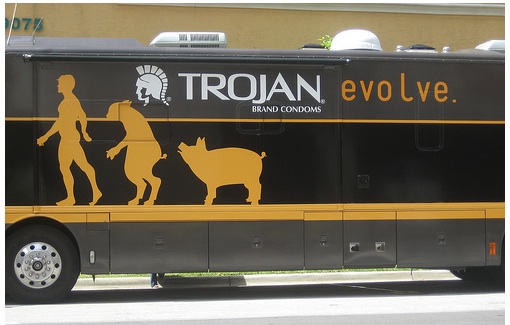
I know the Trojan “Evolve” Campaign has been going on for a while now, but just recently something occurred to me that I hadn’t quite realized about it before.

The campaign started out last June, with the premiere of a commercial featuring women being hit on by a bar full of anthropomorphized pigs. It’s only when one of the pigs finally shuffles off to the men’s room, and purchases a condom, that he is transformed into a hot guy, and returns to the girl he was chatting up to find that she’s now suddenly totally interested in him.

In addition to the ad, whose message at the end reads: “Evolve. Use a condom every time,” the campaign also includes a website, evolveoneevolveall.com, driven by celebrity and user-generated videos dealing with the subject of sexual health, the Trojan Evolve National Tour, a mobile, experiential campaign “Raising awareness and stimulating dialogue about America’s sexual health in towns and campuses across the country,” radio ads that deal with STDs as Christmas gifts (“How about Herpes? It’s the gift that keeps on giving.” / “Would you like Chlamydia wrapped?” / “No, I’ll give it to her unwrapped.”) and more. All of this, hinging on the word “Evolve.”

“Evolve is a wake-up call to change attitudes about using condoms and, on a larger scale, the way we think and talk about sexual health in this country,” said Jim Daniels, Trojan’s VP of marketing. As Andrew Adam Newman pointed out in the New York Times piece, “Pigs With Cellphones, but No Condoms,” the campaign is an evolution for Trojan itself:

While Mr. Daniels does not disparage the company’s double-entendre-heavy “Trojan Man” campaign from the 1990s or similar Trojan Tales Web site today, the tone of the company’s promotions is moving away from “Beavis and Butthead” and toward “Sex and the City.”

“The ‘Evolve’ ad does a nice job of being humorous, but it’s also a serious call to action,” Mr. Daniels said. “The pigs are a symbol of irresponsible sexual behavior, and are juxtaposed with the condom as a responsible symbol of respect for oneself and one’s partner.”

Newman suggest that “The perennial challenge for Trojan and its competitors is the perception that [condoms] are unpleasant to use.” But I think, for a company that, according to A. C. Nielsen Research, has 75 percent of the condom market (Durex is second with 15 percent, LifeStyles third with 9 percent), Trojan oughtta have really known better than that.

“Over the last few years conservative groups in President Bush’s support base have declared war on condoms,” wrote Nicholas D. Kristof, in an opinion piece, also in the New York Times:

I first noticed this campaign last year, when I began to get e-mails from evangelical Christians insisting that condoms have pores about 10 microns in diameter, while the AIDS virus measures only about 0.1 micron. This is junk science (electron microscopes haven’t found these pores), but the disinformation campaign turns out to be a far-reaching effort to discredit condoms, squelch any mention of them in schools and discourage their use abroad.

Then there are the radio spots in Texas: ”Condoms will not protect people from many sexually transmitted diseases.”

A report by Human Rights Watch quotes a Texas school official as saying: ”We don’t discuss condom use, except to say that condoms don’t work.”

Last month at an international conference in Bangkok, U.S. officials demanded the deletion of a recommendation for ”consistent condom use” to fight AIDS and sexual diseases. So what does this administration stand for? Inconsistent condom use?

Kristof was posing this question back in 2003, while he could still add, “So far President Bush has not fully signed on to the campaign against condoms, but there are alarming signs that he is clambering on board.”

In the now almost six years since, the very subject of contraception has become as politicized as abortion, and the emphasis on condoms’ ineffectiveness has become a standard component of Abstinence-Only sex education. (You knew about that, right?) It’s even begun to affect mass media. In a written response to Trojan about why they would not air the pigs-with-cell-phones ad, Fox (which had aired prior Trojan ads) said “Contraceptive advertising must stress health-related uses rather than the prevention of pregnancy.” CBS refused to air it, too, and didn’t even offer further comment. Meanwhile, as paid advertising for condoms is being turned away, in the past few months I’ve seen at least two TV shows where characters made a point of mentioning that condoms don’t work: Fringe, and The Practice–a show about DOCTORS for cryin’ out loud! (Clearly, “First do no harm” must not apply to the practice of TV medicine.)

As a teenager of the 90’s, I’ve never known a world where AIDS didn’t exist, and where condoms were anything but an unequivocal necessity for “safe sex” (also a 90’s-ism that seems to no longer be in use, replaced instead by the millennial “sexual health crisis”). Sure, no one was going around preaching that condoms are 100% fail-proof, but in the decade when Magic Johnson and Greg Louganis both came out as HIV-positive, I can’t imagine any TV program deliberately broadcasting (or being allowed to get away with it), the kind of message that says, “Condoms don’t work. So why bother using them at all?”

As of 2006 the birth rate among 15 to 19 year-olds in the United States has risen for the first time since 1991 (that was the year of Johnson’s announcement). While teenage sex rates have risen since 2001, condom use has dropped since 2003. In other words, more teenagers are having more sex, and using less and less condoms in the process. But then, Jamie Lynn Spears or Bristol Palin could have told you that.

And so it is we find ourselves in a situation where Church & Dwight—the consumer products company that owns Trojan—is taking on what should have been the responsibility of the Department of Health and Human Services. Teenage or not, the U.S. apparently has the highest rates of unintended pregnancy (three million per year) and sexually transmitted infections (19 million per year) of any Western nation. (What the fuck?!)

“Right now in the U.S. only one in four sex acts involves using a condom,” Says Daniels. “Our goal is to dramatically increase use.” Then what in God’s name convinced the Kaplan Thaler Group, the New York advertising agency that created the “Evolve” campaign, that aligning condoms with evolution was the way to go about achieving this?

Cuz here’s the thing: The majority of Americans do not believe in evolution!

http://graphics8.nytimes.com/images/2007/06/18/business/media/18adcol.600.jpg

(CRAP!)

In fact, according to 2006 research in Science Magazine, out of 33 European countries where peolpe were asked to respond “true”, “false”, or “whuuuu?” to the statement: “Human beings, as we know them, developed from earlier species of animals,” the only country that scored lower on belief in evolution than the US is Turkey (Also what the fuck?!)

Disturbing as this unfortunate reality may be, this is the contemporary American Landscape, and pushing Trojan as “Helping America evolve, one condom at a time,” in the face of it, seems ludicrous.

Hell, why not just call the campaign “Darwin’s theory of contraception,” while you’re at it?

The biggest threat to condoms is not the perception that they don’t feel good. It’s not even condom fatigue. The biggest threat to condoms is the Christian Right’s propaganda that they don’t work, and the government’s, and much of media’s, wholehearted complicity. And it’s the same people who are waging a war on contraception that don’t like Evolution either. I don’t know about the ultimate impact that the Evolve campaign is effecting (or not), but in my view, if, as Daniels says, Trojan’s focus is on growing the market beyond the–pardon the irony here–already converted, and getting more people to use condoms, I think a completely different slogan/campaign theme would be the way to go.


Subscribe for more like this.


growing up and the city

“I am real!” said Alice, and began to cry.
Through the Looking Glass, Lewis Carroll

I always find it fascinating when movies do things that executives didn’t expect. Entertainment, particularly the kind with narratives and characters, is like a Rorschach test where what we have to say about the inkblot and what the inkblot has to say about us are equally as meaningful. Thus when a movie manages to find an appeal beyond what was expected it can illuminate new cultural insight.

Here is the point at which I admit I love Sex And The City. And while I can’t say I’m a “huge” fan not because I don’t feel like I am one, but because I don’t think I am one in comparison to ACTUAL “huge” SATC fans, I will say I’m pretty excited to have a reason to be writing about it.

The series premiered on HBO in 1998, when I hadn’t even graduated high school yet, and at the time the show had absolutely no way to compete for relevance in my life against My So-Called Life. But then a couple of years ago an old friend of mine (who you should know is male, and straight, and works in real estate finance in NY) got me to watch a couple of episodes cuz he loved the show, and long before I went to see the Sex and the City movie this weekend, I’d actually managed to see every single episode of the show (thanks, Netflix).

It’s not just cuz the main character is a writer, and all the episodes were filtered through the perspective of a woman whose job was about observing and writing about social behavior (though, yeah, I did really dig that aspect). It’s because she was clever enough to make even cynicism charming, hopeful enough to still be curious, difficult enough to give her gravity beyond the frenetic giddy fashionableness. It’s because there’s not too many shows where four friends hanging out is consistently some of the funniest dialogue on a screen, and where decent, relatively normal people, dealing with lives complicated by emotions and nuance and relationships–rather than intrigue or crime or the paranormal–could continue to be genuinely interesting enough to be watchable for six years.

Of course, these decent, relatively normal people happen to be four urban, sassy, sexually uninhibited women, and the show happened to be on a cable network that blazed the trail on you-can’t-do-that-on-television television. So it’s no surprise that two weeks before the movie opened, the LA Times prophesied “Sex and the City” movie may lack wide appeal,” proclaiming:

Few films have polarized audiences more than May 30’s long-awaited cinematic adaptation of the influential HBO show. It’s easier to find $2-a-gallon gas than a straight man eager to see the movie. Older women (in Hollywood’s youth-obsessed view of the world, this means older than 30) hold a dramatically different view: When they are not posting online about their love of the series — “addicted” pops up with frightening frequency — they are organizing ladies’ night viewing parties around the film’s opening….

If “Sex and the City” can start attracting more teenage girls (and appeal to audiences in smaller cities), it just might have a shot at turning into a hit.”

The polarized reactions to Sex and the City–not just the movie, or the HBO series, but really the entire franchise–is not based just on gender, or even on age. When I asked a friend of mine if she wanted to go see the movie, she replied she didn’t think she could for “moral” reasons. Another texted back, “I never took you for that type.”

You’d think digging a show about smart, quick-witted, modern women, half hopelessly jaded half hopelessly romantic, talking about love, sex, and relationships over brunch, and reaping the sexual benefits and pitfalls of having happened to be post-feminist females wouldn’t be a bad type to be taken for. Especially by anyone else that fits that exact same profile. Yet that watching Sex and the City would seem somehow “immoral” even to another educated, liberal, sophisticated girl, speaks to a dramatic dissonance in the movie’s expected demographic.

LA Times movie critic, Carina Chocano, began her review of the film by admitting:

IT’S IMPOSSIBLE to talk about the new “Sex and the City” movie without first mentioning… the rabid fan devotion [the HBO series] enjoyed; or the equally fervent antipathy (female and male) it inspired on socio-political grounds (sort of like the late-’90s equivalent of not letting your daughter play with Barbies)….

Which is too bad, because Michael Patrick King, who executive produced the show (with series creator Darren Star) and wrote and directed the movie, has done some brave, surprising things with it, mining territory that’s been all but abandoned by Hollywood….

“Sex and the City” can’t rightly be called a romantic comedy in the dismal, contemporary sense, though it is at times romantic and is consistently very funny. It’s also emotionally realistic, even brutal….

Yet despite the fact that for the majority of it’s 2 1/2 hours this is not a happy story, yesterday morning Marketing Daily proclaimed, “Sex/City’ Poised To Become Era’s ‘Feel-Good’ Movie.” And I, and no doubt everyone else who cheered when the usher at the Arclight who’d introduced the movie yelled, “Let’s escape reality!” as the lights went down, would agree:

Brands looking to sweep consumers off their feet to escape the recession, global warming and the war in Iraq might want to take a closer look at Carrie Bradshaw and friends.

“Sex and the City” is poised to become the new Depression Era feel-good movie that makes cash registers ring in shopping malls and along Fifth Avenue and Rodeo Drive. Such films tend to make consumers feel upbeat and not overly cautious about spending, according to marketing experts.

…Faith Popcorn, a trend spotter and founder of marketing consultancy BrainReserve, believes the “Sex and the City” movie comes at the perfect time for a nation exhausted politically, emotionally and financially. Marketers can use the good feeling gained from the movie to their advantage, she says, helping consumers temporarily escape tough times. The movie joins “My Man Godfrey,” “The Women” and other Depression Era classics that provided weary audiences with high-style fantasy relief.

Of course, as Chocano says:

The clothes, the restaurants, the apartments, the shoes — they’re all there, but then, even on the show, they were always the fantasy element, the sugar that helped the sometimes harsh emotional reality go down….

For a film that delights in indulging in frivolity at every possible turn, it examines subjects that most movies don’t dare graze for their terrifying seriousness. [How should women live their lives in a society that constantly limits them while pretending not to? What is the function of forgiveness, and why is it necessary for living?] And when it does, the movie handles them with surprising grace, wit and maturity. In other words, it’s a movie for grown-ups of all ages.

The Marketing Daily piece mentions how, “During the run of “Sex and the City” on TV, even women who couldn’t afford Jimmy Choo shoes bonded to an image that had them skipping lunch for two months so they could buy them. In one TV show episode, Sarah Jessica Parker’s character is about to lose her apartment and she recognizes that $40,000 went into buying shoes.”

These anecdotes, of both real and dramatized women, speak not so much to a childish frivolousness as to a rudderless adulthood. Cuz it’s a funny thing, this idea of a contemporary “adult”–whatever that is. We are the generation that won the fight for our right to party, after all, did we not? So that we could stay boys and girls for longer than anyone ever before. And so we have!

Then perhaps that is what it looks like now, adulthood: It doesn’t always have its priorities straight. It makes some bad choices, it has to confront compromise and make sacrifices. It fucks up and has to face the consequ–

Wait a second….

Oh, god damn it! That sounds just like OLD version of adult! What the hell?!

Beyond the frosted fashion glaze, and the wonderfully fantasy ending we can only truly appreciate after having first been taken through some nasty emotional lows, what is, in fact, quite shocking about Sex and the City, is the apparent movie-going hunger it’s revealed for characters that can reflect maturity with a right to style and joi de vivre. And there is perhaps nothing more timelessly “feel-good” than a concept like that.

After just three days, the movie that by some estimates was only expected to make $20 million its opening weekend, whose appeal to anyone but 30+ year old women seemed incomprehensible, that unflinchingly staked its flag in that grown-up territory Hollywood had pretty much abandoned, now “Ranks as the biggest R-rated comedy opening of all time,” According to the LA Times. “Among all R-rated films, it ranks at No. 5 behind largely male-driven films like “The Matrix” and “300.”

Chocano concludes her review saying:

As far as big Hollywood movies go, the idea that we might watch movies to empathize with characters whose lives are different from ours but whose humanity links them to us is all but lost.

That’s why it feels unnatural to say that what feels most remarkable about the movie is its unapologetic embrace of middle-aged women…. The fact that Carrie et al. are allowed to be funny, independent, complicated, sexual, cynical and happy still comes across as a delightful surprise.

She adds that what really made the show so loved by its fans is that despite whatever moments of silliness or cliche, ultimately, the show reflected a vision of real life, “one which doesn’t require its characters being frozen in amber after a fairy tale ending and allows life to go on, happily and unconventionally.”

I think to have considered Sex and the City as having no greater appeal than merely a poshed up “chick flick,” is just as erroneous as to consider it to be some un-PC farce “immorally” portraying women as ludicrous cartoons.

All of us who went to high school in the late 90’s had to look a decade back to find the movies (Heathers, Pump Up the Volume, Sixteen Candles) that defined a generation’s adolescence. (American Pie, aside, of course). Now in the next decade, I wonder if Sex and The City might pave the way for new stories and characters that can fill the void in contemporary cinema for movies that can define a generation’s coming to terms with its adulthood.


Subscribe for more like this.


whatever, internet

cut it out, internet.

everyday there’s some kind of new technology hoopla vying for my attention with the sordid insidiousness of a tabloid magazine at the checkout counter. and i don’t even buy that shit, but for some reason i can never resist trying to get the latest download on what’s going on in brad and angelina’s relationship while i’m waiting to ring up my groceries.

like this crazy story about a 17 year old girl from a working-class chicago suburb with no business background or any kind of investment backing accidentally striking it rich with her site that creates custom myspace layouts: www.whateverlife.com. (i feel like i may as well be reading about the state of britney’s deteriorating mental health.)

or getting sent links to stuff like dapper.net–which i don’t even understand what the hell it means half the time and that just fills me with this kind anxiety that’s on par with the dread of an “orange”national security alert. (are you feeling it yet?)

at least a friend of mine explained to me what this means: http://code.google.com/apis/opensocial

translation: “FACEBOOK = SCARY”

but that, of course, just begs the question: why is google so scared? what’s facebook really trying to do?

it’s like lindsey lohan. it’s insidious. it’s a giant nebula of crowd-sourced user-generated conspiratorial terror. i don’t want to think about the internet anymore. i’m over it. i just want a break.

though you really just can’t help but wonder what the hell a 15 billion dollar valuation means exactly.

crap!

i’m doing that thinking about the internet thing again.

fucking QUIT IT, internet. i don’t even care about this defeating, demoralizing tabloid trashstuff.

this is why i try to stay on the people side. with humans it might take like millennia to create any kind of significant change. it’s like…. all you have to do is look backwards at a relatively finite amount of information. (we may be discovering more of it as we go along, but it’s not like more of it’s being created.) so you just figure that stuff out, and you’re good to go. the basic programming idea behind the way we think, why want what we want, why we buy what we buy, why we behave the way we do, it’s all right there….. it’s like a swiss watch. it’s complicated, but you’re not expected to put it together differently every morning.

the internet, however is a different story. makes you want to just stick your fingers in your ears and go “lalalalala” (it’s working out well for the music industry, i hear).

ugh….

the whole thing’s just a big ol’ mess.

the post about the whateverlife.com story says:

The name came to Ashley in a moment of frustration. After losing a video game to [her friend] Bre, she dropped the controller and blurted out, “Whatever, life.” She liked it instantly. She thought it would be a great name for a Web site.

well…..

at least i’m not the only one tired of this stuff. even fifty’s got technolofatigue:


Subscribe for more like this.