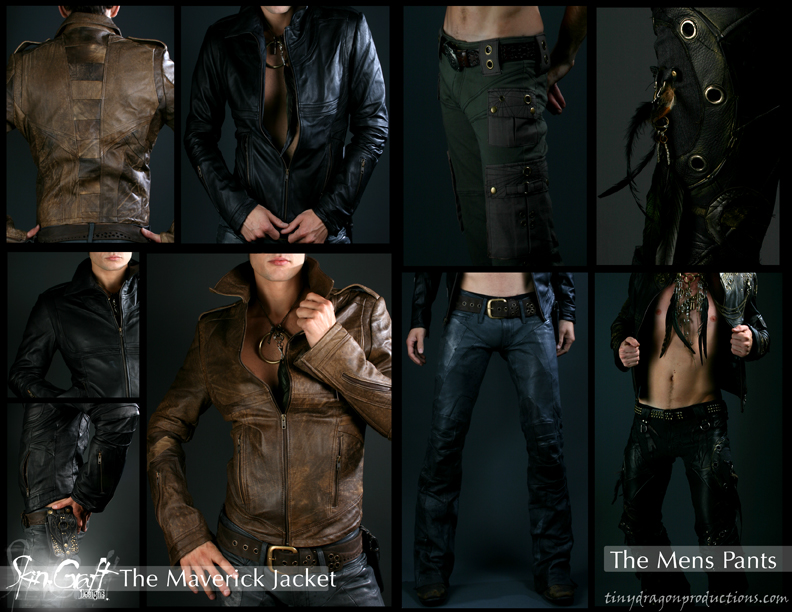
If, sometime circa 2004, you were out and about at certain underground parties in the Los Angeles Circus scene, and saw someone wearing a particularly striking pair of pants (male or female), created from asymmetrical strips of leather sewn in a twisted, impeccably tailored way, like the trappings of some Mad Max forest nymph biker gang escapee, and were compelled by this post-apocalyptic hipness to inquire of the wearer as to where these pants had come from, the answer you would inevitably receive is that they were made by someone named Cassidy. This would happen so often, in fact, that by the time I finally met Cassidy, out one night at a club on the shady side of La Brea, I actually recognized him by his trousers.
At the time, Cassidy was part of the Ernte design team, but soon thereafter co-founded SkinGraft Designs with partner Jonny Cota, and later Katie Kay. Even as the SkinGraft operation was growing with each year, headlining LA fashion week, opening the doors to a flagship store in Downtown LA this spring (no small feat for an indie fashion label in a recession!), and getting their sartorial grafts onto an ever-expanding assortment of celebrity skins, what Cassidy kept yearning to do was sing.

I discovered very quickly after we met that in addition to his fashion career, Cassidy is also a songwriter and performer. At one point, there were even a couple of production meetings held at my house for a show he was thinking of putting together around his music, and involving various performance-oriented friends. That show never came to pass, but after years of false starts, Cassidy finally revived his music focus from back-burner exile and 10 days ago self-released his debut album, Little Boys and Dinosaurs. What happened next is straight out of the viral phenomenon playbook.
On Sunday afternoon, August 15th, Adam Lambert, longtime SkinGraft friend (he’s currently wearing a custom SkinGraft jacket on the American Idol tour, and sported numerous other SG pieces during the show’s run) tweeted to his followers: “My friend Cassidy just shot this great video… http://bit.ly/18FvaM.” Within days, the video shot up to over 36,000 views, and Little Boys and Dinosaurs, sans label, marketing push, or pr strategy, rose to #3 on the iTunes electronic chart, between LMFAO’s “Party Rock” and Imogen Heap’s “Ellipse.” It didn’t hurt that the video was glam-rock pretty and sexually controversial, featuring some simulated sexual behavior, and a pair of undies slung Sports Illustrated-low. Within hours of Lambert’s tweet, a bonafide minor scandal had erupted over his linking the video, which was, by some contingent, considered inappropriate for his underage following. If you’re thinking this sort of outrage over music video explicitness seems strangely anachronistic in the post-Lil’ Kim / Britney Spears / Lady Gaga era, it should probably be mentioned that the dirty dancing in question here is exclusively male. In any case, the controversy only helped to generate further attention for the music, and by Thursday, Lyndsey Parker, was writing for Yahoo! Music’s The New Now blog:
At this point, Adam Lambert is pretty much like Oprah, in terms of his all-encompassing influence over his devoted fanbase. Just like any Oprah Book Club selection is certain to become a New York Times best-seller, in the pop music world there is perhaps no more ringing endorsement these days than a black-fingernailed thumbs up from the tastemaking Glamerican Idol.
So far the public response to Cassidy’s music, at least among diehard and very vocal Adam Lambert fans, has been hugely enthusiastic. Will record labels take notice? That remains to be seen, but if so, then Cassidy Haley may be the first artist to get signed out of American Idol without ever having appeared on the show.
If you’re a social media strategist, and your friend just so happens to become an overnight internet phenomenon, you’ve basically got no choice but to find the whole thing incredibly fascinating. On Tuesday, as Little Boys and Dinosaurs was climbing the chart, I got a call from Cassidy, and the question on his mind was, “What do I do now? What next?”
Which is a great question for any marketer in the digital age to think about as well. All too often I think marketers have blinders on, criminally overusing the word “viral” (still!) in the frenzy for buzz and fans and word of mouth and all that. But what if you could get all of it overnight? What if all the promotional initiatives and exposure efforts paid off just like they were supposed to? Is that the extent of your strategy? Or would you be prepared for What Next?
My advice to Cassidy was to take his questions straight to his new-found fans; involve them directly in helping to shape and define the answers together, and keep the momentum going. And he did. The outpouring of ideas that came back to him from this nascent, yet incredibly dedicated, army included everything from ad hoc twitterstorms that got the attention of various media folks, to online community resources created by fans to connect to one another, and to Cassidy’s music. The troops even came up with a seriously cute name for themselves, Comets, (as in Haley’s).
Overnight, Cassidy was handed the sort of opportunity that many marketers and brands are tirelessly chasing after, and yet the most powerful move he made was the one AFTER that happened. He opened up to his fans and offered them the opportunity to be directly involved with him in the creation of what comes next.
.