
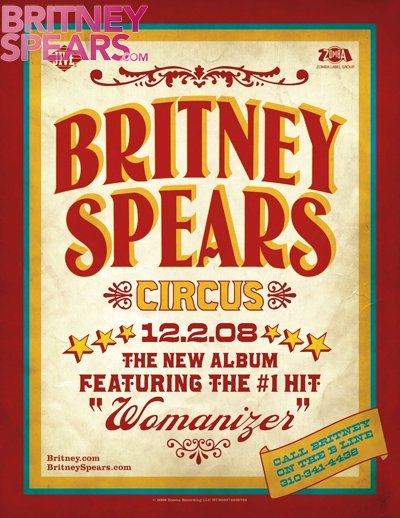
Britney Spears has a new album out today, and guess what it’s called:
That’s right!
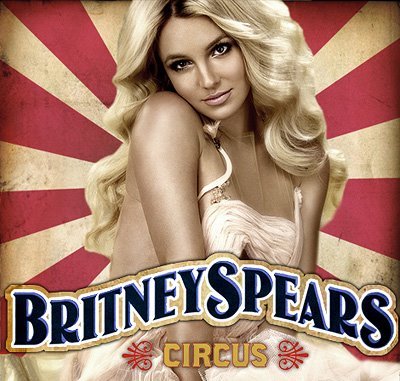
Britney Spears’ new album is called Circus, and this is incredibly interesting to me.
Once upon a time, I used to be the production manager for a circus called Lucent Dossier—
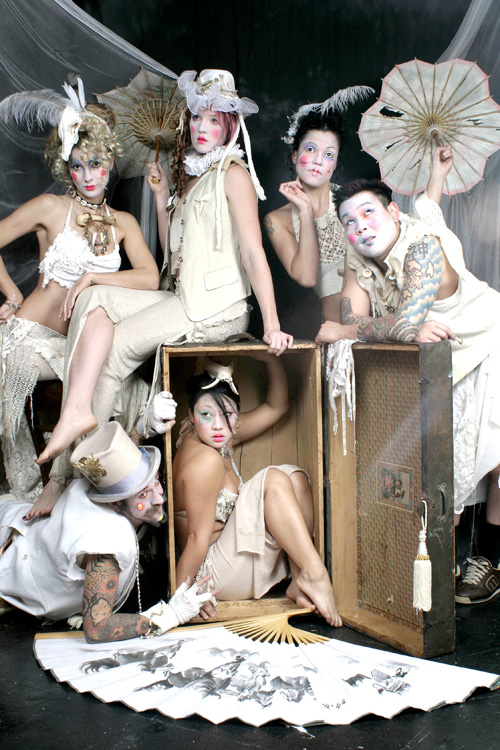
This troupe is actually part of a whole larger Circus performance subculture that has been growing on the West Coast for years. San Francisco’s The Yard Dogs Road Show, El Circo, and Vau De Vire Society, Santa Barbara’s Clan Destino, L.A.’s Mutaytor, Cirque Berzerk, and Lucent Dossier, these are just a few of the major acts that are coming to mind, but there are untold scores of others. With its own distinctive music, style, and nightlife, the Circus scene’s cultural influence has been steadily spilling over into mainstream fare for a while.
In 2006, Panic! at the Disco cast Lucent Dossier in the music video for their first big hit, I Write Sins Not Tragedies. When Panic! went on the road later that same year they brought Lucent along, and called it the “Nothing Rhymes With Circus,” Tour–
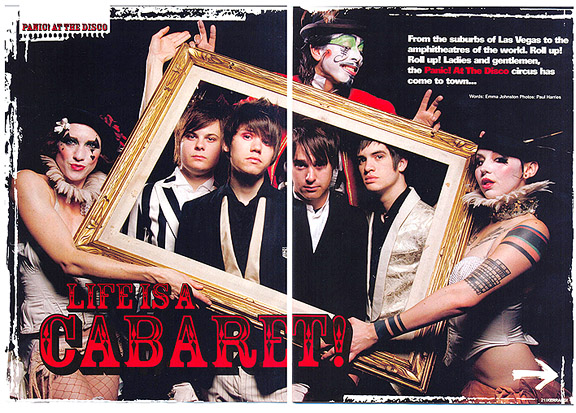
–which, according to the Washington Post, offered “a far superior take on the warped circus theme Motley Crüe was going for in its latest tour.”
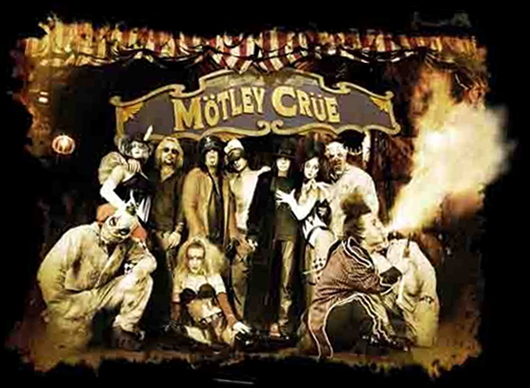
Oh, yes…that’s right. A year prior, Motley Crüe–who would become no strangers to the stylings of Lucent Dossier, themselves–reunited, and you know what their comeback tour was about?
Here’s a hint:
The Circus subculture infiltration, I should mention, has by no means been limited to music. With such proximity to the entertainment industry, it’s been showing up all over the place. Captivating gamers at E3, holding it down at Red Bull’s nightlife spectacle, Ascension, even America’s Next Top Model weighed in with an “homage” of sorts to the style earlier this year–
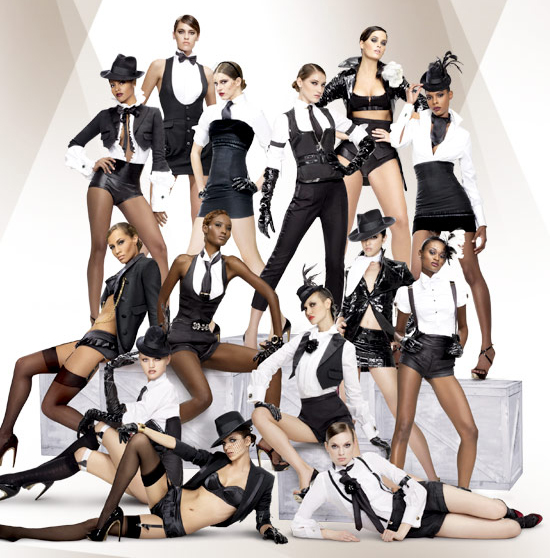
–but none of this is really comparable in scale to an endorsement from the Princess of Pop herself.
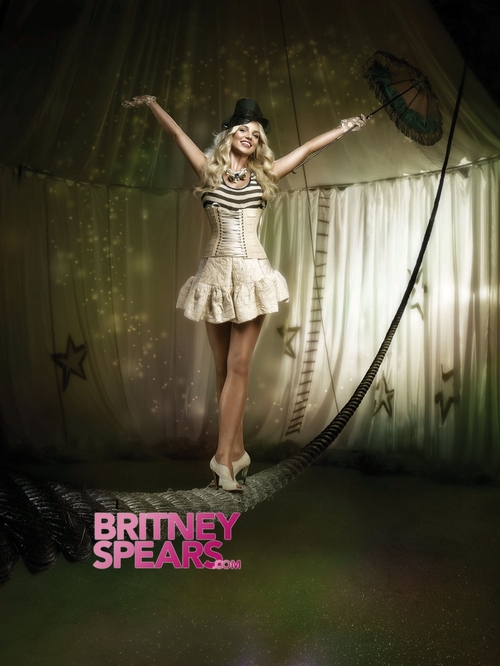
Despite the inescapable reality that it’s blatantly far from any kind of original album or tour concept, Britney Spears still chose to go with Circus anyway. Clearly there is something about Circus that continues to resonate with performers, but there is also something about our current culture, that the Circus theme persists in being so damn appealing. It should have long ago gotten played out, and yet here it is again, and again. It would be easy to contend that Circus is just an overly-tenacious current trend (and I know a few Circus professionals who do), but I see it is as the manifestation of a cultural response to a slew of far greater–and much less fickle–social trends.
In Freaks and Fire: The Underground Reinvention of the Circus, J. Dee Hill delves into the history and sociology of the Circus subculture:
Traditional forms of the tribe, like the village, have almost completely disappeared. Fewer and fewer people live in small communities where their daily interactions bring them in contact with the people they are deeply connected to, either spiritually or economically. Workers in modern corporations are replaceable and no longer bound to each other by the experience of a shared interdependence. The modern individual is preoccupied simultaneously by isolating, immediate concerns of personal survival and the larger, often intangible concerns of war, terror and economic change as transmitted by a now-seamless global media network. The intermediate space of community is not easily reached.
Not by accident, many of the newer, emergent forms of culture include a specifically tribal aspect. A return to tattooing, sacrification, fire performance and drumming, as well as a renewed interest in ritual, has occurred side-by-side with the formation of intentional (if temporary) communities such as the Rainbow Family gatherings and Burning Man festival, all of which focus on celebrating and integrating the peculiarities of their varied members.
It was at these kinds of festivals, in clubs and at underground raves, that alternative circus acts began appearing in the early 90’s. The performers were young, crazy “freaks” without any formal training who used circus costumes, skills or themes as performative means for expressing their own exaggerated personalities. Many went on to gain formal training or to study the history of the genre, but essentially their relationship to conventional circuses resembled that of outsider art to mainstream art circles. They didn’t really relate to the modern-day circus. They took their cues from something much, much older: the caravan-pulling gypsies.
The gypsies, shunned by society at large, but fiercely loyal to their own clan, were the most tribal group in all of Europe. It was these wanderers who first produced circus-like entertainment in the medieval townships, along with strolling players and minstrel shows. It wasn’t until the 1770’s that Englishman Philip Astley fused military equestrian drills with acrobatics and other entertainments to form the modern circus.
The phenomenon of alternative circus performance can be seen as the theatrical dimension to one generation’s wholesale rediscovery of the concept of tribe.
In other words, kids originally began forming Circus performance troupes as an extension of creating urban tribes:
According to French sociologist Michel Maffesoli, urban tribes are microgroups of people who share common interests in metropolitan areas. The members of these relatively small groups tend to have similar worldviews, dress styles and behavioral patterns. Maffesoli claims that punks are a typical example of an “urban tribe.”
20 Years later, instead of forming punk bands, party kids were forming circuses. And in an age where no one thinks twice of breakdancing or skateboarding, does circus art seem all that unexpected?
In the past decade we’ve also seen the arrival of social media, and “Performative means for expressing exaggerated personalities” as Hill put it, isn’t just for the Circus anymore. It’s what makes the social web go round, too. In Generation Me: Why Today’s Young Americans Are More Confident, Assertive, Entitled–and More Miserable Than Ever Before, Jean Twenge and her coauthors analyzed 15,324 responses to the Narcissistic Personality Inventory, completed by college students between 1987 and 2006. The survey is considered the most popular and valid measure of narcissism, and features statements such as “I think I am a special person,” “I can live my life anyway I want to,” “If I ruled the world, it would be better place,” etc. According to the results:
The trend was extremely clear: younger generations were significantly more narcissistic. The average college student in 2006 scored higher on narcissism than 65% of students just nineteen years before in 1987. In other words, the number of college students high in narcissism rose to two-thirds in the space of less than twenty years.
While Myspace, Youtube, blogs, and all the rest, aren’t responsible for the origins of this narcissism trend, they absolutely help enable its progress. “Narcissism is the darker side of the focus on the self,” writes Twenge, and our constant interaction with social media is an indulgence in self-focus. All of us have been affected by the process of maintaining our online presence. Even if we’re not all live-streaming our entire existence, we upload photos of our lunches or puppies for our network to see, we write blogs about experiences that we planned to blog about even as we were having them, we leave comments for friends just so other people will see them, we fill in our favorite movies and books and music in the appropriate boxes on various profiles, aware of what our choices say about us. In a sense, all of this is a performance. We are already constantly performing our selves, and Circus represents the ultimate performance platform.
Not surprisingly, we also crave attention. After all, what’s the point of being the spectacle if no one is watching? “Given the choice between fame and contentment,” writes Twenge, “29% of 1990s young people chose fame, compared to only 17% f Boomers.” No doubt, the 2000’s generation would score even higher.
Writing about narcissism and fame, Danah Boyd, a researcher of digital youth practices, asks, Why is it that people want to be famous?:
When i ask teens about their desire to be famous, it all boils down to one thing: freedom. If you’re famous, you don’t have to work. If you’re famous, you can buy anything you want. If you’re famous, your parents can’t tell you what to do. If you’re famous, you can have interesting friends and go to interesting parties. If you’re famous, you’re free!… [However] Anyone who has worked with celebrities knows that fame comes with a price and that price is unimaginable to those who don’t have to pay it.
The idea of “freedom” is a huge aspect of the appeal embodied by the Circus since way before its modern “reinvention.” Circus has long represented freedom from normal society’s rules. The ultimate outlaw lifestyle. And like celebrity, it too has extolled its own price. No surprise then that celebrities from Motley Crüe to Britney spears should find this theme so relatable.
While I don’t doubt there will be much talk of shark-jumping going on within the Circus underground (after all, just how underground-y can it be if Britney’s fans get into it?), to me, both the alternative and the mainstream reincarnations of Circus are on the same continuum. More than just a subculture or a concert tour fad, Circus has come to articulate something about the nature of our relationship with various social trends shaping the modern experience.