
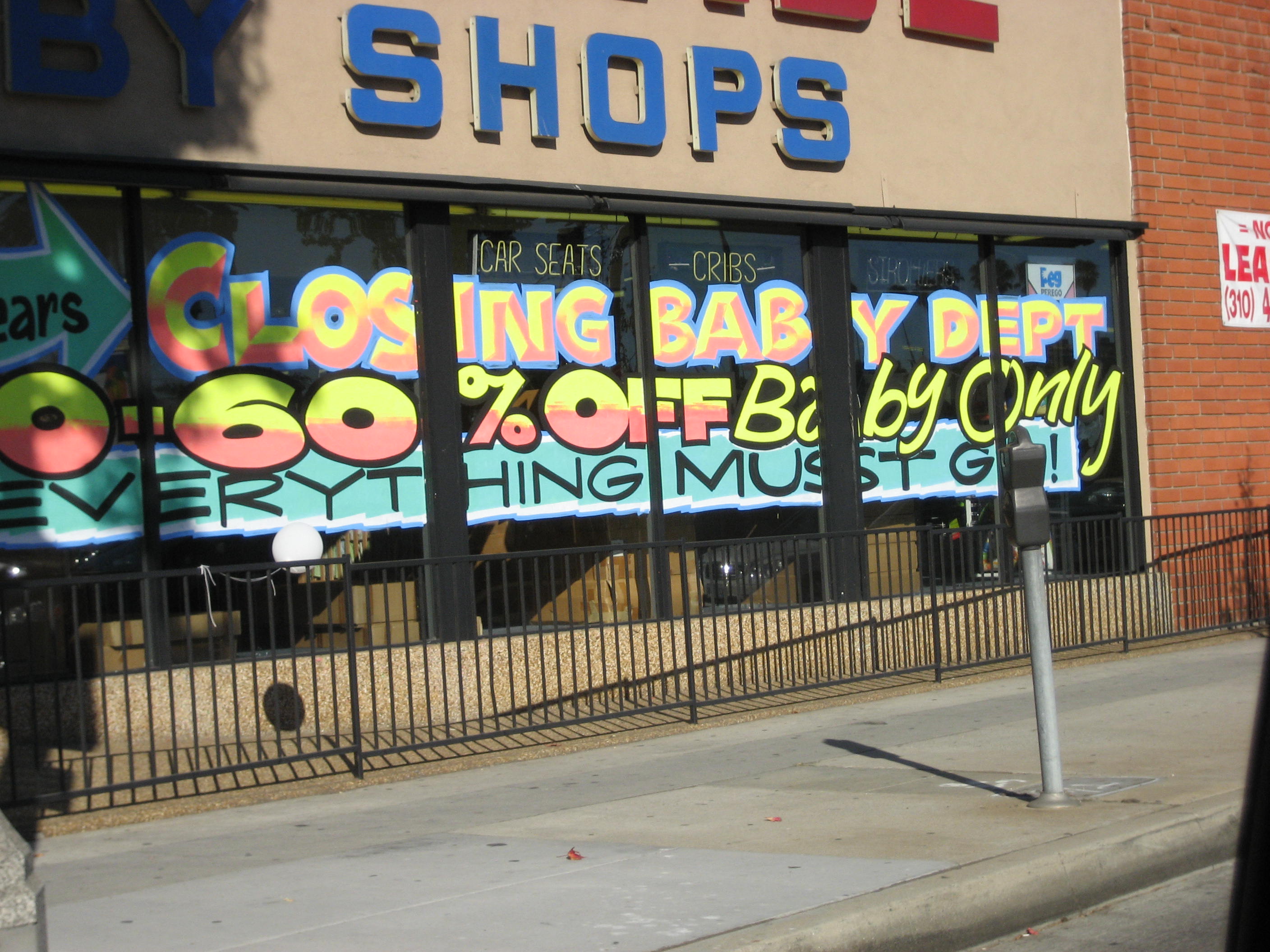
teen spending, however, remains stable.
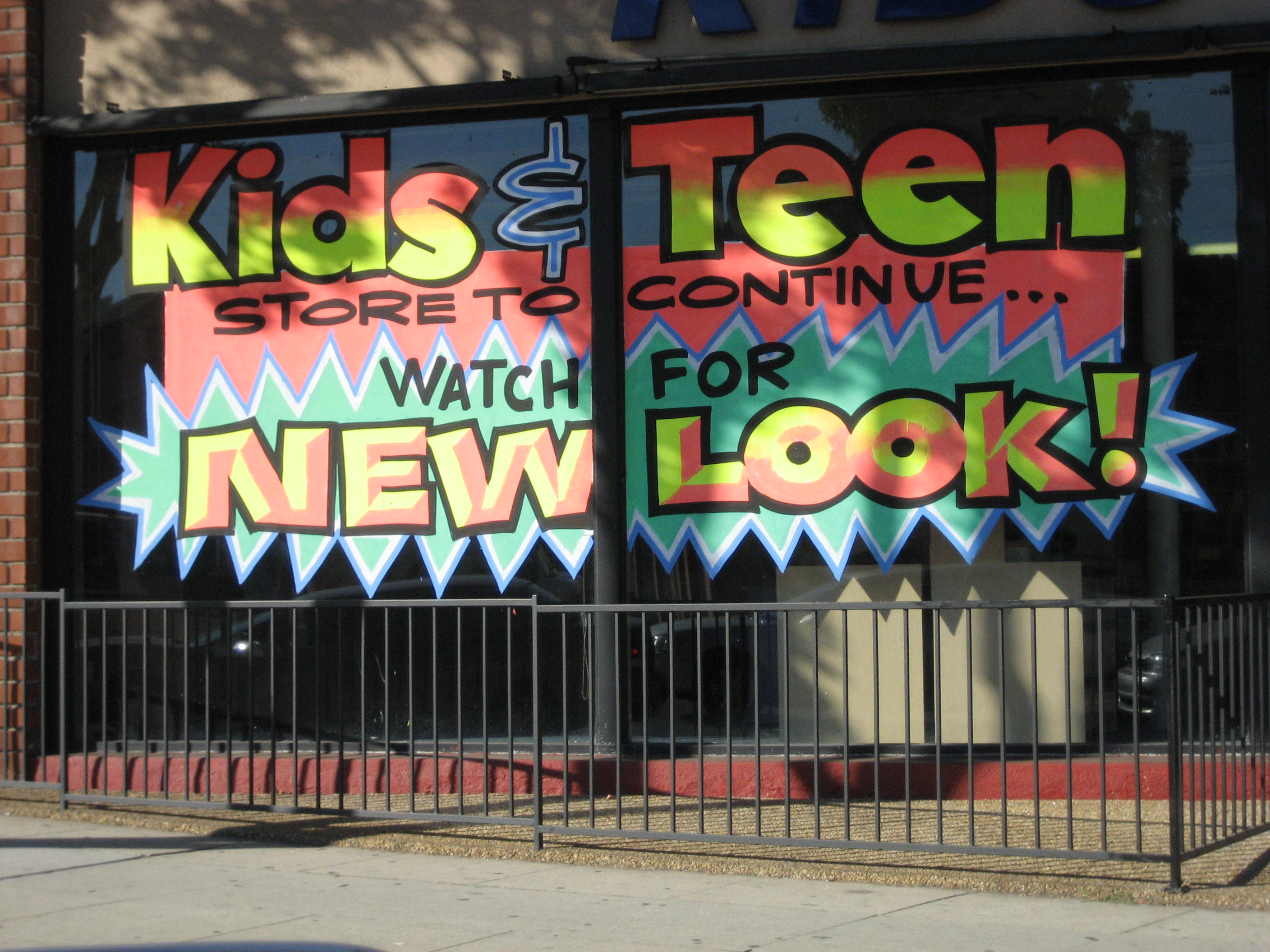
or maybe new parents are increasingly just buying all this stuff online.
teen spending, however, remains stable.
or maybe new parents are increasingly just buying all this stuff online.

this weekend was the 27th annual sunset junction music festival, a kind of cross between oldskool urban summertime carnival and indie rock block party. think: stale cotton candy and amusement park rides, local shops and art galleries trapped in the warpath shelling beer, dancing in the streets to mobile soundsystems, and the major stages blaring serenades by such haircut stalwarts as she wants revenge, autolux, blonde redhead, hot hot heat and so on.
sunset junction is the most fun you can have at a locally nurtured street festival tradition south of pink saturday in san francisco, which, if you haven’t been, is a complete free-for-all of music madness and making out that takes place the saturday night before san francisco’s gay pride parade every year. which is kind of a good segue to where i’m heading with this entry. because what struck me the most about this year’s sunset junction had nothing to do with the music (at least not directly). about half an hour in, i thought i saw something that no former san francisco resident has any right to get confused about: two straight guys holding hands.
this wasn’t some 4 am e-puddle at a rave cir. 1998. this was around 6 pm on a sunday afternoon in 2007, and while queer eye for the straight guy had mainstreamized the revolution in gay-straight male relations, metrosexual had become a house-hold word, and looking stylish was now par for the course for any sophisticated urban male, there’s still one thing that straight guys simply do not do as a fashion statement, and that’s hold hands.
yet “straight guys holding hands” was the first thing that instinctively passed through my mind. followed immediately, of course, by knee-jerk confusion: that’s not….right…. so then…. what the fuck?
the problem was that they didn’t look gay. not that there’s a certain kind of way that gay guys look that straight guys do not, but rather there are definitely certain ways that straight guys look that gay ones wouldn’t–or at least… there used to be.
what threw me off was that this seemingly-straight hand-holding couple were wearing plaid shorts that looked like swimming trunks found in a florida retirement home, and were sporting sloppy 60’s style columbia-university protester haircuts–the kind that 40 years ago just sort of grew out on their own, but today are no doubt cultivated under the careful attention of a hairdresser to look appropriately “period” vs. “politically active.” essentially, they were dressed like guys dressed before any kind of particularly gay aesthetic EXISTED, when less than 25% of men’s apparel was bought by men anyway. women used to buy 75% of it. (and you can imagine who was buying that other 25, right?)
for the rest of the night i kept seeing the same story repeated: all kinds of gay couples that didn’t look gay aside from the the fact that they were hardcore making out. (true story: at one point, towards the end of the night, when the real minority at sunset junction had become the sober people, one of a trio of guys walking in formation with their arms around each other’s waists backed up into me, and hiccuped, “oh! a girl! where’d they come from?” and i realized i was indeed hard-pressed to find an answer.) there were even mexican dudes in big white t-shirts and shaved heads going at it, that you know blast the radio when down’s “lean like a cholo” comes on. on a sidenote: do people outside of calexico even know what reggaeton is? after a while you start to go a bit blind to the contours of local culture’s idiosyncrasies when they are so prevalent….perhaps this is what has also been going on in the expression of gay identity as well.
one of the things that virtually all my gay friends have in common is a professed dislike of other “gay guys.” which is pretty telling of a major generational rift in the gay community.
the generation coming of age in the 70’s, in the wake of stonewall fought first and foremost for the rights of their community. the chant was “we’re here. we’re queer. get used to it.” the assertion of an individual gay identity, one that has the luxury to be vague, and even profess distance from the rest the gay community, is one that was only achieved through decades of pre-will and grace civil rights struggles.
in a 2005 article from the NYTimes style section, sensibly titled “Gay or Straight? Hard to Tell” bruce pask, the style director of cargo magazine, talked about why especially younger gay men don’t want to feel or look that different: “They didn’t need to assert their place in society, their right to be who they are. They’re not fighting for visibility. We got it; they don’t need it.”
perhaps that’s the issue my gay friends have with the established gay community: they do not feel that this community which is primarily defined by sexual preference is a viable forum for expressing their individual identity.
“if you can hang out with your straight buddies and be part of the group,” said brendan lemon, the editor of out, in the NYTimes article, “why would you feel the need to look different as an assertion of identity?” lemon suggested that for a generation that grew up watching “The Real World” on MTV, in which the gay and lesbian characters were no more or less flamboyant in dress or persona than their straight counterparts, being gay carries neither the stigma nor the specialness it once did. that, he said, has also altered the landscape of men’s style.
“it’s easier for gay men to come out of the closet as slobs, just as it’s easier for straight men to be dandies.” said lemon. “one of the things that’s breaking down how gay guys are seen is that people know more kinds of men who are gay.” but this dissolution of any one gay sensibility seems to be developing not just from the way in which the outside world sees gay men, but from the way gay men themselves want to be seen. as individual as any straight people would consider themselves from the rest of the “straight community.”
in a certain sense, even the breeders have been affected by the coming out of a whole generation. claims that the gay agenda to turn even the straightest of the straight gay by using the media to subliminally refashion their very notions of what they find attractive in women to resemble a male figure aside for the moment, this is the lifestyle that invented the CONCEPT of an “alternative” lifestyle (as opposed to simply a “counter-cultural” rebellion). it set the precedent. as all the rest of us participating in the greater culture now likewise face the burden of defining our own identities (whether we’re conscious of it or not), we all sorta ended up becoming queer…
and wouldn’t you know it, as soon as we did, they just turn around start lookin’ straight.
bastards.
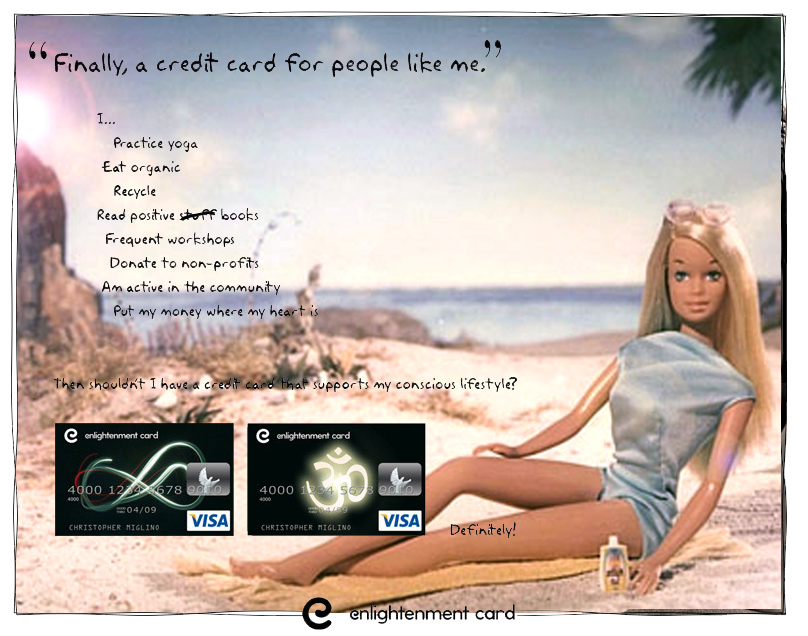
in light of the previous post, a friend suggested i redevelop the ad for the enlightenment card to make it more relevant to a consumer identity that would actually find the product appealing.
i only had five minutes tho, so here’s the best i can do:
as a marketer you realize that it’s not so much that you’re really setting anything up for sale, it’s that everything already IS for sale, and you’re just helping it along. so it’s not so much that i’m bothered by the selling of “enlightenment,” (there’s been buddha statues on-sale for millennia, and what are THOSE selling?) but rather it’s that i find the whole “enlightenment lifestyle,” kinda… icky.
today on the website for the san francisco green festival conference i discovered a publication called what is enlightenment magazine, published by enligntennext, which is “defining the contours of a new revolution in human consciousness and culture.” (it’s essentially not doing anything different than any punk band or public enemy-era hiphop act professed to be doing. it’s just targeting a different audience.)
my first encounter with companies targeting this demo was when we were soliciting sponsors for LIB and were approached by the “enlightenment card”:

(in case you’re wondering, yes, the card IS real, no that ad is NOT a joke, and we said “no, thank you” to the offer.)
while on the one hand, i’m trying to think of where else do sheltered caucasian people get to evangelize a brand of appropriated cultural imperialism with such tactless self-righteousness and get away with it, on the other hand, from a technical standpoint, i’m completely impressed.
this is everything i preach about identity marketing in action.
in robotics, there is a theory of the “uncanny valley“:
The hypothesis states that as a robot is made more humanlike in its appearance and motion, the emotional response from a human being to the robot will become increasingly positive and empathic, until a point is reached beyond which the response quickly becomes that of strong repulsion. However, as the appearance and motion continue to become less distinguishable from a human being’s, the emotional response becomes positive once more and approaches human-to-human empathy levels.
This area of repulsive response aroused by a robot with appearance and motion between a “barely-human” and “fully human” entity is called the Uncanny Valley. The name captures the idea that a robot which is “almost human” will seem overly “strange” to a human being and thus will fail to evoke the empathetic response required for productive human-robot interaction.
maybe there is an uncanny valley in the process of identity expression as well. the more a brand or a product makes it easier for people to express their identity the more palatable it is, until maybe it hits a certain point where it becomes so blatant that its appeal suddenly drops off. however, as this brand’s identity-expressing qualities continue to become more innate and nuanced, and less overt it once again becomes appealing. maybe it could be called the uncanny “wannabe valley,” the place in brand authenticity/relevance that will likewise “fail to evoke the empathetic response required for productive human-brand interaction.” (cuz brands are robo–i mean, people too.)
one of the explanations for the uncanny valley phenomenon is that the robots stuck in no-man’s land elicit revulsion because they look “dead,” and biologically we’re wired to have an aversion to corpses, cuz stickin around doesn’t bode so well for the immune system. (makes you wonder tho if necrophiliacs collect weird lookin robots). but when it comes to identity, the brands (and people) stuck in the uncanny wannabe valley turn us off because they’re “fake.” in a similar sort of way, biology may have led us to respond with distaste to “fake” people (and by proxy brands now) because they are untrustworthy. from a social selection standpoint, they may even be community saboteurs.
the funny thing in all of this is that there’s nothing actually WRONG with the enlightenment card except its name. if you have to have a credit card, why NOT get one that’s gonna let you earn points towards, like, trips to spas in costa rican rain forests, right?
while no doubt one person’s fake is another person’s orgasm, it just feels like confusing a lifestyle for an expression of “enlightenment,” is kinda, um, you know…. BOGUS!
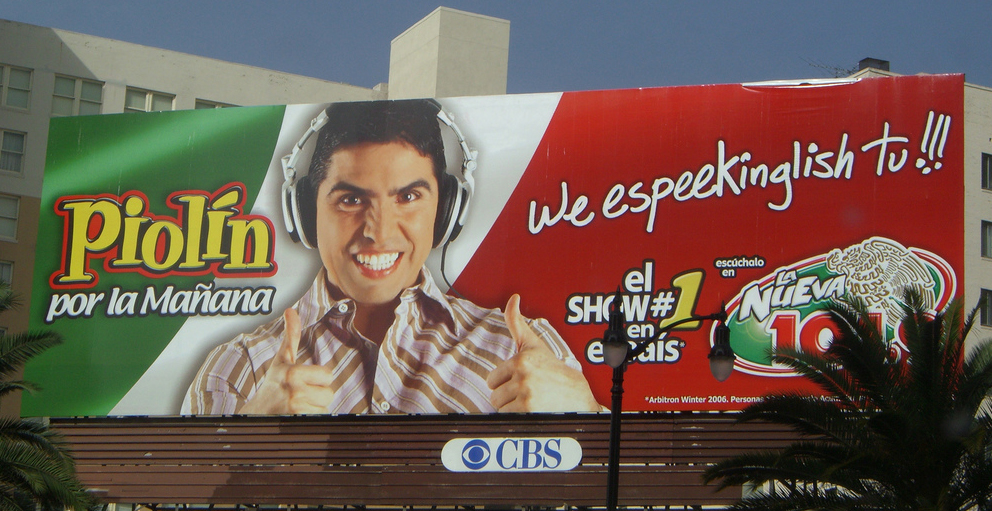
photo by: anearthling

One of usability’s most hard-earned lessons is that “you are not the user.” If you work on a development project, you’re atypical by definition. Design to optimize the user experience for outsiders, not insiders.
– jakob nielsen
much the same way that the developer is not the user, the marketer is not the demo. being a marketer does not actually make you so atypical, (anyone who has given thought to what they put up on their social network profile, and why, suddenly understands the concept of “branding”), but being who you ARE does. to a certain extent marketers address the fact that not all markets are made in their own image, but at the end of the day, despite all the demographic research, despite all the focus groups, and everything that the nielsen ratings have to say, it is, inevitably, still individuals who design the ad and its messaging. individuals whose natural tendency is to take for granted that their own identity defaults are relevant to other people. the tricky thing, of course, is that since they’re defaults, it’s quite hard to recognize their personal and non-universal nature. and since we generally tend to hang out with the kinds of folks that reinforce our own identity and worldview back to us (our “community”) we often end up viewing the people who don’t agree with us as “wrong”–just think about people with political leanings or musical tastes that are incompatible with yours….
well, it’s those same people thinking about your political leanings and musical tastes right now, and comparing how incompatible they are with their own, that are designing the marketing message that’s gonna speak to you.
as humans we define our modern identities by our cultural affiliations and lifestyle choices, and the more we are identified with them the more it can get in the way of understanding what resonates with the people who do not share our community’s language and values. as marketers–who still happen to be human–this poses a particular problem.
unlike, say, the perspective of danah boyd, i don’t subscribe to the worldview that american society is so easily split up between the “hegemony” (dominant class) and the “subaltern” (subordinate, lower class). perhaps it’s like that among high school kids, since that’s whom danah studies, but i still doubt it. if this simple split between the popular kids and the burnouts castes was a hugely relevant definition of identity then all marketers would need to do is keep cranking out hegemonic “aspirational” ad messages, go home, and call it day. the reality of ad messaging, however, seems to have gotten a bit more complicated than that since the 1950’s, and then even exponentially MORE complicated since the 1980’s. there is no universal influencer anymore. there are instead tribal market segments, and the tricky part is translating between, and even within them.
ok, i don’t know about you, but if i have to slog through reading a lot of abstract theory i tend to zone out and go skipping stones across my mozilla tabs, so how about a practical example?
nielsen writes:
The Web’s chattering classes tend to be overly engaged in the “Internet elite experience.” They actually care about the ‘Net for its own sake, and go gaga over new ways of showing maps. In contrast, average users just want to complete tasks online. They don’t particularly like the Web, and they’d like to get back to their jobs or families as quickly as possible.
i’d add that they want to get back to their own identities as quickly as possible. the “elite internet user” is a kind of identity/lifestyle/community unto itself, and it’s not that the “average” user is just a wannabe tourist in this clique, it’s that the average user isn’t even INTERESTED in being part of the clique. the average user probably has interests and ways of defining their identity that the “elite internet user” couldn’t even care about, much like an “elite soccer mom” probably doesn’t give a shit about the “Net for its own sake”–except for the times when it’s in any way involved with sex offenders, maybe.
that photo at the top of this post is for a spanish-speaking morning radio show in l.a. hosted by piolin, and i think it’s absolutely hilarious. this message, which proclaims in a broken english that “we espeekinglish tu!” is in no way aimed at convincing any native english speaker to listen to the program. this is, of course, a more dramatic example of translating between market segments since it actually involves a product and a message that, literally, speaks to a demo in a different language–but it’s not spanish. it’s spanglish.
these billboards are all over l.a. (including an even funnier one that involves the phrase “free toes free hole es” smack dab over hollywood blvd.) these are not messages relegated to some “subaltern” niche corner, they are actually pretty brazen displays of a very inside joke that is only supposed to resonate with a particular kind of identity.
even though markets are increasingly defined by their individuals’ identities, it is impossible for any one individual marketer to be able to understand and speak the language of EVERY identity out there. the first step to learning anything new, however, is to simply accept that you don’t know it. accept that you are not the demo. EVER. even if you fit the profile, it doesn’t matter. it’s not the point. it’s just luck. (like it’s lucky that you, reader, happen to be part of the 35% of internet users who are familiar with “blogs”… if you’re from the west coast, 18-34, college educated and male, you’re also likely to be a part of the paltry 16% familiar with “wikis”…. and if you happen to be surprised that those percentages are so low, considering how much impact you might feel these channels/tools carry, then it’s even more proof of why taking your personal self out of the equation when developing a strategy is crucial.)
nielsen says that the antidote to the elite “bubble vapor” problem is user testing:
Find out what representative users need. It’s tempting to work on what’s hot, but to make money, focus on the basics that customers value.
in marketing it’s not specifically about what the “user needs” but what they “relate to.” it’s not about what you think is “hot,” it’s about distilling a message and an approach that resonates with a particular identity.