
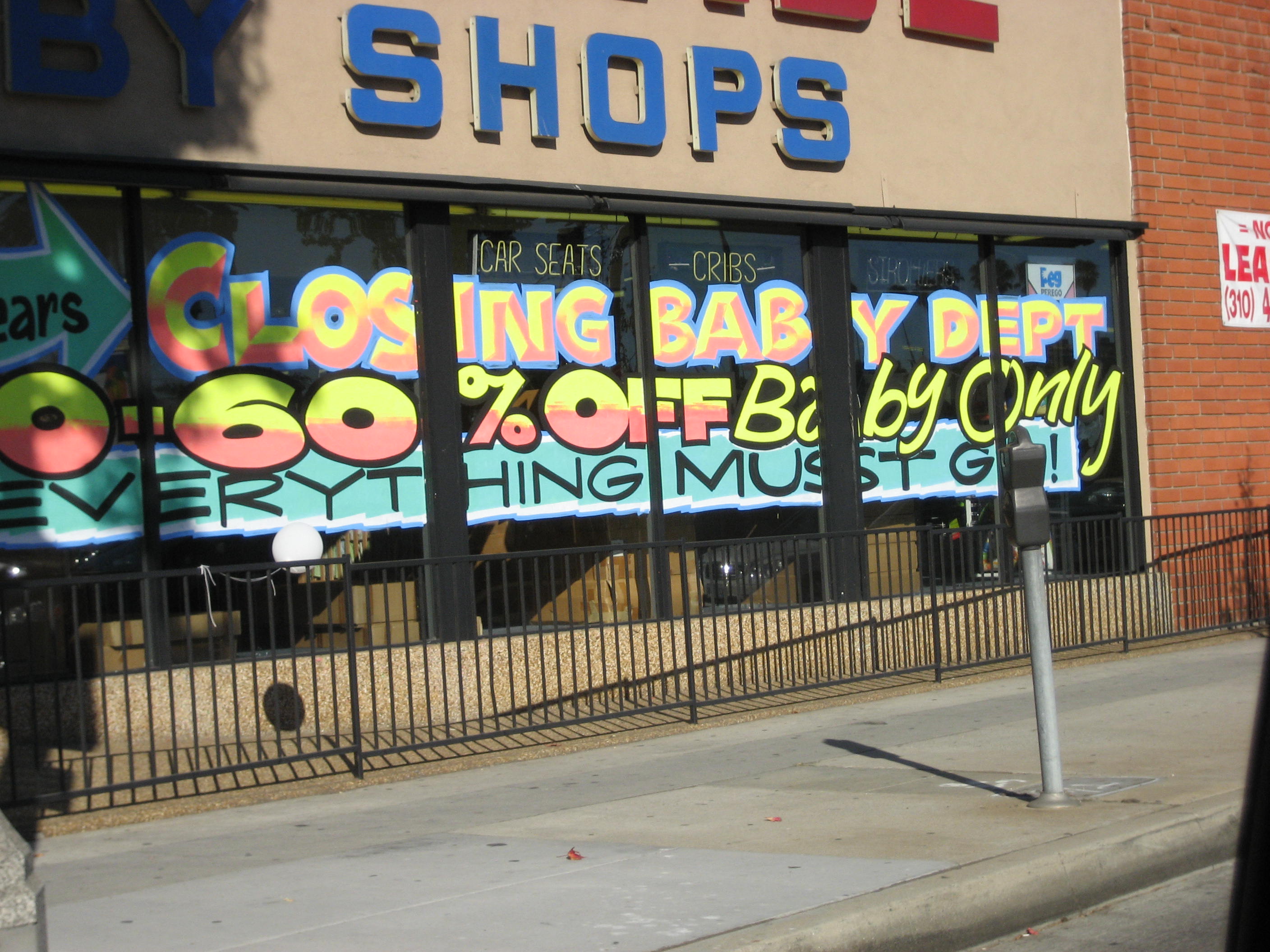
teen spending, however, remains stable.
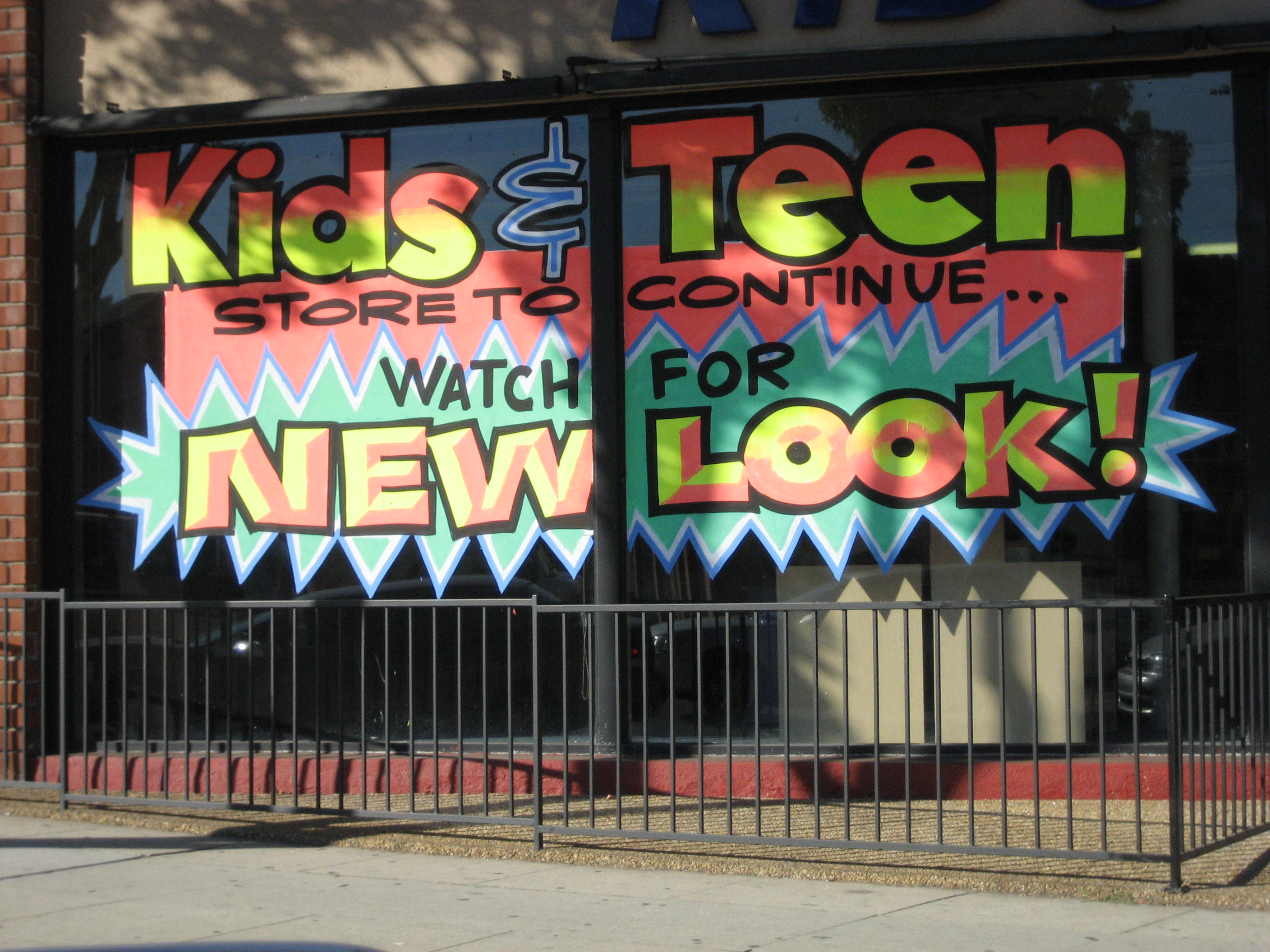
or maybe new parents are increasingly just buying all this stuff online.
teen spending, however, remains stable.
or maybe new parents are increasingly just buying all this stuff online.
right after i’d written the cult of the gate-crasher post i found an op-ed video of sorts made for the wall street journal by scott karp, responding to the question of whether bloggers can be journalists, and i’ve been following him since.
today i just saw this very interesting piece he wrote: Should Newspapers Become Local Blog Networks? among a lot of other thought-provoking things, he writes:
“The word “blog” has way too much baggage — it’s too often equated with opinion. But a blog is just a content management system, and you can use it to publish shrill opinion, or you can use it to publish traditional journalism…or you can use it to publish journalistic reporting with a bit more point of view.”
he’s totally right. the word blog does have a lot of baggage, and i personally refuse to carry it even though i actually even have… you know… one of those things. i practically never say the word, and i certainly don’t think of myself as a “blogger.” (don’t take it personally, i went to burningman when i was 18, and am inextricably enmeshed in the burningman community in l.a., yet i refuse to say i’m a “burner” either. i’m equal opportunity when it comes to defining the difference between something i do, and who i am.)
what i am is a writer. and there happen to be quite a few other writers out there, with the same sort of approach to articulating a combination of insight and opinion, and publishing their writing using the same kind of content management system that i do. a blog IS just a content management system, and lumping all the people who use the same system into one category, rather than actually examining the difference in the content being produced, is kind of ridiculous.
in a lot of instances a blogger (that is, the content creator, not the system user in this case) is nothing different from what has traditionally been called a “columnist.” you know… opinionated and personal, yet creating something informative and entertaining enough to get to see the light of print. i mean… look at the layout of a blog! they all even LOOK like a column. there may be a nation of blogges out there who all use the same sort of content management system, but i think i’ll claim my allegiance to the nation of columnists.

the do lab’s hope flower, 2006
photo by: Natalia Valik

it’s the middle of summer. this means i’ve been spending time lately putting together the next issue of the Do Lab Artist Network. it started in the winter, when a ton of the producers we work with at the do were making noise about the new noise they were making, so i got the idea to put together an email from the dolab covering the latest moves happening in the music in our music-driven scene. i realized even then that if we were to do this on a quarterly basis, we could time the spring issue to coincide perfectly with the peak of promotions for lightning in a bottle, the do’s music festival. it just so happened that there were a bunch of new videos (music and doc-stylie) coming out of our community at that time, so the spring issue was dedicated to this multimedia explosion. with LIB over, and my move to a freelance lifestyle giving me insomnia, i started sharing work space with skin.graft designs in an effort to curb the sensation that my home was my office, hoping this would get me back to sleeping normally. it’s no surprise then that summer is going to be the do lab artist network “vogue” issue with a focus on fashion designers/photographers.
as always any do lab project inevitably becomes more than just the sum of its parts. (the do motto is “go big” after all). a great part of the reason that i cherish what i get to do with the do is that at its most profound, my ideas and projects develop into all sorts of insights on everything from branding, to campaign strategy, to business organization, the artist network publication is now no exception.
for the past seven years the do has been producing events, and in the past couple of years is when the scale of these productions has begun to grow exponentially. we now count such companies as redbull, scion, lexus, and the coachella music festival among our portfolio of clients (and before the fall issue of the artist network comes out we will have added summer sonic festival in japan, electric picnic in ireland, virgin festival in baltimore, and that’s all i can keep track of so far). on top of this we are still also producing our own events. we had our biggest creation ever (LIB) go down just a couple of months ago. creating events for our community is what the dolab was doing before any big corporate brands ever knew our name, and it’s still where our heart is and always will be.
what we do isn’t just about entertainment. it’s about taking people’s breath away. people come to our events to have visions, make discoveries, get inspired, fall in love, (among other things you don’t mention in polite company). we design super dynamic, interactive environments, and our creations move people. it’s hard to describe what it’s like to see people ride up to the giant hope flower, and look up at this insanity that was pulled out of the ether of magic and heavy machinery, speechless, tears streaming uncontrollably down their faces.
then a funny thing happens when you are the consistent purveyor of epic, life-changing, reality-bending experiences… you end up developing a very dedicated and suuper engaged community.
people not only keep coming back to event after event, but people spend the time in between telling their friends about it, or talking to the new friends they made there about it. people become interested not just in participating in the experience, but in actually being a part of the creation process itself. our events run on an army of volunteers, and everything we build is the result of a kaleidoscope of collaboration. the fact that an event production crew said “sure, let’s do it,” when i suggested we start an arts publication is testament to this collaborative spirit.
(…. and thank god that segue brings us back to the point–i was getting so far into back-story exposition there, i was kind of getting worried about how i’d be able to suavely transition us back to the action. did you notice?)
in the process of brand development there are elements that are the well-established usual suspects. experience and design are crucial, “content is king,” and community is…. well, you know. but there is such a vital element that is so often neglected.
culture.
in all the time i worked at house of blues, the only kind of communications we ever sent out to our huge database of avid music fans were emails bugging them to buy tickets. there’s a never-ending stream of popular musicians touring through the clubs at any given moment, and yet the idea of leveraging these relationships with culture creators into, say, a house of blues publication, that could, for instance, offer its readers exclusive interviews with the artists, conducted over drinks after soundcheck…. would have been considered ridiculous. instead it was all just emails about show pre-sales and desperate reminders. cuz what would a concert promotion company get out of becoming a publisher, right? (you know… just thinking about the out of control drinks at the house of blues restaurant–a chocolate vodka concoction that sips like an alcoholic tiramisu, margaritas that are so whipped you’ll feel like any other margarita is cheating on you thereafter–i’d be down to read an interview even with the bartenders.)
anyway…something really strange and amazing happened to the open rates on do lab emails that we were sending out leading up to our music festival. they kept getting better with each one! which is unheard of in the land of event reminder emails. the difference between the kind of “reminders” that the do sends vs. house of blues–or, i suppose, really any other major concert promoter–is that we make sure to approach each communication with our community as not just another opportunity to send a banner ad into their inbox, but as culture creation. that is, a transmission of the aesthetics, sound, news, and values of the community.
not like hiring the words “culture” and “marketing” as a team to model your brand’s latest collection is all that new. in fact, no less a sage than faith popcorn has already hailed “culture as the new medium,” pointing out that in the future (and by that i mean, you know… the present) brands need to find ways to “embed” themselves within culture to stay relevant and competitive, and that considering a “culture plan” is just as important as a “media plan.” culture marketing, however, depends on the process of co-opting existing culture. and hey, i’m not knockin’ that. the hippies, hipsters, and hiphop-sters are all equally entitled to free redbull, and brand logos on their flyers. it’s all love, baby, fo sho. but i’m not talking about “embedding” your brand into culture here. (most “sponsorship” at this point has devolved into essentially nothing more than just getting a new place to put a billboard.) this post is called “create culture.”
it’s about brands being platforms of cultural expression. in the ballyhooed (what the hell kind of word is ballyhoo?) future where “brands are the new networks, and advertising agencies are like Hollywood producers” you can think of culture as… cable. mtv, in fact, is THE perfect example of a brand creating culture. (in case you didn’t really think i meant that the concept should be applied literally, you’re wrong.)
ok, but not every brand is mtv or house of blues or even the do lab for that matter, that has cultural content literally walking through its doors, right? and by the same token, not all cultural content is created equally relevant to your particular community (though music is almost always a good place to start). either way, it’s not necessarily about brands needing to create their own proprietary cultural content (we’ve totally got enough of that already, thanks). but perhaps partnering with culture creators to license their stuff would be a direction to consider. after all, the do lab artist network is not us stroking our own egos on our decor and lighting designs, it’s about the many varied cultural creators relevant to our community.
culture not only facilitates communication within a community–it is a medium for expression and communication at its core, after all–but it’s a way to build brand value! think of it like the advanced level you get to in the game after you beat the koopa at the end of the “creating community” level. and this level involves giving something back.
Go Big!
working on music festivals has gotten me to thinking about the kind of presence that these events develop online.
p.t. barnum pretty much laid the template for the concert promotion industry, and in that process also invented the advertising industry. thereafter events and promotions have been inextricably linked, like a codependent couple stuck in a mutually-enabling relationship.
which is not to say that that relationship hasn’t become totally dysfunctional in the past century. after so long getting completely ignored by concerts, which has no passion for anything but venues, promotion turned what was once an innocent flirtation with media into a full-on, often illicit, always exhilarating love affair.
see, because concerts makes its money at the venue door, it doesn’t really see why it oughtta give a crap about “engagement” since “the draw”–that is, the band–changes every night. and so in this precariously maintained way, the concert industry gets away with more or less letting the bands have engagement be their cross to bear.
which is why the music festival website is such a bizarre little anomaly. it’s the rare occasion when a concert promotion company must use its own brand as an element of the “draw,” and thus needs (whether it understands it or not) to deal with engagement media.
that’s like…. imagine having to work with your partner’s secret lover on a big work project that you’re not really feeling that confident about, and you might start to get an inkling of the sort of awkwardness with which the concert industry approaches this whole process.
essentially there are three things that a festival is selling:
1. the event lineup
2. the event brand
3. the event community
like toilet paper, tissues, and paper towels, they’re all made up of the same stuff, and to a certain degree serve an interchangeable function, but at the end of the day, you do buy each for different reasons.
after lightning in a bottle, the do lab’s coachella installation, now working on the street scene music festival, and with all the various other festivals around the world the do’s negotiating with right now, i’ve been looking at more festival websites than i can even recall. but what keeps catching my eye is the way that they all address the above three selling points:
1. Virgin Festival – August 4 & 5 – Baltimore, MD.
Lineup: HOLY SHIT!
the smashing pumpkins AND the police! M.I.A.!? how the hell did they get M.I.A. i thought the dept. of homeland security wasn’t even letting her in the country?! WU TANG? i’m sorry… WU TANG FUCKING CLAN? wait…. a third time… WU?! (ok, how many members of wu tang do you need to book to be able to put them on the bill? i guess now that ODB’s out for the count it’s easier to get the full mishpucha, but… still, really?)
brand: what else would you expect from virgin?
they’ve been doing the festival thing in europe for a decade now, and while i have never heard of the venue, and i’ve never even heard of baltimore insofar as any music festival conversation is concerned…and i don’t care! i trust virgin’s gonna do me right. way to put the east coast back on the music festival map in a big way.
community: the what now?
ok, granted they’re only a year old, so it’s not like they’ve got a huge community legacy to capitalize on, but really, just getting the chance to vote for a band to get booked to the lineup via mobile text voting is not a legitimate substitute for even so much as a token myspace page link so far as “getting people involved” goes.
* bonus points: motherfuckin KILLER site.
2. Vans Warped Tour – all fuckin summer – all the fuck over the place
lineup: does it matter?
with 45 shows in the space of three months, there’s single bands that can’t even handle that kind of touring schedule, but somehow warped, the pop-punk travelling circus makes it happen. each date has a different lineup, so in a buddhist sort of way, there’s no constant, solid, separate, unchanging, lineup there. but even if you look at the roster for a random showdate all the bands are just listed in alphabetical order, and there isn’t even any kind of top billing to be had here. clearly for warped, it’s not about the bands.
brand: keepin it real.
the 07 site’s few creative elements hearken back to traditional punk tattoo designs. that intimate kind of “we know you know, and we know you know we know” insinuation gets a 10 on the identity marketing meter.
community: THAT is fuckin brilliant.
check it out! warped turned their whole site into a COMMUNITY site. any given showdate’s page gives you pictures of the people who have made profiles for it. the login is actually ABOVE the purchase link! imagine that! having to scroll down to buy tickets! it doesn’t even say “buy tickets” it just says “onsale now” (cuz we know you know to buy them). there are soooo many reasons this whole approach is just genius, i’m not even going to go into it. (if you’re really interested, send me an email: jenka@social-creature.com). suuuper smart long-term strategy thinking.
* bonus points: i’d just like to reiterate again how incredibly brilliant turning a festival website into a community site is.
crap! i’ve run out of time gotta get back to work, so i’ll just rush through a few more, but you get the gist…
SOS live earth – al gore’s green music festival
* bonus points: that scrolling lineup banner plus the green mission are just like LIB! if only al was running for president! a movie, a book, a music festival?! he’s like a branding empire… it’d be like p diddy running for president.
electric picnic – ireland
with nav. sections like, “comedy and spoken word,” “theatrics,” and “body and soul” in addition to “the music,” it’s evident that this event is all about the experience.
* bonus points for addressing the silent fourth element in addition to lineup, brand, and community: experience.
* negative points for a stupid useless splash page! come on, i get that this year’s festival is sold out, but seriously, having a splash page on a music festival site is like dousing it in bird flu. just… GROSS!
summer sonic – tokyo & osaka
aahhh! the site’s in japanese, i don’t understand anything but that lineup, which actually ALSO doesn’t make sense: black eyed peas, avril lavigne, gwen stefani, googoo dolls? SUGAR RAY? this is like the anti-virginfestival. (does that make it the whore festival?) god you could NOT sell this lineup to a cohesive enough demo in the US to get away with it being a massive festival AT ALL. foreign people are weirdos.
just saw a great bit by sarah dopp about the trend of an established company’s new community site campaign that involves an outdoor advertising strategy to drive traffic–case in point: reebok’s goruneasy.com that i already wrote about glowingly HERE.
what i find particularly interesting about this approach that’s being adopted not just by reebok, but starbucks as well (letsmeetatstarbucks.com), among what’s sure to be a coming slew of others, are the kind of pre-web 2.0 strategies–and their benefits–that are getting incorporated in this technique.
from sarahdopp.com:
- Billboard-to-web community-oriented marketing is being adapted with high visibility.
- By sending people to a campaign-specific website, they can monitor their campaign’s site traffic ROI without any confusion.
we’ve been employing this tactic in concert promotion for ages. the simplest way to determine the effectiveness of any ad is to isolate an offer, for example, letting radio station X promote a particular kind of discount offer that no other outlet is pushing.
it’s incredibly interesting also to consider the significance of using outdoor media to promote a web 2.0 site of a consumer goods brand. this is the multi-platform kind of “meta-strategy” that i think is going to become the standard for a new kind of campaign. one that fuses the best of the old (it don’t get much older than billboards, yo) with the new, and in the process fuses engagement WITH awareness instead of relegating the two to their own separate ghettos.