
the cult of the gate-crasher


“We’re the most permeable membrane in show-business. Anyone who thinks they’re part of Mystic Family Circus probably is.”

Mystic Family Circus in Freaks & Fire: The Underground Reinvention of the Circus

ok… i’m going to confess: i didn’t read the cult of the amateur (and i’ve read enough reviews of it at this point to be fairly certain that i will never want to) but i’m sure whatever the book is trying to say, it’s got it wrong.

wait, no, that’s not right… we can’t begin this way…

this isn’t even about the book. the book is just a a timely incarnation of a widely-held perspective that there is, and needs to be, a set dividing line to separate creative expression of worth from that which is worthless. and without this line there would be no way to distinguish between that which is moving culture forward, and that which is, as andrew keen says, “killing culture.” what the book is wrong about is this perspective in the first place.

i’m going to give the majority of the credit for why i’m not going to read the book to this fantastically insightful customer review of it on amazon. (i actually can’t think of a more amazingly ironic sort of fate for a book that’s a polemic decrying the worthlessness of the web’s content! can you?):

Although The Cult of the Amateur is highly thought provoking, it is marred by sloppy thinking. For one thing: “Amateur” is never defined. Professionalism is a complicated concept in the fields of literature, music, visual arts, and dance (the last is a field this book does not cover, but it is one I am familiar with as a performer and teacher). Professionalism is often not defined by whether the person makes his or her living as a writer, musician, etc. Most people in most arts fields, including some highly skilled and well-known artists, simply cannot earn a living working in the arts full time because the pay is typically too low. Professionalism is sometimes defined by whether the artist has passed “gatekeepers,” in the form of publishers or producers, or by winning contests.

yes… this is where we should begin.

right there.

artistic expression of worth, i.e. “professional-quality,” as defined by whether the artist has passed “gatekeepers.”

see this is where the cult of the amateur is wrong. in the very concept of its title! there is certainly no lack of amateurs out there–those that haven’t passed through the gate–but the cult isn’t about them. no, all they get is a club. and they’re quite happy with it.

the cult…is about the gate-CRASHERS! these are the people who don’t give a shit about the gate.

see, despite whatever the book is (i’m told) trying to assert, it’s not REALLY about how web 2.0’s proliferation of “amateur content” threatens “our cultural standards and moral values.” it’s not really about how a static volume of books edited by a bunch of white guys who determined what was and was not worthy of inclusion is “better” than a universal wiki-encyclopedia. it’s not REALLY about how news written by a professional journalist working for a publicly-traded corporate-owned media outlet is better than a blog. it’s probably not even about concepts for determining the merit of creative expression in a more complex way than “created by someone who has passed through the gate” vs. “not.” no, it’s not about any of that nonsense…. what it’s really about is a huge degree of fear and anxiety from the cultural conservatives within the gates, who will pay money to read a book that might allay these fears by discrediting the unwashed barbarian insurgents outside threatening to undermine the very foundation of the elite’s worth as artists, not to mention their authority.

hold up a second…. let’s pause for a brief history lesson on “degenerate art“:

Entartete Kunst-

In 1927, the National Socialist Society for German Culture was formed. The aim of this organization was to halt the “corruption of art” and inform the people about the relationship between race and art. By 1933, the terms “Jewish,” “Degenerate,” and “Bolshevik” were in common use to describe almost all modern art.

Viewers of Degenerate Art Exhibit In 1937, Nazi officials purged German museums of works the Party considered to be degenerate. From the thousands of works removed, 650 were chosen for a special exhibit of Entartete Kunst. The exhibit opened in Munich and then traveled to eleven other cities in Germany and Austria. In each installation, the works were poorly hung and surrounded by graffiti and hand written labels mocking the artists and their creations. Over three million visitors attended making it the first “blockbuster” exhibition. Many of the artists included in the Entartete Kunst exhibition are now considered masters of the twentieth century. The following are some of the better known artists whose works were ridiculed in the exhibit. Marc Chagall, Max Ernst, Kandinsky, Die Brücke….

woops. looks like someone messed up on their art history final. oh wait…. hitler was never accepted to art school in the first place…

“All my life I have wanted to be a great painter in oils … As soon as I have carried out my program for Germany, I shall take up painting. I feel that I have it in my soul to become one of the great artists of the age and that future historians will remember me not for what I have done for Germany, but for my art.… As for the degenerate artists, I forbid them to force their so-called experiences upon the public. If they do see fields blue, they are deranged, and should go to an asylum. If they only pretend to see them blue, they are criminals, and should go to prison. I will purge the nation of them.”
– Adolf Hitler

he really really tried to feature picasso’s work in the entartete kunst exhibit too, unfortunately picasso could never be proven to be jewish enough to fit with the theme.

ok, you know what?…. that was a pretty extreme example. don’t lets get carried away, aight? alls i’m sayin’ is…. it ain’t like discrediting gate-crashing artists out of fear is a new thang. it’s got quite a robust history. ironically, angstily revenging your rejection by the gatekeepers by wiping them out isn’t really what gate-crashers care about. really, more often gate-crashers don’t even care whether they are accepted or not.

that’s part of what makes them so dangerous. see, whereas some “amateurs” really might get all despondent (and in very rare cases…genocidally psychotic) if a gatekeeper won’t let their art through, to a gate-crasher the idea of getting discouraged if they didn’t make it is like getting discouraged from sneezing in the future just because you didn’t get a “god bless you.” they’re going to create art no matter what. it’s a disorder. they generally can’t help it. and i’m not talking about all those poor tone-deaf souls with pop-star delusions that american idol relishes for its gag reel. that’s not about compulsive creative expression, that’s about feeding the fantasies of narcissism. and while the two very often come hand in hand, they are very easily distinguishable.

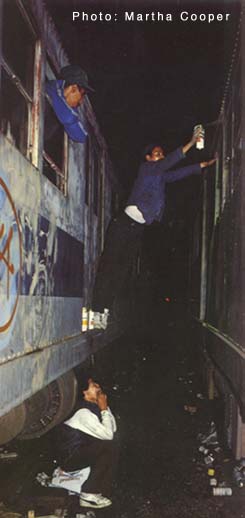
the self-identified “professionals” inside the gate, however, like to lump all the people on the outside into this one big tragic wannabe “amateur” category. it’s a lot less threatening that way. call them all pestilent “amateurs” and it helps delay the need to critically address any revolutionizing impact of the gate-crashers among them. generally the rule is to scoff at the barbarians with spray cans overtly tagging the walls of the hallowed gate until such time as the side facing out has itself turned into a new kind of canvas, and the gatekeepers have figured out how to move the gate to a more accommodating locati–i mean, monetize the new art.

even arguably the most impenetrable gate on earth (i’m not counting heaven) moved when hollywood was financially forced to stop staring at its on celluloid navel. once upon a time hollywood was adamant that there was no way that any entity but an established studio could produce quality movies. after all, how could they? beyond the impossible hurdles of the huge amounts of money and all sorts of other resources required, producing movies that the public would be interested in seeing was a craft, requiring years of professional training and dues paying. this just wasn’t the kind of thing any amateur could do. that is, until miramax’s independently-produced, $1.1 million sex lies and videotape performed better on a cost-to-earnings ratio than the $50 million batman. four years later disney bought miramax, and now now, over a decade later, the concept of an “independent” film is basically an anachronism. (seriously, like when was the last time you went to see an “independent”?) hollywood’s totally cool with good (profitable) movies coming from wherever it is that they come from now–it’s too busy just scrambling to figure out how it’s going to continue to make money on distributing them to care about defending it’s Ahhht gate anymore.

as the auter’s (not amateurs) of the 1990’s independent film industry attest, “outsider artists” are not necessarily all that interested in paying their dues and waiting in line for the chance to get their shot. nor are they particularly resourceless when it comes to finding innovative ways to create and distribute the fruits of their creativity on their own terms. these things hold true for gate-crashers in all creative fields. from film, to music, fashion, entertainment, to business, and even to the creative expression of lifestyle itself.

this is all a great opportunity to reevaluate the question: is creative expression worthless unless it has prestige? does it have to have “superiority” (i.e. better than the stuff outside the gate) to have value? both the “polish” of industry and “ingenuity” of independence lend their respective expressions different kinds of caché, but is there perhaps a way to decipher the inherent value in creative expression regardless of origin? can expression be judged on how insightful it is? how entertaining it is? how relevant? provocative? fresh? without that measure necessarily being a reflection of how many gates it did or did no pass?cuz see, the funny thing about the gate, is that the gate doesn’t actually CARE about the art. well, it sort of does. but mostly, it just cares about perpetuating itself. this is why it’s so difficult for people on the inside side of it to break out once they’ve gotten too far in. (oh, so you want to be a political essayist but your major success is in illustrated children’s books? roiiiight.) this is also why true gate-crashers are defined not by having been able to do so from the outside in, but rather by continuing to crash through the gate, no matter which side they’re on. see: paul simon’s foray into mbaqanga music of south africa on the Graceland album, 1986. According to allmusic.com, “Graceland became the standard against which subsequent musical experiments by major artists were measured.” totally a gate-crasher move.

i’m not saying that traditional training is unnecessary, i’m just saying that it’s not a consistent enough determinant of quality to rely on too heavily for the judging. “self-taught” is not a separate art category. and i’m not saying that gates don’t matter, they are, in fact, crucial. without them, the gate-crasher could not exist. what i am saying is it’s time to give the gate-crashers their due recognition. the experimenting, the visionary, the curious… these qualities that are ignored, denied and discredited by the word “amateur,” these are the qualities that fuel the innovators that are not only not killing culture, but in fact, have always been the ones reincarnating it.



Subscribe for more like this.


attention deficit distorter

according to Can’t Stop Won’t Stop: A History of the Hip Hop Generation, afrika bambaataa defined the four elements of hip hop as djing, emceeing, breakdancing, and graffiti. of the four, only graffiti makes a case that its conception was a little more immaculate. in truth, it’s the only element that can actually even pursue any kind of truth with such a claim, as the origin of modern graffiti can be traced back not to the bronx, but to philly, as far back as 1965.

from Can’t Stop Won’t Stop:

Aerosolist and activist Steve “Espo” Powers says that the Black teenager, CORNBREAD, who is credited with popularizing the tagging of the Philly subways was only trying to attract the attention of a beauty named Cynthia. by 1968 the movement had spread to New York City.

but destiny is forged not of details, but from convergences:

….When a Greek American named TAKI 183 told the New York Times in the summer of 1971 why he tagged his name on ice cream trucks and subway cars–“I don’t feel like a celebrity normally, but the guys make me feel like one when they introduce me to someone”–thousands of New York youngsters picked up fat markers and spray paint to make their own name.

….Writing your name was like locating the edge of civil society and planting a flag there. In Greg Tate’s words, it was “reverse colonization.”

…. But these writers weren’t like the revolutionaries, or even the philosopher-activist wall-writers in Lima, Mexico City, Paris, and Algiers. Theirs were not political statements. They were just what they were, a strike against their generation’s invisibility…

They held no illusions about power. No graffiti writer ever hoped to run for mayor. And unlike the gang bangers, none would submerge his of her name to the collective. They were doing it to be known amongst their peers, to be recognized….

Normal Mailer, one of the first to write seriously about graffiti, got it instantly: the writers were composing advertisements for themselves.

graffiti was the megaphone that amplified the identities of those who knew they could never expect any other kind of recognition. a kleptomania of attention by those suffering from the original sort of attention deficit. by the time graffiti evolved from simply tagging, to “piecing” train-big creations, it was like stealing “rolling billboards for the self.”

but this kind of exposure came at a price. first of all, it was illegal. then after that it was time-consuming, a huge health hazard, incredibly dangerous, and of course, fiercely competitive. that was how much it cost to earn that moment of recognition. these kids were not raised on any illusion that they would ever be famous, be recognized, even be noticed. graffiti thus became a weapon with which to fend off the extreme alienation experienced by a generation of neglect victims.

thirty years later, here we are:

the most well known graffiti artists have either become corporate brands (obey, ecko) or are icons of anonymity (banksy). and everyone else has become, as the colloquialism goes, an attention whore.

to the invisible, writes jeff chang, fame itself was wealth.

funny that the same currency should be the lucre for those indulged with access to the fastest and easier methods for widespread expression ever developed. myspace and facebook and twitter and flickr and on and on, all mean that there’s no longer need to risk running from the police, inhaling noxious aerosol fumes, or life and limb to get your name out. “tagging” has literally never been easier. thirty years ago tagging was an illicit activity, branding one an outlaw for branding their name upon the gaze of others. now all of social media has become a “tagging-approved” zone. like a giant graffiti skate-park: a designated safe area where anyone can perform what was once a struggle to express.

modern society’s indulgence of its youngest children has led us to more craving, as shows like american idol inflict an even more profound deficit between the attention we want and the attention we get. the tools and opportunities we seem to seek are no longer an offense against society’s neglect, but a defense against our own narcissism’s resentment.

the old way at least made the commute more colofrul.


Subscribe for more like this.


future de ja vu

The image “http://www.dehora.net/journal/metropolis.jpg” cannot be displayed, because it contains errors.

you ever have that feeling that you’re living in the future? like you’re driving on these strange elevated chutes, and whether or not to have kids is now a choice, and you have no need to think about WHERE food comes from, it just generally appears at the beckoning of a shopping cart.

it’s pretty strange, all this is.

all this that you take for granted because you’ve just never known any different, but every so often something will jolt you out of this haze of taking-for-grantability. it happened to me the other day in the checkout line at bed bath and beyond. there were a couple of people in front of me, so i had time to actually notice what was going on as i waited. standing on the checkout counter, just to the left of the cashier was was a 12-inch flat plasma-screen TV, and it was playing a scene from one of those “relaxing” dvd compilations that were on sale in the impulse-buy section of the store right below the counter. it was a scene of tropical fish swimming around a reef. it was uncanny how much the 2-d fish looked like they could be real life, non-pixel based lifeforms just swimming around inside the frame of this plasma fishtank as cashiers made change, and customers sighed in line.

the thought ocurred to me: this is what the future looks like. or rather… this is what the future was going to look like. it was as if i’d experienced a vision of this moment in the past, before it happened, and was now living through its fulfillment. like…future de ja vu.

i think about that as i watch these crazy videos my friends keep shoving at me:

like:
http://www.popularmechanics.com/technology/industry/4217348.html
or
http://www.devilducky.com/media/62817

looking backwards, from the future where every surface has become a computer, and every photo anyone has ever taken is part of wiki-map of the universe, on today’s present, it already feels like we’re living through the dark ages right now.

which, of course, raises that inevitable question as old as the concept of time itself: when the future arrives, are you going to be glad you made it through, or not so much?

i mean, for the people born then it won’t matter. they won’t know any different. like how my generation doesn’t know a concept of sex without aids being attached to it somehow. i bet the older generations pity how much worse it is for us, but since we don’t really have anything else to compare it to, it’s just all we know.

i feel like i’m already starting to pity younger generations.

like…. how for kids that were too young to be in high school when tupac was shot, they don’t really have the same understanding when you say “hip hop” to them that older generations do. and that already includes mine!

explaining to them what hiphop used to be like is like explaining how michael jackson used to be black. which is, of course, another big one all unto itself.

i think porn is probably the biggest point of lament. like what’s happened in the course of porn going from hidden and inaccessible to mainstream and expected. i remember reading a statistic somewhere that it’s like 7 out of 10 elementary school kids have already seen graphic porn on the internet when they weren’t even looking for it. whatever that must mean in terms of the kind of inescapable message that’s being passed along to kids about the expected standard for sexual behavior is kinda disheartening.

food is a huge one too. from obesity to anorexia we have more disorders around food now than ever before. either we don’t think about what we’re eating enough, or we obsessively overthink it–is this the consequence of not having to think about getting it in the first place?

and while we’re on the topic of overthinking things, there’s of course that little narcissism epidemic thing. the rise of the creative class is, of course, not doing any of us any favors here, since narcissism is a side effect of self expression, unfortunately.

there’s openmindedness, i guess. we’re definitely getting exposed to a greater assortment of lifestyles than an average person would have been able to encounter before, and it’s making us more tolerant as we come to realize that our default, may not be the universal default we thought it was. a none too shabby outcome of the world getting all smaller and way too crowded like.

but it’s interesting, you know… we’re openminded…. yet no more empathic than ever before.

i wonder how that happened…

maybe openmindedness is a “nurture” thing…. but empathy is a nature one? requiring actual genetic change vs. cultural? we “know” we shouldn’t do bad stuff to people over there, but it’s not like we are more prone to feel bad if we do. (in fact, all these horrifyingly gruesome movies about torture and mutilation oozing out of hollywood these days only seem to indicate we may be getting a greater kick out of it than ever). the real issue is that the proximity of “over there” is getting increasingly closer and closer to us, so in effect, our restraint is still just us thinking about OUR own asses.

jeez… this is making me depressed…

the only good change i can even think of is in terms of sustainability. here’s a concept that was barely even in the common dialogue just a few years ago, and now it’s on the tip of everyone’s tongue. finally, environmental consciousness has been emancipated from the hippie ball-and-chain, so now it can actually be hip for EVERYONE to care about sustainability instead of just the counterculturals.

but this one good bit of future de ja vu, isn’t enough. i’m still pretty heartbroken about the whole michael jackson becoming white thing.

and don’t get me started about hip hop.

there’s gotta me something more, right?

anyone got any bright future forecasts?


Subscribe for more like this.


the treatment of your life

Cool New York Times article about the psychology of that screenplay you’re writing…of which you’re the director and the star. One of the only ways I’ve ever considered narcissism might be beneficial. I guess it’s all in how you think about yourself, not how much:

May 22, 2007

This Is Your Life (and How You Tell It)
By BENEDICT CAREY

For more than a century, researchers have been trying to work out the raw
ingredients that account for personality, the sweetness and neuroses that make
Anna Anna, the sluggishness and sensitivity that make Andrew Andrew. They have
largely ignored the first-person explanation — the life story that people
themselves tell about who they are, and why.

Stories are stories, after all. The attractive stranger at the airport bar hears
one version, the parole officer another, and the P.T.A. board gets something
entirely different. Moreover, the tone, the lessons, even the facts in a life
story can all shift in the changing light of a person’s mood, its major notes
turning minor, its depths appearing shallow.

Yet in the past decade or so a handful of psychologists have argued that the
quicksilver elements of personal narrative belong in any three-dimensional
picture of personality. And a burst of new findings are now helping them make
the case. Generous, civic-minded adults from diverse backgrounds tell life
stories with very similar and telling features, studies find; so likewise do
people who have overcome mental distress through psychotherapy.

Every American may be working on a screenplay, but we are also continually
updating a treatment of our own life — and the way in which we visualize each
scene not only shapes how we think about ourselves, but how we behave, new
studies find. By better understanding how life stories are built, this work
suggests, people may be able to alter their own narrative, in small ways and
perhaps large ones.

“When we first started studying life stories, people thought it was just idle
curiosity — stories, isn’t that cool?” said Dan P. McAdams, a professor of
psychology at Northwestern and author of the 2006 book, “The Redemptive Self.”
“Well, we find that these narratives guide behavior in every moment, and frame
not only how we see the past but how we see ourselves in the future.”

Researchers have found that the human brain has a natural affinity for narrative
construction. People tend to remember facts more accurately if they encounter
them in a story rather than in a list, studies find; and they rate legal
arguments as more convincing when built into narrative tales rather than on
legal precedent.

YouTube routines notwithstanding, most people do not begin to see themselves in
the midst of a tale with a beginning, middle and eventual end until they are
teenagers. “Younger kids see themselves in terms of broad, stable traits: ‘I
like baseball but not soccer,’ ” said Kate McLean, a psychologist at the
University of Toronto in Mississauga. “This meaning-making capability — to talk
about growth, to explain what something says about who I am — develops across
adolescence.”

Psychologists know what life stories look like when they are fully hatched, at
least for some Americans. Over the years, Dr. McAdams and others have
interviewed hundreds of men and women, most in their 30s and older.

During a standard life-story interview, people describe phases of their lives as
if they were outlining chapters, from the sandlot years through adolescence and
middle age. They also describe several crucial scenes in detail, including high
points (the graduation speech, complete with verbal drum roll); low points (the
college nervous breakdown, complete with the list of witnesses); and turning
points. The entire two-hour session is recorded and transcribed.

In analyzing the texts, the researchers found strong correlations between the
content of people’s current lives and the stories they tell. Those with mood
problems have many good memories, but these scenes are usually tainted by some
dark detail. The pride of college graduation is spoiled when a friend makes a
cutting remark. The wedding party was wonderful until the best man collapsed
from drink. A note of disappointment seems to close each narrative phrase.

By contrast, so-called generative adults — those who score highly on tests
measuring civic-mindedness, and who are likely to be energetic and involved —
tend to see many of the events in their life in the reverse order, as linked by
themes of redemption. They flunked sixth grade but met a wonderful counselor and
made honor roll in seventh. They were laid low by divorce, only to meet a
wonderful new partner. Often, too, they say they felt singled out from very
early in life — protected, even as others nearby suffered.

In broad outline, the researchers report, such tales express distinctly American
cultural narratives, of emancipation or atonement, of Horatio Alger advancement,
of epiphany and second chances. Depending on the person, the story itself might
be nuanced or simplistic, powerfully dramatic or cloyingly pious. But the point
is that the narrative themes are, as much as any other trait, driving factors in
people’s behavior, the researchers say.

“We find that when it comes to the big choices people make — should I marry this
person? should I take this job? should I move across the country? — they draw on
these stories implicitly, whether they know they are working from them or not,”
Dr. McAdams said.

Any life story is by definition a retrospective reconstruction, at least in part
an outgrowth of native temperament. Yet the research so far suggests that
people’s life stories are neither rigid nor wildly variable, but rather change
gradually over time, in close tandem with meaningful life events.

Jonathan Adler, a researcher at Northwestern, has found that people’s accounts
of their experiences in psychotherapy provide clues about the nature of their
recovery. In a recent study presented at the annual meeting of the Society for
Personality and Social Psychology in January, Mr. Adler reported on 180 adults
from the Chicago area who had recently completed a course of talk therapy. They
sought treatment for things like depression, anxiety, marital problems and fear
of flying, and spent months to years in therapy.

At some level, talk therapy has always been an exercise in replaying and
reinterpreting each person’s unique life story. Yet Mr. Adler found that in fact
those former patients who scored highest on measures of well-being — who had
recovered, by standard measures — told very similar tales about their
experiences.

They described their problem, whether depression or an eating disorder, as
coming on suddenly, as if out of nowhere. They characterized their difficulty as
if it were an outside enemy, often giving it a name (the black dog, the walk of
shame). And eventually they conquered it.

“The story is one of victorious battle: ‘I ended therapy because I could
overcome this on my own,’ ” Mr. Adler said. Those in the study who scored lower
on measures of psychological well-being were more likely to see their moods and
behavior problems as a part of their own character, rather than as a villain to
be defeated. To them, therapy was part of a continuing adaptation, not a
decisive battle.

The findings suggest that psychotherapy, when it is effective, gives people who
are feeling helpless a sense of their own power, in effect altering their life
story even as they work to disarm their own demons, Mr. Adler said.

Mental resilience relies in part on exactly this kind of autobiographical
storytelling, moment to moment, when navigating life’s stings and sorrows. To
better understand how stories are built in real time, researchers have recently
studied how people recall vivid scenes from recent memory. They find that one
important factor is the perspective people take when they revisit the scene —
whether in the first person, or in the third person, as if they were watching
themselves in a movie.

In a 2005 study reported in the journal Psychological Science, researchers at
Columbia University measured how student participants reacted to a bad memory,
whether an argument or failed exam, when it was recalled in the third person.
They tested levels of conscious and unconscious hostility after the
recollections, using both standard questionnaires and students’ essays. The
investigators found that the third-person scenes were significantly less
upsetting, compared with bad memories recalled in the first person.

“What our experiment showed is that this shift in perspective, having this
distance from yourself, allows you to relive the experience and focus on why
you’re feeling upset,” instead of being immersed in it, said Ethan Kross, the
study’s lead author. The emotional content of the memory is still felt, he said,
but its sting is blunted as the brain frames its meaning, as it builds the
story.

Taken together, these findings suggest a kind of give and take between life
stories and individual memories, between the larger screenplay and the
individual scenes. The way people replay and recast memories, day by day,
deepens and reshapes their larger life story. And as it evolves, that larger
story in turn colors the interpretation of the scenes.

Nic Weststrate, 23, a student living in Toronto, said he was able to reinterpret
many of his most painful memories with more compassion after having come out as
a gay man. He was very hard on himself, for instance, when at age 20 he
misjudged a relationship with a friend who turned out to be straight.

He now sees the end of that relationship as both a painful lesson and part of a
larger narrative. “I really had no meaningful story for my life then,” he said,
“and I think if I had been open about being gay I might not have put myself in
that position, and he probably wouldn’t have either.”

After coming out, he said: “I saw that there were other possibilities. I would
be presenting myself openly to a gay audience, and just having a coherent story
about who I am made a big difference. It affects how you see the past, but it
also really affects your future.”

Psychologists have shown just how interpretations of memories can alter future
behavior. In an experiment published in 2005, researchers had college students
who described themselves as socially awkward in high school recall one of their
most embarrassing moments. Half of the students reimagined the humiliation in
the first person, and the other half pictured it in the third person.

Two clear differences emerged. Those who replayed the scene in the third person
rated themselves as having changed significantly since high school — much more
so than the first-person group did. The third-person perspective allowed people
to reflect on the meaning of their social miscues, the authors suggest, and thus
to perceive more psychological growth.

And their behavior changed, too. After completing the psychological
questionnaires, each study participant spent time in a waiting room with another
student, someone the research subject thought was taking part in the study. In
fact the person was working for the research team, and secretly recorded the
conversation between the pair, if any. This double agent had no idea which study
participants had just relived a high school horror, and which had viewed theirs
as a movie scene.

The recordings showed that members of the third-person group were much more
sociable than the others. “They were more likely to initiate a conversation,
after having perceived themselves as more changed,” said Lisa Libby, the lead
author and a psychologist at Ohio State University. She added, “We think that
feeling you have changed frees you up to behave as if you have; you think, ‘Wow,
I’ve really made some progress’ and it gives you some real momentum.”

Dr. Libby and others have found that projecting future actions in the third
person may also affect what people later do, as well. In another study, students
who pictured themselves voting for president in the 2004 election, from a
third-person perspective, were more likely to actually go to the polls than
those imagining themselves casting votes in the first person.

The implications of these results for self-improvement, whether sticking to a
diet or finishing a degree or a novel, are still unknown. Likewise, experts say,
it is unclear whether such scene-making is more functional for some people, and
some memories, than for others. And no one yet knows how fundamental personality
factors, like neuroticism or extraversion, shape the content of life stories or
their component scenes.

But the new research is giving narrative psychologists something they did not
have before: a coherent story to tell. Seeing oneself as acting in a movie or a
play is not merely fantasy or indulgence; it is fundamental to how people work
out who it is they are, and may become.

“The idea that whoever appeared onstage would play not me but a character was
central to imagining how to make the narrative: I would need to see myself from
outside,” the writer Joan Didion has said of “The Year of Magical Thinking,” her
autobiographical play about mourning the death of her husband and her daughter.
“I would need to locate the dissonance between the person I thought I was and
the person other people saw.”


Subscribe for more like this.


too narcissistic for this book

while being too sick to get out of bed for the majority of the past week, i read Generation Me by jean twenge. i found out about the book via danah boyd’s post several weeks ago, and beyond my long-standing general infatuation with teenagers, it was the aspect that dealt with the rise of narcissism in the current culture specifically that made me really curious to read it.

as someone whose professional and recreational interest is directly based in people fetishizing the self (a curious pratfall of identity expression) i find the implications of a culture’s self-obsessive compulsive tendencies to be beyond fascinating.

after danah’s enthusiastic review of the book, i was eager to spend my hours of sniffling and sneezing incapacitation at least getting to delve into an analysis of the social psychology of the latest generation of teenagers and 20-somethings.

but a 120-tissue box of kleenex later, and i was suddenly aware that the book was bothering me more than my severe sinus congestion.

it’s got a promising start. hey, i can dig the whole, the self-esteem education approach has developed a generation with a heightened predisposition for narcissism bit. as the daughter of a moscow conservatory-trained violist, i have been hearing my mother complaining for the past two decades about how american students (as opposed to european and asian ones) are totally incapable of dealing with criticism. with a music instrument there is no “A for Effort.” you either hit the right note, or you didn’t. so it would definitely seem like a valid observation that america’s particular ego-insulating take on child development could yield a lot of egotistic children.

there’s even a semi-astute extension of this theory into an explanation for the civic cynicism in the recent generation of once would be “rebels.” all this focus on the self, i.e, “you gotta believe in yourself, and then you can achieve anything,” or “you have to love yourself before you can love anyone else” could logically translate to a widespread political apathy. after all, if shit’s fucked up, you’re supposed to be able to take care of it simply by believing in yourself more… right? not by joining with the other people who are in the same boat as you and working towards affecting larger institutional change together, certainly. while prior generations of youth were protesting, and organizing towards making an impact in social justice and civil liberties, we can’t even be bothered to vote. the promotion of a rampant, definitively american style of radical individualism (hellooo, Ego, how YOU doin‘?) certainly could be a suspect to bring in for questioning on that charge.

however, beyond these two points the book is a mess of contradiction, anecdotal “proof,” and some mind-bogglingly trite answers to the narcissism epidemic (how did the editor okay “watch less MTV, and get your daily dose of essential fatty acids, kids” a valid “solution”…. seriously?)

the biggest disappointment of the book is that it actually fails to present any kind of sufficient analysis for the implications and applications of this elevated cultural narcissism. don’t get me wrong, i think the diagnosis is dead-on. i just don’t think the symptom chart is all that accurate.

perhaps the most glaring oversight in the book is the complete ignorance or denial of two very significant books on the future of life for the coming generation, resulting in statements that end up being glaring contradictions of prior trend-forecasts.

1. published in 2003, urban tribes, by ethan watters, details how this generation is “redefining friendship, family, and commitment.” watters presents a cultural shift wherein this generation of transplanted young folks making their way out on their own–removed from the traditional support system of extended family/close-knit community–is creating its replacement through the formation of what he labels “urban tribes.” these friend groups function as surrogate family/support systems helping the individuals within them to handle the kind of trials that they wouldn’t be able to solely on their own. twenge fears we are becoming a nation of isolated workaholics, (and some of us are, certainly) but watters argues that just as significant a segment of us are instead finding new ways of extending the social “clique” dynamic we got used to in high school. we may be politically apathetic, but we’re pretty savvy when it comes to naturally gravitating towards a social arrangement of tight and loose friendships formed around some basic bonding activities or affinities. (watters mentions his friend group planning their burningman theme camp, for instance). a semi-conscious method of delaying adulthood (i.e. marriage, children, etc.) / prolonging adolescence isn’t a move that in any way negates the escalating narcissism prognosis, thus by completely not taking it into account twenge’s assertion on narcissism’s effects is glaringly incomplete.

2. published in 2002, the rise of the creative class, by richard florida, investigates the development of a demographic shift that is “transforming the nature of work, leisure, community and everyday life.” florida, a renowned urban planner now turned cultural trend guru asserts that much like the previous eras whose industry was defined by “organization” (50’s) or “information” (80’s/90’s), today’s defining occupational movement is “creativity.” the result is a whole “class” of individuals who work in new fields such as graphic design, audio engineering, web development, etc. in Generation Me, twenge asserts that much of what makes today’s “confident, assertive, and entitled” young americans so miserable is the crushing disappointment that results from their impossible mantras of “believe in yourself, and never give up on your dreams.” what pop culture is leading this generation to expect (i.e. the lifestyle on MTV’s Cribs that they’ll access as soon as they win American Idol) is just setting young people up for anxiety and depression once they are forced to face the harsh reality that they’ll barely be able to afford buying a house or raising a family. not everyone is going to be able to reach their delusional dreams of fame and wealth, says twenge, so we need to make sure today’s youth are adequately prepared for that truth. twenge’s position is that one of the best ways to help youth today deal with reality is by making sure they understand that they cannot expect that work is going to be satisfying, and should find ways to cope with that asap. “no one at my company is following their dreams,” says a friend of twenge’s quoted in the book, who works in marketing.

this struck me personally as particularly tragic as i’d actually be someone whose dream, in fact, DOES involve working in marketing. according to florida, there are not only quite a few people out there whose dreams involve some kind of creative pursuit, but, in fact, enough occupational need for such individuals to warrant calling it a whole “class” of work. after all, one thing that you gotta hand to self-esteem education is that in making all the hard and fast “rules” a lot more flexible, it’s provided a whole generation with the kind of space for “creativity” (for better or worse) that hasn’t been accommodated in education ever before.

creativity has always been a competitive advantage in business, and florida asserts that there is now a widespread transformation happening in the nature of work in order to facilitate and foster this competitive advantage. this shift involves the kinds of considerations business has never needed to face before, and, a good deal of them involve allowing people the ability to gain a sense of fulfillment from their work. (they may still end up being workaholics anyway, but when work’s fulfilling, you may as well, right?)

dreams of fame may be ridiculous and end only in frustration and disappointment, but then again, so will the idea that fame is going to bring you fulfillment anyway. demand for fulfilling work by a whole generation of “creatives,” is what has fueled the very shift happening in the nature of work in the first place. (now, if they could all just get organized and demand better pay!)

finally, even laying the full blame on self-esteem based education doesn’t quite add up. twenge’s main recommendation for addressing the escalation of narcissism, which for the record is, indeed, unhealthy in a number of social and psychological ways, is putting an end to the self-esteem education movement. but if giving kids trophies just for participating was really considered sufficient education then why are kids’ schedules overbooked with a ton of extra curricular and AP add-ons? the robustness of the SAT prep industry alone is testament to the fact that just because certain schools may attempt to obfuscate the competition inherent in education, it doesn’t mean anyone’s really falling for it.

this of course leaves me now, further on my way to regaining my health, going through fewer and fewer tissues with each day, and still my curiosity about all those narcissism questions left unanswered. for instance:

… a generation constantly faced with the requirement of thinking about and defining themselves and their identities with each bio they fill out, and each photo they upload, on every social networking app emerging from the primordial web 2.0 ooze… how’s THAT affect narcissism?

… a generation with more occasion to pose for cameras than probably even most movie stars ever needed to endure in the pre-digital age… how’s THAT gonna affect narcissism?

… a generation where anyone can create a show out of their daily lives on youtube or blip.tv, and turn their very existence into a “performance” on a level once only really experienced by sideshow freaks…well, how’s THAT gonna affect narcissism?

and what does all of this mean for the state of the next generation’s mental health?

i’m feeling incredibly entitled to a book about THAT.


Subscribe for more like this.