To the extent that any advertising works, the model in place at websites like Hulu and Fancast, that offer commercial-supported streaming video of TV shows and movies, is pretty damn effective. Unlike the 3-minute average TV commercial break, which most people Tivo past or click away for or simply go to the bathroom during, the 30-second “limited commercial interruption” on your online machine gets you to pay attention. 30 seconds isn’t enough to walk away for, after all. Sure, you can pause to answer nature’s call or email’s or SMS’s or whatever, but the remainder of the ad will play when you unpause. You can, at most, surf over to another browser tab, but nevertheless you’re still listening to the ad’s audio, and on several occasions I’ve gotta admit this was intriguing enough unto itself to get me to tab back. (The lazer-bassy sounding Asics ad with the Asian male model dude running through psychedelic milk formations is coming to mind).
At the same time, because the commercial interruption really IS limited — one ad per break — and often Hulu even offers a choice as to which ad you’d prefer to see and in what sort of format (a long-form ad before the program starts, with no breaks later on is also an option), it doesn’t feel nearly as offensive and imposing as the ads that you DO have time to walk away from on the teevee. The one thing that’s missing is a feature to click to see the ad directly, replay it, and embed or share it. Right now you still have to go over to youtube or elsewhere if you want to find the ad you just saw on Hulu (counter intuitive, no?) and sometimes you can’t even find the ad anywhere (the Timberland Earthkeepers ad where the sole of the shoe keeps morphing into all sorts of things like an eagle and a tire, etc, is coming to mind. I STILL can’t find that shit, and it was hella cool.)
As Hulu’s brand keeps growing — it overtook the big broadcast networks that own shares of it (ABC, NBC and Fox) in web traffic for the first time this past June — less, it turns out, really is more, paricularly when it comes to commercials. Now, how long until Hulu starts producing its own original content, you think? Let’s just hope Netflix (whose Red Envelope Entertainment division, responsible for licensing and distributing films such as Born into Brothels and Sherrybaby expanded to produce its own original content in 2006 only to close down just 2 years later in part to avoid competition with its studio partners) isn’t necessarily a permanent precedent.
While traditional media budgets have kept shrinking in the wake of the recession, according to recent Forrester Research, “53% of marketers are determined to increase their social media budget, and 42% will keep it the same, a total of 95% of marketers are bullish on social media marketing.” Just two years ago, “Social Media” was still something that most marketers felt needed to be justified. The absence of a simple answer to the complex question of “how to measure the ROI of Social Media,” was consistently invoked as a means to dismiss it. (As if the effectiveness of traditional media was oh so much more trackable in contrast.) But times are definitely changing. Speaking at Ad Age’s Digital Conference last month, Unilever CMO, Simon Clift admitted, “I’m convinced fat media budgets help make people lazy,” adding that he encourages thinking about what could be done without a media budget altogether to inspire alternative, social media ideas.
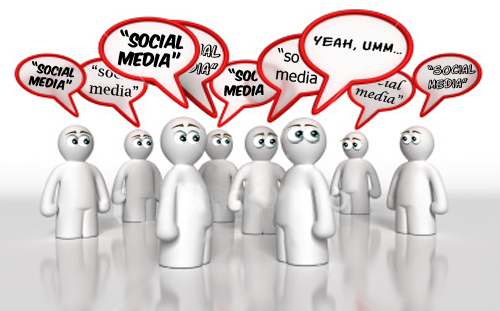
While some companies are clearly on the right track, lately I’ve been seeing how that dismissive attitude of two years ago is being replaced by a new frenetic trendiness. With everyone rushing to get this latest campaign accessory, it seems “Social Media” has become the new “Viral“–a term that gets thrown about much more frequently than what it actually means is understood. Everyone just knows they need to score some “Social Media”…. Whatever it is.
The problem, of course, is that “social media” is not just a new flavor of media, it’s not even really MEDIA, in the way we think of the word, as just another channel to push messaging through, at all. When you’re saying “Social Media” what you are actually referring to are:
SOCIAL NETWORKS / SOCIAL NETWORK SITES / SOCIAL PLATFORMS
Think: Online destinations where people connect, communicate, and share with their friends.
Example: Myspace, Facebook, Twitter, LinkedIn, etc.
BLOGS / BLOGGERS / THE BLOGOSPHERE
Think: Just like “The Press.” I.e. Writers, video-makers, podcasters, and other content creators, as well as the websites where they post their output.
Example: You’re at one right now.
SOCIAL TOOLS / SOCIAL APPLICATIONS:
Think: Digital tools that facilitate the sharing of content and help drive adoption.
Example: Embeddable video players, embeddable music players, embeddable widgets….pretty much ANYTHING embeddable, really. See also, the “Forward to a friend” button.
COMMUNITY WEBSITES:
Think: Any website that helps support a specific community by enabling connection, communication, and sharing between its members. Community websites function in many ways like social networks but are usually centered around a specific community focus.
Example: Nikeplus.com, Mystarbucksidea.com, TheShadowbox.net, Ted.com,
COMMUNITY FEATURES Think: Interactive features that support online communication, sharing, and community connection.
Example: Comments, forums, profiles, video sharing, photo sharing, content rating, Facebook Connect, etc.
Thus, when you’re saying something like “We’ll do Social Media outreach,” what you actually should be saying is “We’ll do blogger outreach.” (Which, by the way, is called PR.) When you’re saying something like “We’ll promote it on Social Media,” what you actually should be saying is “We’ll promote it on social networks.” And when you’re saying something like “We’ll just add some Social Media,” what’s actually important to realize is that Social Media is not just a budget line item, it is now an integral component of strategy.
Joe Rospars, the man behind Barack Obama’s election campaign’s new new-media effort, explained in an Ad Age interview that the campaign succeed not because it used the latest technology, but rather because of its “holistic approach that integrated digital tools into the overall strategy.” That Ad Age entitled this approach of mixing the old media with the new, “The Secret” to the campaign’s success, is telling of where the industry’s understanding of what Social Media is and how it works is at. The most effective social media strategies do more than just utilize newfangled networks, features, tools and whatnot, they absolutely incorporate the digital resources into the complete, overall strategy.
So, forget the word “media.” Think of Social Media like messaging tone or demographic research–a critical element in the way a campaing is planned and in defining the direction it will take. Approaching it as something that can just be added on at the end is like building a house without electrical wiring. And tacking on a generator at the end is as pretty lousy substitute. Social Media isn’t just the wiring for one house, it is the whole electric gird, and you need to be putting a plan in place for how your campaign will plug into it from the very beginning. That’s what you’re actually saying whenever you say you want to use “Social Media.”
starting this blog seems kinda like merging onto a freeway. one doesn’t just take a sharp left turn and blurt out some sort of doctoral thesis, rather it’s a continuous, gradual process of edging closer and closer to the main flow of traffic, with ideas expanding on ideas, expanding on ideas.
i’ve been tinkering with this draft for a while now, about what i’ve got to say on the way i see the value of social engagement marketing being discussed, which is, like, oh man, just a big monster of a topic that only seems to make the post more and more unwieldy the further i delve into it.
so, i think, rather than waiting until i’ve got the whole thing complete enough to just barrel at a 90-degree angle against oncoming traffic, i’m going to tackle a bit of the onramp–as i see it–at a time.
** curves ahead: **
please be forewarned — i am NOT an online media expert. i do NOT have any kind of technology background, and quite honestly i couldn’t do math to save my life. my perspective comes from almost a decade of producing events and experiences that bring hundreds and now thousdands of people together, and create a platform for interaction on some incredibly visceral levels. large-scale live event creation is sort of like a “control” running parallel to the online experience creation experiment, and there are a myriad ways in which each informs the other.
my perspective also comes from studying PEOPLE and SOCIAL BEHAVIOR, (there’s a reason this blog is called “social creature,” after all). if i was doing what i do in a rural village in africa, it would be called anthropology. in l.a., however, we call it marketing.
so…. with an understanding of THAT basic caveat in mind, here’s an initial attempt at getting on that bull that’s the discussion about “the value of social engagement marketing,” and seeing how long i can stay on and ride it.
myth #1:
THE INTERNET INVENTED SOCIAL ENGAGEMENT MARKETING
nope.
guess again.
before it was about pressing Enter, it was about pressing the flesh. before web 2.0 there were tupperware parties, door to door salesmen, and patent medicine shows. all of these involved the same exact elements as what’s currently referred to in such clinical terms as “social engagement marketing,” and its potency as a selling method was never in question. before advertising, in fact, this was the only method there WAS.
but though the internet didn’t invent it, it DID upgrade it. as the tools for generating and enhancing social interaction got way fancier (and also more removed from immediately physical interaction) they seem to have also made us confused. we now look at this whole process as if it’s some alien anomaly we’ve never encountered before, when the truth is that this process has been in existence for AGES. for, in fact, as long as human beings have known how to communicate.
Strong, E.K. (1925). “Theories of Selling”. Journal of Applied Psychology9: 75-86.
A lot of models are known in order to sell, e.g. the BOSCH-Formula, developed by Peter Hubert for the international sales training for consumer goods.
Offer solutions – talk about the endresult benefits for the customer
Stimulate the senses – let the customer test your product
Cross your sales – think of all the necessary accessories
Hit the closing point – sell when the customer is ready to buy
….ask open questions and offer solutions, stimulate the senses and think of all the necessary accessories. sounds a lot like “social engagement,” wouldn’t you say?
and all of this happening before the invention of media as we know it, let alone the application of social media.
before we go any further in this conversation (and i do hope to make this a conversation) about evaluating the “ROI of social engagement,” we must first take the follwing into account:
the internet does not exist in an easy vaccum.
the online measurement of the effectiveness of social engagement marketing is a PARTIAL measurement of the full social picture.
to measure the remainder of the social picture you will need a shitload of radio transmitters and a good number of soviet psychics. don’t worry, they’re on order, and will probably be a service package offered soon by these guys : http://www.mworks-inc.com/about.html
i believe that because the internet did not spawn either the concept or the application of “social engagement marketing” (only the terminology), nor did it eliminate all its prior forms, but rather ENHANCED them, it’s vital to recognize that any measurement of online social engagement will NOT be a measurement of its TOTAL effectiveness.
– – –
thanks to the following folks for their insight, info, and sounding boards for this in one fashion or another:
there’s more to come on this, for sure, but if you’ve got any thoughts on this particular part of the onramp, feel free to use your turn signal in the comments.
just saw a great bit by sarah dopp about the trend of an established company’s new community site campaign that involves an outdoor advertising strategy to drive traffic–case in point: reebok’s goruneasy.com that i already wrote about glowingly HERE.
what i find particularly interesting about this approach that’s being adopted not just by reebok, but starbucks as well (letsmeetatstarbucks.com), among what’s sure to be a coming slew of others, are the kind of pre-web 2.0 strategies–and their benefits–that are getting incorporated in this technique.
Billboard-to-web community-oriented marketing is being adapted with high visibility.
By sending people to a campaign-specific website, they can monitor their campaign’s site traffic ROI without any confusion.
we’ve been employing this tactic in concert promotion for ages. the simplest way to determine the effectiveness of any ad is to isolate an offer, for example, letting radio station X promote a particular kind of discount offer that no other outlet is pushing.
it’s incredibly interesting also to consider the significance of using outdoor media to promote a web 2.0 site of a consumer goods brand. this is the multi-platform kind of “meta-strategy” that i think is going to become the standard for a new kind of campaign. one that fuses the best of the old (it don’t get much older than billboards, yo) with the new, and in the processfuses engagement WITH awareness instead of relegating the two to their own separate ghettos.
Sure, you’re hiring an agency to direct it, but YOU are paying for it. It belongs to you. Or even more precisely, it belongs to your brand. The ad agency is like the au pair you hire to make sure your baby gets the best care. It also happens to be an au pair that hopes to win awards for its stellar child-rearing, so it’s your job to understand the difference between sheer showmanship and actual skillfulness. It’s the difference between a successful campaign and sabotage.
Sometimes an ad fails because it’s simply irrelevant. Because it didn’t find the right audience, because it missed the mark on how to communicate its message, or because it didn’t really understand who it was talking to in the first place. A bad advertising strategy won’t make national headlines, but this subtle failure will discredit your brand’s reputation, and it will convince an audience that your message or brand isn’t for them.
You’re counting on your agency to get you exposure; you’re not expecting it’ll make your brand lame in the process!
So what can you do to avoid this silent sabotage?
Well, to start, here are a few things you should understand about what matters in the process of choosing an agency, assessing its work, and understanding the measurements of your campaign’s effectiveness.
1. The ‘Creative’ shouldn’t happen before the Research
Before there’s a contract, all the agency wants is to convince you that they will deliver the most creative, most original campaign. They may even go to astounding lengths to prove theirunparalleled creativity, but how many of their unbillable hours go into research? Enough to be certain that the message they are developing is going to be relevant and effective? It may be a creative concept like no other, but does the agency know the campaign they’re pitching is going to actually speak to your audience in their own language? Will it approach them on their terms? It may resonate with the hipster designers coming up with the creative, but not all consumers are made the same….So do they understand who yours are? Does your ad agency know what drives their culture, and how they express their identities? Can their pitch impress you with non-speculative revelations about your brand’s audience that you may not have even considered before?
It should.
The greatest disservice an agency can do to your campaign is sell you on creative without doing their homework first, because they are then bound to deliver what you bought even if its efficacy is questionable, at best. Worse still, any data will need to be skewed to corroborate the agency’s efforts. By selling the creative ahead of the research they are not only doing a disservice to your audience, they are doing a disservice to your understanding of your own audience.
2. There’s gotta be some ‘Creative’ left over for the Media Plan
Half the joke is in the delivery. And it’s half the ad too. Relying on a generic media plan belies a lack of understanding about, or even indifference to your users’ identity, and exposure without a targeted strategy should only even be considered by a very particular kind of brand–unless you’re buying Super Bowl ads, it’s not your brand.
Does your agency understand how and where to access your target audience, and the various subtleties and patterns inherent in the ways your target audience interacts with different marketing channels? Developing relevant and originalcommunications strategies within the current marketing landscape is not about whether you buy ad-space in Filter vs. Vapors, whether you should build a microsite, which keywords to buy, and it’s certainly not about trying to make some video go “viral.” A campaign is no longer limited to being simply printed, broadcast, or even forwarded, it should be embedded. From Red Bull partnering with sub-culture creatives to produce a platform for Ascension from the underground, to Scion planting its car as the coolest item one can “buy” on the popular Tween online community Whyville, an authentic, relevant strategy plays an integral part in defining the message’s form and function.
The niche-ing of all media, multiplied exponentially by the variety of interactive opportunities makes the process of disseminating the message a lot trickier, but the payoff is that it can also make the message itself a whole lot stickier. Knowing how your consumers’ identities shape their interactions with your marketing approaches can be leveraged towards navigating the most important emergent medium: Culture. (Were you expecting the Internet?)
3. The Great User-Generated Content Divide
The average cost of a 30-second TV ad, including production and airtime costs, can run $500,000 to $1 million. Consumer-generated campaigns can cost just a few thousand dollars. So which amount do you think your Agency’s hoping you’ll write a check for?
User-generated content means audience engagement, message relevancy (if it’s not you’ll hear about it right away), authentic endorsement, and even the enablement of culture and identity expression. You should be excited. This is all pretty awesome stuff! But if consumers are making the “ads” for free, then how does the agency validate its cost? There’s a bit of a conflict of interest going on, for sure. Conveniently for you, a cottage industry of startups has emerged to help companies create and manage user-generated content for consumer contests and community input.
Your agency’s validation should lie in precisely this kind of interaction creation and management service. If the campaign concept does not include a function as a framework for enabling user engagement, it is effectively turning your audience away at the door when they arrive.
4. Traffic is not a useful Success Metric
If your site or ad was an art exhibit it would matter how many people were coming by to take a look. Manipulating an audience towards your site for a traffic spike is not that complicated, and it’ll let your agency produce some acceptable statistics for progress reports, but if the audience isn’t getting involved then the traffic doesn’t mean all that much.
Engagement does. From click-thrus, to subscription rates, to form submissions, the measures of a campaign’s success are revealed through audience interaction patterns. Integrated analytics are even better. For example, integrating analytis from an email campaign with site statistics allows not only for a much better indication of a campaign’s success, but grants greater insight into user behavior, which, in turn, will help develop more relevant communication.
Success metrics should be established in advance, but need to remain flexible enough to accomodate change as the campaign evolves. One of the greatest advantages of maintaining this kind of malleability is that it will allow your campaign to “self-correct.” Your community will tell you when you’re missing the mark if empowered with the tools to do so. At the end of the day the more positive the customer experience, the better a return rate you’re going to see.
– – –
Employing a meaningful, integrated strategy that allows you to measure and capitalize on the interplay between all the various marketing channels at your disposal is like playing pinball with a highly developed understanding of physics. The way that the ball reacts and moves from one side to another is the same way a consumer traverses your promotional terrain from interaction to interaction. What you don’t want is for your agency to show up, pull the plunger, and bang mercilessly on the side of the machine hoping to thwart the laws of physics by sheer force.
Agencies know they need to change, they just can’t figure out how. Half the problem is they’re so stuck in doing things the way they always have that their approach to new options is still, unfortunately, through the same old processes (uploading a TV spot to You-Tube, anyone?) The other half of the problem is that somehow along the way they’ve become convinced the campaign is theirs, and this sense of entitlement is keeping them from being curious or diligent enough to develop the kind of relevant and original communications solutions that are called for not only by today’s media realities, but by your brand.