
|
Marketing 1.0 |
Marketing 2.0 |
|
| spin | word of mouth | |
| image | – vs. – | experience |
| audience | community | |
| demographic | individual identity |
~
Is your marketing strategy ready?
|
Marketing 1.0 |
Marketing 2.0 |
|
| spin | word of mouth | |
| image | – vs. – | experience |
| audience | community | |
| demographic | individual identity |
~
Is your marketing strategy ready?
it’s 24 days till LIB and we just surpassed the LIB06 presale ticket sales.
now it’s time to buckle in and level up to the next project on the game-plan: Coachella.
since 2005 the Do LaB has been bringing domes to coachella. the first year the Do LaB dome was essentially a spot for festival-goers to be able to escape from the sun for a bit. it had a (renegade) sound-system where we set up some our djs to play, and a misting machine which allowed people to cool off from the heat. in 2006 we returned with the full Lucent Dossier Vaudeville Cirque performing a show developed specifically for coachella called the Forbidden Om, and the Misting Oasis evolved from simply a reprieve to a dynamic performance area with stilters, aerialists, and acrobats thrilling the gathering crowds with four shows a day.
by this year coachella realized that the domes, which could only hold approximately 200 people at capacity were not a very cost-effective option for a festival which attracts 150,000 attendees per day. so for 2007 we are developing an acre-big installation that involves giant flowers blooming from the polo field floor with the drooping petals designed as shade structures.
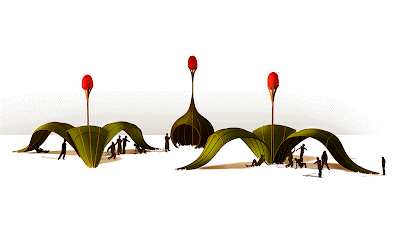
and in the center, a performance and sound stage which can support a 360 degree, panoramic audience view.
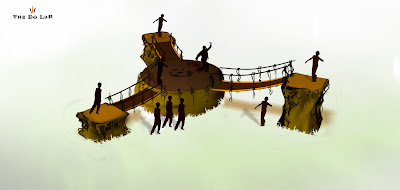
the scope of exposure has also increased, with the festival itself expanding from just a weekend to three days. and with just two weeks and a three-hour drive between coachella and Lightning in a Bottle, this prime promotional opportunity has not gone unnoticed.the do lab has a number of ways planned for engaging the event’s primed music festival-attending audience, from the traiditional, to some that apply new technologies into the design of our experience.
after all, even the way you discover something shapes your experience of it–brand, product, or music festival.
i’d like to say a few words about how horrifyingly, dismayingly, pitifully, AWFUL our purchase page is. we didn’t design it. it’s what our ticketing company is making us use, and we can’t change it and it’s totally driving me crazy!
yeah, THANKS, inticketing!
yeah, i know you’re green, and use soy-based ink, and recycled materials, and that’s all great, but…what are you thinking with your web services?
check it out:
THIS is our website that the Do LaB designed:

THIS is our purchase page from inticketing:

…..i think i might cry.
like are you kidding me? who okayed THAT from an experience design standpoint, huh?
yes, dear, customer, you’ve come this far with us. we have reminded you of how awesome LIB was last year, we have managed to convey some hint of the kind of crazymagic experience that awaits you this year, and just at the point where you are really ready to make the commitment to join us on the LIB adventure, the point at which, you are essentially trying the ticket on in the dressing room, asking us, “what do you think? does this look good on me?” what does inticketing do?
oh, it throws the lamest looking webpage with a whole lot of T+C bullshit at you.
well, you know….. those tickets do kind of make your butt look sort of big.
oh… this is making me so frustrated, i’m considering just getting our programmer to hack the freakin‘ thing. at least put some pictures on it, for god’s sake! move the T+C crap BELOW the credit card info part. or, better yet, just keep the “i agree” checkbox, and say “click here for terms and conditions.”
bad experience design is bad customer service, inticketing!
from the standpoint of an experience creation company, this makes me feel like we’re actually MISTREATING our potential attendees.
like, no, really, our event is WAY better than this lame purchasing experience.
we promise!
sigh… anyway…
miraculously, even in spite of all of that, tickets are starting to pick up this week. in the past three days alone we’ve acquired guests from utah, ohio, and texas! we probably have about 15 states represented at this point. including hawaii, oregon, colorado, new york, and my home state, massachusettss—woot!
the word is definitely getting out there.
here’s your problem. whoever you are, whatever service or widget you’re selling, you’ve gotta reach your consumer. and 10 years ago “reaching” your consumers meant simply broadcasting advertising at them. but that’s the past. becoming ever more and more officially the past with every word that gets blogged. now “reaching” your consumer means you have to actually get to them, not just at them.
you’ve got to speak their language, approach them on their terms, give them what they want how they want it, and unless you understand why they want it that way you won’t know what it takes to keep them wanting it.
all of marketing, whether it’s an advertisement, a website, or an event, is an interaction between your brand and your consumer. whether you think of your tv ad as an “interaction” doesn’t matter. your consumer does. the challenge now is not whether you’re going to accept the changing nature of marketing or not, the question is how are you going to adapt your messaging to the new consumer demands.
there are a few key element that are good to keep in mind as a kind of compass for navigating the new marketing landscape.
1. experience is everything.
if you can make it interactive, you should. if you can make it even more interactive, you should. and interactive does not just mean on-line. if your marketing plan does not involve strategies for creating meaningful experiences for your consumers, whether virtual or sensory, you’re missing the whole point.
2. relationship is new r.o.i.
promoting cars to savvy 10 year-olds isn’t going to do anything for your quarterly sales report. but check back with scion in six years about what they were thinking when they decided to spend money on an advergame like that anyway.
3. feedback means never having to say, “how do we spin this story?”
encouraging participation goes hand in hand with creating experiences and relationships. when it goes well you get powerful word of mouth and fun user generated content. but sometimes it’s gonna go “wrong” too, and you’re gonna hear about it. that’s part of the deal. if you understand the value of letting your audience feel they are being heard (exhibit a: making news in wired for the merit and audacity of your “wrong” campaign) instead of forcing them to talk about you behind your back, then you should be less worried about what the elevated role of consumer feedback is gonna mean for your future than your media crisis consultant.
4. you can get away with anything except being fake.
you can be ironic, sarcastic, facetious, in fact in many cases your brand identity and/or consumers call for it…but if you’re not authentic we’re gonna feel tricked, and we’re gonna hate you for it. the same reason people don’t want to hang out with “fake” people is why people don’t want to hang out with “fake” brands. so get your identity together, and mean what you say.
5. half of what you’re really selling is identity.
and it’s not your brand’s. it’s your consumers’. you’re not just selling me a pair of shoes, you’re selling what your shoes say to the world about who i am. look at music. whether you like the beatles or the stones, hiphop or indie rock, breakbeats or psytrance isn’t just about the sounds. it’s about the lifestyle choices that those sounds signify about you both as an individual and as a member of a cultural community that listens to that kind of music.
whoever you are, whatever service or widget you’re selling, you’ve gotta keep all of this in mind in order to be able to really reach your consumer, develop a long-term relationship, encourage interaction, be real, and if you’re feeling really stuck use some music–just remember to be sure and make it experiential, not just a jingle.
