This weekend I was invited to a salon-style dinner organized by Tim Chang and Les Borsai, hosted at the home of Steve Rennie. The event turned out to be a fascinating gathering at the intersection of digital media, technology, and music.
I have an art app called Mirrorgram. We launched it last October, and just this past month we crossed a million users! But I ended up in apps kind of by accident. I come, as did nearly everyone at the dinner, from music. For a long time, I used to produce music festivals. I’ve worked with Live Nation and House of Blues, and for years I was the marketing director for the Do Lab on the Lightning in a Bottle Festival. That’s actually how I met my Mirrorgram co-founder, Justin Boreta, who’s part of a band called the Glitch Mob. In fact, he came up with the concept for Mirrorgram while on tour, during the hours spent bored on the bus between shows, nerding out with iPhone photo apps. And it was built by the team at StageBloc, whose platform is designed to specifically support the unique content and community needs of musicians and performers. So when Tim asked me to come to the salon with a few minutes worth of lessons learned from working in apps, the first thing that came to mind for me was how much we draw on what we’ve internalized from our experiences in the music world to shape the way we approach what we do in the app world:
1. Fans vs. Users.
Before we ever started thinking about “users” our reference point was always “fans.” Of course, now we’re incredibly concerned with usability, and how people actually engage with our product, but beyond the app itself, we have a deep understanding and respect for the importance of nurturing the kinds extended social narratives and interactions that get created around it. Like what happens with a band people love, or an annual music festival that they revisit every year. We’ve seen so many Mirrorgrammers create connections and forge friendships and even artistic collaborations with one another through this shared love that they have for the app, and the art they create with it. And we’ve always understood that drive through the lens of fandom.
2. Choose your own adventure. Coming from a world of creating real-life experiences we have a natural inclination to approach what we’re doing in the digital space with that same sensibility. It’s about creating a platform with a certain amount of structure — a concert set list, a festival lineup, an app feature-set — but then also leaving a ton of room open people to create their own experiences within that structure. When we look at the kind of art that people create with Mirrorgram, it consistently blows us away. Half the time we don’t even know HOW people are creating the images they are with it. We’re just watching the feed, mesmerized. It’s pretty unbelievable. Coming from music, that experience of creating something and putting it out into the world and then seeing people take it into directions you could have never imagined or expected is very familiar.
3. More than the sum of its parts.
There’s something really interesting in approaching the evolution of an app, or any product, the way a band thinks about the new music it releases, or the way a music festival builds on what came before, year after year. A band doesn’t think about its next album like an “update.” It’s about a journey that we want to take our fans or our attendees or our users on with us. The day we went live with Mirrorgram, we referred to it (kinda jokingly, but kinda not) like the start of “The Symmetry Revolution.”
We still reference it in a tongue in cheek kind of way, but people in the iPhoneography world have really gravitated to that idea of it being about something bigger, of the app as an entry-point into a larger creative movement or community. To us, Mirrorgram has always been much more than just the sum of its features — it’s part of an ongoing, shared, cultural and aesthetic experience we’re creating and evolving together with the people who use it.
Been quiet on SocialCreature the past month as I’ve been head-deep down the MirrorLAnd rabbit-hole. Surfacing for a quick nod to the remix contest that just launched with the release of Chapter 2.
If you or someone you know are a knob-fiddler type person, and you’d be interested in having your music become the soundtrack for the new video by Khameleon808, the creator of the Glitch Mob’s Tron:Legacy “Rerezzed” video, then you should check out:
Back in early 2006, Chevy tried to get on the whole “consumer generated content” bandwagon (or bandSUV, I suppose), with a website which allowed users to easily create their own “ads” for the Chevy Tahoe using provided video and music assets. In theory, the idea was to generate interest in the vehicle through user created ads circulating virally around the web. But just months ahead of the release of An Inconvenient Truth, with all things “green” and “climate crisis”-related just on the verge of tipping over from environmentalist niche to major mainstream movement, the cluelessness of the folks at Chevy about the extent of the negative sentiment for this vehicle became all too quickly apparent, as the most popular results generated by the their ad-creator came out looking something like this: .
.
Three years after what remains one of the most infamous examples of a social media reality check, Chevy is pursuing perhaps the greatest rebranding of any American car company, (not that it has a choice, exactly), with the debut of the whopping 230mpg, electric vehicle: the Chevy Volt. .
.
A phenomenal advancement from the environmental perspective, for sure, but from the marketing side, perhaps, it shouldn’t take a government bailout to get you to really listen to what consumers are telling you. .
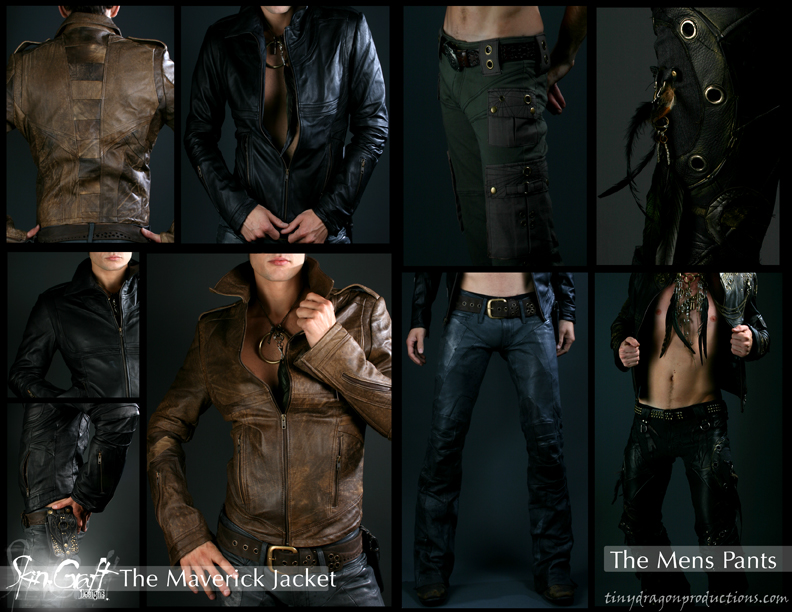
If, sometime circa 2004, you were out and about at certain underground parties in the Los Angeles Circus scene, and saw someone wearing a particularly striking pair of pants (male or female), created from asymmetrical strips of leather sewn in a twisted, impeccably tailored way, like the trappings of some Mad Max forest nymph biker gang escapee, and were compelled by this post-apocalyptic hipness to inquire of the wearer as to where these pants had come from, the answer you would inevitably receive is that they were made by someone named Cassidy. This would happen so often, in fact, that by the time I finally met Cassidy, out one night at a club on the shady side of La Brea, I actually recognized him by his trousers.
At the time, Cassidy was part of the Ernte design team, but soon thereafter co-founded SkinGraft Designs with partner Jonny Cota, and later Katie Kay. Even as the SkinGraft operation was growing with each year, headlining LA fashion week, opening the doors to a flagship store in Downtown LA this spring (no small feat for an indie fashion label in a recession!), and getting their sartorial grafts onto an ever-expanding assortment of celebrity skins, what Cassidy kept yearning to do was sing.
I discovered very quickly after we met that in addition to his fashion career, Cassidy is also a songwriter and performer. At one point, there were even a couple of production meetings held at my house for a show he was thinking of putting together around his music, and involving various performance-oriented friends. That show never came to pass, but after years of false starts, Cassidy finally revived his music focus from back-burner exile and 10 days ago self-released his debut album, Little Boys and Dinosaurs. What happened next is straight out of the viral phenomenon playbook.
On Sunday afternoon, August 15th, Adam Lambert, longtime SkinGraft friend (he’s currently wearing a custom SkinGraft jacket on the American Idol tour, and sported numerous other SG pieces during the show’s run) tweeted to his followers: “My friend Cassidy just shot this great video… http://bit.ly/18FvaM.” Within days, the video shot up to over 36,000 views, and Little Boys and Dinosaurs, sans label, marketing push, or pr strategy, rose to #3 on the iTunes electronic chart, between LMFAO’s “Party Rock” and Imogen Heap’s “Ellipse.” It didn’t hurt that the video was glam-rock pretty and sexually controversial, featuring some simulated sexual behavior, and a pair of undies slung Sports Illustrated-low. Within hours of Lambert’s tweet, a bonafide minor scandal had erupted over his linking the video, which was, by some contingent, considered inappropriate for his underage following. If you’re thinking this sort of outrage over music video explicitness seems strangely anachronistic in the post-Lil’ Kim / Britney Spears / Lady Gaga era, it should probably be mentioned that the dirty dancing in question here is exclusively male. In any case, the controversy only helped to generate further attention for the music, and by Thursday, Lyndsey Parker, was writing for Yahoo! Music’s The New Now blog:
At this point, Adam Lambert is pretty much like Oprah, in terms of his all-encompassing influence over his devoted fanbase. Just like any Oprah Book Club selection is certain to become a New York Times best-seller, in the pop music world there is perhaps no more ringing endorsement these days than a black-fingernailed thumbs up from the tastemaking Glamerican Idol.
So far the public response to Cassidy’s music, at least among diehard and very vocal Adam Lambert fans, has been hugely enthusiastic. Will record labels take notice? That remains to be seen, but if so, then Cassidy Haley may be the first artist to get signed out of American Idol without ever having appeared on the show.
If you’re a social media strategist, and your friend just so happens to become an overnight internet phenomenon, you’ve basically got no choice but to find the whole thing incredibly fascinating. On Tuesday, as Little Boys and Dinosaurs was climbing the chart, I got a call from Cassidy, and the question on his mind was, “What do I do now? What next?”
Which is a great question for any marketer in the digital age to think about as well. All too often I think marketers have blinders on, criminally overusing the word “viral” (still!) in the frenzy for buzz and fans and word of mouth and all that. But what if you could get all of it overnight? What if all the promotional initiatives and exposure efforts paid off just like they were supposed to? Is that the extent of your strategy? Or would you be prepared for What Next?
My advice to Cassidy was to take his questions straight to his new-found fans; involve them directly in helping to shape and define the answers together, and keep the momentum going. And he did. The outpouring of ideas that came back to him from this nascent, yet incredibly dedicated, army included everything from ad hoc twitterstorms that got the attention of various media folks, to online community resources created by fans to connect to one another, and to Cassidy’s music. The troops even came up with a seriously cute name for themselves, Comets, (as in Haley’s).
Overnight, Cassidy was handed the sort of opportunity that many marketers and brands are tirelessly chasing after, and yet the most powerful move he made was the one AFTER that happened. He opened up to his fans and offered them the opportunity to be directly involved with him in the creation of what comes next.
In case you happen to have missed it, Tropicana changed the design on their cartons last month, and in the process discovered that “Some Buyers Are Passionate About Packaging,” as Stuart Elliott writes in the New York Times:
PepsiCo is bowing to public demand and scrapping the changes made to a flagship product, Tropicana Pure Premium orange juice. Redesigned packaging that was introduced in early January is being discontinued, executives plan to announce on Monday, and the previous version will be brought back in the next month.
Also returning will be the longtime Tropicana brand symbol, an orange from which a straw protrudes. The symbol, meant to evoke fresh taste, had been supplanted on the new packages by a glass of orange juice.
The about-face comes after consumers complained about the makeover in letters, e-mail messages and telephone calls and clamored for a return of the original look.
Some of those commenting described the new packaging as “ugly” or “stupid,” and resembling “a generic bargain brand” or a “store brand.”
“Do any of these package-design people actually shop for orange juice?” the writer of one e-mail message asked rhetorically. “Because I do, and the new cartons stink.”
Others described the redesign as making it more difficult to distinguish among the varieties of Tropicana or differentiate Tropicana from other orange juices.
Such attention is becoming increasingly common as interactive technologies enable consumers to rapidly convey opinions to marketers.
It was not the volume of the outcries that led to the corporate change of heart, Mr. Campbell, [president at Tropicana North America in Chicago] said, because “it was a fraction of a percent of the people who buy the product.”
Rather, the criticism is being heeded because it came, Mr. Campbell said in a telephone interview on Friday, from some of “our most loyal consumers.”
“We underestimated the deep emotional bond” they had with the original packaging, he added. “Those consumers are very important to us, so we responded…. What we didn’t get was the passion this very loyal small group of consumers have. That wasn’t something that came out in the research.”
What has essentially happened here is that the ultimate fallout from the responses of a “very loyal small group of consumers” has exponentially magnified the exposure for what was originally just your run-of-the-mill packaging redesign:
The campaign, which carries the theme “Squeeze it’s a natural,” was created by Arnell in New York, part of the Omnicom Group. Arnell also created the new version of the Tropicana packaging.
“Tropicana is doing exactly what they should be doing,” Peter Arnell, chairman and chief creative officer at Arnell, said in a separate telephone interview on Friday.
“I’m incredibly surprised by the reaction,” he added, referring to the complaints about his agency’s design work, but “I’m glad Tropicana is getting this kind of attention.”
That’s the thing. Because of this vocal minority of avid Tropicana fans the attention of a far wider audience has been captured. Tropicana has now made a bigger splash by announcing they will be changing the packaging design back, than they did by changing it in the first place. Suddenly the avid Tropicana-fan minority has company.
Suddenly a lot more of us are now talking about orange juice. Thinking about orange juice! And thinking about it in a way that we never did before. After all, for the vast majority of us, just how different is one OJ brand from another? It’s not exactly a lifestyle product category, is it? (The whole organic argument aside for the moment, as it isn’t really specific to orange juice in particular so much as to grocery purchases in general). Do most of us really think about purchasing Tropicana vs. Florida’s Natural vs. Minute Maid because one brand is more relevant to our identity than the others? Unlikely.
So after enjoying its moment of unique distinction, Tropicana is now planning to scrap the new packaging and bring back the old familiar design so that the small loyal group who asked for it can be appeased, and all the rest of us can go back to not caring about orange juice.
But what if you could do something different?
What if discovering that your brand has more deeply passionate consumers than you’d imagined, and being open to to their input and responding to their concerns is just one part of the new marketing equation? What if the other part is understanding when you have an opportunity to get people really engaged. And not just engaged in giving you feedback, but engaged in helping to develop the brand’s identity itself. What if a non-lifestyle product category suddenly had the opportunity to stake out a piece of the cultural landscape? After all, Tropicana spent $35 million on the “Squeeze” campaign Arnell developed, which it now has to partially undo. What other direction could future advertising money be invested towards?
Having worked with various music festivals, I’ve consulted on and helped execute a number of “Battle of the Bands” contests. A proto-“User Generated Content” initiative, it’s always exceedingly popular. Different music acts submit tracks, or sometimes videos, competing for a chance to perform at the festival. This kind of initiative is most effective when combined with a voting aspect, so that it can extend beyond just the music acts, and actually get greater swaths of fans to participate in the process of selecting the winner to be added to the festival lineup.
In a more beverage-oriented variation on this theme, there’s last year’s “DEWmocracy” campaign, which allowed fans to vote on the new flavors for Mountain Dew (incidentally, also owned by PepsiCo), including the product packaging:
According to the PepsiCo press release, “DEWmocracy is the first-ever interactive, story-based online game that will result in a consumer-generated beverage innovation.” The campaign, which consisted of several phases, involved the launch of a website with a massive multi-player game. Once users created a profile they could go into the game’s 7 “worlds,” earning points and selecting different attributes for their ideal Mountain Dew beverage–i.e. flavor, “boost”, color, name, logo design, and so on. On top of all of this, the game/campaign had quite the storyline. As BevReview explains:
Pepsi and ad agency WhittmanHart Interactive tapped into actor/director Forest Whitaker to help craft the storyline. The entire adventure is setup up via a 3 minute short film that evokes overtones of Big Brother and overbearing governmental/corporate control. This has resulted in a loss of creativity….As is the plotline in most of these types of stories, a “chosen one” rises up to rebel against this oppression. Here’s the product twist… he seeks an elixir that will bring creativity and “restore the soul of mankind.” Now if you move beyond the irony that PepsiCo is a huge multinational conglomerate and that Mountain Dew is a top 5 selling soft drink found pretty much everywhere, you can see the somewhat unique spin this campaign possesses.
Not that I’m suggesting something this over-the-top is really appropriate for orange juice, necessarily, but the DEWmocracy site did reportedly have over 700,000 unique visitors, with 200,000 registered users participating in the first phase of the game. And that’s when they had to stir up consumer interest in engaging with the process of defining a brand direction for the Mountain Dew brand from scratch. Tropicana’s already got that one in the bag.
So what could you do if you were Tropicana?
Now that there’s already quite the buzz about Tropicana’s openness to fan-feedback in general, and about its packaging design in particular, why not create a platform for people to submit their design ideas? Yes, ok, clearly they discovered that people are deeply connected to the original design, but that is in response to just one other, radically departing, yet not particularly dynamic option. How might Tropicana lovers re-envision what that OJ carton could look like given the chance? It could just be a fun exercise in creativity, but then why not consider the possibility that the new design direction could emerge from the fans? Perhaps some new designs would remix the beloved orange-with-a-straw-poking-out image, but put a new spin on it with additional design elements or layers. Perhaps others would reinterpret the iconic image in totally new ways. Maybe others would find new ways to recreate the Tropicana logo in an unexpected style. Who knows?
What is definitely certain is that a small group of avid Tropicana fans clearly have deeply feelings about the brand and its design, and that a whole lot greater audience now cares that Tropicana cares about their input. So why stop the train there? Why not see how far it can go? In fact, why pick just one new design? How about different winning carton designs printed in “limited editions”? If it’s art, suddenly there’s a WHOLE new reason for choosing one OJ brand over another. In that case, why not deliberately set out to discover and promote emerging artists? Giving them their first break of mass exposure through orange juice cartons in grocery stores across the country. Nike’s doing it. So has Mountain Dew, for that matter. Suddenly it’s not just about a “campaign,” it’s an opportunity to create culture.
It’s like that scene in the Mad Men pilot episode where Don Draper suddenly realizes that if all the cigarette companies are facing the same limitations on what claims they can make in their advertising, then it’s “The greatest advertising opportunity since the invention of cereal.” When you’ve got a bunch of pretty much identical companies, making a pretty much identical product–in this case, OJ–you can do anything you want to create distinction. The possibilities for what you could do are pretty limitless, if you were Tropicana.

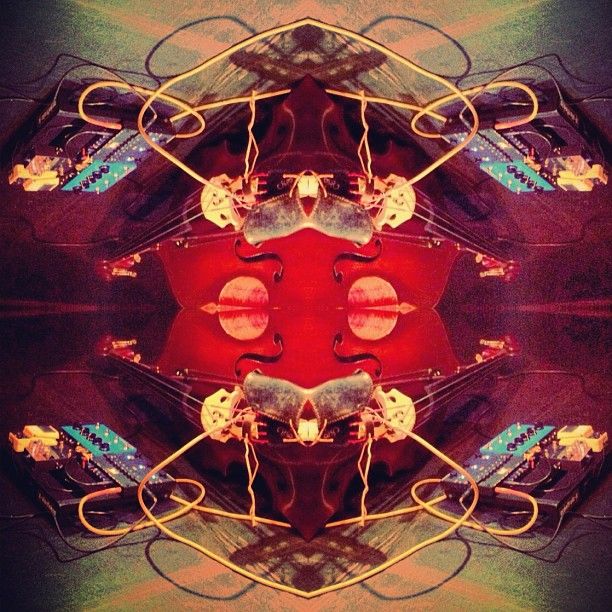 Mirrorgram by: bobdoran



 the longtime Tropicana brand symbol, an orange from which a straw protrudes. The symbol, meant to evoke fresh taste, had been supplanted on the new packages by a glass of orange juice.