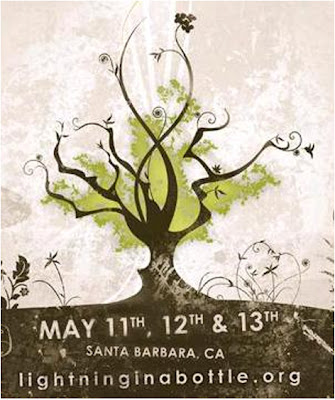
i’d like to say a few words about how horrifyingly, dismayingly, pitifully, AWFUL our purchase page is. we didn’t design it. it’s what our ticketing company is making us use, and we can’t change it and it’s totally driving me crazy!
yeah, THANKS, inticketing!
yeah, i know you’re green, and use soy-based ink, and recycled materials, and that’s all great, but…what are you thinking with your web services?
check it out:
THIS is our website that the Do LaB designed:
THIS is our purchase page from inticketing:
…..i think i might cry.
like are you kidding me? who okayed THAT from an experience design standpoint, huh?
yes, dear, customer, you’ve come this far with us. we have reminded you of how awesome LIB was last year, we have managed to convey some hint of the kind of crazymagic experience that awaits you this year, and just at the point where you are really ready to make the commitment to join us on the LIB adventure, the point at which, you are essentially trying the ticket on in the dressing room, asking us, “what do you think? does this look good on me?” what does inticketing do?
oh, it throws the lamest looking webpage with a whole lot of T+C bullshit at you.
well, you know….. those tickets do kind of make your butt look sort of big.
oh… this is making me so frustrated, i’m considering just getting our programmer to hack the freakin‘ thing. at least put some pictures on it, for god’s sake! move the T+C crap BELOW the credit card info part. or, better yet, just keep the “i agree” checkbox, and say “click here for terms and conditions.”
bad experience design is bad customer service, inticketing!
from the standpoint of an experience creation company, this makes me feel like we’re actually MISTREATING our potential attendees.
like, no, really, our event is WAY better than this lame purchasing experience.
we promise!
sigh… anyway…
miraculously, even in spite of all of that, tickets are starting to pick up this week. in the past three days alone we’ve acquired guests from utah, ohio, and texas! we probably have about 15 states represented at this point. including hawaii, oregon, colorado, new york, and my home state, massachusettss—woot!
people keep asking me what i’m up to these days. people that don’t know that my life has been completely taken over by Lightning in a Bottle. and i try to explain something about how there’s this 3-day greeen music festival, and how i’m directing the whole marketing strategy for it, and how that involves managing everything from our email communications, website updates, street promotions, pr efforts, and to all kinds of other initiatives… but the truth is that when you’re so in the thick of it, it’s really hard to step back and gain enough perspective to really be able to articualte ANYTHING that you’re doing. it’s hard to comment on the state of the battle from the trenches.
so it’s dawned on me that i should have started this months ago. but what the hell, 4.5 weeks out is better than not at all, right?
at this point there’s new moves happening fast and furious, and i figured this could be a good place to document the LIB07 marketing & communications strategy process. it’s also the process through which a grassroots organization is transitioning from the underground to the spotlight, elevating both its community of fans and network of creators with it.
here’s what’s happened within the past few days in the land of LIB promotions:
– LIB + worldchanging = : worldchanging is an online hub that aims to connect innovative, forward-thinking people who are doing things now to create profound, positive change for a better future. i thought they were great even before that fortuitous introduction to alex steffen at sxsw that resulted in this great little piece. turns out worldchanging digs us too: we’re now officially the “coachella for environmentalists”! awesome!
– what lucent dossier really wants to know is… : met with dream this weekend about really kick-starting community interaction among lucent’s 16,000+ myspace friends. we’re so excited by all the great response we’ve gotten already that we’re planning to continue stirring up conversation among that community on a very regular basis leading up to LIB. (taking cues from gnarls barkley on this one, for sure. 😉 )
– the santa barbara news press, which did an article on LIB last year wants to know what’s new about LIB this year. they’re saying that unless there’s something drastically new it probably won’t warrant extensive coverage. so what do you say to that when you know that the santa barbara community digs us hardcore for what we are, not for any gimmick we might be doing differently?
i say:
“last year it was the first time we’d ever done an event in s.b. we have a devoted following in l.a. but we had no idea how people there would react to it. whether they’d even care. the response we got from the people there was really overwhelming. we kept hearing over and over how excited they were that we had brought an event like this to santa barbara. people really loved this festival.
so the big difference is that while last year our venture into s.b. was somewhat of an experiment, the genuine enthusiasm for LIB within the santa barbara community (the same community where “earth day” originated) is what’s giving us the support to bring LIB back on a larger scale in all areas in 07.”
david starfire, one our mainstay event djs, and on the lineup for LIB, turned us on to this really great video of an event we did in february 2006 (yeah, that’s how long it takes us to catch up here, at the Do!) anyway, we contacted the creator, and are considering using this video in the Spring issue of the Do LaB Artist Network email blast, which is going to be all about videos, especially music videos. he says he’s got footage from LIB06 as well, maybe we can find some way of convincing him to edit that too…- lots of other bits and ends going on, and in the works, including that ad in Plenty Magazine, now on newsstands, gonna be getting some coverage from bijoubreaks.com, the San Luis Obispo New Times is gonna be doing an interview with some our crew–jesse, dream, and shena, i think. brian shaw is hopefully programming our music contest as i type, i think…brian? are you? will we be able to announce it to the bands that sent in submissions soon? ….
and then there is, of course the constant construction and preparations going on for another little festival called Coachella where the Do will be producing an acre-big installation with full performance stage and sound-system just two weeks before LIB…. so that’s going to be madness….
i think this is all i can think of for right now…. not sure how often i’ll be making these “what the hell is a strategy?” posts, but i’m positive it’s a good idea that i started.
It’s the beginning of April, and The Do LaB has been in production on our Spring festival, Lighting in a Bottle for over two months now. I realized about a month ago how huge an oversight it was that I hadn’t written a single word about LIB here, and this is the first moment that I’ve been able to steal 15 minutes away to give this amazing, overwhelming, inspiring project a little mention.
So what’s the big deal about Lightning in a Bottle? Well, in addition to the 40+ musical acts on 3 stages spanning 40 acres of Santa Barbara forest ground, the whole to do is being powered almost entirely by solar, or otherwise renewable energy, and incorporating green production practices from top to bottom.
Having worked with major music festivals like Coachella and Vegoose through the Do LaB for years, we witnessed the massive amounts of waste these events generate. There’s something about crunching over an entire polo field of plastic water bottles at 12:30 am on Coachella Saturday and realizing that after the bulldozers come in to shove it all off to a landfill, the whole thing would repeat the next night, that really fills you with a bottomless dread for the future of the world.
So when it came time for the Do LaB to create our own festival, we knew we had to do it differently. With LIB we are setting out to not only produce an unforgettable experience, but to create a model for sustainable large-scale live entertainment.
My role on this team is directing the full LIB marketing campaign, which incorporates everything from structuring the communications strategy with our community, to sponsorship and press, and back to all manner of word-of-mouth building initiatives–for an organization that built its reputation in the underground, word of mouth is still what drives our events–and stirring all the ingredients together in the magic marketing cauldron to produce a strategy that optimizes each of its various components.
That’s where my head is at these days in an all-consuming kind of way. I am loving the team we’ve got at the Do LaB, I am loving the process and our creation. And I’m loving the work. Which is a very good thing, since there is a ton of it!
I helped SkinGraft Designs develop this campaign for their rad line of holster accesssories. Watch out. Cavalli or someone’s gonna steal it next. Naked circus freaks will be hawking you Gucci bags and Armani glasses.
Sure, you’re hiring an agency to direct it, but YOU are paying for it. It belongs to you. Or even more precisely, it belongs to your brand. The ad agency is like the au pair you hire to make sure your baby gets the best care. It also happens to be an au pair that hopes to win awards for its stellar child-rearing, so it’s your job to understand the difference between sheer showmanship and actual skillfulness. It’s the difference between a successful campaign and sabotage.
Sometimes an ad fails because it’s simply irrelevant. Because it didn’t find the right audience, because it missed the mark on how to communicate its message, or because it didn’t really understand who it was talking to in the first place. A bad advertising strategy won’t make national headlines, but this subtle failure will discredit your brand’s reputation, and it will convince an audience that your message or brand isn’t for them.
You’re counting on your agency to get you exposure; you’re not expecting it’ll make your brand lame in the process!
So what can you do to avoid this silent sabotage?
Well, to start, here are a few things you should understand about what matters in the process of choosing an agency, assessing its work, and understanding the measurements of your campaign’s effectiveness.
1. The ‘Creative’ shouldn’t happen before the Research
Before there’s a contract, all the agency wants is to convince you that they will deliver the most creative, most original campaign. They may even go to astounding lengths to prove theirunparalleled creativity, but how many of their unbillable hours go into research? Enough to be certain that the message they are developing is going to be relevant and effective? It may be a creative concept like no other, but does the agency know the campaign they’re pitching is going to actually speak to your audience in their own language? Will it approach them on their terms? It may resonate with the hipster designers coming up with the creative, but not all consumers are made the same….So do they understand who yours are? Does your ad agency know what drives their culture, and how they express their identities? Can their pitch impress you with non-speculative revelations about your brand’s audience that you may not have even considered before?
It should.
The greatest disservice an agency can do to your campaign is sell you on creative without doing their homework first, because they are then bound to deliver what you bought even if its efficacy is questionable, at best. Worse still, any data will need to be skewed to corroborate the agency’s efforts. By selling the creative ahead of the research they are not only doing a disservice to your audience, they are doing a disservice to your understanding of your own audience.
2. There’s gotta be some ‘Creative’ left over for the Media Plan
Half the joke is in the delivery. And it’s half the ad too. Relying on a generic media plan belies a lack of understanding about, or even indifference to your users’ identity, and exposure without a targeted strategy should only even be considered by a very particular kind of brand–unless you’re buying Super Bowl ads, it’s not your brand.
Does your agency understand how and where to access your target audience, and the various subtleties and patterns inherent in the ways your target audience interacts with different marketing channels? Developing relevant and originalcommunications strategies within the current marketing landscape is not about whether you buy ad-space in Filter vs. Vapors, whether you should build a microsite, which keywords to buy, and it’s certainly not about trying to make some video go “viral.” A campaign is no longer limited to being simply printed, broadcast, or even forwarded, it should be embedded. From Red Bull partnering with sub-culture creatives to produce a platform for Ascension from the underground, to Scion planting its car as the coolest item one can “buy” on the popular Tween online community Whyville, an authentic, relevant strategy plays an integral part in defining the message’s form and function.
The niche-ing of all media, multiplied exponentially by the variety of interactive opportunities makes the process of disseminating the message a lot trickier, but the payoff is that it can also make the message itself a whole lot stickier. Knowing how your consumers’ identities shape their interactions with your marketing approaches can be leveraged towards navigating the most important emergent medium: Culture. (Were you expecting the Internet?)
3. The Great User-Generated Content Divide
The average cost of a 30-second TV ad, including production and airtime costs, can run $500,000 to $1 million. Consumer-generated campaigns can cost just a few thousand dollars. So which amount do you think your Agency’s hoping you’ll write a check for?
User-generated content means audience engagement, message relevancy (if it’s not you’ll hear about it right away), authentic endorsement, and even the enablement of culture and identity expression. You should be excited. This is all pretty awesome stuff! But if consumers are making the “ads” for free, then how does the agency validate its cost? There’s a bit of a conflict of interest going on, for sure. Conveniently for you, a cottage industry of startups has emerged to help companies create and manage user-generated content for consumer contests and community input.
Your agency’s validation should lie in precisely this kind of interaction creation and management service. If the campaign concept does not include a function as a framework for enabling user engagement, it is effectively turning your audience away at the door when they arrive.
4. Traffic is not a useful Success Metric
If your site or ad was an art exhibit it would matter how many people were coming by to take a look. Manipulating an audience towards your site for a traffic spike is not that complicated, and it’ll let your agency produce some acceptable statistics for progress reports, but if the audience isn’t getting involved then the traffic doesn’t mean all that much.
Engagement does. From click-thrus, to subscription rates, to form submissions, the measures of a campaign’s success are revealed through audience interaction patterns. Integrated analytics are even better. For example, integrating analytis from an email campaign with site statistics allows not only for a much better indication of a campaign’s success, but grants greater insight into user behavior, which, in turn, will help develop more relevant communication.
Success metrics should be established in advance, but need to remain flexible enough to accomodate change as the campaign evolves. One of the greatest advantages of maintaining this kind of malleability is that it will allow your campaign to “self-correct.” Your community will tell you when you’re missing the mark if empowered with the tools to do so. At the end of the day the more positive the customer experience, the better a return rate you’re going to see.
– – –
Employing a meaningful, integrated strategy that allows you to measure and capitalize on the interplay between all the various marketing channels at your disposal is like playing pinball with a highly developed understanding of physics. The way that the ball reacts and moves from one side to another is the same way a consumer traverses your promotional terrain from interaction to interaction. What you don’t want is for your agency to show up, pull the plunger, and bang mercilessly on the side of the machine hoping to thwart the laws of physics by sheer force.
Agencies know they need to change, they just can’t figure out how. Half the problem is they’re so stuck in doing things the way they always have that their approach to new options is still, unfortunately, through the same old processes (uploading a TV spot to You-Tube, anyone?) The other half of the problem is that somehow along the way they’ve become convinced the campaign is theirs, and this sense of entitlement is keeping them from being curious or diligent enough to develop the kind of relevant and original communications solutions that are called for not only by today’s media realities, but by your brand.