
Last year, I wrote a post called “Your Life Is A Transmedia Experience.” In October, the post became the basis for a panel discussion event at the FutureM conference in Boston with me, Marta Kagan and Jan Libby. I have updated the deck from that panel, and am sharing here for your viewing pleasure. Enjoy!
jenks
The Top 5 Social Creature Posts Of 2010
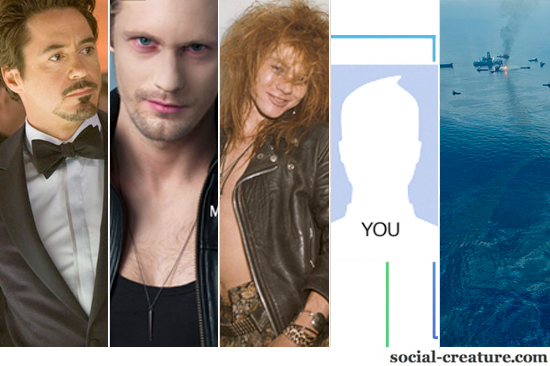
If you’re just joining us, here’s the top 5 things that happened here this year:
1. Why Iron Man Is The First 21st Century Superhero
For the past 70 years we have been living with a 20th century version of the superhero. Until now. Though the Iron Man character was originally created in the early 60s, his most recent incarnation is really the first Millennial superhero. (Then Jon Favreau, the director of Iron Man, retweeted it!! Craziness!)
2. The First 21st Century Vampires
Just as the new Iron Man has broken the mould constricting the superhero archetype, True Blood’s vampires offer a compelling commentary on our rapidly changing present through their own, archly extrahuman relationship to it. (MetaFilter gave it love, too.)
3. How The Internet Killed The Rock Star (…Not The Way You Think)
At this point, to say the Internet’s done away with anything else when it comes to music is, admittedly, a cliché, but, nevertheless, there’s one more, less-publicized casualty: the rock star. Zoe Keating agreed.
4. Your Life Is A Transmedia Experience
“Transmedia” has become the new buzzword for multi-platform narratives, but in the digital age, transmedia isn’t just how we consume entertainment narratives, it’s how we experience the narrative of our lives. This post later became the basis for a panel with me, Marta Kagan, and Jan Libby, at the FutureM conference in Boston.
5. How To Stand In the Face of Powerlessness For A New Generation
As a generation, mine has not known powerlessness. We’ve had so little practice at facing situations where we couldn’t just do something; at fighting them, at living through them. The Deepwater Horizon oil spill is my generation’s unfortunate turn to figure out how to stand in the face of powerlessness.
Honorable mention:
The Glitch Mob Drops The New-Tron Bomb
This happened so late in the year that it didn’t quite have time to catch up, but my idea for a Tron:Legacy remix video scored to The Glitch Mob’s music and edited by Khameleon808 is still the 7th most popular thing that happened on Social-Creature in 2010. (It even got into Wired.com.)
Ps. Thanks to Boston Innovation for naming me one of “Five Fresh Faces Leading Boston’s Creative Revolution.” Though I seem to be splitting my time between Boston and LA the past couple of years, (I wish Facebook would let you put “It’s complicated” under “Current city”), it is, of course, an honor to play even a little part in any Boston-based revolution.
See you next year!!
today’s awesome ad (mashup) award goes to
Ad #2 (but watch them in order).
.
.
UPDATE:
On December 1st, I received an email from a reader, Dave Clooney, pointing to an NBC Sports article which uncovers the truth about the Jordan ad:
Sorry, it’s a spoof. Someone has taken an old Jordan Nike commercial, “Maybe You Should Rise,” and mashed it with LeBron’s “What Should I Do?”, with pretty good results. But Sun-Sentinel Miami Heat beat reporter Ira Winderman confirms that it’s a forgery in this tweet.
Here’s the original Jordan Nike commercial:
Still, the mashup was so good that it fooled a lot of people. Others just threw it up there without checking. But as Winderman points out, there’s no way Nike is going to undermine its own efforts by letting one of its superstar endorser take a shot at another.
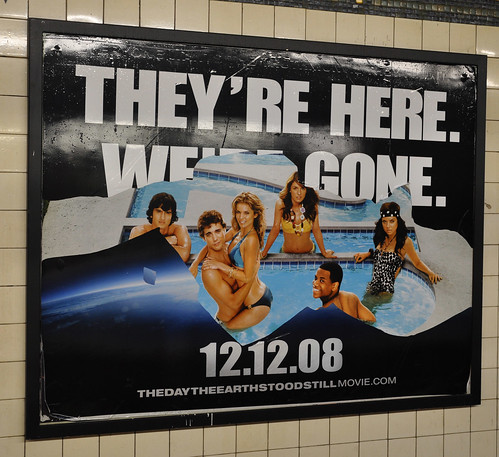
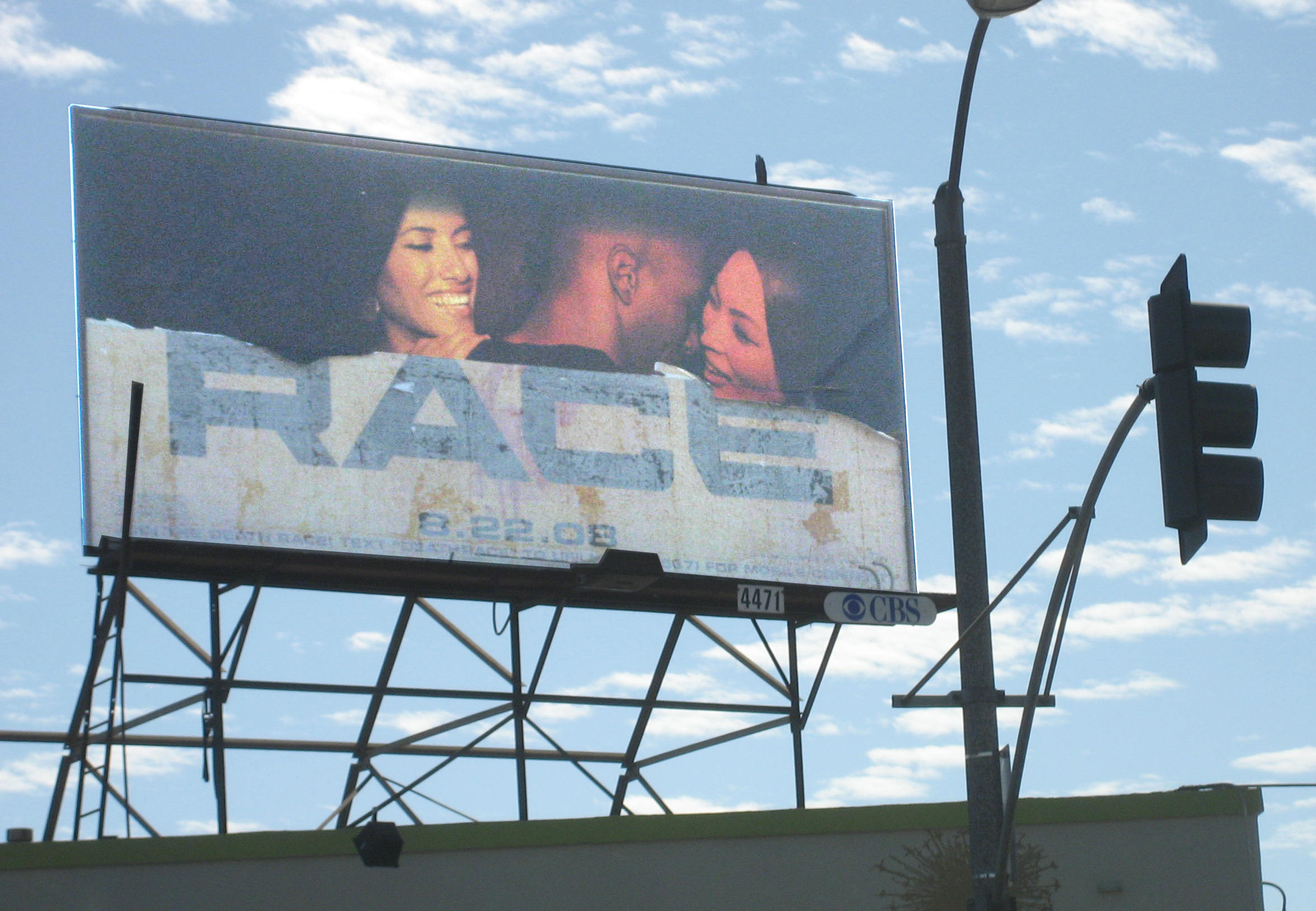
Reminds me of the awesome billboard mashup trend I’d been noticing before:
The Glitch Mob Drops The New-Tron Bomb
Back in the spring, when I was writing a post about Why Iron Man is The First 21st Century Superhero, I came across this awesome Iron Man trailer remix created by Mike Relm. The remix was so rad, in fact, that when Jon Favreau, the director of Iron Man, brought it to the attention of Paramount and Marvel, they hired Relm to do an official TV spot for the film in his signature style.
Some months later, I saw a beyond-epic 9-minute long video, called “The Apple Tree,” featuring VFX shots, action clips, and dance sequences from like 700 different movies in a mind-scrambling montage scored to The Glitch Mob‘s music. New York Magazine, which got a hold of the video in September, called it “intense,” and, indeed, if by the end of The Apple Tree you don’t experience the overwhelming need to get in your car and drive somewhere immediately with the volume up, the windows down, and the needle in the red the whole way, you’re probably dead. The first time I watched it I literally had to hit pause like every 30 seconds just to catch my breath. But more than simply an adrenalized ad for special effects, The Apple Tree video is really a piece of art, using montage not so much to tell a story but rather to relate sound to motion, each cut creating its own blast of synesthesia. Among the clips used in the video were a handful from the forthcoming Tron: Legacy sequel due out in December, which picks up where the classic 1982 movie left off.
And that’s when I got an idea… I brought this idea to The Glitch Mob, who got Khameleon808, the auteur behind the Apple Tree on board; we picked a track, Animus Vox, off their new album, Drink The Sea, and now, a few months later, I’m suuuuuper excited to announce this new piece of total fucking awesome!
Brace yourselves!
Khameleon808’s Tron: Legacy “REREZZED”
ft. music by The Glitch Mob
.
UPDATE:
On November 23rd, Wired.com picked up the video, in an article titled “Fan’s ‘Rerezzed’ Mashup Earns Raves From Tron: Legacy Producer”:
A Tron mashup crafted by an unemployed movie fan made a big impression on Tron: Legacy producer Sean Bailey, who singled out the clip during a recent Los Angeles press conference.
While discussing Tron: Legacy’s viral-marketing campaign, Bailey saluted the trailer made by 31-year-old Josh Prescott. The DIY filmmaker took Daft Punk’s electronica as a stylistic point of departure for his own sequence of beauty shots culled from promotional trailers and music videos for the 3-D sci-fi sequel.
Prescott’s “Rerezzed” clip, which glides along on music by Los Angeles-based trio The Glitch Mob, caught the eye of Bailey and other Tron: Legacy filmmakers.
On November 24th, the video was featured on the official Tron: Legacy Facebook page, and Twitter account.
At the time of this update the video has been viewed over 85,000 times.
For my crimes in originating the idea for the video, Wired.com called me a “social media maven.”
Congrats to all those involved, Khameleon808 and The Glitch Mob!
March 2, 2011 – The cat is out of the bag: Pitchfork reports Walt Disney Records will release a remix album of the Tron:Legacy soundtrack, Tron: Legacy R3CONFIGUR3D on April 5th. The first track on there is The Glitch Mob’s remix of “Derezzed.” In case you’re wondering what that’s gonna be like, I’ve heard it, and it sounds like what this looks like:
.
How The Internet Killed The Rock Star (…Not The Way You Think)
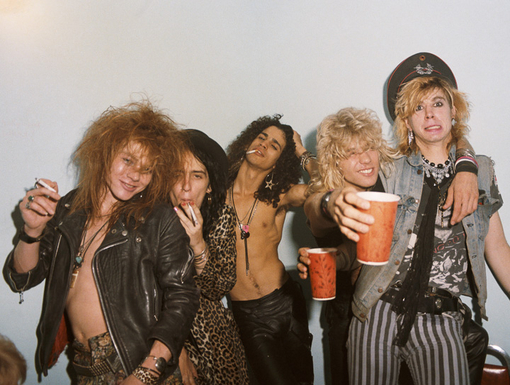
Guns N’ Roses backstage at the Stardust – Los Angeles, 1985 / Image: Reckless Road
Some friends came through town on tour, and sitting around in the dressing room backstage at House of Blues during the opening act, we started talking about the most epic-est, rock-‘n’-rollingest backstages we wished we could have gotten to been a part of. Guns N’ Roses, Mötley Crüe, The Rolling Stones. You know, the usual acts that had come to represent the platonic ideal of the Rock Star. This conversation was instigated by an admission from the main act himself about how boring it was backstage. Thinking back on the venues and the bands I’ve worked with, and even the vaudeville circus I used to manage, it occurred to me that (aside from a few exceptions working with music festivals — notably, on the production rather than the performance side — which only served to prove the rule) almost all the backstages I’ve ever been in were basically boring. Sure, there was always the inevitable adrenaline of last-minute chaos and ego trips and personality clashes and whatnot, but the debauched excess of the truly rock ‘n’ roll antics of yore? Even the folks on the tour, who would, that night, go on to rock the faces off twelve hundred screaming fans, noticed that all the examples of the epitomized backstages we were listing off had had their heyday before we were even old enough to get into any of their shows. This was not what MTV (back when MTV, actually stood for Music Television) or even Vice Magazine had promised us backstage would be like when we grew up. It looked increasingly less like the photo above.
It looked a lot more like this:

Mike Gallagher of the band Isis, backstage at the Trocadero – Philadelphia, 2007 / Image: Markphoto.net
And that’s when it dawned on me: the Internet had killed the rock star.
Well, first off, is there anything the Internet hasn’t already killed yet? Back in May, The Atlantic featured a piece about the Internet’s ongoing assassination of the music industry — a crime story a decade old now, but, like the JonBenét Ramsey of disruptive technology, undyingly over-covered. Other casualties in the Internet’s Edward Gorey-like murder spree have included music journalism, killed by mp3 blogs, pirate radio, killed by general redundancy, and even the mystique of the radio star (which, hadn’t video already confessed to killing like 30 years prior?) killed by too much exposure. At this point, to say the Internet’s done away with anything else when it comes to music is, admittedly, a cliché, but, nevertheless, I do think there’s one more, less-publicized casualty.
In an interview with NME earlier this year, Kasabian singer Tom Meighan was on to part of it:
It’s not like what it used to be like in rock ‘n’ roll. In the ’60s and ’70s you had the likes of David Bowie and Marc Bolan, and then in the ’80s you even had shit acts that were rock stars.
I think – especially in the last three or four years – the internet’s taken a stranglehold and killed off the myth of the rock star now. You know when you used to buy the records and there was the myth behind them? There’s too much on blogs now and I think it’s killed it off. Nobody’s surprised by an interview anymore or anything. It’s quite tragic.
There are so many rock stars writing these self pitying blogs and it’s not in the spirit of rock ‘n’ roll, it’s like ‘Wow, what rubbish’.
That’s the victim no one talks about when they’re focusing instead on how much money the RIAA’s member organizations are losing due to the Internet: the “spirit of rock ‘n’ roll.” Cuz you know what those acts in the 60’s and 70’s and 80’s and, to a large extent, the 90’s didn’t have backstage? Email. Or Facebook or Twitter. There were no urgent texts that needed immediate replies, no forums of endless fan comments to be compulsively monitored, no hundreds of images from the previous night’s show to be sorted through and uploaded, no online profiles for potentially competing or collaborating artists to be stalked, no blog posts that needed to be written, or livestreams set up. Hell, there weren’t even any cell phones with which to call anyone during those hours and hours on the tour bus. Not to mention any of the normal things that even non-rock stars do on their computers, like instant message with their friends or watch the entire last season of Mad Men. Millennials — the generation whose older members are now of rock star age — spend almost 10 hours a day online. Add to that the three more hours per day that Americans now spend using the web on their mobile phones, and then factor in the completely-absurd-even-to-this-millennial FOUR THOUSAND texts that the average (AVERAGE!!) teenager sends per month — that’s six texts every waking hour — and all of that compounds into a LOT of time that the typical touring act in 2010 is spending doing shit that simply wasn’t there to have been done back in the day. Before we all developed these new digital compulsions there used to be a lot more time for, and a lot fewer pressing distractions from, the analog ones, namely the sex + drugs that = the “spirit of rock ‘n’ roll.”
Of course, being a rock star back in the 20th century, you could also get away with a lot more than you can now. Your drug-addled, sex-addicted, minor-fucking ways were not gonna end up on Twitter three seconds after some groupie snapped a photo on her cell phone, let alone on TMZ. To a large extent, truly rock star behavior used to be a lot easier to contain. Now, there’s really no buffer. And that increasingly permeable line cuts in both directions. Much as self-pitying blog posts are a definite cramp in the rock ‘n’ roll style, so is not being able to avoid your hate mail. In the past, your handlers would have simply made sure you never saw it. Now, not only does it take some herculean willpower to avoid the known hubs of haterade — and rock stars aren’t famous for their self-restraint — but even for the most disciplined musicians, messages letting you know you suck are like online porn: one in three of us has ended up with it in our face even when we weren’t looking for it. It’s why Trent Reznor quit Twitter last year…. Twice. The first time around, Reznor posted the following on the Nine Inch Nails forum by way of explanation:
When Twitter made it’s way to my radar…. I decided to lower the curtain a bit and let you see more of my personality. I watched some of you get more engaged because you started to realize there’s a person (flaws and all) back there, and I watched some of you recoil in horror because I’m not what you projected on me. All expected. I’m not as concerned about “breaking” your idea of NIN at this point. It is what it is and I am what I am. The relationship between artist and fan is changing if you haven’t noticed, along with the way we consume and experience music and even communicate since the internet arrived.
….But some people exist to ruin it for others – and they are the ones who have nothing better to do with their time. Example: on nin.com, there’s 3-4 different people that each send me between 50 – 100 message per day of delusional, often threatening nonsense. We can delete them, but they just sign back up and start again. Yes, we are implementing several changes to address this, but the point is it quickly gets very old weeding through that stuff.
Rock ‘n’ roll has never been scared of confrontation, but in the past it’s always been in-person, and visceral. Being able to settle things with a fistfight or a blunt and / or glass object is incredibly more rock ‘n’ roll-y than this new equation:

Image: John Gabriel
Of course, it’s undeniable there are significant advantages that all this new technology has afforded artists as well. From those just starting out to the ones with Stadium Status, the Internet has put a lot of new tools and resources directly into artists’ hands, allowing them unprecedented control over their own careers and their relationship with their fans. But it also means that handling much of what a label was once responsible for — and even more that they still haven’t even figured out how to do — is now part of the job requirement of being a successful musician. You have to be an expert in marketing, branding, community strategy, and user engagement; knowing how to write code, the meaning of the term “information architecture,” and a good web designer also help. “Engaging your fans” the old fashioned way meant spraying them with champagne in the green room. Now, replying to messages on Facebook is your second job. A couple of decades ago you wouldn’t have had to be giving a shit about anything called a website; now you have to anticipate you’ll be redoing yours every few years just to keep up with the rapid pace of change on the web. A friend of mine who’s in a band that just finished a tour of the U.S. followed by Australia, told me in the wake of the band’s website redesign to incorporate the StageBloc platform, a process that spanned several months, “At the time, I didn’t think that working at an internet startup was going to be helpful to my music career.” Which also speaks to the kind of personality the evolution of rock ‘n’ roll is selecting for these days.
Think about the best concert you’ve seen in the past five years. You know what the band did after the show? They checked a bunch of email, sent a bunch of texts, possibly also a bunch of Tweets, and generally stared at screens for a while. Cracked.com’s list of the 7 Most Impossible Rock Stars to Deal With, which features the likes of DMX, Keith Moon, Iggy Pop, Nikki Sixx, Ozzy Osbourne, and Eric Clapton — all people who were wreaking havoc by the time they were my age — includes absolutely no one who is my age now. (And aren’t we, Millennials, supposed to be the over-entitled spoiled-brat “Generation Me”?) While the barrier to entry into rockstarhood may have never been as porous (getting discovered on YouTube, anyone?), the competition has arguably never been more intense. Just being a talented performer and charismatic entertainer is not enough anymore. The same tools that are giving artists more control are also saddling them with more responsibility. The business savvy and marketing aptitude that once made Madonna an anomalous success are now prerequisite just to stay in the game. You simply couldn’t keep up if you are the kind of mess that the emblematic rock stars who defined the term got to be. Or, perhaps, as Cracked suggests, all the drug addiction and general nihilism were so rampant among rock stars in the olden days “possibly because no one had invented the Internet yet, [and] they got bored.”
Of course, there’s still bands like Justice, whose trouble-making, euro-hipster decadence is entertaining enough for an hour-long tour documentary. But as you’ll realize if you watch the “A Cross The Universe” DVD, chronicling the band’s 2008 U.S. tour, the duo hardly spend time at their computers, aside from when they’re performing. And there’s no mystery why. The band doesn’t have a website, or Twitter. Their Facebook is a UGC Community Page created by fans. They basically just have a Myspace, which is maintained by their French label, Ed Banger Records. In a sense, Justice isn’t so much an exception as an appropriately ironic throwback. The documentary, hearkening back to when rock stars were legitimately so, effectively paints the laptop rocker duo in those nostalgically familiar colors.
When asked during the promo tour for his latest book, Imperial Bedrooms, whether contemporary book launches are more or less fun than when he started in the late 80’s, Bret Easton Ellis — arguably the closest equivalent that the literary world has to a rock star, and a writer who has expertly articulated the unbridled excess that is the trope’s defining characteristic (“It was always the A booth. It was always the front seat of the roller coaster. It was never ‘Let’s not get the bottle of Cristal’ … It was the beginning of a time when it was almost as if the novel itself didn’t matter anymore—publishing a shiny booklike object was simply an excuse for parties and glamour.”) — laughed, “Oh, it’s less fun. It’s much less fun. Because we’re in the ‘post-Empire’ world now. Book publishing,” he added, “flourished in the ‘Empire,'” a term which Ellis uses to refer to the period from 1945 until 2005 — the era that defined the 20th century, and a time when, not coincidentally, the rock star flourished, too.
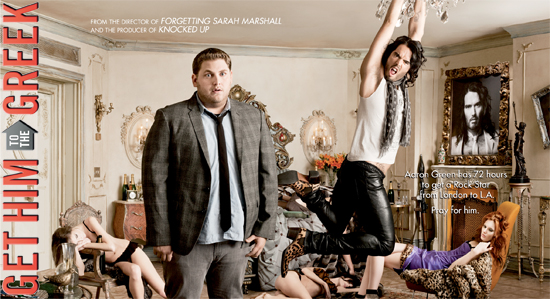
There’s a reason that Aldous Snow — the rock ‘n’ roll MacGuffin played by Russell Brand in this summer’s Get Him To The Greek, the latest installment “From the Director of Forgetting Sarah Marshall and the Producer of Knocked Up and Superbad” — is referred to in the movie as “one of the last remaining rock stars.” When it comes to this 20th century Dionysian archetype, there really aren’t that many left. The Internet is making sure of it.