by andrea spratt.
so bummed i couldn’t make it to this, looks like it was fantastic!
(andrea, i am SO proud of you!)
by andrea spratt.
so bummed i couldn’t make it to this, looks like it was fantastic!
(andrea, i am SO proud of you!)
absolutely phenomenal:
you know, i didn’t even used to care about the music industry. i could vibe on its culturally–relevant aspects, but the industry of the music industry was never all that interesting to me. it was always just this thing…over there. somewhere else. the concert industry, which i have been involved with for a while, is a whole different beast all unto itself, focused on selling a physical experience of music rather than a digital recording of it–and things like this used to be very clear-cut. or, perhaps much like the distinction between culture and marketing, used to seem very clear-cut.
and while there’s nothing like going over to the other side and working with musicians to make you discover you’re suddenly all kinds of interested in what’s going on in the music biz, perhaps this too is just a symptom of its current condition: because the gates of the music industry have been busted open, and its implications become so much more far-reaching, the music industry has, in fact, ended up being relevant to more people than ever before.
so who knows? perhaps it’s ended up being relevant to you too, and if it has, i recommend the following two articles, which came out this week, within a day of one another, incidentally:
1. MTV’s The Year The Music Industry Broke
in which MTV rejoices in the destruction of the music industry with the incongruous glee of a rotisserie store rejoicing over mad cow disease.
2. WIRED’s David Byrne’s Survival Strategies for Emerging Artists — and Megastars
in which we explore opportunities for innovation, and perhaps ponder the nuances of personality-types which would rejoice in destruction vs. creation.

after mentioning him in the previous post, i ended up going on what can only be described as an eddie izzard bender.
a self-identified “male lesbian,” and “action transvestite” (you know… “running, jumping, climbing trees… putting on makeup while you’re up there”: action transvestite), izzard is also fluent enough in english and french to do standup in both. so clearly the man understands a thing or two about the intricacies of hybridity and cross-cultural communication–phenomena that likewise are pretty fascinating for me.
i first saw dress to kill in 2002, and what forever earned my respect for izzard’s genius is when, during the encore, he actually performs a bit in french and manages to get everyone in the audience–and me watching–laughing hysterically. i don’t know french. neither does most of the rest of the english-speaking, san francisco audience where the show was recorded. yet in a feat of linguistic alchemy he somehow is able to completely pull it off. we’re watching him in a different language, and we totally get it. it’s such a bewildering display of how little a language barrier might actually matter in the process of understanding people who are unlike us that it feels like you’ve just witnessed a magician perform rather than a comic.
so somewhere in the course of the haze induced by binge consumption of every glorious, sexie, eddie izzard clip on youtube last weekend, i stumbled onto his website. i’m not entirely sure i remember how i got there, but i do remember flashes of what happened after. (note: this will be way funnier if you’ve actually seen eddie’s shows. since i had just watched several years of them before i arrived at the site, it was completely hilarious to me.)
when i went to sign up for eddie’s email list, i was faced with the following options:
Send me news and info about Eddie via Email
Only send me gig & appearance emails for my chosen country
Cake OR Death
when was the last time you were asked THAT before joining a mailing list?
and furthermore, what’s a nav. section called  gonna lead you to?
click on it and an audio clip of izzard’s voice admits, “well, it was the pressy-makey-doey-things page…but that didn’t really fit it.”
maybe you might want to pressy-makey-doey up on eddie’s sexie fridge…
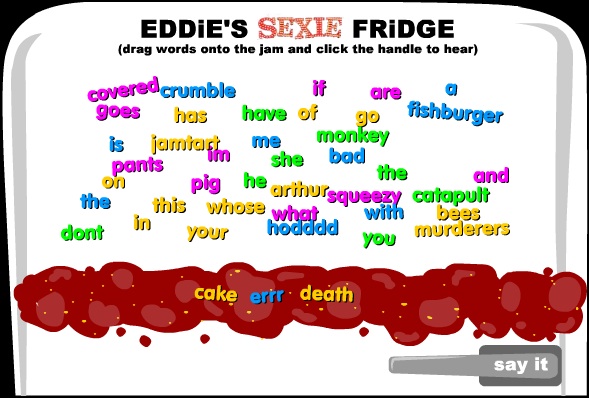
…where you drag words eddie utters during his show onto the jam smear on the fridge and then play them back to hear him say customized nonsense. (“jamtart arthur squeezy fishburger murderers catapult” is a good one).
but let’s back up for a second. maybe you’ve never seen eddie’s standup. maybe you came here because you’ve seen eddie in a movie, or on his TV show, the riches, and you’re trying to find out more about that. then you want the  page. and when you click on it, eddie’s relentless, adlibbing audio which follows you around–as in real life so on the internet–announces in a tone of sophistication, “this is the acting page. it is a very serious page.” it, in fact, does look very serious. with a vogue-y black and white glamour shot of izzard. but when you look in the corner there’s a little purple beehive just below eddie’s face with bees buzzing all around it. drag your cursor over to it to find out what the hell that’s all about, and your mouse gets covered in bees!
you may have seen glorious. you may not. you may think that’s hilarious. you may not. but either way, at least there’s something different going on here. something unexpected. and it’s not some kind of slick design-gasm. it’s not trying to wow you with unprecedented feats of programming. no. the site actually comes off as a pretty uncomplicated bit of online real estate, but with these absurd little pressy makey doey game-y bits. and it’s great!
i think the most important question for anyone creating a website to answer has to be “what do you want the website to do?” and at the basic level this question is pretty easy to answer. sure you want it to provide information, to sell something, to connect people, to encourage participation, whatever. all that’s well and good, but as soon as it gets beyond the level of “what do you want it to do beyond simply function,” the vision for what’s possible becomes kind of polarized and discordant.
on one side of this mania there’s:
make more features!
make it slicker!
make it cleaner!
make it cooler!
make it bigger…

and on the other side is something my friend jesse shannon calls the “myspacification of websites,” where content management systems are churning out the online equivalent of cookie-cutter suburban tract homes. sure it might be super intuitive and user-friendly, and you might know where your neighbor’s bathroom is located when you come to visit without anyone ever having to tell you, but….isn’t there anything else to an online experience beyond features or navigability? beyond flash or content management?
how about “i want the website to entertain people.” or “i want it to make people laugh.” creating a FUN experience is just as valid as an easily-navigable, informative one, but between the designer, the developer, the information architect, and everyone else…. whose job is it to make sure a site is FUN?
i once got asked if the “this is not a trend” in masthead image on this site is supposed to be a reference to magritte’s “this is not a pipe.”
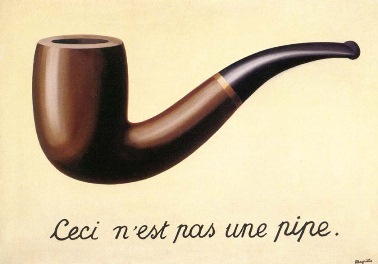
and while we may not all be looking for subliminal surrealist messages in our online experience, i think we are definitely looking for that kind of element of surprise, for unexpected juxtapositions, and even for non sequiturs sometimes, the same qualities that made the surrealist movement’s artistic expression so different from what had come before it. check out whateverlife.com on that note. the whole thing was originally created by a teenage girl who taught herself all the necessary design skills. not surprisingly, since there was no formal training which could instill upon her what a website SHOULD look or operate like, it looks completely different from any typical site.
perhaps it’s because we’ve always thought of the online experience as “browsing” that all we’ve been doing so far has just been making different versions of that one experience. maybe it’s time to re-imagine the whole thing. to integrate fun into its very functioning (as opposed to relying solely on the content), to reclaim it from its current humorless condition–and i mean, beyond just with LOLcats or cute hipster tech geek colloquialisms in dialogue boxes and error messages. if you’re looking at whateverlife and thinking, oh, so does this signify the next stage of a website experience?
instead think: maybe it just seemed like it would be fun.

If you ain’t never been to the ghetto
Don’t ever come to the ghetto
‘Cause you wouldn’t understand the ghetto
~ Naughty By Nature, “Ghetto Bastard”
used to be that if you were a musician the only way you could get ANY kind of significant distribution for your music was through a record label. cassettes and cds made it easier, but you were still at the mercy of the bureaucratic limits of physical distribution, and the price-tag for quality production was still insurmountable for most independent artists. when judged by the standard of the pro-quality sound and behemoth distribution bestowed upon label-produced music, independent options didn’t really compare.
(to make a long story short, i’m gonna skip over the way that punk and underground hiphop have functioned for the past several decades for the moment, and just flash forward to:) and then the internet came along, and all of that changed. not only could any dedicated producer get the pro music production software he (or she) needed for relatively cheap (or, you know, free), but the barriers for distribution got plowed down. you, as an unsigned, independent music producer–if you’re particularly talented–are now completely capable of producing music that sounds just as good as anything a label could create, and–if you’re particularly clever–that is disseminated damn fiercely.
and while all kinds of independent options were springing up like mushrooms after the online rain, and while tower records announced it was going out of business in october of 2006, just a month after wired’s “the rebirth of music” issue pointed out that the “music” industry had become simply the “plastic disc” industry, what also happened was that the music industry became a publicly traded industry.
you ever think about that?
that the major culture creation industry answers to shareholders every quarter–and i mean, ALL of it, not just the labels, the live concert promotion industry too–what that all means?
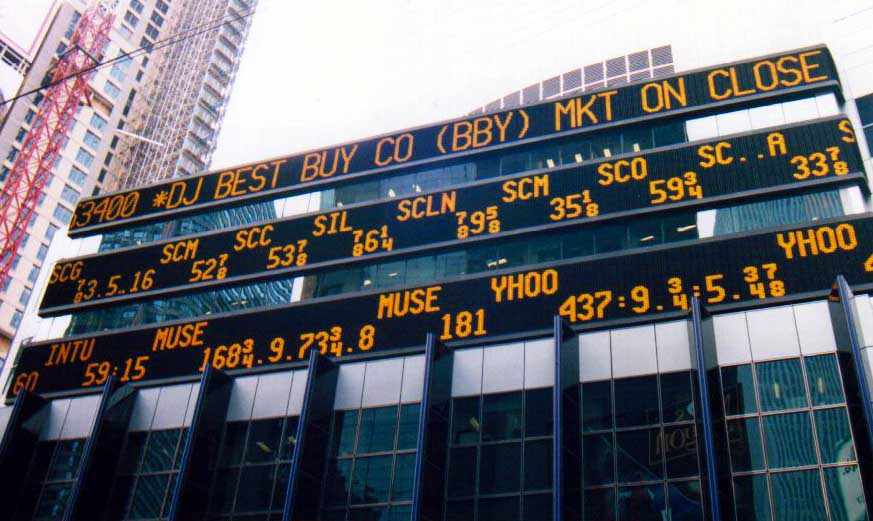
every business wants to make a profit, but when wall-street gets all up in this piece, it’s all just about making sure that stock is going up every quarter, and that means you can’t take long-range risks. a mainstream venue is no longer just a building, it’s an investment bank, and every band is valuated on their prior ticket sales track record. if you were paying attention, you noticed that in the course of this paragraph your saturday night concert ticket just became about that wallstreet stock ticker.
it’s a bit weird, huh?
there’s a lot of complaining that goes on about this situation, but personally, i think this is the best thing that could have ever happened as far as subcultures go.
since artists can now completely bypass labels and still grow a fanbase, this means that it’s possible for an act to be selling out underground parties from vancouver to san diego, and the publicly-traded music industry wouldn’t even KNOW they exist. it just became that much easier for communities to grow around music that has completely flown below the mainstream biz’s radar. and not just grow, but flourish. and then all of a sudden there’s a need for booking agents, managers, venues, labels, and of course, marketers too. all of it. the underground becomes a whole economy unto itself.
not that underground music is anything new by any means, but i think the degree to which this non-publicly traded music is now able to spread, and the extent to which the “underground economy” has the opportunity to expand, is completely unprecedented. by underground economy i don’t mean an illegal black market, i mean simply the economy that develops around independent culture creation. this isn’t people playing make-believe, waiting around, hoping to be “given a shot” by the majors. these are legitimate livelihoods, these are unmistakably careers, and what’s facilitating them shows no signs of slowing down.
over the course of the past year i’ve personally watched the mainstream and an underground start to collide on a business level, and i’ve been simultaneously in a front row seat on both sides of the battle line. i’ve seen major concert promoters cluelessly offer artists a tenth of what they easily command in their underground economy because they had no idea they were worth that much. i’ve seen underground producers get offered laughable deals that came from people thinking they are doing them some kind of favor. and i’m not even trying to be clever when i say that it just doesn’t seem to occur to them that musicians not represented by some kind publicly-traded entity would have anything better to do with their time. time is money everywhere, and money isn’t any less green in the underground economy, you know.
the whole thing reminds me of an eddie izzard routine about how england conquered the world with “the cunning use of flags.”
“That’s how you build an empire. Sail halfway around the world, stick a flag in. ‘I claim India for Britain.’
And they’re going, ‘You can’t claim us. We live here! There’s 500 million of us.’
Do you have a flag?
‘We don’t need a bloody flag, this is our country, you… bastard!’
No flag, no country. You can’t have one. That’s the rules…that…. I’ve just made up! ”
except the underground, now more than ever, very much does have a claim to its territory on the cultural landscape. and while the music industry continues to cut costs on its own product like it’s disposable, to the rest of the consumer goods industry underground culture is becoming an indispensable marketing tool.
a couple of months ago the wall street journal wrote:
At Nike, the drive to recruit under-the-radar influencers is on the rise and a key part of the company’s strategy.
Mr. Parker (Nike’s CEO) sees the challenge thusly: “The question is, how do you not let your size become a disadvantage? How do you keep an edge, a crispness, a relevance?”
Though far from mainstream, Mr. Cartoon rivals Nike’s high-profile jocks for influence among a certain crowd that is young, Latino and hip-hop. His ink-on-flesh flourishes are popular with rappers like Eminem and 50 Cent. Born Mark Machado, Mr. Cartoon has also written comic-book style graphic novels and created a brand called Joker to sell T-shirts and baseball caps with his designs. Nike’s Mr. Parker, who met Mr. Cartoon several years ago, calls him an “aesthetic influence and a friend.”
In addition to Mr. Cartoon, Mr. Parker has fostered Nike collaborations with a New York graffiti artist named Lenny Futura, the industrial designer Marc Newson and a pair of twin Brazilian muralists known as Os Gêmeos.
Following his own instincts, Mr. Parker has moved to aggressively link Nike with those who can help maintain the company’s standing among what he calls the “influencers of influencers.”
“I have a personal interest in popular culture and the influence of culture on the consumer landscape,” says Mr. Parker.
funny…didn’t that used to be what the music industry used to be interested in? i could have sworn….
so the music industry stopped being about culture and became about product, and the product industry became about culture. major labels started treating underground artists like they were doing them a favor by even deigning to acknowledge their existence while major brands have started seeking to develop partnerships with them. well, i didn’t just make up these rules, but it sure does seem to have gotten all turned around, doesn’t it?