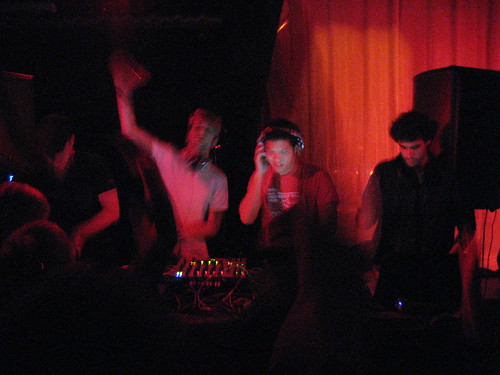
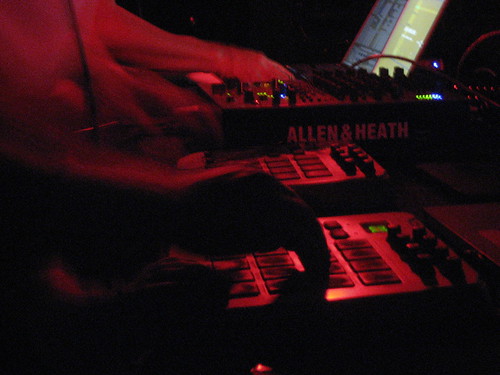
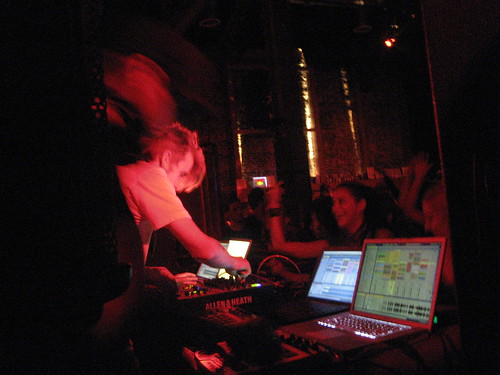
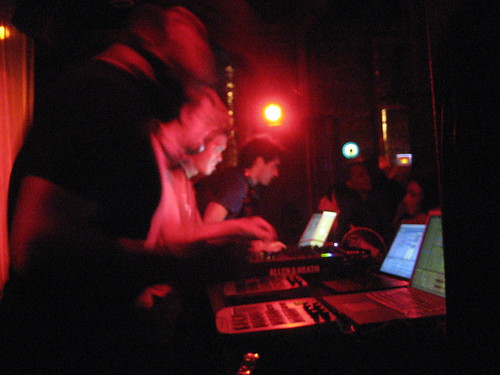
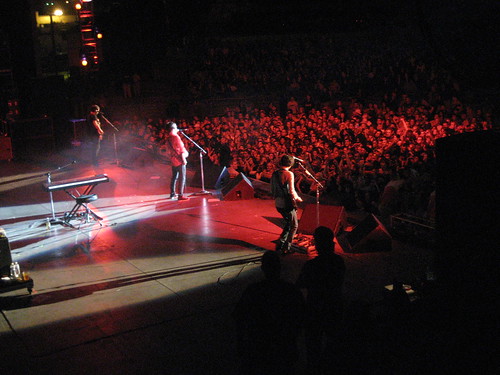
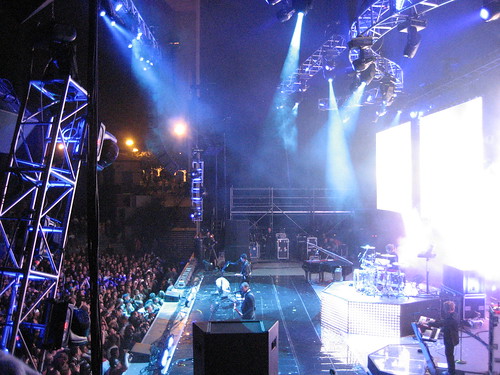
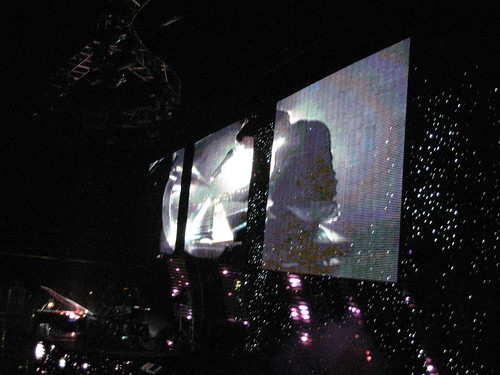
four guys on keyboards does not a band make, but when they’re laptop keyboards it’s a whole new breed of musical act.
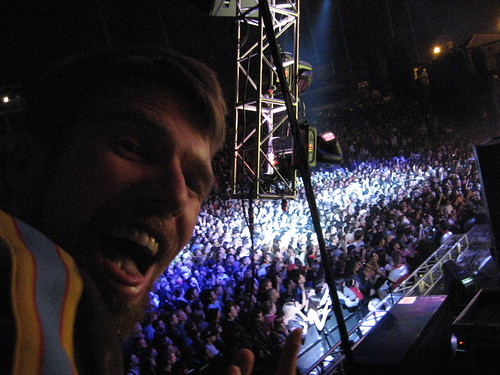
last night the glitch mob dutifully slayed the LA crowd at the kingking on hollywood blvd. it was the first time in a long time (too long) that all four members played together. with half the band based in san francisco and half in l.a., plus a highly modular performance aspect, getting to hear the whole ensemble together is a significant treat, and for reasons beyond simple logistics.
in a genre known for solitary performers (djs), or, at most, duos (daft punk, justice, juniorsenior) a dynamic team of performers creating the music experience is practically unheard of.
i’m betting this new incarnation of a “band” for digital age is a sign of things to come.
and since you’re curious, check out the mob’s mix on xlr8r.com.
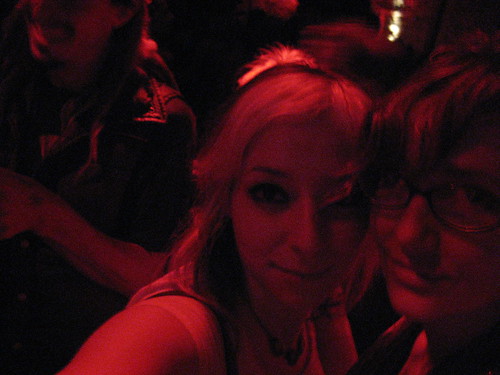
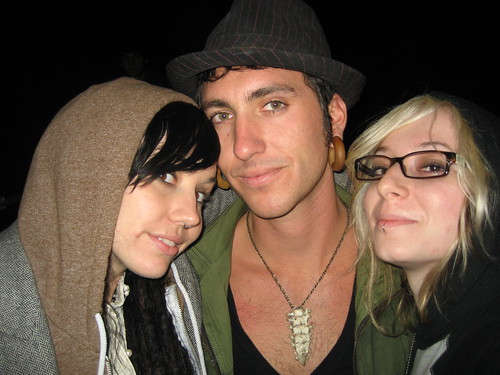
the mob’s girls friday–me with their booking agent, arin ingraham of lumineart:
it’s kind of hard to write a post advocating a sense of balance. it’s easy to get all riled up and energized on preaching some kind of extreme; is it even possible to create a polemic for moderation? i’ve been sitting on this particular post for weeks, unable to summon up the oomph to do it justice, but i’m gonna try, cuz i think it’ll be useful.
there’s a lot of push for “radical transparency” in this social media culture of ours. from the free-sharing ethos of the open source community that’s defining a good deal of the new medium’s structure, to the rampant open-bookiness of the random user’s social network profile, total “openness” is being heavily bandied as a requisite for the new media era.
a few months ago wired dedicated it’s cover story to this issue, with the see-through CEO article:
Radical forms of transparency are now the norm at startups – and even some Fortune 500 companies. It is a strange and abrupt reversal of corporate values. Not long ago, the only public statements a company ever made were professionally written press releases and the rare, stage-managed speech by the CEO. Now firms spill information in torrents, posting internal memos and strategy goals, letting everyone from the top dog to shop-floor workers blog publicly about what their firm is doing right – and wrong….
of course, when considered in contrast to the long legacy of empty hype, manipulation, and even straight up coercion that we have become fed up with in mainstream media and big business it’s understandable that there would be such a resounding grito for “radical transparency” now that media has, for the first time, truly become interactive. “secrecy is dying.” the article proclaimed. “it’s probably already dead.”
but before we go get it taxidermied and hang its stuffed, antlered head up in social media’s hunting lodge, what i am proposing is that there is room for an intermediate option between the overt and the covert, one that emphasizes a sustainable (vs. radical) approach to maintaining the delicate balance between the blatant and the intriguing.
but wait…
Your customers are going to poke around in your business anyway, and your workers are going to blab about internal info – so why not make it work for you by turning everyone into a partner in the process and inviting them to do so?….Some of this isn’t even about business; it’s a cultural shift, a redrawing of the lines between what’s private and what’s public. A generation has grown up blogging, posting a daily phonecam picture on Flickr and listing its geographic position in real time on Dodgeball and Google Maps. For them, authenticity comes from online exposure. It’s hard to trust anyone who doesn’t list their dreams and fears on Facebook.
ok. i’ll tell you something else about what i and some of the rest of this generation grew up doing. we grew up going to–and some of us, producing–“outlaw” parties. you can check out groove or go or kids even, if you weren’t there for yourself, but suffice it to say these were unpermitted, unfireproofed, underground all-night events that routinely broke a whole lot of safety codes, property laws, and a slew of other legislative regulations. there was a tremendous sense of community and trust that developed within this scene which was at once superlocal and hyperglobal, and we all relied on each other to be good at keeping a secret. because if we weren’t, we would all be saving the 3 am dance for members of law enforcement. and once the cops came there was no more fun for anyone.
which is not to say that i am advocating illegal activity in business practices, but rather to point out that this generation that now publicizes its dreams and fears for the world to see may yet be able to appreciate the value in keeping certain things–as the kids say–on the DL.
the wired article does point out that, ok, perhaps:
Secrecy can be necessary – CEOs are often required by law to keep mum, and many creative endeavors benefit from being closed: Steve Jobs came up with a terrific iPhone precisely because he acts like an artist and doesn’t consult everyone. In fact, secrecy is sometimes part of the fun. Who wants to know how this season of 24 is going to end? It’s not secrets that are dying but lies.
the article tosses in this dynamic concept that secrets can be fun, and then moves right along on its radical transparency proselytizing way without giving it any more thought. it’s this kind of secret that i’m interested in. the secret that is not a lie, the secret that’s enjoyable: the mystery.
because you know why? because mystery is infinitely engaging. mystery bestows specialness. mystery can create bonds within a community, and oh, hell, mystery is sexy!
i mean, full disclosure certainly can be sexy too, but it all depends. we don’t fantasize about what EVERYONE looks like naked, dig? and that goes for companies too. sometimes we don’t NEED to know. sometimes it’s a lot more boring or disappointing if we do. sometimes it ruins the magic. sometimes it could be more captivating if you maybe put your clothes back on and sought to seduce us. think of it like a strip tease. in fact, i think we can all learn a thing or two on the subject from cabaret. but not the outdated oldskool kind. no, i’m talking about punk rock cabaret.
n 2004 the dresden dolls were just this odd little cult duo from boston on their first US tour. at their L.A. show matt hickey, the dolls’ booking agent, said to me: you know, no matter how big they may ever get, it’s really important that you should still be able to feel like you are just discovering them. that idea has stuck with me ever after, and i think it’s immensely valuable advice to anyone responsible for the development of a lifestyle brand.
in the years since that conversation, the dolls have gone on to tour the world with panic! at the disco, nine inch nails, and many other major acts. the last time i saw them perform was about a year ago at the orpheum theatre in LA and i’d say that that sense of intimate discovery remained intact even when thousands of people now knew the words to all their songs.
how do you cultivate this intimacy? you keep things mysterious.
the lore around the relationship between the duo is the stuff of cult-rock mythology at this point, rife with tensions and speculation. but sustained mystery is not the exclusive territory of celebrity, where it is, in fact, more often than not mismanaged. it’s also the very same sort of element that induces alternate reality game enthusiasts to willingly participate in an obscure adventure, trusting that each discovery will lead them to an even greater enigma. in a certain sense our whole fetishized infatuation with celebrity can itself be thought of as one giant pop culture ARG–but that’s enough philosophy for one post, i think.
instead lets head over to psychology land. after all, this whole mystery thing is how people fall in love, and the result of eliminating its terrific tension can ruin an otherwise great relationship. (think brand-consumer relationship too!)
in her excellent book, mating in captivity, esther perel, a couples and family therapist and self-identified “cultural hybrid,” offers some refreshingly counter-intuitive (to american intuition, that is–perel was raised in europe, educated in israel, and now practices in NY) insight on how to “reconcile the erotic and the domestic.”
Intimacy has become the sovereign antidote for lives of increasing isolation…. but I am not convinced that unrestrained disclosure–the ability to speak the truth and not hide anything–necessarily fosters a harmonious and robust intimacy.
The mandate of intimacy, when taken too far, can resemble coercion. Deprived of enigma, intimacy becomes cruel when it excludes any possibility of discovery. Where there is nothing left to hide, there is nothing left to seek.
It’s been my experience as a therapist that the breakdown of desire appears to be an unintentional consequence of the creation of intimacy. Our ability to tolerate our separateness is a precondition for maintaining interest and desire in a relationship….Desire thrives on the mysterious, the novel, and the unexpected. It is energized by it.
An expression of longing, desire requires ongoing elusiveness.
we appreciate mystery not for the end goal of its destruction, but for the enjoyment of its process–its revelatory discovery, its furtive sharing. mystery isn’t about being shady, it’s not about deception, nor is it mutually exclusive with making things more accessible, safer, or better explained. there probably isn’t even one right way to sustain it–do too good a job of it and you run the risk of ending up in the dangerous territory of exclusivity. but mystery is incredibly powerful, and has the capacity to engage and captivate us all like nothing else. we shouldn’t ever discount it or think that complete transparency is really a viable substitute. sustained mystery, when pursued consciously and wielded carefully is an effective strategic approach in its own right.
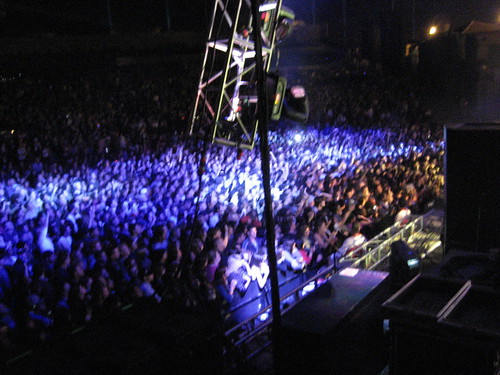
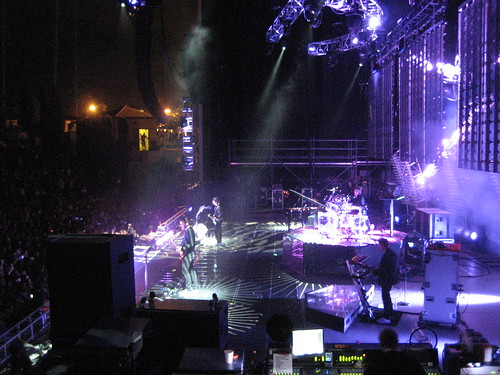
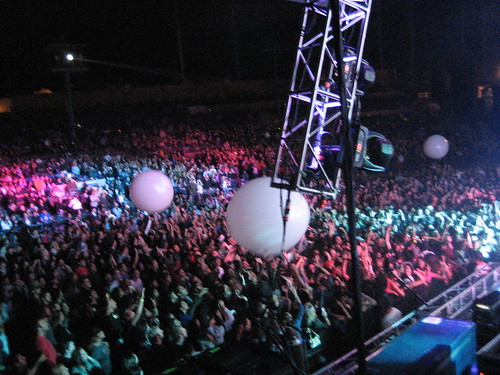
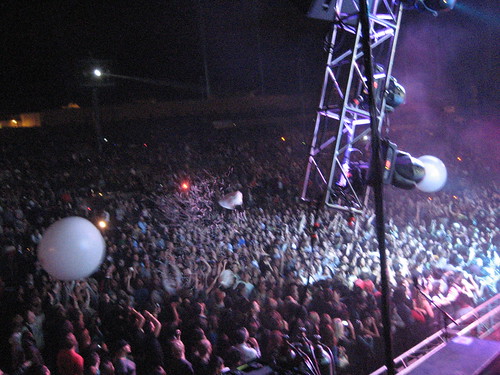
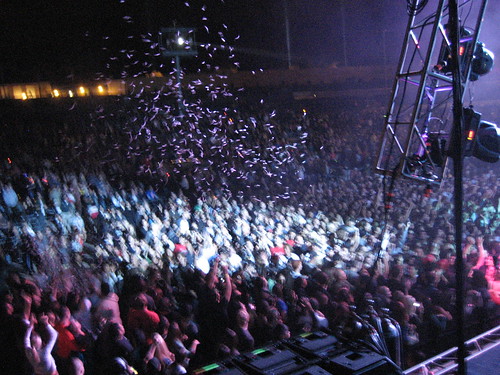
after months of work on street scene 2007, the festival kicked off last night with muse headlining. these photos were taken from what the industry refers to, technically, as the “poser decks.” (i’m 100% serious; should you happen to ever find yourself there, you now know what you will have become). it’s a pretty epic view though, and kind of endemic of a marketer’s perspective in a sense. this is pretty much the view you have to maintain throughout the whole process of marketing a festival, so it’s a pretty fitting vantage point from which to finally see it come to fruition.
among the many highlight moments was getting to see panic! at the disco perform i write sins not tragedies live, which is a song that still manages to elicit excitement every time i hear the track’s opening pizzicato notes since its music video not only features lucent dossier, but it’s also the reason behind how lucent ended up going on tour with panic! in 06–the precursor to their “nothing rhymes with circus” tour.
oh, and i’d like to give a little shoutout othe folks at imeem, for running our battle of the bands contest–which is actually always one of my favorite parts of a music festival promotion strategy. the winning band was monte battalion, but there were so many genuinely talented musicians and bands that participated in the contest, it was actually really hard to chose. imeem should be really proud of the caliber of the creative community they’ve got.
“THEORY ENDS HERE”
– sign on the door to the production office at Boston University’s film department
working with so many music festivals i’ve come to see the pattern in their ticket sales to be a kind of concentrated tour through all the major factors involved in driving adoption.
like the type of excursion that shuttles travellers to all the major european cities in the course of 6 days, from the moment a pre-sale begins till the gates close a music festival’s on-sale period exposes a landscape of distinct adopter personas within the kind of condensed time-frame that could double for an academic experiment on diffusion dynamics. while the details vary from one type of music event to another, in general certain things hold true. a huge amount of tickets–often-times the vast majority–are sold late. yet most people attending a major music festival have known about it, and have actually been considering going for some time before finally making their decision. this despite the fact that a ticket at the end of the on-sale period is considerably more expensive than it is at the beginning, since tickets scale in price as lower-priced tiers sell out.
inevitably this raises the question: WHY are the vast majority of folks waiting till the ticket is at its most expensive to commit to making a purchase?
the answer to this is not only about the dynamics of adoption for music festivals, but sheds light on the factors that drive adoption in a much broader sense. a couple of months ago i wrote a post comparing various music festival websites and mentioned that:
essentially there are three things that a festival is selling:
1. the event lineup
2. the event brand
3. the event community
like toilet paper, tissues, and paper towels, they’re all made up of the same stuff, and to a certain degree serve an interchangeable function, but at the end of the day, you do buy each for different reasons.
to broaden the application of what i’m talking about, lets consider that every time i mention “the lineup” what i am essentially referring to is the “product.” features, design elements, utility, whatever. think of “the lineup” as the thing with the actual bar-code on it–unless you too happen to be in the business of selling tickets.
what that ticket is actually SELLING–the cumulative representation of lineup, brand, and community–is differentat different stages throughout the course of an event’s on-sale period. the point at which someone buys a ticket (aka where on the adoption chart they fit in) tends to be a result of the relevance that that particular combination of lineup, brand, and community has for them. these three elements are distinct adoption-drivers whose impact and interplay it is essential to understand in order to develop an effective marketing strategy–whether for a music festival or anything else really.
1. EARLY ADOPTERS BUY ON BRAND
unlike selling tangible goods, where the product and brand are generally simultaneous and thus difficult to separate and examine independently, selling an “experience” makes it much easier. when we initially launched the pre-sale for the Do LaB’s Lightning in a Bottle music festival we did not announce a lineup.
with the “product” an unknown, and the community still solely theoretical (sure, you may know who’s LIKELY to go, but the first week of a pre-sale you’re not likely to know too many people that actually ARE going) the most overt selling point was inevitably the brand.
the do lab had been creating events for seven years at that point, establishing a reputation for consistently spectacular, jaw-dropping creations, and the people who bought tickets that first week before either the lineup or community of LIB was a viable element, bought on the basis of the identification they had with the brand.
that bold stuff is the common denominator that i believe drives early adopters in general. whether you’re nike coming out with a new type of shoe, or lexus with a new model of car, or mac with a new sort of i-something, the people at the very front of the line buy on the basis of the identification they feel with the brand.
the first tier of lowest-priced tickets was sold out before we announced the lineup, having gone to the do’s most ardent early supporters. i imagine to a lot of people reading this (due to the nature of this medium’s demo) the logic in that kind of arrangement is self-evident, however, because i have seen this group be treated with the most extreme disregard, i’m going to go off on a little tangent here.
the folks who would buy a ticket without even knowing who’s playing, in a more traditional marketing model have generally been regarded as the most easily conned. the cheapest date who evidently requires the least amount of wooing. in the do lab world however, and in a world of brands that actually care about their consumers, a world that is being more and more empowered by social media, that kind of take-the-money-and-run mentality is going to fly less and less.
early adopters buy on brand, and yours better be the kind of brand that understands the necessity of rewarding them for this devotion as opposed to taking advantage of them for it, otherwise you’re going to LOSE them.
2. EARLY MAJORITY BUYS ON BRAND + PRODUCT & DRIVES COMMUNITY
the conventional assumption has been that it is the early adopters who steer a product to eventual popularity, but as the prior article on late adopter strategy pointed out, that is not necessarily the case. i’m of the opinion that it is actually the early majority that is responsible for pushing adoption against gravity, up the slope of the s-curve. in the case of LIB, an easy way to define the early majority is everyone who bought a ticket from the point when the lineup was announced, up until two and a half months later when the online sales officially ended the night before doors opened.
in the marketing bible malcolm gladwell splits the burden of causing cultural epidemics to “tip” between three types of culprits: connectors, mavens, and salesmen. gladwell gives an example of one such a maven: a man who after getting taken to a new japanese restaurant by his daughter and liking the food, comes home and sends an email to all his acquaintances who live near the restaurant recommending that they check it out. mavens, i would say, are the folks that comprise the early majority in general, and they make or break “critical mass” for adoption by generating what is technically referred to as, uh…. buzz. if you understand the impact of this, you’ll do everything you can to give them the tools and the content they’re looking for to help them do just that.
3. LATE MAJORITY – BUYS ON COMMUNITY
the late majority of a music festival is likewise easy to identify: it’s all the people who bought tickets at the door. in the case of LIB07 this turned out to be approximately 2/3 of the total purchasers. since this was a weekend-long camping event, it’s not exactly the kind of thing that had a spur-of-the-moment appeal. pretty much all of the late majority had known about this festival for a while. they knew the lineup, they knew the brand, but did not make their purchase until the last minute. why?
they were waiting on the community aspect to build. for the late majority, it is the community–a factor that is nonexistent when the tickets are inexpensive–that makes the higher price of the ticket worth it. when the buzz gets loud enough is when the late majority starts to realize that they don’t want to miss out on getting to share an experience with all their friends. in the same way that brand functions as the major motivator for the early adopters, community fills that role for the late majority.
in the conversation that is going on right now about how to measure the success of social engagement, an interesting factor to throw into the equation is that the “late majority” gets the thing once all their friends have it and won’t shut up about it–and this applies to whether we’re talking about a ticket to a festival, a pair of sneakers, an mp3-player, whatever. the better a brand’s social engagement strategy (and this transcends simply online social engagement, by the way), the easier it is for the early majority to build that buzz. the “effectiveness” of social engagement can thus be seen as directly correlated to the size of a product’s “late majority” purchasers. (tho it sure don’t hurt the other categories none either).
in the end, it comes down to developing a strategy that addresses what is relevant to the different personas on the adoption curve (in the broadest sense: brand, product, and community), and likewise is then able to proactively anticipate and deliver on these elements in ways which will help expand the adoption to the next phase.
NB: you know… all these rules sound really complicated and confusing.
B: it’s really not. it’s really all just about art. you know, people spend so much time and energy creating amazing art to bring out there and share with everyone, and this guy just–
NB: wait…you think maybe this was his art?
B: what?
NB: well, i bet this took a good deal of planning beforehand, and it’s certainly a statement–
B: what the hell kind of statement does it have?
NB: i don’t know… maybe something like, about culture jamming or somethig? it seems like there’s a message it’s trying to get across maybe, and it–
B: that is ridiculous. that isn’t art with a message! THIS is art with a message:
NB: oh. hm…. how much fuel you think it took to trasnport and construct atll tha?
B: ok. you know what…. i have to go finish packing now.