
.
Read: Sex, Drugs, & The Internet – Inspired By A True Story
.
.
You know those movies about characters trail-blazing the business of some terrible vice? They’re always set in a not-too-distant past, have trailers full of period-specific songs, and include the words “inspired by a true story” on the poster. There’s the initial meteoric rise to power and wealth, followed by a period of unbridled excess — generally involving use of montage — and, ultimately, the inevitable downfall which was doomed to happen from the start, with, possibly, an epilogue of redemption. It’s a very specific film archetype, wherein the traditional bad guy is, instead, the quintessential American hero: the visionary entrepreneur who possesses the ingenuity and tenacity and just plain balls to seize an opportunity only he can see, and achieve a feat so stupendous — inventing the American cocaine trade, for instance, becoming the first black man to rise above the Italian mafia in the New York heroin business — you’re at once inspired and horrified by his success.
In 2001, Blow kicked off this trend of movies where you’re rooting for the drug dealer. The movie’s based on the life of George Jung, played by Johnny Depp, a Boston guy living in California, who starts off smuggling pot cross-country in the 60’s, and ends up becoming the American connection to Pablo Escobar’s Medellín Cartel, which, with Jung’s help, would go on to own 85% share of the U.S. cocaine market by the late 70’s / early 80’s:
.
Then came 2005’s Lord of War, in which the illicit contraband is weaponry, and Nicolas Cage plays Ukranian-American gun trafficker, Yuri Orlov — a fictional character based on a composite of a number of actual post-soviet arms dealers — whose big break comes as he watches Mikhail Gorbachev give his resignation speech on television, Christmas Day 1991. Like a prospector who’s just struck oil (See also: There Will Be Blood, for a variation on this cinematic theme), he envisions, in this moment, the future of his business expanding with the gush of weapons — even tanks! — he’ll now be able to buy (illegally) from the just-dissolved Soviet Union’s stockpile in the Ukraine:
.
2005 was also the year Weeds premiered on Showtime, in which Mary-Louise Parker plays a widowed housewife who becomes a suburban pot dealer, and a few seasons later ends up married to the head of a Mexican drug cartel.
By 2008, when American Gangster came out — which tells the story of Frank Lucas, played by Denzel Washington, who bypassed the entire Italian mafia to become the heroin king-pin of New York in the early 70’s by establishing his own direct supply connection in Asia during the Vietnam war and smuggling the drugs into the U.S. in the coffins of dead U.S. soldiers — rooting for the vice-peddling, psychotically enterprising, imminently doomed outlaw businessman — even though, good god! he’s a fucking heroin drug lord turning all of Harlem into addicted zombies!! — had become a familiar experience:
.
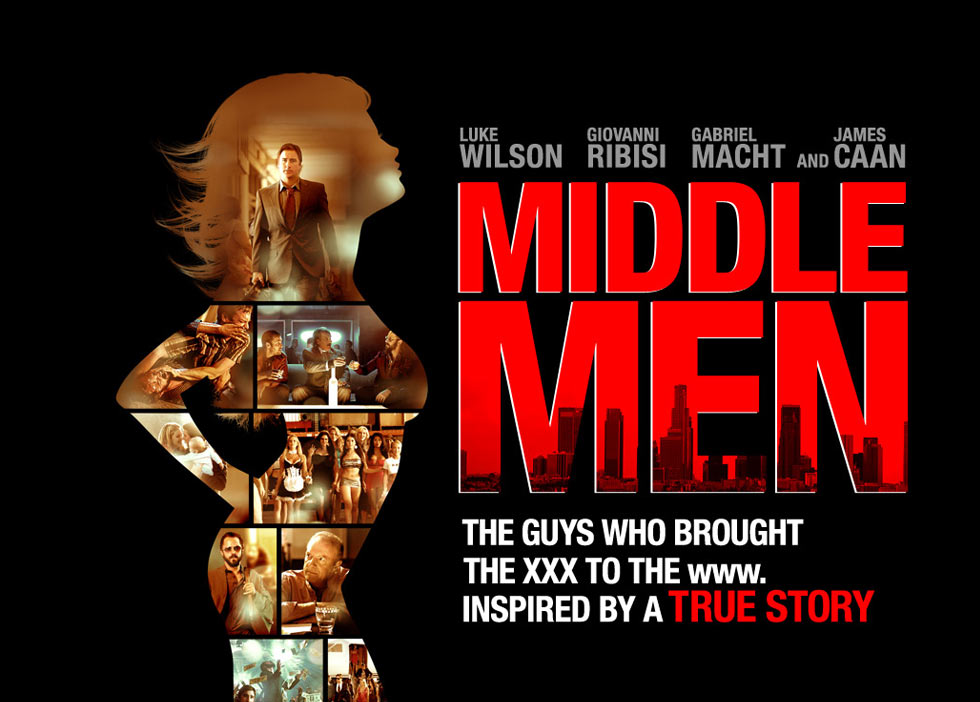
Which is how we arrive at Middle Men, due out later this year, a based-on-reality story in which Luke Wilson plays Jack Harris, a mainstream businessman who partners with a pair of porn content providers (played by Gabriel Macht and Giovanni Ribisi) to form the first online adult billing company in the mid 1990’s:
.
The drug dealer used to ALWAYS be the bad guy. You weren’t supposed to sympathize with him. Now it’s every fuckin’ movie like this. But the story isn’t just about the clever bastard with an idea for a supply to human nature’s demand, it’s about the vice itself. It’s not just George Jung’s story, it’s the history of blow we’re fascinated by — how a chance cell-mate pairing between a California pot smuggler and a member of the Medellín cartel would pave the way for the U.S. cocaine highway. How the Vietnam war became the camouflage for the heroin epidemic Frank Lucas created. How the Soviet Union’s collapse helped the business of illegal arms dealers. Each of these stories has this moment where entrepreneur and zeitgeist collide, and — for better or worse; mostly for worse — it changes the world. In Middle Men the focus of the story could have easily been the porn industry — but it isn’t. Porn is just the side effect. Like the preview voice-over announcer says, it’s the story of the worldwide web.
Finally.
It’s 2010. 20 years since the first web browser, 15 years since the first adult materials became commercially available online, 10 years since the dot com bubble burst, 5 years since MySpace was getting more page-views than Google, a year since Facebook overtook MySpace in unique visitors, and meanwhile, Americans now spend, on average, about as much time on the Internet as watching TV. In fact, if you’re under the age of 45, you spend considerably more time on the Internet than watching TV. Amid a global financial crisis, US online retail managed to grow 11% in 2009 to reach $155.2 billion. Overall online sales are projected to increase almost 200% between 2008 and 2012. 75% of us use social network sites. And the time we spend there is growing at 3 times the overall Internet rate, accounting for 10% of all Internet time — every second of which, by the way, 28,258 internet users are viewing porn.
Hollywood is finally catching on. Up next after Middle Men is the film adaptation of Ben Mezrich’s 2009 book, The Accidental Billionaires: The Founding Of Facebook, A Tale of Sex, Money, Genius, and Betrayal. It comes out just a couple of weeks after Wall Street 2:
Here’s an excerpt from the book:
What neither he nor Mark [Zuckerberg, Facebook founder] had known when they started the damn thing was how addictive Facebook was. You didn’t just visit the site once. You vsited it every day. You came back gain and again, adding to your site, your profile, changing your pictures, your interestes, and most of all, updating your friends.
… Most kids who tried out [Facebook] once tended to come back — 67 percent every day.
The Internet: It might not be illegal, but it’s unquestionably addictive.
Once considered the province of geeks, the Internet is now where all of us live. It is a huge, enormous thing that is changing how we do practically everything and permeating the very experience of our lives. It is now all of our’s vice. And it’s breeding a whole new generation of vice entrepreneurs. Drug dealers and gunrunners have new company.
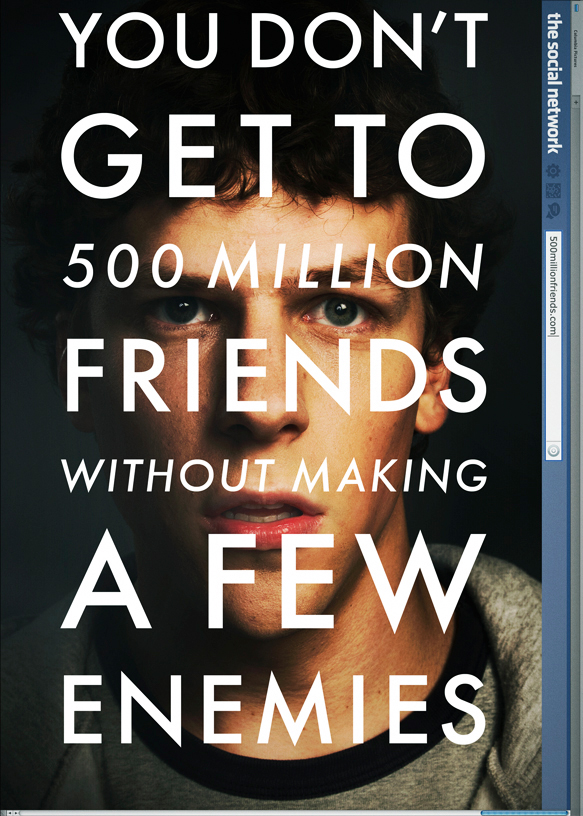
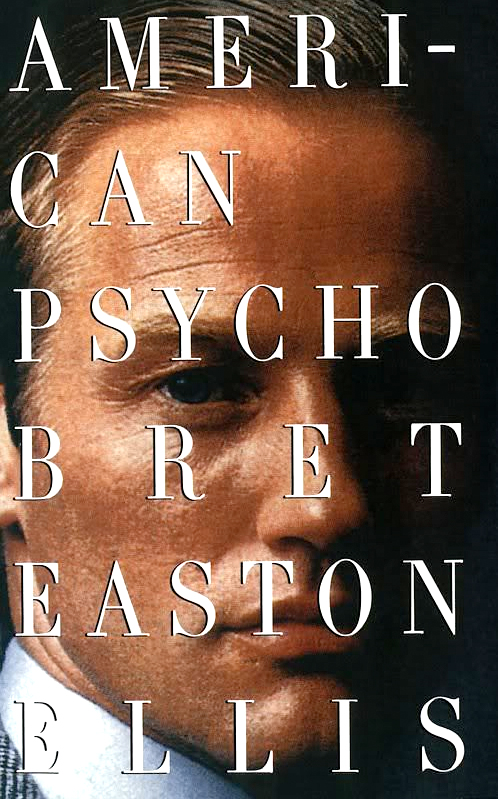
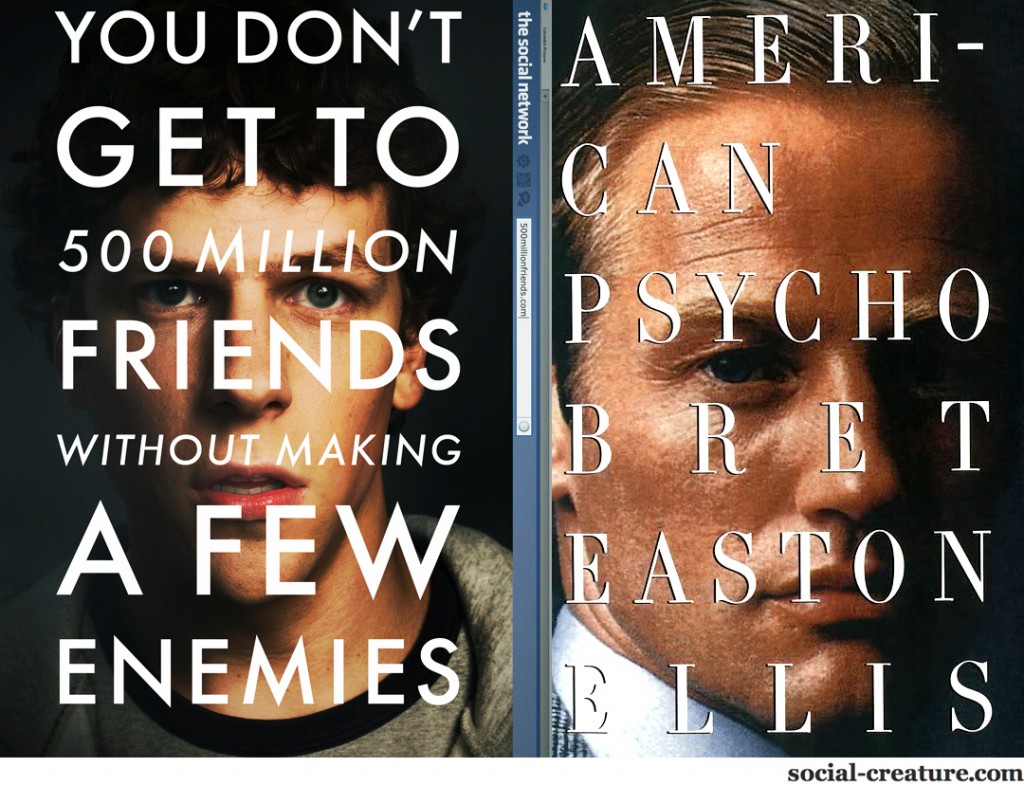
In related news, is it just me or does the new poster for The Social Network seem, like, awfully familiar?
.
.
Just sayin’.


Last month, we at Espresso launched “Connect or Die: How to survive in a Music 2.0 World,” the first in our “2.0” thought leadership series exploring the challenges and opportunities facing various industries as digital and social technology dramatically alter the consumer landscape.
This month, I’m excited to share the second installment, Drink 2.o: Anything But ‘The Usual’, where we take a critical look at the trends in the alcohol biz in the U.S., and also Canada. As with last time, I helped research and co-write these decks. Enjoy! (Ideally with a cocktail!)

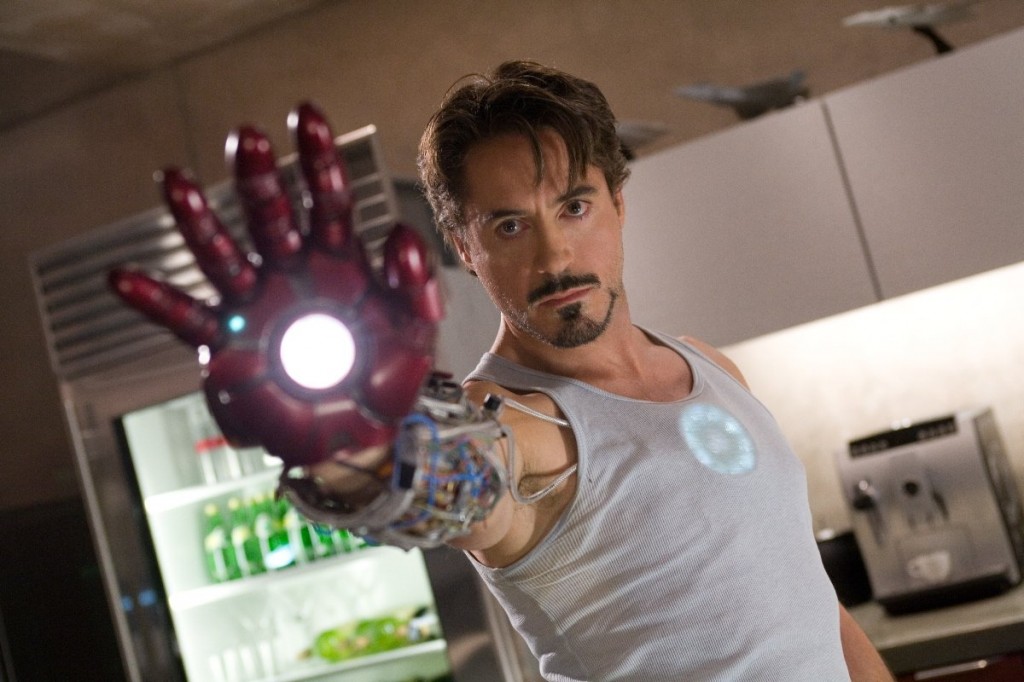
In 1938, on the eve of the Second World War, a relatively new medium called the comic book unleashed a new kind of character into the consciousness of American youth. Created by writer Jerry Siegel and illustrator Joe Shuster, this character possessed superhuman powers and a dedication to using those powers for the benefit of humanity. Often battling and defeating evil as hyperbolic as his own goodness, his iconic name would become the source of the term for this all-American archetype, the “superhero.” In the decades since Superman‘s arrival, innumerable variations on this theme have emerged, but always these characters have struggled under the weight of a concept about who they must be that was invented before television. For the past 70 years we have been living with a 20th century version of the superhero. Until now. Though the Iron Man character was originally created in the early 60s, his most recent incarnation, as played by Robert Downey Jr., and directed by Jon Favreau in the just released Iron Man 2, is really the first Millennial superhero.
The original Superman prototype possessed a key characteristic, one that his creators, first generation American sons of Eastern European Jewish immigrants, would have known something about, one that this “Man of Tomorrow” would pass on as part of his legacy to future generations of masked heroes: a secret identity. This trait would become an intractable part of the very definition of a superhero, as much a prerequisite for his mythology as extraordinary powers, or at least a flamboyant getup. And yet, in a press conference at the end of 2008’s first installment of the Iron Man franchise, Tony Stark announces to the world that he is Iron Man. This is where the sequel starts off. The need for a secret identity is gone. The entire world knows — and not because some tabloid uncovered the mystery man behind the mask, but because he just straight up told everyone. In the comic books, it took Stark 40 years to make this move. For Superman or Spiderman or Batman or virtually any other superhero from the prior century (save some like the X-Men) their secret identities were their most sacred possessions, the keys to their undoings, and they fought as hard to protect them as to save humanity itself. But in the 21st century, Tony Stark’s approach to privacy reflects how Millennials now think of the concept.
These days, the kind of stuff kids choose to reveal about themselves online is almost beyond comprehension. The latest social platform eroding the boundary between what was once strictly private and is now exposed to the world is Formspring.me, which the New York Times calls, “the online version of the bathroom wall in school“:
While Formspring is still under the radar of many parents and guidance counselors, over the last two months it has become an obsession for thousands of teenagers nationwide, a place to trade comments and questions like: Are you still friends with julia? Why wasn’t sam invited to lauren’s party? You’re not as hot as u think u are. Do you wear a d cup? You talk too much. You look stupid when you laugh.
Comments and questions go into a private mailbox, where the user can ignore, delete or answer them. Only the answered ones are posted publicly — leading parents and guidance counselors to wonder why so many young people make public so many nasty comments about their looks, friends and sexual habits.
Social media researcher danah boyd asked a similar question a couple of weeks ago:
This [behavior] has become so pervasive on Formspring so as to define what participation there means. More startlingly, teens are answering self-humiliating questions and posting their answers to a publicly visible page that is commonly associated with their real name. Why? What’s going on?
While this particular trend is definitely a bit baffling, those of us that have grown up in the digital age have pretty much come to expect that the privacy arc of the internet is perpetually bending more and more towards greater disclosure. Privacy, as Facebook’s Millennial founder Mark Zuckerberg insists, is dead:
People have really gotten comfortable not only sharing more information and different kinds, but more openly and with more people. That social norm is just something that has evolved over time… But we viewed that as a really important thing, to always keep a beginner’s mind and what would we do if we were starting [Facebook] now and we decided that these would be the social norms now and we just went for it.
Here’s an interesting visualization of the Evolution of Privacy on Facebook, indicating how the website has let ever more of our information become increasingly public over the years:
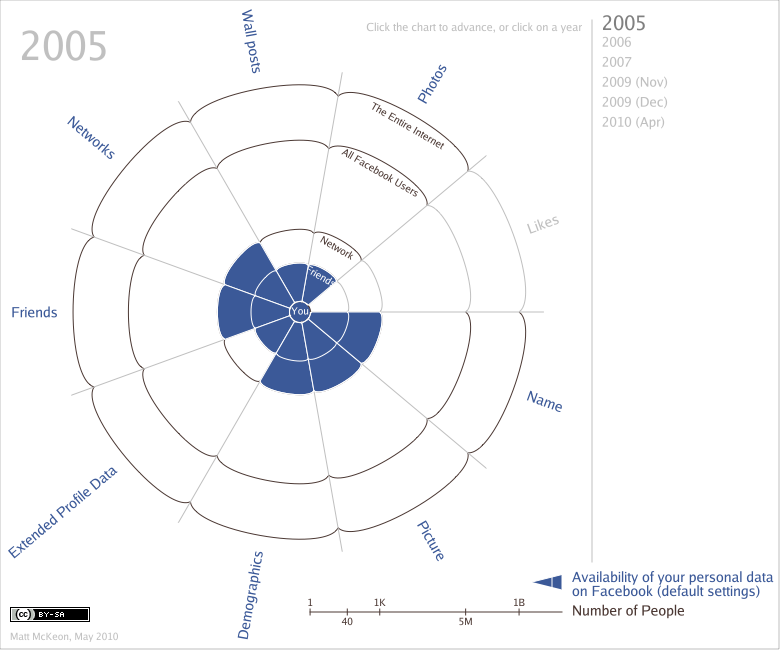
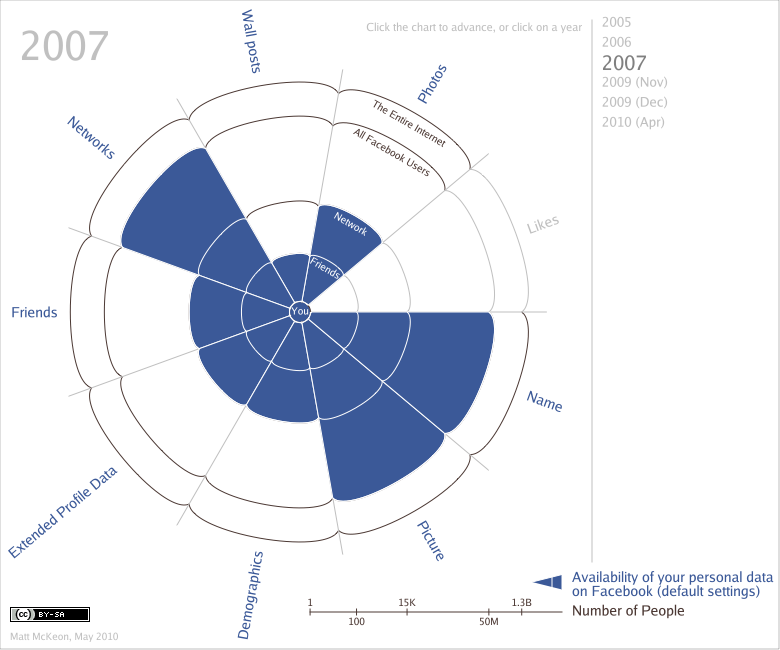
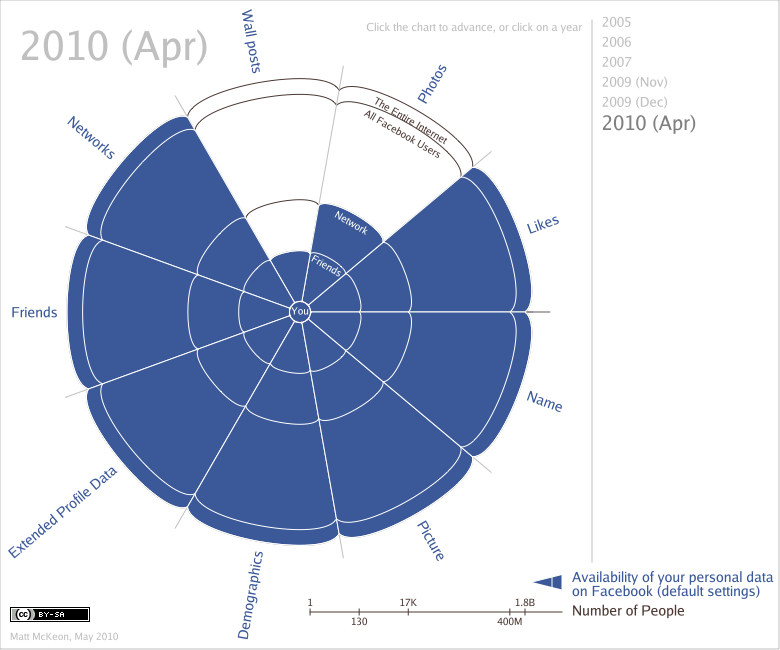
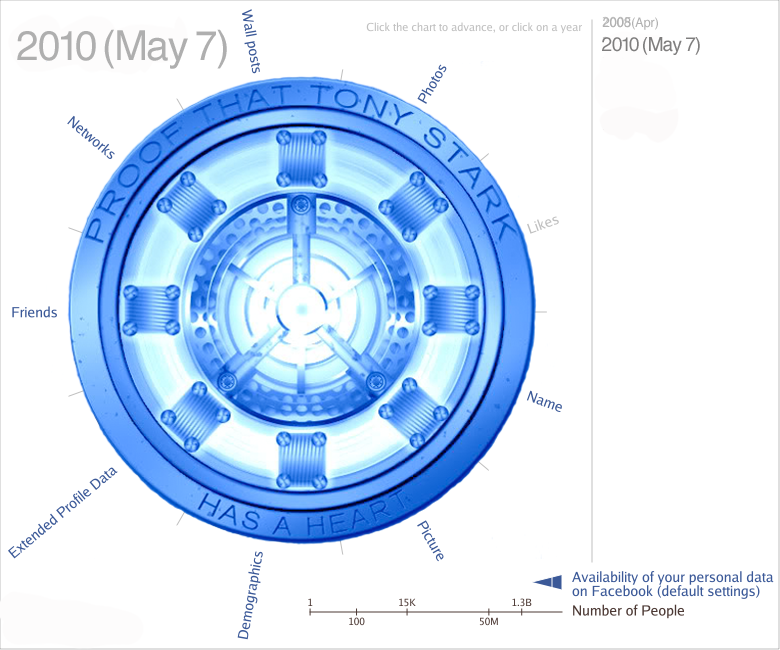
Oh… wait a second, no, that last one is actually the arc reactor implant that’s keeping Tony Stark alive. But, no doubt, Skynet… err.. Facebook is intent on catching up to the full-pie version of the chart soon.
Anyway, Bruce Wayne, Clark Kent, Peter Parker, they were never prepared for this brave new networked world. Their entire way of being simply doesn’t fit anymore. Neither with Facebook and its social network platform ilk, nor the (*cough* relative) sensibilities of the Millennial youth who use it. For Tony Stark, transparency isn’t just relegated to the subject of his super-powered “alter ego,” it’s a pervasive part of his total personality, his way of being in the world. Stark is as blatant as his id, his mobile touch-screen device is actually, literally, transparent, allowing others to see everything he’s doing on it, every surface in his house seems to be equipped with touch-screen capabilities, his browsing activities public to anyone sitting nearby who cares to look. Zuckerberg himself likely couldn’t have dreamed up a more post-Privacy kind of superhero, one less conflicted about the disparate parts of his identity. With the death of privacy, you cannot be one thing in one context, and something different in another. You cannot be Clark Kent at the Daily Planet desk job, and then Superman on the night shift. You are exactly who you are to everyone at all times. Like no other superhero, Tony Stark’s identity isn’t conflicted. It’s absolute.
In her book Generation Me: Why Today’s Young Americans Are More Confident, Assertive, Entitled–and More Miserable Than Ever Before, psychology professor Jean Twenge writes:
It has always been normal for kids to have big dreams, but the dreams of kids today are bigger than ever. By the time kids figure out they’re not going to be celebrities or sports figures, they’re well into adolescence, or even their twenties.
High expectations can be the stuff of inspiration, but more often they set GenMe up for bitter disappointment. [The book] Quarterlife Crisis concludes that twenty-somethings often take a while to realize that the “be whatever you want to be, do whatever you want to do,” mantra of their childhoods is not attainable.
In the late 90’s, Tyler Durden, himself a sort of Gen X superhero — a transitional alpha version precursor to the Gen Y launch model, if you will — said it like:
We have no Great War. No Great Depression. Our Great War’s a spiritual war… our Great Depression is our lives. We’ve all been raised on television to believe that one day we’d all be millionaires, and movie gods, and rock stars. But we won’t. And we’re slowly learning that fact. And we’re very, very pissed off.”
Even in the throes of the economic crisis, my generation hasn’t really had a Great Depression either — though we did come this close. And even after 9/11 my generation hasn’t had a Great War. The world is now far too mind-numbingly complicated and complex to even have a clear concept of a single, monolithic Evil to fight. The “heroes” of my generation, the ideals that kids look up to and wish to be like, haven’t been men of steel battling evil for a long time, they are now, like Durden says, millionaires and rock stars. And that is precisely what 21st Century Tony Stark is. After he comes out of the closet (or, more accurately, the basement science lab) as Iron Man, he becomes a worldwide celebrity, a household name. Even the migrant worker he stops to buy strawberries from on the Pacific Coast Highway asks, “Are you Iron Man?” like he’s recognized a movie star.
And unlike Superman or SpiderMan or Batman or any other major superhero before him whose truth the world was not yet ready to handle, Tony Stark answers casually, “Sometimes.”
Perhaps that’s the other side of what allows a 21st century superhero to be transparent. The modern world can accept him as such. Gen Y is a lot more tolerant of lifestyle differences than prior generations, after all. The X-Men didn’t hide that they were different, either, but then again, they COULDN’T hide it — looking like Beast or Nightcrawler, or having Rogue or Cycolps’ particular mutations, you couldn’t just “pass” in normal society — and the humans the X-Men fought to protect could never accept them for being what they are. Not so in the world of Tony Stark. He’s no mutant. No outcast. He’s the most popular kid in school. The late DJ AM even spins at his birthday bash. The 21st century Tony Stark reveals to the world he is Iron Man, and the 21st century world says…. Awesome!
In the past, being a tech entrepreneur-slash-engineer, as Tony Stark is, would have made him a nerd, or otherwise Bruce Wayne, still stuck in the previous millennium, putting on a show of irresponsible playboy-ness to deflect attention from both his morbidly serious crime-fighting alter ego and his humorless tech geek underbelly. Like, remember when no one would have wanted to sit at the lunch table with kids who talked about stuff like “augmented reality”?
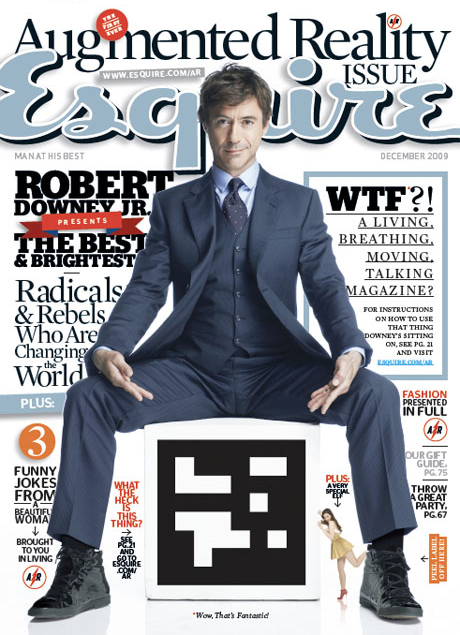
Yeah, not so much, anymore. In the 21st century, being a tech geek no longer detracts from the image of a bad-ass or a dilettante. James Bond and Q have combined into one seamless character. It’s 2010, and geeks are cool! Hell, we’ve even got one as President.
While both Wayne and Stark are surrounded by high tech everything, for the 20th century hero all the gadgetry is just a means to an end. Even the Batmobile is ultimately just a flashy tool. Same could technically be said about the iPhone, but who would? In the post-iPod era we have a very different relationship with our technology. Our favorite tech objects aren’t just for utilitarian application, they’re obsessed over, fetishized, loved. It’s why Gizmodo would pay $10,000 for an exclusive scoop on an in-production, “lost” 4g iPhone, and why an enormous global audience would give a crap. When Stark says in the movie that the Iron Man suit is a part of him, that he and it are one, we all intimately understand exactly what he means even if the rest of us don’t actually literally plug our gadgets into our chest cavities.
After a raucous birthday party in which we see Stark, in full Iron Man gear, getting shitfaced and acting the fool, (he’s dying at the time, and feeling a bit of the nothing-really-matters mortality blues — being dissolute and apathetic, itself, unusually postmodern behavior for a superhero), S.H.I.E.L.D. agency director Nick Fury (played by Samuel L. Jackson) “grounds” the hungover superhero by sequestering him in his house with all access to communication with the outside world cut off until he solves a theoretical physics problem. This superhero’s punishment is having his phone and internet privileges revoked and being sent up to his room to finish his math homework. There isn’t a single one of the 60 million American Millennials that doesn’t relate to this.
When Favreau was looking for a 21st century industrialist corporate executive to use as a model for his and Robert Downey Jr’s interpretation of Tony Stark, he sought out Elon Musk, co-founder of paypal. Musk even has a cameo in the movie, chatting Tony up about an electric rocket, a concept referencing Musk’s current endeavors, Tesla Motors, which produces fully electric sports cars that rival Porsche in performance, and SpaceX, a private aerospace company working to invent the first reusable rockets, which would dramatically reduce costs and eventually lead to affordable space-travel. This dude is the inspiration for the 21st century version of Stark.
So what’s Tony Stak’s inspiration? Why does he do what he does? There was no childhood trauma that drove him to caped crusading. He wasn’t raised by adoptive Earth parents who imbued him with a strong moral compass during his formative years on a farm in the American Heartland. Sure, ok, he underwent a certain crisis of conscience in his 40s after escaping from a terrorist hostage situation in Afghanistan, shutting down the weapons manufacturing division of Stark Industries and all, but still, why does he take it so much further, going so far as to “privatize world peace.” …. For the thrill of it! As he himself says, he keeps up the good fight at his own pleasure, adding, “and I like to pleasure myself often.” Unlike the prior century’s superhero, this new version saves the world not out of any overwhelming sense of obligation or indentured servitude to duty, but because he can do what he wants, when he wants, because he wants to, and most importantly, he GETS what he wants. Sure he has to work for it, but unlike with, say, Peter Parker and Mary Jane or Clark Kent and Lois Lane or even Buffy and Angel, what he wants isn’t perpetually out of his grasp just because he is who he is. Being Iron Man isn’t a burden, it’s an epic thrill-ride.
The first 21st century superhero is a hedonistic, narcissistic, even nihilistic, adrenaline junkie, billionaire entrepreneur do-gooder. If Peter Parker’s life lesson is that “with great power comes great responsibility,” Tony Stark’s is that with great power comes a shit-ton of fun.
You can’t get any more Gen Y than that.
Welcome, 21st Century superhero, my generation has been waiting for you.

.
“God is alone — but the devil, he is far from being alone; he sees a great deal of company;
he is legion.”
– Henry David Thoreau, “Solitude,” Walden, 1854
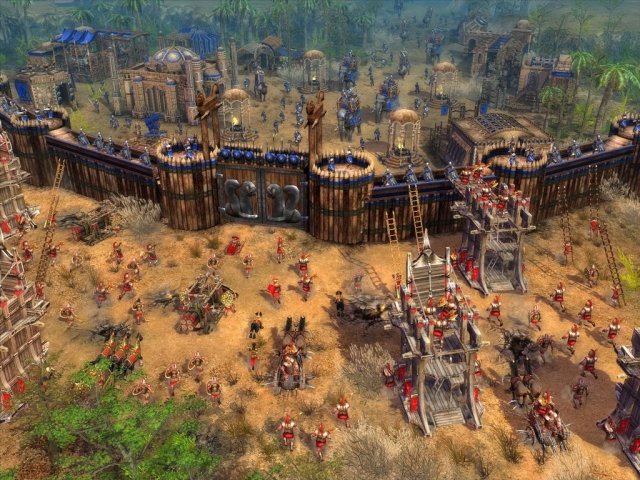
Standing on the field at Coachella 2008, the endless noise and heat like physical things pushing and shoving in a mosh pit, the blast clouds of music spilling out from monolithic stacks of speakers across four hundred acres, the polo field crawling like an ant-farm with a hundred thousand bodies, it suddenly occurred to me that the only historical precedent for this sort of massive concentration of people and resources and infrastructure in one place at one time had to have been… war.
I’d only slept a few hours the previous night, been up since early enough to hear Prince’s sound-check as the score to the start of my workday, and looking through the 100+ degree Palm Sprigs haze that afternoon under the sweltering sky, I imagined ancient Greek or Roman or Macedonian battlegrounds and thought they might not have looked too different.
In college I’d started throwing raves; at the turn of the millennium I was part of the promotions team at New York’s iconic Lunatarium, a 20-thousand square foot warehouse space in DUMBO dubbed “the studio 54 of the moveon.org crowd” by the New York Times; by the mid-aughties I’d been the Online marketing Coordinator for House of Blues Concerts in Southern California, led the social media strategy for Live Nation’s Street Scene Music Festival in San Diego, consulted on web strategy for the Bonnaroo Festival in Tennessee, and at the moment of that heat-stroked revelation on the Empire Polo Field was the Marketing Director for an independent event creations company which, in addition to Coachella, that summer would also work with the Rothbury Music Festival in Michigan, Optimus Alive Festival in Portugal, All Points West Festival in New York, the Virgin Music Festival in Baltimore, Electric Picnic in Ireland, and finish off the season with a stint at Burning Man.
Needless to say, this wild proliferation and growth of massive music festivals over the past decade was something I’d noticed. Yet at the same time that I was in the front row seat at the concert industry, my career also overlapped with the ascension of social technology. At the time, already anachronistic phrases like “new media,” and “electronic marketing” were still being tossed about to describe my inevitable department. Just the year before, at SXSW Interactive 2007, when Myspace was still king of the web and Facebook was just a college dorm and the newly-launched Twitter was yet to be anything but the geeks’ private playground, there were still panels called things like, “Why Marketers Need To Work With ‘People Media’“. Hard to imagine now that just a few years ago the term “Social Media” had barely entered the mainstream marketing lexicon. Witnessing the rise in demand for massive music festival experiences and the mass adoption of digital and social technologies, it occurred to me that these two seemingly disparate forces were not only gaining traction in tandem, they were, in fact, both part of a far lager and more meaningful societal shift.
“Mass Mingling” is what trendwatching.com called it, one of their “10 Crucial Consumer Trends For 2010:”
More people than ever will be living large parts of their lives online in 2010. Yet, those same people will also mingle, meet up, and congregate more often with other ‘warm bodies’ in the offline world. In fact, social media and mobile communications are fueling a MASS MINGLING that defies virtually every cliché about diminished human interaction in our ‘online era’.
So, forget (for now) a future in which the majority of consumers lose themselves in virtual worlds. Ironically the same technology that was once seen to be—and condemned for—turning entire generations into homebound gaming zombies and avatars, is now deployed to get people out of their homes.
Basically, the more people can get their hands on the right info, at home and on the go; the more they date and network and twitter and socialize online, the more likely they are to eventually meet up with friends and followers in the real world. Why? Because people actually enjoy interacting with other warm bodies, and will do so forever.
At SXSW Interactive 2010, convincing marketers that they need social media would have been about as necessary as convincing them they live on a round planet. Attendance for Interactive grew by 40% in the past year alone, and for the first time surpassed that of both the film and music portions of the festival. This year, the hot new thing getting everyone’s panties in a twist was location-based social technologies like Foursquare and G0walla, which add a real-time, real-place dimension to social media. You’re not just keeping up with your friends’ status updates or photo uploads anymore, you’re now actually aware of where they are in relation to you geographically — and perhaps it’s at the bar next door, which you may never have known otherwise, but now that you do, you can all meet up. Much of the appeal of these new location-based social applications is the alleviation — or perhaps the compulsive exacerbation — of FOMO (“fear of missing out”) on ever more potential social opportunities.
But what’s interesting to me in all this isn’t that, social creatures such as we are, we’re using yet more new technology to enable evolutionary imperatives — so, we’re using new gadgets to scratch the itch of 200,000-year-old human desires, and this is a new trend for 2010 why? — but rather that, much like music festivals themselves, our new social experiences seem to be happening at a consistently unprecedented scale. We are no longer content to have social experiences, we want bigger, faster, louder, immediate, MASSIVE social experiences. The kind of resources that thousands of years ago would have been summoned for the purpose of defending an empire, and decades ago for a singular moment in the Summer of Love, are now routinely assembled every weekend of the annual music festival season that is summer.
In his essay in The Chronicle of Higher Education entitled “The End of Solitude,” former Yale professor William Deresiewicz writes:
Technology is taking away our privacy and our concentration, but it is also taking away our ability to be alone. Though I shouldn’t say taking away. We are doing this to ourselves; we are discarding these riches as fast as we can. I was told by one of her older relatives that a teenager I know had sent 3,000 text messages one recent month. That’s 100 a day, or about one every 10 waking minutes, morning, noon, and night, weekdays and weekends, class time, lunch time, homework time, and toothbrushing time. So on average, she’s never alone for more than 10 minutes at once. Which means, she’s never alone.
I once asked my students about the place that solitude has in their lives. One of them admitted that she finds the prospect of being alone so unsettling that she’ll sit with a friend even when she has a paper to write. Another said, why would anyone want to be alone?
There is an analogy, it seems to me, with the previous generation’s experience of boredom. The two emotions, loneliness and boredom, are closely allied. They are also both characteristically modern. The Oxford English Dictionary’s earliest citations of either word, at least in the contemporary sense, date from the 19th century. But the great age of boredom, I believe, came in with television, precisely because television was designed to palliate that feeling. Boredom is not a necessary consequence of having nothing to do, it is only the negative experience of that state. Television, by obviating the need to learn how to make use of one’s lack of occupation, precludes one from ever discovering how to enjoy it. In fact, it renders that condition fearsome, its prospect intolerable. You are terrified of being bored — so you turn on the television.
So it is with the current generation’s experience of being alone. That is precisely the recognition implicit in the idea of solitude, which is to loneliness what idleness is to boredom. Loneliness is not the absence of company, it is grief over that absence. If boredom is the great emotion of the TV generation, loneliness is the great emotion of the Web generation.
Young people today seem to have no desire for solitude, have never heard of it, can’t imagine why it would be worth having. In fact, their use of technology — or to be fair, our use of technology — seems to involve a constant effort to stave off the possibility of solitude. As long ago as 1952, Trilling wrote about “the modern fear of being cut off from the social group even for a moment.” Now we have equipped ourselves with the means to prevent that fear from ever being realized. Which does not mean that we have put it to rest. Quite the contrary. Remember my student, who couldn’t even write a paper by herself. The more we keep aloneness at bay, the less are we able to deal with it and the more terrifying it gets.
Which is why massive festivals have exploded like manic Murakami mushrooms after a radioactive rain. Having produced and marketed music festivals I am keenly aware that it’s not just the lineup that sells the ticket. “The Internet is as powerful a machine for the production of loneliness,” adds Deresiewicz, “as television is for the manufacture of boredom.” The same technology that allows us to be more connected than ever before, on its flip side, perhaps even simply through contrast, has increased our capacity for loneliness. We have built up a new tolerance level, and all we do is want more, more, more. Hence the compulsive need to feel a part of something, something massive, surrounded by hundreds of thousands of other people, all experiencing the same trending topic together as it scrolls by. Of course, it helps that adding music to the cocktail lends a self-transcending aspect to the experience — as does rolling or tripping or being stoned or drunk, which, lets face it, you probably are if you’re at a festival. Taking part in these massive social experiences has become a default rite of passage, an almost religious annual ceremony, and, perhaps, an addiction like any other, demanding we keep upping the dose at every tinge of the creeping withdrawal that is loneliness.
So, as the legions prepare to head to the desert this weekend to score a fix at the kickoff to the annual music festival season (the first of the 2010’s) that is Coachella, and as the rest of us, too, keep tap tap taping our QWERTY keys and touchscreens like pushing the air-bubbles out of a syringe, Deresiewicz reminds us: “We are not merely social beings. We are each also separate, each solitary, each alone in our own room, each miraculously our unique selves and mysteriously enclosed in that selfhood. No real excellence, personal or social, artistic, philosophical, scientific or moral, can arise without solitude. To remember this, to hold oneself apart from society, is to begin to think one’s way beyond it.”

